



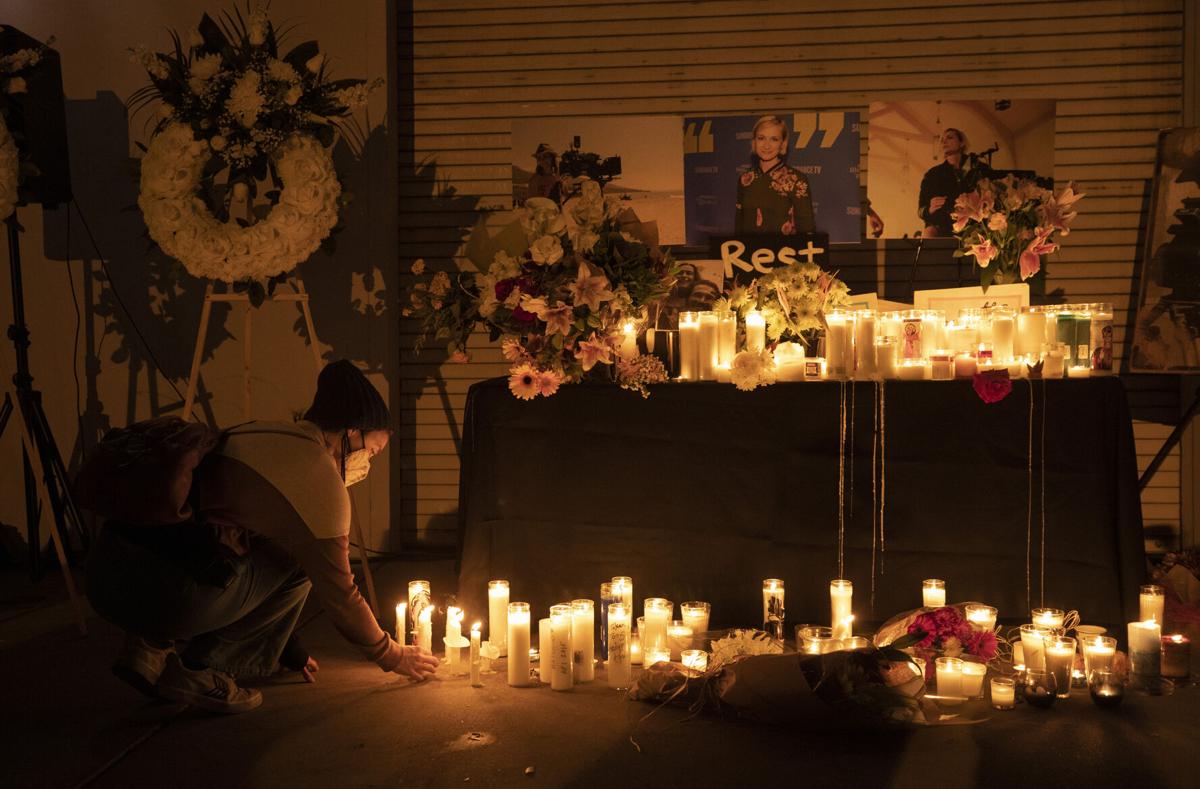
After cinematographer Halyna Hutchins was killed on a New Mexico film set after actor Alec Baldwin fired a prop handgun in October, one city councilmember is moving to prevent such a tragedy from happening in Tucson.
Councilman Steve Kozachik introduced a motion in December to ban live ammunition on film sets in Tucson, which was unanimously passed by City Council. Now, the city is working those requirements into the permits productions must obtain from Tucson when filming here.
Baldwin has said he never pulled the trigger on the prop gun on the set of “Rust” and did not know how a live bullet ended up on the film set, killing Hutchins and wounding director Joel Souza.
Many industry guidelines are utilized on film sets to ensure the safety of real guns used as props, and even modified weapons are checked several times, usually by a trained armorer, before they end up in an actors’ hands. Industry standards say no real bullets should ever be used on film sets.
But as the New Mexico shooting is still being investigated, Tucson’s moving to put gun safety guidelines into official standards for filming in the city.
“Let’s not wait for someone to get killed to deal with it. I mean, this wasn’t on anybody’s radar screen until the issue popped up in New Mexico,” Kozachik said.
The councilman has a personal connection to the film industry, as his brother, Pete Kozachik, has worked on films such as “Coraline,” “James and the Giant Peach” and “The Nightmare Before Christmas.” After Hutchin’s death, Kozachik and local independent filmmakers held a vigil at the Tucson Convention Center.
“Everybody’s reaction is ‘What was a live round doing in that gun?’ And nobody has that answer,” Kozachik said. “I visited sets that (Pete’s) worked on and seen how they create special effects. The reality is that any effect you’re trying to achieve by using a weapon, you can achieve it in post-production … you don’t need live ammunition to create a special effect.”
The new rules will follow guidelines from the Actors’ Equity Association, which prohibit live ammunition on sets, say simulated or dummy weapons must be used whenever possible and require that firearms are never directly pointed at anyone. Although the Actors’ Equity Association deals with theater productions, Kozachik says their guidelines can easily be applied to film.
In order to film in Tucson, filmmakers must sign a license agreement with the city. City Attorney Mike Rankin said he expects to build the Actors’ Equity Association language about gun safety into the permits next week.
If a production is found in violation of the permit, it will be revoked, along with the filmmakers’ rights to film in the city.
Tucson has a rich film history, but it’s been a while since a major Hollywood studio has set its sights on the city. Most film permits the city issues are for productions such as “fashion shoots and commercials,” according to Peter Catalanotte, director of Film Tucson, the city and Pima County’s official film office.
Other neighboring states, including New Mexico, out-compete Arizona in providing the tax incentives that attract productions, and the large studios that might feature live-action gun scenes are rare occasions in the city.
“Because we don’t have state credits, we can’t lure big feature films here. Those are typically the things that have guns and explosives in them, a reality show generally doesn’t. Fashion shoots certainly don’t,” Catalanotte said. “The issue of gun safety hasn’t been a huge issue for us. But on the rare occasion where we had a project where they were involved, we always made sure to contact city officials and the police and the fire department and county officials.”
Tucson recently hosted a large production, however, after state, county and city leaders joined with Visit Tucson and Rio Nuevo to put together an incentive package for the HBO production “Duster.”
One episode of the series, set in the 1970s, was filmed in downtown Tucson and on the second floor of City Hall. Catalanotte couldn’t say if the production featured ammunition due to HBO’s “strict publicity standards.”
According to Catalanotte, that production brought about $10 million into Tucson’s economy, a boost the city often misses out on as neighboring states out-compete in incentivizing filmmaking.
“I’m totally supportive of bringing the film industry back. But we can do it safely, too,” Kozachik said.
From now on, productions set in Tucson must follow a strict set of industry guidelines that will soon be bound in city filming permits. But despite the new contract terms, it’s unclear how the city will ensure productions follow them.
“I would not expect the city, via (the Tucson Police Department) or other agency, to be actively looking for violations,” Rankin said in an email. “We don’t have those kinds of resources. Film Tucson will work with the film productions that come here to make them aware of the requirements, and the license will put the productions on notice of those requirements.”
Catalanotte said Film Tucson actively engages with local officials to make sure “the filmmakers are abiding by local and state laws.” Ultimately, he said the new permit conditions are a welcome measure to ensure safe conditions for Tucson’s film industry.
“The law that Kozachik has championed, it just adds to a more safe environment in Tucson and we’re happy to promote it,” he said.

