
The Democratic nominee for Pima County Recorder has been paying herself a salary from campaign funds for the work she does as a candidate.
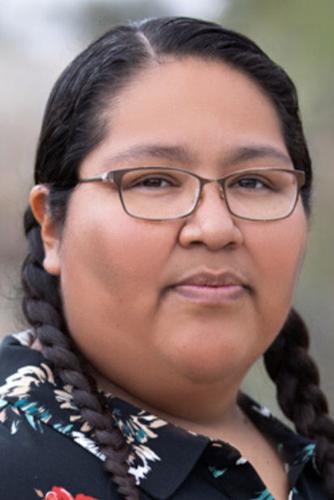
Campaign finance filings suggest Gabriella Cázares-Kelly has taken payments of $5,580 in August and September for “labor” — the labor of being a candidate. Cázares-Kelly said $1,000 listed on the filings is being returned, making the total $4,580.
While she started at $1,000 per two weeks, she is now being paid $1,290 per two weeks, the same $15-per-hour rate as her campaign manager, she said.
It’s unusual for candidates to pay themselves for their work campaigning, but it’s not illegal or unprecedented. Cázares-Kelly’s Republican opponent, Benny White, declined to criticize the payments, though he did post them on Facebook, after former Pima County Republican Party chair Bill Beard first revealed the payments.
“I really don’t have an opinion on it other than I found it really curious,” White said. “I don’t recall a candidate paying themselves.”
In an email to supporters, Cázares-Kelly said her decision to take a salary reflected the reality of being a working-class candidate. She noted that U.S. Rep. Alexandria Ocasio-Cortez of New York also paid herself a salary when she was a candidate.
“The way our system is set up overwhelmingly favors wealthy people who either have the independent resources to begin financing their own campaigns, or people who have the luxury of not working full-time to support themselves and their families,” she said.
Cázares-Kelly was working as a college and career readiness counselor on the Tohono O’odham Nation when she started campaigning, she said. The demands of the campaign convinced her to leave that job and become a substitute teacher in Tucson, a job that ended because of the pandemic.
Biden, Kelly dwarf opponents’ ad buys
Democratic presidential nominee Joe Biden is outspending Republican President Trump more than 6-to-1 on advertisements in Southern Arizona on the state’s largest telecommunications provider.

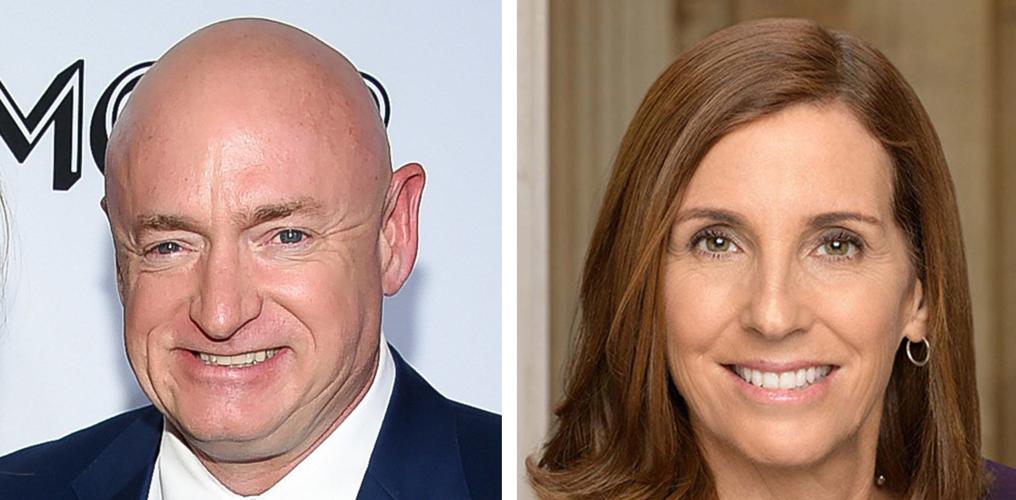
Democratic Senate candidate Mark Kelly has outspent Republican Sen. Martha McSally more than 2-to-1 on reaching Arizona voters south of Phoenix.
Cox Media reported that Biden had spent $1 million in markets south of Phoenix compared to $155,000 for Trump, as of Wednesday. That difference was even greater in Phoenix, where Biden spent $5.7 million compared to Trump’s $600,000.
About 30 volunteers took part in the pickup organized by Caterpillar Inc. in partnership with Tucson Clean and Beautiful and the Sonoran Institute. In addition, several employees worked with the Sonoran Institute on riverbed litter quantification studies. These simple surveys identify and categorize trash found with in 10 meter by 10 meter square areas with the goal of learning ways to control pollution at its source and coming up with strategies to better capture trash once it has reached the riverbed. Here, Luke Cole with the Sonoran Institute explains more about the surveys. (Josh Galemore/Arizona Daily Star)
In other races, Democratic Senate candidate Mark Kelly has outspent Republican Sen. Martha McSally more than 2-to-1 in advertising in communities south of Phoenix, dumping $1.2 million compared to her $515,000. Kelly has spent $5.7 million in the Phoenix markets, compared to $2.7 million for McSally.
The company has approximately 400,000 customers in Southern Arizona, and 2.5 million in Phoenix.
Rich Barone, Cox Media vice president, said Cox has seen changes in the last 30 days, like the Trump campaign becoming more geographically targeted in its ads compared to the summer, when the campaign was running more national advertisements.
Overall, he said there has been a more targeted approach to advertising this cycle, even going as far to use data to develop customized TV spots.
“Today to break through the clutter and to be more voter targeted with messages, we see them reaching out to specific audiences using a variety of more than 50 cable channels like ESPN, Animal Planet, Travel, DIY, Game Show Network, Bravo, Lifetime and Sci-Fi channels, just to name some,” Barone said in an emailed statement.
Losing candidates head back to work
Four of the five Pima County employees who ran for office in August’s primary election are back to work in their previous offices, following county-mandated unpaid leaves of absence.
Jonathan Mosher, who held the position of chief criminal deputy in the Pima County Attorney’s Office before taking leave to run for county attorney, stepped in to fill a vacancy as chief of the office’s Major Crimes Bureau upon his return to work. Pima County Attorney Barbara LaWall opted to keep David Berkman in the chief criminal deputy spot to maintain stability, said Chief Deputy Pima County Attorney Amelia Cramer. The Major Crimes Bureau was previously called the Violent Crimes Bureau but has recently been re-named.
Deputy Pima County Attorney Mark Diebolt, who was also competing for LaWall’s seat, is again working in the line prosecutor position in the Operations Bureau Charging Unit, where he worked before taking leave, Cramer said.
In other county offices, recorder candidate Kimberly Challender is again working in the office as an unclassified program coordinator and assessor candidate Dustin Walters, has returned to his previous post as senior property appraiser, said Jason Parrish, deputy director of Pima County Human Resources.
Pima County Precinct 9 constable candidate George Camacho is the only candidate not back to work after his imposed leave. Camacho went on leave from his position as an unclassified special staff assistant in the constable’s office on April 6 but was fired a few weeks later, Parrish said.
Star archives show Camacho was terminated by Presiding Constable Kristen Randall after complaints of sexual harassment and bullying. On his campaign’s Facebook page, Camacho called his firing a political ploy and retaliation by Randall, who he said has a longstanding personal relationship with Camacho’s opponent.
Camacho went on to win the Precinct 9 constable’s race in the primary but is now fighting a Sept. 17 injunction against harassment that restricts him from carrying a gun for a year.
Circus is coming to entertain voters
The circus is coming to town — to promote voting.)
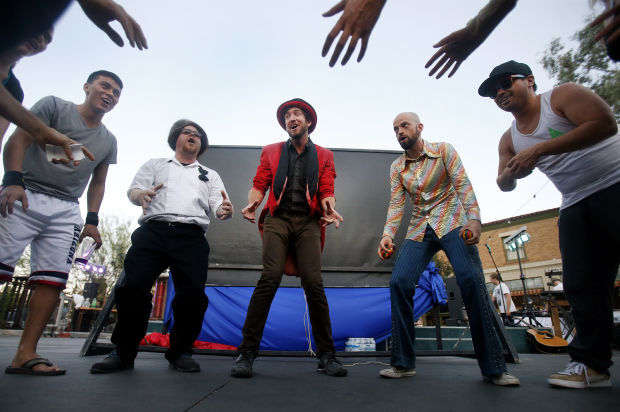
Emergency Circus, a nonpartisan group that has ties to Tucson, will be hosting “Cirque d’Vote” from noon to 5 p.m. Wednesday across from the Mission Public Library polling place. Local jugglers, acrobats and aerialists will be stationed at John F. Kennedy Park, 3700 S. Mission Road, to entertain voters as they drop off ballots or vote early.
The nonprofit was formed in 2012 to bring circus joy to hospitals, refugee camps and disaster shelters around the country. It will be headed to seven polling places, including two in Arizona, before Election Day to promote voting.
Photos: Stock car racer Kelly Jones returns to the track after a six year hiatus
Kelly Jones
Updated
Kelly Jones heads for the track to run a heat in the Thunder Trucks division at Tucson Speedway, Tucson, Ariz., October 17, 2020. It was Jones first time behind the wheel at the track after taking six years off to support her two kids and husband Dustin with their racing and help run the family business.
Kelly Jones
Updated
Racer Kelly Jones, left, talks with her dad, Colin Germain, about her upcoming qualification laps in the Thunder Trucks division as husband Dustin dives into the truck cab for some last minute adjustments, Tucson, Ariz., October 17, 2020.
Kelly Jones
Updated
Kelly Jones laces up her shoes, the same ones she last used 16 years ago at age 18, prior to her practice laps at Tucson Speedway, and her return to racing after taking off the last six years, Tucson, Ariz., October 16, 2020.
Kelly Jones
Updated
Kelly Jones and her husband Dustin sit on the ramp to the trailer to talk about her qualifying run, where she placed fifth in Thunder Trucks, at Tucson Speedway, Tucson, Ariz., October 17, 2020.
Kelly Jones
Updated
Dustin Jones gives his son Devin a hug in the pits at Tucson Speedway while crewing his wife Kelly's return to the track after six years, Tucson, Ariz., October 17, 2020.
Kelly Jones
Updated
Devin Jones talks to his mom Kelly Jones while she waits in line to make her qualifying run in the Thunder Trucks at Tucson Speedway, Tucson, Ariz., October 17, 2020.
Kelly Jones
Updated
Dustin Jones gives his wife Kelly a big thumbs up as she rolls into post race inspection after her fourth place finish in Thunder Trucks, the feature race at Tucson Speedway, and her fist race in six years, Tucson, Ariz., October 17, 2020.
Kelly Jones
Updated
Thunder Trucks driver Kelly Jones gets a hug from her daughter Keirstin as the two wait in the pits for Kelly's race at Tucson Speedway, Tucson, Ariz., October 17, 2020.
Kelly Jones
Updated
Kelly Jones gets a congratulatory kiss from husband Dustin after she drove to fourth place finish in Thunder Trucks at Tucson Speedway, Tucson, Ariz., October 17, 2020. The two met as teenagers racing at the speedway.
Kelly Jones
Updated
Dustin Jones checks in with his wife Kelly before she takes to the track at Tucson Speedway for a practice run, Tucson, Ariz., October 16, 2020.
Kelly Jones
Updated
Devin Jones climbs on the family golf cart to watch his mother Kelly turn in some practice time on the track at Tucson Speedway, Tucson, Ariz., October 16, 2020.
Kelly Jones
Updated
Colin Germain takes lap times as his daughter Kelly Jones returns to the track after six years during her practice laps at Tucson Speedway, Tucson, Ariz., October 16, 2020.
Kelly Jones
Updated
Keirstin Jones unloads the new tires for the truck her mother Kelly Jones is readying to race at Tucson Speedway, Tucson, Ariz., October 16, 2020.
Kelly Jones
Updated
Racer Kelly Jones takes her Thunder Truck through turn two during a practice session at Tucson Speedway and her return to racing after six years, Tucson, Ariz., October 16, 2020.
Kelly Jones
Updated
Racer Kelly Jones talks with her family and friends about the handling of her truck after driving to a fourth place finish at Tucson Speedway, her first race after a six year hiatus from racing, Tucson, Ariz., October 17, 2020.
Kelly Jones
Updated
Racer Kelly Jones brings her truck, center in yellow, blue and black, into turn one in the night's preliminary heat at Tucson Speedway as she returns to the track after six years, Tucson, Ariz., October 17, 2020.
Kelly Jones
Updated
Keirstin Jones holds the brake pedal down so her dad Dustin can get the lug nuts off a rear wheel as he readies the truck for his wife Kelly Jones to run during practice at Tucson Speedway, Tucson, Ariz., October 16, 2020.
Kelly Jones
Updated
Kelly Jones adds sunglasses to her equipment before taking a late afternoon qualifying run in Thunder Trucks at Tucson Speedway, Tucson, Ariz., October 17, 2020.
Kelly Jones
Updated
16-year-old Kelly Germain proudly displays the back of her racing helmet in 2002. She says many other students at Saguaro High School think it's pretty cool that she races and many of the boys claim they could beat her in a race..
Kelly Jones
Updated
Nineteen year-old racer Kelly Germain (now Kelly Jones) sits on her car to weight it while her dad, Colin Germain, make a suspension adjustment to the rear of the car at Tucson Raceway Park on March 19, 2005.
Kelly Jones
Updated
Kelly Germain, back to the camera, gets a hug from boyfriend Dustin Jones, at a practice at Tucson Raceway Park on March 19, 2005.
Kelly Jones, racing family
Updated
Dustin Jones, left, and his girlfriend (now wife) Kelly Germain, with their cars at Tucson Raceway Park in 2004. They were two of the best racers in the Late Model series at TRP, and they're also a couple - an odd arrangement in the competitive world of motor sports.
These 3 race car-driving girls just made Tucson Speedway history
UpdatedThe first time she raced on the track, Quinn Davis was 5 years old.
She’ll never forget what happened.
Quinn climbed into a club car and drove 10 laps around the Tucson Quarter Midget Association’s Marana track. Then she couldn’t stop.
Really. Quinn didn’t know how to stop the car.
“I hit the wall,” says Quinn, now 11. “And I wanted to do it again.”
Quinn’s driving quickly improved and she went on from driving a club car — a four-cylinder vehicle weighing a few hundred pounds and traveling upwards of 45 mph around a 1/20-mile track — to win four championships in the association before moving up to Bandolero racing on Tucson Speedway’s 3/8-mile track. She’s had success with the larger Outlaw Bandolero vehicles as well. Earlier this month, Quinn took third in points in this year’s Outlaw season, for drivers who are 11 years old and older.
For the first time in Tucson Speedway history, the top three Outlaw Bandolero point leaders — Anika O’Brien, Keirstin Jones and Quinn Davis, who finished in first, second and third place, respectively — are girls.
The Outlaw cars are small but mighty, capable of reaching speeds up to 70 mph .
The sport has obvious dangers. But these girls are taking risks in order to achieve their goals, and they’re tearing it up on the track while slashing stereotypes in what’s historically been a male-dominated sport.(
They’re also forging friendships, supporting each other and providing a solid example of good sportsmanship to drivers of all ages.
All three girls had their struggles during the track’s shortened 2020 season, including crashes and breakdowns, but they stayed focused and stuck together as they drove their way to success.
“I knew my car had it and I had it”
Anika says nothing compares to racing.
“The adrenaline is what makes it fun,” Anika said. “Every time you go on the track, you don’t know what could happen. You have a split-second to decide what to do in a situation.”
The 14-year-old has been driving for five years, but is still two years away from earning her driver’s license, something she calls “not fair.”
Like Keirstin and Quinn, Anika was born into racing. Her dad, Brian O’Brien, began racing stock cars when he was 21 years old. He was Tucson Speedway’s 2016 and 2017 Pro Stock Champion. He also finished second in points in 2018 and again in 2020.()
“Eventually, I want to move up and race against him,” Anika O’Brien said.
Anika began her racing career five years ago in the racetrack’s Bandit division, which is for drivers ages 8 through 11. She’s been a rising star from the start. In her three seasons in the division, she took one Rookie of the Year and two championships before moving up to the Outlaw division.
“Last year, when I moved up to Outlaw, I got Rookie of the Year,” Anika said. “This year, I was hoping for another championship title. That was my goal.”
She has finished in the top five in all four races she’s competed in this year. On Oct. 3, she finished first.
“I knew my car had it and I had it” that day, Anika said.
Next year, Anika will compete in the speedway’s Hobby Stock Division, driving an early 1980s Monte Carlo that she and her dad built earlier this year.
“I raced it once this year, but at a practice the weekend after the first race I crashed into the wall and wrecked it,” Anika said.
The car survived, and Anika’s father drove it to a second-place finish in the Hobby Stock season’s final race last weekend. Anika and her mother, Kristi, proudly watched.()
Anika wants to keep racing for as long as she can. She wants to be a police officer someday, saying she isn’t particularly interested in racing professionally.
“I wouldn’t be interested in going big-time, because it’s not the same, but I do want to continue with short track racing,” Anika said. “My favorite part is the fun of it. Going out there every weekend, you meet a whole bunch of great people.”
“This was a special season”
One of those “great people” is 13-year-old Keirstin Jones, whose racing bloodlines run deep.
Her parents, Dustin and Kelly, competed at the speedway as teenagers and later married. Keirstin Jones’ uncle, Dylan Jones, was crowned Pro Stock season champion last weekend. Her younger brother, Devin, races in the track’s Bandit division.
Keirstin Jones was 8 years old when she got her start in go-karts, She moved up to Bandolero racing three years ago. Last year, during her first season in Outlaws, Keirstin came in third in points.
“My favorite thing is just having fun and winning,” said Keirstin, who has been racing alongside — and against — Anika for the past three years. “This was a special season, because it was all three girls.”
When she’s not busy working on her car and practicing at the track, Keirstin also plays volleyball at Old Vail Middle School.()
After the shortened season, Keirstin is eager to get back on the track next year for a full — and possibly final — season in the Outlaw division. Racing resumed in August following the coronavirus pandemic closures, but with only a few months left in the season, there was only time for three more races.
Keirstin can move up from Outlaw racing when she turns 14, but will likely compete in the full season before “probably” moving up to Thunder Trucks, the same division in which her mom just made her racing return.
Keirstin’s second-place finish was a highlight of her racing career. As far as a career in racing goes, that’s yet to be decided.
“It kind of depends on how everything goes,” Keirstin said.
What’s not up in the air is her love for racing and all that comes with it.
It’s a very competitive sport, but it’s also a nice (way to form) friendships,” Keirstin said. “I’ve made so many friends at the racetrack.”
“It’s not about trophies for me”
While Anika and Keirstin spent last weekend at Tucson Speedway, Quinn was at the Las Vegas Motor Speedway Bullring and Dirt Track, competing in the Bandoleros at INEX Asphalt Nationals.
Quinn loved racing quarter midgets, but at 10, she and her parents realized she was outgrowing the car. She decided she wanted to move over to Bandoleros, and had an impressive first season. Quinn finished fifth in points after only racing half the season, and was named Rookie of the Year.()
“I like to have fun,” Quinn said. “It’s not about the trophies for me. It’s about having fun.”
Like her friends, Quinn was born into racing. Her father, Mark, raced off-road vehicles and motorcycles, and at one point worked as a NASCAR official.
“It’s really surprising that some people say that girls aren’t capable of stuff,” Quinn said. “I do this to make girls have a positive energy and give them inspiration to do this and try other sports as well that boys like to do. We’re not allowed to do baseball, but we can do softball.”
Quinn said the sport allows her to let out her emotions on the track. “They’re really strong at this point because of COVID and not being able to see anyone. You can get them all out on the track,” Quinn said. She added that when “aggressive driving happens on the track, it’s just like, ‘Oh we’re racing now.’”
Quinn is planning to return for another season at Tucson Speedway, and will continue racing in Las Vegas, despite some bad luck at the track, including wrecking her car on the first lap last weekend.
When she’s not helping her dad out with her car, Quinn loves going to cafes and getting her nails done with her mom. She can do both, she says, thanks to the support she receives at home and at the track.
The girl who couldn’t stop her car in her first trip around the track now can’t stop racing.
“I suggest (kids try) racing because everyone is accepting of people and they don’t judge.” Quinn said. “Your friends are supportive no matter what.”
Quinn says she would love to race professionally someday. She rattles off a list of NASCAR drivers, including Brad Keselowski, Noah Gragson and Hailie Deegan, saying, “I want to be like them, but different.
Quinn was 4 years old the first time her dad took her to a race at Tucson Speedway.
On that day, kids were invited onto the track to meet Keselowski and touch his race car, she said.
“I was like, ‘I don’t want to touch the car,” Quinn said. “I want to drive it.”
“People speak a lot about the silent majority,” said Emergency Circus co-founder and Tucson native Clay “Mazing” Letson in a press release. “But the real silent majority are nonvoters. We’ve never had an election in the U.S. where more than 45% of the total population has voted. We at the Emergency Circus feel compelled to utilize our talents to decrease voter apathy and help create positive change from our towns to our planet.”