

Five races to watch Tuesday in Southern Arizona
- Updated
There's a lot to keep an eye on this election, but these five races are worth extra attention.
Sen. John McCain is in one of the toughest political races of his career.
Arizona’s senior senator, seeking his sixth term, finds himself in a convergence of political trouble. He’s facing a well-known Democratic congresswoman in Ann Kirkpatrick, and a controversial Republican presidential candidate who has shown disdain for McCain and tea party Republicans in the state are undermining him politically.
The race was once considered to be a toss-up, but recent polls offer conflicting narratives on how close the race truly is.
A recent NBC/Marist poll has the 2008 presidential candidate beating Kirkpatrick by 19 points. An older poll released last month from Public Policy Polling had McCain and Kirkpatrick in a statistical dead heat.
The race has attracted a lot of attention from outside groups, which have poured more than $5.9 million into the race, according to The Sunlight Foundation, a nonpartisan group that advocates for transparency and public access to government data. About $2.7 million was spent in the Republican primary on ads attacking McCain’s opponent, former state Sen. Kelli Ward.
Additionally, both McCain and Kirkpatrick have individually raised millions of dollars and have begun spending money on television ads.
Kirkpatrick’s ties to Arizona
Standing in the lobby of La Estrella Bakery before a tour of the business recently, Kirkpatrick told the owner about the tiny store her father owned in Whiteriver. Her family has deep ties to Northern Arizona: Her dad’s family were merchants in the White Mountains, while her mother’s family had a ranch in Snowflake.
Before being elected to Congress in 2008, Kirkpatrick represented Flagstaff and the Navajo Nation as a state representative. Before that, she worked as an attorney. In 1980, she was Coconino County’s deputy county attorney.
The 66-year-old congresswoman briefly helped make — and eat — tortillas at La Estrella. She spoke to locals who lined up to buy empanadas and other pastries as well as the fresh tortillas. Many didn’t seem to know who Kirkpatrick was, nor that she was running against McCain.
Kirkpatrick has been criticized for her support for the Affordable Care Act, but the Flagstaff Democrat isn’t backing away from the issue.
She believes that some of the issues with the system, including problems with finding companies willing to provide health insurance in rural areas, have become political. For example, AETNA’s decision to leave the ACA marketplace briefly left Pinal County residents without an option to buy subsidized health insurance.
She contends AETNA officials left the marketplace because they wanted to hold federal officials hostage.
“AETNA’s situation is vindictive. They are getting revenge on the Department of Justice who wouldn’t approve their merger with Humana,” she said. “They are hurting real families who depend on their medical care.
“Insurance companies are making record profit, including health-insurance companies,” she said.
But she concedes that the Affordable Care Act still needs work.
“Even from the very beginning, I’ve said, ‘We’d need a revision,’” Kirkpatrick said.
The top priorities for Kirkpatrick are building a world-class educational system and comprehensive immigration reform.
For Southern Arizona, the lack of immigration reform is hurting the economy. And the proposal for a larger border wall is bad for local businesses, she says.
“Arizona last year did $31 billion dollars worth of business with Mexico,” she said, standing in the back of the bakery, motioning to the customers. “People tell me that Trump’s idea of deporting 12 million people, that is personal to them.”
Kirkpatrick blames elected Republicans, specifically, House Speaker Paul Ryan, for gridlock on immigration reform.
Many fronts
McCain is well-known and is fighting battles on many fronts.
On a recent trip to his midtown Tucson election headquarters, the 80-year-old McCain rattles off percentages, figures and statistics as he discusses hot-button topics.
For example, McCain notes a Gallup poll found 29 percent of Americans report that the Affordable Care Act has hurt them financially.
“My opponent said it was one of her more important votes,” McCain says.
The issue in finding health-insurance providers in the ACA marketplace in Pinal County is one of the many examples McCain cites as the broken promises of the federal health-care initiative.
“I know that when we are down to one that this is a complete contradiction to the promises that were made,” McCain says. And he says he has heard numerous “horror stories” from supporters.
Jobs are also a top concern for McCain, although he believes the Obama administration has largely avoided Congress by passing mandates through executive action or by setting new regulations with federal agencies.
The Navajo coal generation plant, for example, is threatened by new standards set by the Environmental Protection Agency.
“It is going to have devastating effect on Northern Arizona,” McCain notes.
He offers himself as a check on presidential power, noting President Obama said two years ago he would use his office to enact legislation.
“He said, ‘I’ve got a pen, and I’ve got a phone,’” McCain said.
If Democratic presidential nominee Hillary Clinton is elected, McCain predicts she will push for more regulations that will hinder businesses.
“If you talk to any small businessperson in Pima County, they will tell you that government regulations are choking them. That and taxes,” McCain said.
McCain also said Congress needs to address illegal immigration, noting his role in the “Gang of Eight” backed plan that cleared the Senate, but not the House.
Most importantly, the plan would have provided a legal pathway for undocumented immigrants.
“There are 11 million people living here illegally,” he said. “That is an unsustainable situation.”
McCain still supports the plan, but says it will require a lot of work for each person before they can become a citizen.
- By Julianne Stanford For the Arizona Daily Star
- Updated
The contest for the two seats to represent Legislative District 2 in the state House has come down to a three-way race between incumbent representatives Chris Ackerley and Rosanna Gabaldón against challenger Daniel Hernandez Jr.
Ackerley, a Republican, is seeking a second term in the predominately Democratic district, and Gabaldón, a Democrat, is seeking to secure a third term. Hernandez, a Democrat, serves on the Sunnyside Unified School District’s Governing Board.
Ackerley and Gabaldón are both running as clean election candidates, which means they will not accept campaign contributions from special interest groups. As of Sept. 7, Ackerley had raised $17,992 and Gabaldón had raised $18,049.
Hernandez had raised $76,178, including large donations from Arizona Cardinals President Michael Bidwill and venture capitalist Arthur Rock.
The three candidates agree the biggest issues facing the district are the lack of public education funding and resources, in addition to a crumbling infrastructure and stifled economic development throughout the area.
EDUCATION FUNDING
Proposition 123 was a hotly debated education funding ballot proposal that Arizonans passed by a narrow margin of 2 percent during a special election in May.
The proposition will increase education funding by $3.5 billion over the course of the next 10 years by allocating more money from the state’s general fund and increasing the annual contribution from the state land trust permanent funds from 2.5 percent to 6.9 percent.
Ackerley and Gabaldón both voted for Prop. 123 in the Legislature, and Hernandez supported the initiative at the ballot box.
“I had some issues with it, primarily the rate at which we were going to withdraw from the state’s trust fund was too high. I thought it should be more in line with about 5 percent,” said Ackerley, who is a math teacher at Amphitheater High School.
As a school board member, Hernandez said he felt he had no choice but to support the measure so the Sunnyside district could recoup some of its financial losses.
“We had $17.5 million in cuts over the last few years,” Hernandez said. “It was a bad deal — but when we had to look at the options, we as a district had nothing we could do but support it. We had staff that hadn’t had raises in over seven years, we had programs that were on the verge of being cut. So I supported it, but I said, ‘This is not a good deal, this is not something that is the be-all, end-all, it’s just a first step.’”
Gabaldón similarly voted for the funding, as she too thought it would be something of the beginning of a recovery for education in the state, but she says she has been disappointed by the lack of follow up in the legislature.
INFRASTRUCTURE needs
Candidates on both side of the aisle believe their district is in need of infrastructure improvements.
“We have to look at our aging infrastructure — our packed roads, our utilities, our bridges,” Gabaldón said.
Ackerley said the roadways in the district, which are often congested, are in need of repair and expansion in order to better facilitate trade in the state and across the border.
“Time is money when you’re talking about the movement of goods and services,” Ackerley said. “We’re in a very competitive environment, and when someone who is either exporting or importing is looking at the port in Nogales or the port in Douglas, as compared to ports in Texas, they’re going to take that into consideration.”
Hernandez said the lack of resources and funding dedicated to infrastructure in the district has had an impact on the region’s economic growth.
“Nogales is often rated as the poorest city in the state of Arizona, and I really think there is no reason for that given how much trade is going through the city of Nogales, how much international money is being brought into the United States,” he said.
BORDER ENFORCEMENT
When Gov. Doug Ducey introduced the polarizing Arizona Border Strike Force last year, both incumbents had mixed feelings about it.
“I had some serious questions to ask when the proposal was first put forward,” Ackerley said. But, “it’s basically about trafficking, whether it’s human trafficking or drug trafficking, along the border. So yes, I support the state in having a role in combating trafficking along the border.”
After speaking with law enforcement officials in the district, Gabaldón came to a different conclusion.
“They don’t support it,” Gabaldón said. “And so, I really have to look at law enforcement, I have to look at public safety, and when you have people who are boots on the ground that are there, I don’t support it.”
Hernandez said any productive discussions on border-related issues in the legislature have been side-tracked by partisanship.
“When we’re looking at border enforcement, and people like Donald Trump talking about building a wall, that’s not the big problem,” Hernandez said. “The problem that we have is that there is 11 million people here that are in the country that do not have the ability to come out of the shadows. We have 11 million folks who are paying taxes, but are not receiving any of the benefits. Kids are graduating from our high schools, and are unable to go to college.”
Voters in District 14 have four candidates to choose from for two open state House seats.
Of the four candidates — Mike Holmes, Drew John, Jason Lindstrom, and Becky Ann Nutt — only Holmes lives in the Tucson metro part of the district. About a quarter of voters in the large district live in Pima County.
The two House seats are open, with incumbent Republicans David Gowan and David Stevens stepping down.
John has raised about $34,300 for his campaign, including major donations from Arizona Cardinals President Michael Bidwill and Tucson auto dealer Jim Click. The other candidates are participating in the clean elections system, meaning they do not accept donations from special-interest groups.
Here’s where the candidates stand on a few key issues:
EDUCATION FUNDING
Republicans John and Nutt supported Proposition 123, the voter-approved measure meant to increase teacher pay and end a years-long legal dispute between schools and the state. Democrats Holmes and Lindstrom opposed it.
Holmes said the Legislature should stop shifting money away from education and focus on funding for teachers, buildings and buses. He opposes the expansion of the state’s school voucher programs and the Empowerment Scholarship Account program, saying those programs would hurt small and rural school districts.
John said Prop. 123 was not the ultimate answer to school funding, but lawmakers can get serious about finding solutions now that the courts and politics are out of it. He said legislators need to do more listening to outside ideas.
Lindstrom called Arizona’s low ranking among states in education spending “embarrassing.” He opposed Prop. 123 because he thought it unwise to spend the state land trust funds more quickly. He said the state should look for more efficiencies to shift funds to education.
Lindstrom also said he wants government to be more transparent, and to promote that he’d wear a camera on the job if elected.
Nutt said she supported Prop. 123 because education leaders supported it. On the campaign trail, she’s met with as many school superintendents as possible to learn about the different needs of different school districts. The Legislature should focus on updating the school-funding system to better meet districts’ needs, she said.
She supports shifting some federally controlled lands to state control, excluding park lands, to put more money in the land trust that helps fund education.
ECONOMIC DEVELOPMENT
Holmes said Cochise County is losing population largely because of Defense Department cutbacks at Fort Huachuca, and the area needs to diversity its economy. He supports Sierra Vista’s plans to create a tech education hub.
Holmes and Lindstrom support plans to add an industrial port of entry in Douglas, like the one in Nogales, and an inland port in Willcox. More investment in infrastructure is needed to make it happen, Holmes said.
Holmes also supports a procurement preference for veteran-owned businesses in state contracting, which he said would help more veterans get jobs and start or grow businesses.
John said rural Arizona has always struggled in economic development because it doesn’t have spare money to spend. He said he’d focusing on helping to create an educated workforce and encouraging community colleges to work with businesses to align curriculum to workforce needs. John also would work to help small businesses in rural areas get better access to capital and training for applying for government loan programs.
John also said it’s important to change the negative rhetoric about border towns and focus on area assets.
Nutt said she started a chamber of commerce and a tourism council in Greenlee County to help stabilize local economies there. She said she wants to help preserve the rural way of life by strengthening local economies and maintaining workforce training programs. “It does the state no good to have areas that are floundering,” she said.
BORDER ISSUES
Each candidate said enforcing immigration law is a federal responsibility, but consideration should be given to crime that comes across the border.
Holmes said the Legislature should empower county sheriffs and stop sweeping funding from sheriff’s departments. Nutt agreed that the state should address the needs of border sheriffs.
John and Lindstrom said the state should push harder on the federal government to address illegal immigration and border-area crime. John said the state should get involved when the federal government won’t.
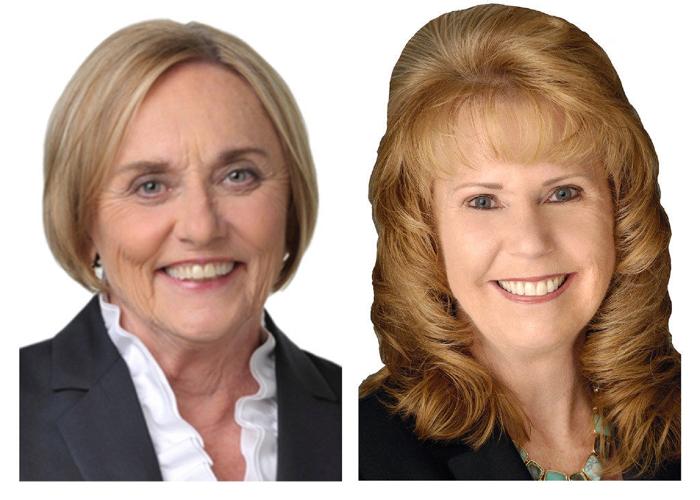
- By Murphy Woodhouse Arizona Daily Star
- Updated
If there’s any chance of the current 3-2 board of supervisors Democratic majority swinging Republican, it’s in the District 3 race. In the race, Democratic incumbent Sharon Bronson, who was first elected to the board in 1996, faces Republican challenger Kim DeMarco.
Bronson has incumbency on her side, as well as a district that has far more registered Democrats than Republicans — nearly 40 percent of voters just 32 percent respectively, according to recent tallies.
She has also raised nearly $170,000 and had nearly $140,000 on hand at the end of the most recent campaign finance reporting period, the second largest war chest after District 4 Republican candidate Steve Christy. DeMarco has raised less than a third of that and had nearly $27,000 remaining at the end of the same period, according to the most current reports.
Caterpillar’s move to Pima County, along with several other developments, has been pointed to as evidence that the county’s economic landscape is improving. However, some have criticized the taxpayer-funded incentives and other means used to attract businesses to the area. What are your thoughts on the county’s recent role in economic development? Would you push for a different approach?
Bronson: I understand that private sector jobs are created by the private sector. However, I believe it is appropriate for the county to play a supportive role in helping the private sector create those jobs. Before I support incentives, I want to be sure the investment we make will provide an economic return to taxpayers. Creating more jobs provides both direct and indirect economic benefits throughout the county.
Recent news reports indicate that the county job initiatives I support are realizing success and that we are third in the nation in job growth. We need to keep moving forward with those initiatives while also simplifying the regulatory and permitting process for new business.
We will continue to invest in key infrastructure that makes Pima County a place where employers will want to stay or relocate.
DeMarco: I think that it is fantastic that new businesses are coming to the county. However, some businesses are receiving taxpayer-funded incentives. These incentives are not sustainable and they are providing millions of dollars in the furtherance of private corporations.
We need to focus on what will bring not only large businesses, but sustain the existing small businesses in Pima County, as they are the backbone of our community. We need to fix our roads and infrastructure, streamline our permitting process and reduce fees and property taxes, to encourage businesses, large and small. By taking care of the county’s primary responsibilities and prioritize our spending it will ensure a positive business atmosphere.
Roads, and their often poor condition, are a perennial source of complaints in Pima County. What do you think is the best approach to improve the condition of county roads in coming years?
Bronson: Our roads and how we are going to pay for repairs is among the most significant challenges facing the county. In the last five years the county has spent almost $500 million in repairing, improving and building new roads. The county has undertaken pavement preservation on 225 miles of road, repaired over 800,000 potholes, and has built or will build 45 miles of new roads.
We must continue to focus on road maintenance. I will work to eliminate the state shifts of Highway User Revenue Funds that divert funds from Pima County, move to a more equitable distribution and increase resources for road repairs. Taxpayer dollars should be used to improve the roads in the county. We must also continue our investment in key infrastructure.
DeMarco: First we need to put road repair into the budget as a recurring expense. We need to use the Highway User Revenue Funds monies for road repairs as they were meant to be used. We have received $688 million over the last nine years for road repair, yet our roads are crumbling. The money is not being used for road repair. We need to look at a regional plan using the Regional Transportation Authority that will be a win-win situation for the county as well as the municipalities within Pima County.
My opponent is urging another tax increase. Tax increases are not the answer. We must cut expenses and prioritize spending. Our roads can be fixed and it is my number one priority.
Beyond the issues raised in the previous questions, what is the most significant problem or issue facing your district, and what would you do to address it?
Bronson: Reducing the property-tax burden on homeowners and businesses. Many in District 3 live on fixed incomes and own their home. As a result, property taxes have a particularly significant impact. In Pima County our property tax supports the many functions of county government including our jail and county hospital.
Other Arizona counties can generate revenue from a sales tax, which our voters have rejected four previous times. Also, these other counties, particularly Maricopa, have created separate, special taxing districts for their jail and hospital that generates revenue through separate property tax assessments.
As a result, Maricopa County taxpayers pay higher taxes when all of these other districts are included. Nonetheless, just as we did this year, I remain committed to cutting property taxes.
DeMarco: Beyond the county’s poor economic development and disintegrating roads, we face a serious crisis with our sheriff’s and corrections departments.
A large part of District 3 is very rural and depends heavily on our great deputies. However, our deputies and corrections officers have not received their step- pay increases as promised in 8 years. Because of this we are losing our experienced deputies and corrections officers to other departments. This loss of experience can be devastating to the safety of our community and can directly affect our ability to draw new business to the area.
This is an issue that needs to be dealt with quickly. We can do this by addressing the nonessential spending in the budget and direct those monies to compensate these men and women as they were promised.
What is the most significant problem or issue facing the county as a whole, and what would you do to address it?
Bronson: Illegal cost shifts by the Arizona Legislature — I will continue to challenge the illegal cost shifts forced on Pima County residents and businesses by the Phoenix politicians in the Arizona legislature. Recently, I voted to sue these Phoenix politicians and the courts ruled in our favor. These efforts resulted in $32 million being returned to Pima County taxpayers thus enabling us to cut taxes in this year’s budget. I will continue to fight these illegal cost shifts.
DeMarco: By far the roads are the biggest issue countywide. Here, I would like to address an issue that is just as important: the mistrust of our county government as evidenced in the 2015 bond proposals failing to pass. It is imperative for the Board of Supervisors to operate in a transparent manner. It is important for the board to listen to the people of Pima County and hear what they are saying.
There is an enormous amount of knowledge among the residents in this county including environmental, education and business knowledge, just to name a few areas of expertise. I will change how the board conducts business. Business transactions and decisions will be done in a transparent, honest and fair manner.
Why should voters pick you over your opponent?
Bronson: I am proud to have called District 3 home for over 30 years. We have strong communities, effective partnerships and a strong embrace of innovation. Pima County is a great place to live, work and recreate. Some politicians and radio talk show hosts think they are able to advance their political and economic interests by tearing down our community. I do not. I am committed to making a difference for the residents of District 3. We will continue to build on our record of creating jobs, strong fiscal discipline, conserving our desert landscape and protecting our water resources that contributes significantly to our current and future economic prosperity. My track record demonstrates that I am committed to making a difference.
DeMarco: My opponent has been in office for 20 years and during that time the county’s debt has doubled to over $1.4 billion. Economic growth remains stagnant while other counties in Arizona are flourishing and our roads and infrastructure have been neglected for years. These serious issues directly affect county residents … and the responsibility falls directly on my opponent’s shoulders. My diverse background as a U.S. Marine, police officer and local business woman has given me the experience, knowledge and leadership skills to find solutions to these problems and take action. My experience in contract negotiation, grant acquisition and budgeting will be invaluable on the board. I will be transparent and honest in my actions and will work hard for the people.
In five weeks, voters will decide the winner in what’s quickly become a heated race for Pima County Sheriff, but they won’t have the opportunity to hear the candidates debate the issues.
Current Sheriff Chris Nanos, a Democrat, told the Arizona Daily Star in September that he won’t be participating in any public debates with his Republican challenger, Mark Napier.
“I don’t have time for that,” Nanos said, explaining his decision. “It doesn’t do any good to argue with Mark.”
Nanos, who was appointed by the county Board of Supervisors in July 2015 to complete the term of Clarence Dupnik, is seeking his first full term as Sheriff.
Napier ran against Dupnik in 2012, earning 46 percent of the vote to Dupnik’s 51.
Over the past month, Napier’s campaign has sought to shine light on issues Sheriff department employees have brought to his attention, including complaints of retaliation against employees who don’t support his candidacy.
“I understand all the fears, but no one is being punished,” Nanos said.
Years of experience
With nearly 70 years of law enforcement experience between the two candidates, each man believes he has what it takes to best serve the citizens of Pima County.
Nanos says he’s done the job well, citing his active involvement in the community, the return of the school resource officer program and his negotiation of a raise for many employees who had fallen behind on the pay scale.
“Our deputies and sergeants just received a five to 20 percent raise,” he said. “For the first time ever, our new-hire deputies make more money per hour than Tucson Police Department’s (new officers).”
Napier said that during his 21 years with Tucson Police Department, he has the leadership skills to bring the department back together.
“As a patrol division commander at TPD I personally met with every officer in my division receiving discipline, no matter how minor. The purpose was not to berate the officer, but rather to affirm the importance of the disciplinary process and convey expectations for future performance,” he said. “Positive interest in discipline and genuine interest in the officer coming from my level helped make discipline more effective. It also served to enhance my relationship with line-level personnel.”
Nanos has been dealing with the overpopulation of Pima County jail since he was named sheriff, at which point the jail was at full capacity. If elected, he says he plans to work closely with local agencies that deal with mental health and substance abuse issues in order to keep the affected individuals out of jail and get them into appropriate treatment programs.
He’s also hoping to reduce costs by using electronic monitoring for low-level offenders, and looking into the structure of how bond amounts are set.
“If a crime is so low-level that the person is not a danger, shouldn’t that play into the conditions of release?” Nanos said. “A person shouldn’t have to sit in jail because they can’t pay $50.”
One of Napier’s goals if elected would be to work closely with TPD Chief Chris Magnus to develop ideas for cross-jurisdictional collaboration and information sharing between the two agencies, of which he says the senior administration have had a strained relationship for decades.
“I would like to centralize a Street Squad (within the Sheriff’s department) consisting of a sergeant and 4 to 5 deputies to proactively address crime and quality of life issues across the county,” he said.
The Pima County Deputy Sheriff Association and the Pima County Corrections Officers Association voted last week to endorse Napier. Nanos received the endorsement of the Fraternal Order of Police, Pima Lodge 20.
The general election is on Nov. 8, with early voting beginning on Oct. 12.
Sen. John McCain is in one of the toughest political races of his career.
Arizona’s senior senator, seeking his sixth term, finds himself in a convergence of political trouble. He’s facing a well-known Democratic congresswoman in Ann Kirkpatrick, and a controversial Republican presidential candidate who has shown disdain for McCain and tea party Republicans in the state are undermining him politically.
The race was once considered to be a toss-up, but recent polls offer conflicting narratives on how close the race truly is.
A recent NBC/Marist poll has the 2008 presidential candidate beating Kirkpatrick by 19 points. An older poll released last month from Public Policy Polling had McCain and Kirkpatrick in a statistical dead heat.
The race has attracted a lot of attention from outside groups, which have poured more than $5.9 million into the race, according to The Sunlight Foundation, a nonpartisan group that advocates for transparency and public access to government data. About $2.7 million was spent in the Republican primary on ads attacking McCain’s opponent, former state Sen. Kelli Ward.
Additionally, both McCain and Kirkpatrick have individually raised millions of dollars and have begun spending money on television ads.
Kirkpatrick’s ties to Arizona
Standing in the lobby of La Estrella Bakery before a tour of the business recently, Kirkpatrick told the owner about the tiny store her father owned in Whiteriver. Her family has deep ties to Northern Arizona: Her dad’s family were merchants in the White Mountains, while her mother’s family had a ranch in Snowflake.
Before being elected to Congress in 2008, Kirkpatrick represented Flagstaff and the Navajo Nation as a state representative. Before that, she worked as an attorney. In 1980, she was Coconino County’s deputy county attorney.
The 66-year-old congresswoman briefly helped make — and eat — tortillas at La Estrella. She spoke to locals who lined up to buy empanadas and other pastries as well as the fresh tortillas. Many didn’t seem to know who Kirkpatrick was, nor that she was running against McCain.
Kirkpatrick has been criticized for her support for the Affordable Care Act, but the Flagstaff Democrat isn’t backing away from the issue.
She believes that some of the issues with the system, including problems with finding companies willing to provide health insurance in rural areas, have become political. For example, AETNA’s decision to leave the ACA marketplace briefly left Pinal County residents without an option to buy subsidized health insurance.
She contends AETNA officials left the marketplace because they wanted to hold federal officials hostage.
“AETNA’s situation is vindictive. They are getting revenge on the Department of Justice who wouldn’t approve their merger with Humana,” she said. “They are hurting real families who depend on their medical care.
“Insurance companies are making record profit, including health-insurance companies,” she said.
But she concedes that the Affordable Care Act still needs work.
“Even from the very beginning, I’ve said, ‘We’d need a revision,’” Kirkpatrick said.
The top priorities for Kirkpatrick are building a world-class educational system and comprehensive immigration reform.
For Southern Arizona, the lack of immigration reform is hurting the economy. And the proposal for a larger border wall is bad for local businesses, she says.
“Arizona last year did $31 billion dollars worth of business with Mexico,” she said, standing in the back of the bakery, motioning to the customers. “People tell me that Trump’s idea of deporting 12 million people, that is personal to them.”
Kirkpatrick blames elected Republicans, specifically, House Speaker Paul Ryan, for gridlock on immigration reform.
Many fronts
McCain is well-known and is fighting battles on many fronts.
On a recent trip to his midtown Tucson election headquarters, the 80-year-old McCain rattles off percentages, figures and statistics as he discusses hot-button topics.
For example, McCain notes a Gallup poll found 29 percent of Americans report that the Affordable Care Act has hurt them financially.
“My opponent said it was one of her more important votes,” McCain says.
The issue in finding health-insurance providers in the ACA marketplace in Pinal County is one of the many examples McCain cites as the broken promises of the federal health-care initiative.
“I know that when we are down to one that this is a complete contradiction to the promises that were made,” McCain says. And he says he has heard numerous “horror stories” from supporters.
Jobs are also a top concern for McCain, although he believes the Obama administration has largely avoided Congress by passing mandates through executive action or by setting new regulations with federal agencies.
The Navajo coal generation plant, for example, is threatened by new standards set by the Environmental Protection Agency.
“It is going to have devastating effect on Northern Arizona,” McCain notes.
He offers himself as a check on presidential power, noting President Obama said two years ago he would use his office to enact legislation.
“He said, ‘I’ve got a pen, and I’ve got a phone,’” McCain said.
If Democratic presidential nominee Hillary Clinton is elected, McCain predicts she will push for more regulations that will hinder businesses.
“If you talk to any small businessperson in Pima County, they will tell you that government regulations are choking them. That and taxes,” McCain said.
McCain also said Congress needs to address illegal immigration, noting his role in the “Gang of Eight” backed plan that cleared the Senate, but not the House.
Most importantly, the plan would have provided a legal pathway for undocumented immigrants.
“There are 11 million people living here illegally,” he said. “That is an unsustainable situation.”
McCain still supports the plan, but says it will require a lot of work for each person before they can become a citizen.
- By Julianne Stanford For the Arizona Daily Star
The contest for the two seats to represent Legislative District 2 in the state House has come down to a three-way race between incumbent representatives Chris Ackerley and Rosanna Gabaldón against challenger Daniel Hernandez Jr.
Ackerley, a Republican, is seeking a second term in the predominately Democratic district, and Gabaldón, a Democrat, is seeking to secure a third term. Hernandez, a Democrat, serves on the Sunnyside Unified School District’s Governing Board.
Ackerley and Gabaldón are both running as clean election candidates, which means they will not accept campaign contributions from special interest groups. As of Sept. 7, Ackerley had raised $17,992 and Gabaldón had raised $18,049.
Hernandez had raised $76,178, including large donations from Arizona Cardinals President Michael Bidwill and venture capitalist Arthur Rock.
The three candidates agree the biggest issues facing the district are the lack of public education funding and resources, in addition to a crumbling infrastructure and stifled economic development throughout the area.
EDUCATION FUNDING
Proposition 123 was a hotly debated education funding ballot proposal that Arizonans passed by a narrow margin of 2 percent during a special election in May.
The proposition will increase education funding by $3.5 billion over the course of the next 10 years by allocating more money from the state’s general fund and increasing the annual contribution from the state land trust permanent funds from 2.5 percent to 6.9 percent.
Ackerley and Gabaldón both voted for Prop. 123 in the Legislature, and Hernandez supported the initiative at the ballot box.
“I had some issues with it, primarily the rate at which we were going to withdraw from the state’s trust fund was too high. I thought it should be more in line with about 5 percent,” said Ackerley, who is a math teacher at Amphitheater High School.
As a school board member, Hernandez said he felt he had no choice but to support the measure so the Sunnyside district could recoup some of its financial losses.
“We had $17.5 million in cuts over the last few years,” Hernandez said. “It was a bad deal — but when we had to look at the options, we as a district had nothing we could do but support it. We had staff that hadn’t had raises in over seven years, we had programs that were on the verge of being cut. So I supported it, but I said, ‘This is not a good deal, this is not something that is the be-all, end-all, it’s just a first step.’”
Gabaldón similarly voted for the funding, as she too thought it would be something of the beginning of a recovery for education in the state, but she says she has been disappointed by the lack of follow up in the legislature.
INFRASTRUCTURE needs
Candidates on both side of the aisle believe their district is in need of infrastructure improvements.
“We have to look at our aging infrastructure — our packed roads, our utilities, our bridges,” Gabaldón said.
Ackerley said the roadways in the district, which are often congested, are in need of repair and expansion in order to better facilitate trade in the state and across the border.
“Time is money when you’re talking about the movement of goods and services,” Ackerley said. “We’re in a very competitive environment, and when someone who is either exporting or importing is looking at the port in Nogales or the port in Douglas, as compared to ports in Texas, they’re going to take that into consideration.”
Hernandez said the lack of resources and funding dedicated to infrastructure in the district has had an impact on the region’s economic growth.
“Nogales is often rated as the poorest city in the state of Arizona, and I really think there is no reason for that given how much trade is going through the city of Nogales, how much international money is being brought into the United States,” he said.
BORDER ENFORCEMENT
When Gov. Doug Ducey introduced the polarizing Arizona Border Strike Force last year, both incumbents had mixed feelings about it.
“I had some serious questions to ask when the proposal was first put forward,” Ackerley said. But, “it’s basically about trafficking, whether it’s human trafficking or drug trafficking, along the border. So yes, I support the state in having a role in combating trafficking along the border.”
After speaking with law enforcement officials in the district, Gabaldón came to a different conclusion.
“They don’t support it,” Gabaldón said. “And so, I really have to look at law enforcement, I have to look at public safety, and when you have people who are boots on the ground that are there, I don’t support it.”
Hernandez said any productive discussions on border-related issues in the legislature have been side-tracked by partisanship.
“When we’re looking at border enforcement, and people like Donald Trump talking about building a wall, that’s not the big problem,” Hernandez said. “The problem that we have is that there is 11 million people here that are in the country that do not have the ability to come out of the shadows. We have 11 million folks who are paying taxes, but are not receiving any of the benefits. Kids are graduating from our high schools, and are unable to go to college.”
Voters in District 14 have four candidates to choose from for two open state House seats.
Of the four candidates — Mike Holmes, Drew John, Jason Lindstrom, and Becky Ann Nutt — only Holmes lives in the Tucson metro part of the district. About a quarter of voters in the large district live in Pima County.
The two House seats are open, with incumbent Republicans David Gowan and David Stevens stepping down.
John has raised about $34,300 for his campaign, including major donations from Arizona Cardinals President Michael Bidwill and Tucson auto dealer Jim Click. The other candidates are participating in the clean elections system, meaning they do not accept donations from special-interest groups.
Here’s where the candidates stand on a few key issues:
EDUCATION FUNDING
Republicans John and Nutt supported Proposition 123, the voter-approved measure meant to increase teacher pay and end a years-long legal dispute between schools and the state. Democrats Holmes and Lindstrom opposed it.
Holmes said the Legislature should stop shifting money away from education and focus on funding for teachers, buildings and buses. He opposes the expansion of the state’s school voucher programs and the Empowerment Scholarship Account program, saying those programs would hurt small and rural school districts.
John said Prop. 123 was not the ultimate answer to school funding, but lawmakers can get serious about finding solutions now that the courts and politics are out of it. He said legislators need to do more listening to outside ideas.
Lindstrom called Arizona’s low ranking among states in education spending “embarrassing.” He opposed Prop. 123 because he thought it unwise to spend the state land trust funds more quickly. He said the state should look for more efficiencies to shift funds to education.
Lindstrom also said he wants government to be more transparent, and to promote that he’d wear a camera on the job if elected.
Nutt said she supported Prop. 123 because education leaders supported it. On the campaign trail, she’s met with as many school superintendents as possible to learn about the different needs of different school districts. The Legislature should focus on updating the school-funding system to better meet districts’ needs, she said.
She supports shifting some federally controlled lands to state control, excluding park lands, to put more money in the land trust that helps fund education.
ECONOMIC DEVELOPMENT
Holmes said Cochise County is losing population largely because of Defense Department cutbacks at Fort Huachuca, and the area needs to diversity its economy. He supports Sierra Vista’s plans to create a tech education hub.
Holmes and Lindstrom support plans to add an industrial port of entry in Douglas, like the one in Nogales, and an inland port in Willcox. More investment in infrastructure is needed to make it happen, Holmes said.
Holmes also supports a procurement preference for veteran-owned businesses in state contracting, which he said would help more veterans get jobs and start or grow businesses.
John said rural Arizona has always struggled in economic development because it doesn’t have spare money to spend. He said he’d focusing on helping to create an educated workforce and encouraging community colleges to work with businesses to align curriculum to workforce needs. John also would work to help small businesses in rural areas get better access to capital and training for applying for government loan programs.
John also said it’s important to change the negative rhetoric about border towns and focus on area assets.
Nutt said she started a chamber of commerce and a tourism council in Greenlee County to help stabilize local economies there. She said she wants to help preserve the rural way of life by strengthening local economies and maintaining workforce training programs. “It does the state no good to have areas that are floundering,” she said.
BORDER ISSUES
Each candidate said enforcing immigration law is a federal responsibility, but consideration should be given to crime that comes across the border.
Holmes said the Legislature should empower county sheriffs and stop sweeping funding from sheriff’s departments. Nutt agreed that the state should address the needs of border sheriffs.
John and Lindstrom said the state should push harder on the federal government to address illegal immigration and border-area crime. John said the state should get involved when the federal government won’t.
- By Murphy Woodhouse Arizona Daily Star
If there’s any chance of the current 3-2 board of supervisors Democratic majority swinging Republican, it’s in the District 3 race. In the race, Democratic incumbent Sharon Bronson, who was first elected to the board in 1996, faces Republican challenger Kim DeMarco.
Bronson has incumbency on her side, as well as a district that has far more registered Democrats than Republicans — nearly 40 percent of voters just 32 percent respectively, according to recent tallies.
She has also raised nearly $170,000 and had nearly $140,000 on hand at the end of the most recent campaign finance reporting period, the second largest war chest after District 4 Republican candidate Steve Christy. DeMarco has raised less than a third of that and had nearly $27,000 remaining at the end of the same period, according to the most current reports.
Caterpillar’s move to Pima County, along with several other developments, has been pointed to as evidence that the county’s economic landscape is improving. However, some have criticized the taxpayer-funded incentives and other means used to attract businesses to the area. What are your thoughts on the county’s recent role in economic development? Would you push for a different approach?
Bronson: I understand that private sector jobs are created by the private sector. However, I believe it is appropriate for the county to play a supportive role in helping the private sector create those jobs. Before I support incentives, I want to be sure the investment we make will provide an economic return to taxpayers. Creating more jobs provides both direct and indirect economic benefits throughout the county.
Recent news reports indicate that the county job initiatives I support are realizing success and that we are third in the nation in job growth. We need to keep moving forward with those initiatives while also simplifying the regulatory and permitting process for new business.
We will continue to invest in key infrastructure that makes Pima County a place where employers will want to stay or relocate.
DeMarco: I think that it is fantastic that new businesses are coming to the county. However, some businesses are receiving taxpayer-funded incentives. These incentives are not sustainable and they are providing millions of dollars in the furtherance of private corporations.
We need to focus on what will bring not only large businesses, but sustain the existing small businesses in Pima County, as they are the backbone of our community. We need to fix our roads and infrastructure, streamline our permitting process and reduce fees and property taxes, to encourage businesses, large and small. By taking care of the county’s primary responsibilities and prioritize our spending it will ensure a positive business atmosphere.
Roads, and their often poor condition, are a perennial source of complaints in Pima County. What do you think is the best approach to improve the condition of county roads in coming years?
Bronson: Our roads and how we are going to pay for repairs is among the most significant challenges facing the county. In the last five years the county has spent almost $500 million in repairing, improving and building new roads. The county has undertaken pavement preservation on 225 miles of road, repaired over 800,000 potholes, and has built or will build 45 miles of new roads.
We must continue to focus on road maintenance. I will work to eliminate the state shifts of Highway User Revenue Funds that divert funds from Pima County, move to a more equitable distribution and increase resources for road repairs. Taxpayer dollars should be used to improve the roads in the county. We must also continue our investment in key infrastructure.
DeMarco: First we need to put road repair into the budget as a recurring expense. We need to use the Highway User Revenue Funds monies for road repairs as they were meant to be used. We have received $688 million over the last nine years for road repair, yet our roads are crumbling. The money is not being used for road repair. We need to look at a regional plan using the Regional Transportation Authority that will be a win-win situation for the county as well as the municipalities within Pima County.
My opponent is urging another tax increase. Tax increases are not the answer. We must cut expenses and prioritize spending. Our roads can be fixed and it is my number one priority.
Beyond the issues raised in the previous questions, what is the most significant problem or issue facing your district, and what would you do to address it?
Bronson: Reducing the property-tax burden on homeowners and businesses. Many in District 3 live on fixed incomes and own their home. As a result, property taxes have a particularly significant impact. In Pima County our property tax supports the many functions of county government including our jail and county hospital.
Other Arizona counties can generate revenue from a sales tax, which our voters have rejected four previous times. Also, these other counties, particularly Maricopa, have created separate, special taxing districts for their jail and hospital that generates revenue through separate property tax assessments.
As a result, Maricopa County taxpayers pay higher taxes when all of these other districts are included. Nonetheless, just as we did this year, I remain committed to cutting property taxes.
DeMarco: Beyond the county’s poor economic development and disintegrating roads, we face a serious crisis with our sheriff’s and corrections departments.
A large part of District 3 is very rural and depends heavily on our great deputies. However, our deputies and corrections officers have not received their step- pay increases as promised in 8 years. Because of this we are losing our experienced deputies and corrections officers to other departments. This loss of experience can be devastating to the safety of our community and can directly affect our ability to draw new business to the area.
This is an issue that needs to be dealt with quickly. We can do this by addressing the nonessential spending in the budget and direct those monies to compensate these men and women as they were promised.
What is the most significant problem or issue facing the county as a whole, and what would you do to address it?
Bronson: Illegal cost shifts by the Arizona Legislature — I will continue to challenge the illegal cost shifts forced on Pima County residents and businesses by the Phoenix politicians in the Arizona legislature. Recently, I voted to sue these Phoenix politicians and the courts ruled in our favor. These efforts resulted in $32 million being returned to Pima County taxpayers thus enabling us to cut taxes in this year’s budget. I will continue to fight these illegal cost shifts.
DeMarco: By far the roads are the biggest issue countywide. Here, I would like to address an issue that is just as important: the mistrust of our county government as evidenced in the 2015 bond proposals failing to pass. It is imperative for the Board of Supervisors to operate in a transparent manner. It is important for the board to listen to the people of Pima County and hear what they are saying.
There is an enormous amount of knowledge among the residents in this county including environmental, education and business knowledge, just to name a few areas of expertise. I will change how the board conducts business. Business transactions and decisions will be done in a transparent, honest and fair manner.
Why should voters pick you over your opponent?
Bronson: I am proud to have called District 3 home for over 30 years. We have strong communities, effective partnerships and a strong embrace of innovation. Pima County is a great place to live, work and recreate. Some politicians and radio talk show hosts think they are able to advance their political and economic interests by tearing down our community. I do not. I am committed to making a difference for the residents of District 3. We will continue to build on our record of creating jobs, strong fiscal discipline, conserving our desert landscape and protecting our water resources that contributes significantly to our current and future economic prosperity. My track record demonstrates that I am committed to making a difference.
DeMarco: My opponent has been in office for 20 years and during that time the county’s debt has doubled to over $1.4 billion. Economic growth remains stagnant while other counties in Arizona are flourishing and our roads and infrastructure have been neglected for years. These serious issues directly affect county residents … and the responsibility falls directly on my opponent’s shoulders. My diverse background as a U.S. Marine, police officer and local business woman has given me the experience, knowledge and leadership skills to find solutions to these problems and take action. My experience in contract negotiation, grant acquisition and budgeting will be invaluable on the board. I will be transparent and honest in my actions and will work hard for the people.
In five weeks, voters will decide the winner in what’s quickly become a heated race for Pima County Sheriff, but they won’t have the opportunity to hear the candidates debate the issues.
Current Sheriff Chris Nanos, a Democrat, told the Arizona Daily Star in September that he won’t be participating in any public debates with his Republican challenger, Mark Napier.
“I don’t have time for that,” Nanos said, explaining his decision. “It doesn’t do any good to argue with Mark.”
Nanos, who was appointed by the county Board of Supervisors in July 2015 to complete the term of Clarence Dupnik, is seeking his first full term as Sheriff.
Napier ran against Dupnik in 2012, earning 46 percent of the vote to Dupnik’s 51.
Over the past month, Napier’s campaign has sought to shine light on issues Sheriff department employees have brought to his attention, including complaints of retaliation against employees who don’t support his candidacy.
“I understand all the fears, but no one is being punished,” Nanos said.
Years of experience
With nearly 70 years of law enforcement experience between the two candidates, each man believes he has what it takes to best serve the citizens of Pima County.
Nanos says he’s done the job well, citing his active involvement in the community, the return of the school resource officer program and his negotiation of a raise for many employees who had fallen behind on the pay scale.
“Our deputies and sergeants just received a five to 20 percent raise,” he said. “For the first time ever, our new-hire deputies make more money per hour than Tucson Police Department’s (new officers).”
Napier said that during his 21 years with Tucson Police Department, he has the leadership skills to bring the department back together.
“As a patrol division commander at TPD I personally met with every officer in my division receiving discipline, no matter how minor. The purpose was not to berate the officer, but rather to affirm the importance of the disciplinary process and convey expectations for future performance,” he said. “Positive interest in discipline and genuine interest in the officer coming from my level helped make discipline more effective. It also served to enhance my relationship with line-level personnel.”
Nanos has been dealing with the overpopulation of Pima County jail since he was named sheriff, at which point the jail was at full capacity. If elected, he says he plans to work closely with local agencies that deal with mental health and substance abuse issues in order to keep the affected individuals out of jail and get them into appropriate treatment programs.
He’s also hoping to reduce costs by using electronic monitoring for low-level offenders, and looking into the structure of how bond amounts are set.
“If a crime is so low-level that the person is not a danger, shouldn’t that play into the conditions of release?” Nanos said. “A person shouldn’t have to sit in jail because they can’t pay $50.”
One of Napier’s goals if elected would be to work closely with TPD Chief Chris Magnus to develop ideas for cross-jurisdictional collaboration and information sharing between the two agencies, of which he says the senior administration have had a strained relationship for decades.
“I would like to centralize a Street Squad (within the Sheriff’s department) consisting of a sergeant and 4 to 5 deputies to proactively address crime and quality of life issues across the county,” he said.
The Pima County Deputy Sheriff Association and the Pima County Corrections Officers Association voted last week to endorse Napier. Nanos received the endorsement of the Fraternal Order of Police, Pima Lodge 20.
The general election is on Nov. 8, with early voting beginning on Oct. 12.


View this profile on Instagram#ThisIsTucson 🌵 (@this_is_tucson) • Instagram photos and videos
Most viewed stories
-
Nearly 90 fun events happening in March! 🌺
-
Why romance is 'breaking' the Tucson Festival of Books: 13 authors to turn up the heat
-
Over 40 events happening in Tucson March 11-15 📖☘️
-
Conservation park for endangered animal could open south of Tucson
-
Surprise! Wildflower season is starting early. Here's where to find the best blooms 🌼
-
Jamie vs Sonoran Dogs: The very delicious ending to the Sonoran Dog Trail
-
Dante's Kitchen is getting 'sexy' menu redo