

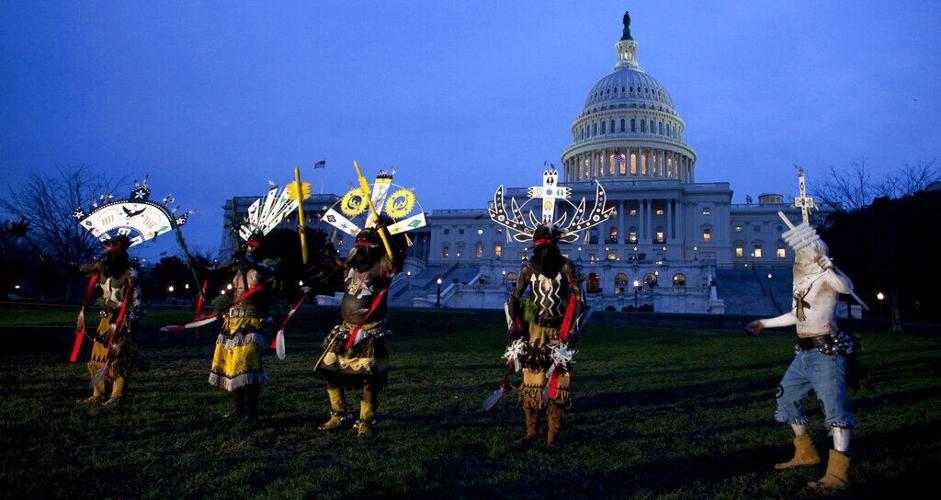
In December 1965, Mary Velasquez Riley stood alongside a contingent of White Mountain Apaches in Washington, D.C., as the official national Christmas tree was lit, the first time a Native American tribe had donated a tree for the seasonal event. Mary rightfully belonged among the delegation as her work among her people had brought them prosperity and recognition as one of the most progressive tribes in the country.
Christmas had always held a special place with Mary since she was born on Dec. 24, 1908, at Fort Apache. Her mother was Apache and her father a Mexican rancher who supplied Fort Apache with produce from his spread. Mary helped milk the cows, slop the pigs, feed and tend to the chickens, turkey, ducks, sheep and goats. Most of her chores had to be done before she headed to school. After school, those cows needed milking once again.
During the influenza epidemic of 1918 and after only three years of education, Mary left school to help care for sick relatives and friends, working with her father as he delivered milk to outlying areas. Only she, her father and an older sister escaped the ravages of the disease.
She never returned to school but sat beside her father as he read the newspaper, developing a keen interest in local and national affairs. She could speak Apache, Spanish and English. Her father, who instilled a strong work ethic in all of his children, also put her in charge of the ranch’s finances.
On March 2, 1935, Mary married for a second time. Peter Kessay Riley had also been born on the White Mountain Apache Indian Reservation. She and Peter reared five children, some of them from her first husband. When Peter entered the military and was away from home for several years, she worked as a housekeeper at the Fort Apache hospital while still maintaining the family farm.
In 1958 Mary was elected to the White Mountain Apache Tribal Council, the first woman on the board. She served, and often chaired, the health, education and welfare committees. She made trips to Phoenix to speak before the state Legislature as well as to Washington, DC, to lobby before Congress on behalf of her people.
Mary’s work ethic served her community well. She is credited with establishing the Fort Apache Timber Company (FATCO) that was started in 1962. By the following year, the company was run solely by the tribe. As its mission statement proclaims, the business was created “to promote the economic development of the White Mountain Apache Tribe and its members, through efficient utilization of the Tribal timber resources; to earn a net profit; to provide business training for members of the Tribe and the White Mountain Apache Tribal Council; to economically and efficiently manufacture lumber or other timber products at a profit while providing employment opportunities for members of the Tribe.” FATCO is still in operation today.
Mary was also instrumental in developing the Alchesay-Williams Creek National Fish Hatchery that stocks and maintains brown and rainbow trout on the numerous lakes throughout the reservation, species that at one time were almost extinct. The hatchery also stocks local lakes with fish listed as threatened or endangered.
Mary and her people are industrious, hard-working individuals. Seeing a chance to bring recognition and wealth to the reservation through entrepreneurial enterprises, the tribe established some of the most desirable locations for tourists from across the country as well as adventurous Arizonans.
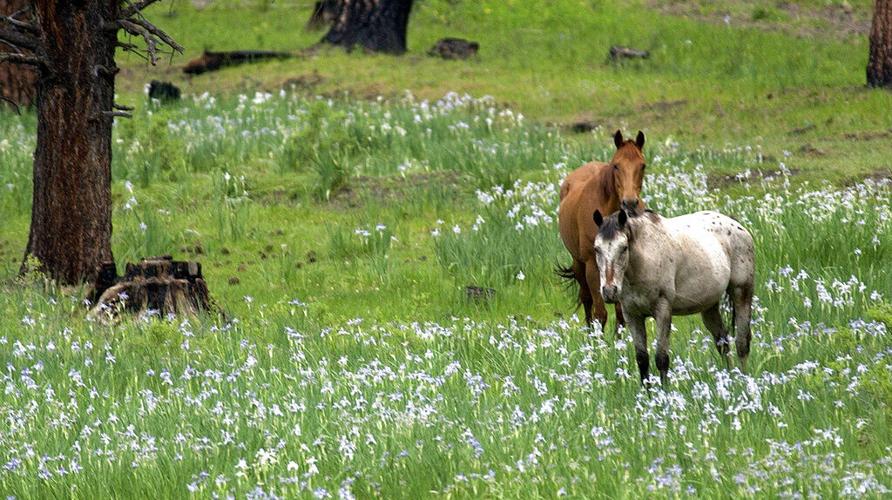
“More than one-third of all fishing in Arizona takes place in the more than 300 miles of fishing streams on the (White Mountain Apache) reservation (which includes about one-half of all Arizona’s trout streams),” a reporter noted in 1967. “Twenty recreational lakes, created just since 1957, afford almost unlimited swimming, boating, and camping opportunities. More than 700 well kept campsites, equipped with picnic tables, toilet facilities, and fireplaces, are provided free of charge. Antelope, elk, bear, javelina, predators, and quail abound and the tribe will provide guide service to anyone who wants it.”
Mary also encouraged the development of what is now the Sunrise Park Resort near Greer, a successful year-round recreational facility that offers some of the best skiing in the winter months as well as hiking, biking, fishing and rock climbing during the summer. There is now even a zip-line, something certainly added after Mary’s involvement with the growth of the area.
She was also proud of her efforts to have a high school built on the reservation.
All of these enterprises employed energetic and productive White Mountain Apaches who had decided they would rather compete with the white man than fade into oblivion. As Mary said in a 1977 interview, “We’re living in a different world now.”
After serving for 20 years on the council, Mary retired in 1978. In 1984 she was recognized by the state for her guidance as well as her involvement in the progress of the White Mountain Apaches.
Mary died on Oct. 5, 1987 and is buried in the Fort Apache Cemetery beside her husband Peter. She was inducted into the Arizona Women’s Hall of Fame in 1988.
Back in 1965 when Mary was in Washington, DC, to celebrate the lighting of the national Christmas tree, then Indian Commissioner Phileo Nash proclaimed about the White Mountain Apaches that it was “probably the most developed reservation in the country. Economic progress has been under way under leadership of the tribal council for quite a number of years. This is a tribe that knows what it is doing.” Mary was part of those efforts to establish the White Mountain Apaches as an entrepreneurial force to be reckoned with.
The Mary V. Riley Building on the reservation houses the tribal education department.
See the A1 covers from the past for this day in history.

