

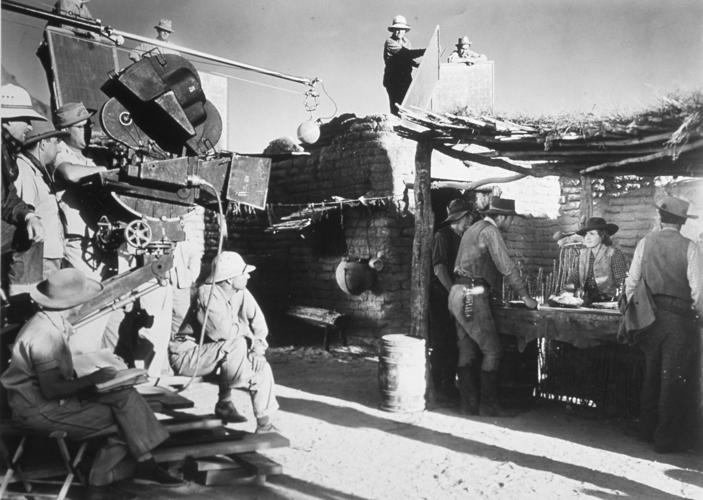
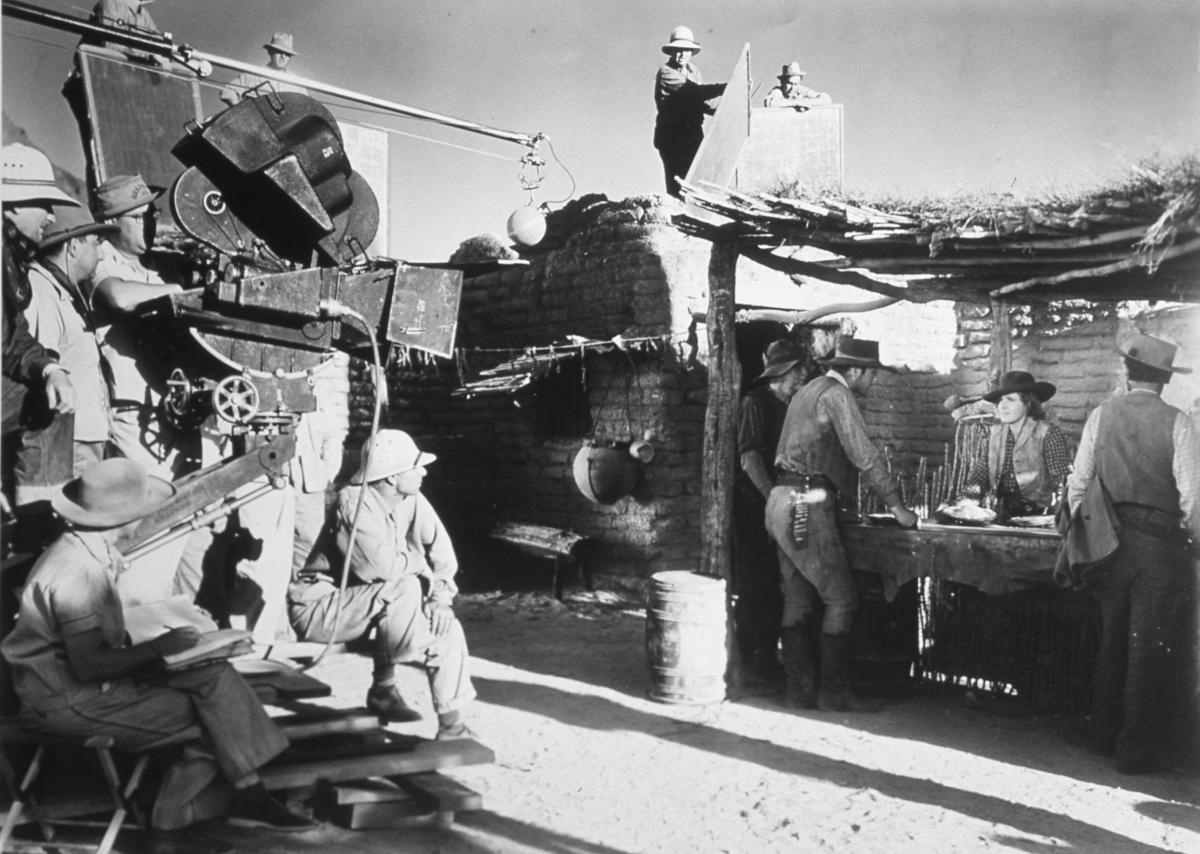
After the Old Tucson movie set was dedicated in 1940, Hollywood movie star Jean Arthur lauded Tucson for its own stars — those in its dark skies. “You have millions more here than any place else in the world,” she marveled.
The famous film set came to be because a best-selling writer, Clarence Budington Kelland, of Long Island, New York, took a tour of Arizona in 1936.
These movies were filmed in part in Tucson and surrounding areas from 1970 to today. In addition to these more modern motion pictures, Old Tucson Studios has hosted nearly 300 productions since 1939.
Video by Pascal Albright, Arizona Daily Star
He was known for his book series Mark Tidd and Scattergood Baines (and his short story “Opera Hat,” the basis for the 1936 film “Mr. Deeds Goes to Town” starring Gary Cooper and Jean Arthur and the 2002 movie “Mr. Deeds” starring Adam Sandler) and for his magazine serials in The American Magazine and The Saturday Evening Post.
The purpose of his trip was to gather material for a serial he was planning to write for The Saturday Evening Post on trailer life, called “Fugitive Father.” He planned an overnight stay in Phoenix but ended up staying two weeks and fell in love with the state. The following year, Kelland purchased a house and grove with 20 acres of orange trees, grapefruit trees and date palms in the Phoenix area and began wintering there in the sweet citrus aroma.
By 1938, Kelland had begun researching the history of Tucson for the first of what was billed as a trilogy on Arizona’s past.
The Arizona Republic newspaper of March 27, 1938 reported: “For some weeks now he has been deep in Arizona historical research and already has roughly plotted the course of, not one but three novels centered in this state.”
In November that year, Arizona Highways magazine shared that “Wesley Winans Stout, editor of the Saturday Evening Post, informs us that Clarence Budington Kelland is preparing a serial on Arizona for the Post entitled ‘Arizona.’”
By December 1938, the galley proofs were completed of what would be a magazine serial and then the novel “Arizona” — about a female pioneer, Phoebe Titus, in Tucson during the U.S. Civil War and her struggle to conquer an untamed territory.
That month Harry Cohn, president of Columbia Pictures, read them and bought the movie rights.
These movies were filmed in part in Tucson and surrounding areas from 1970 to today. In addition to these more modern motion pictures, Old Tucson Studios has hosted nearly 300 productions since 1939.
Cohn later chose Wesley Ruggles, director of the 1931 Academy Award-winning Western called Cimarron, to direct the movie version of the novel “Arizona” and borrowed Claude Binyon, scenarist (screenwriter), from Paramount Pictures.
The duo of Ruggles and Binyon traveled to Tucson in February 1939 within a few days of each other, Ruggles to get a feel for the atmosphere and Binyon to gain historical knowledge of Tucson’s past for the movie script.
Blast from the past: Photos of movie actors in Tucson

Actors Glenn Ford, left, and Van Heflin on the set of the Western classic, "3:10 to Yuma" at Old Tucson in 1957.
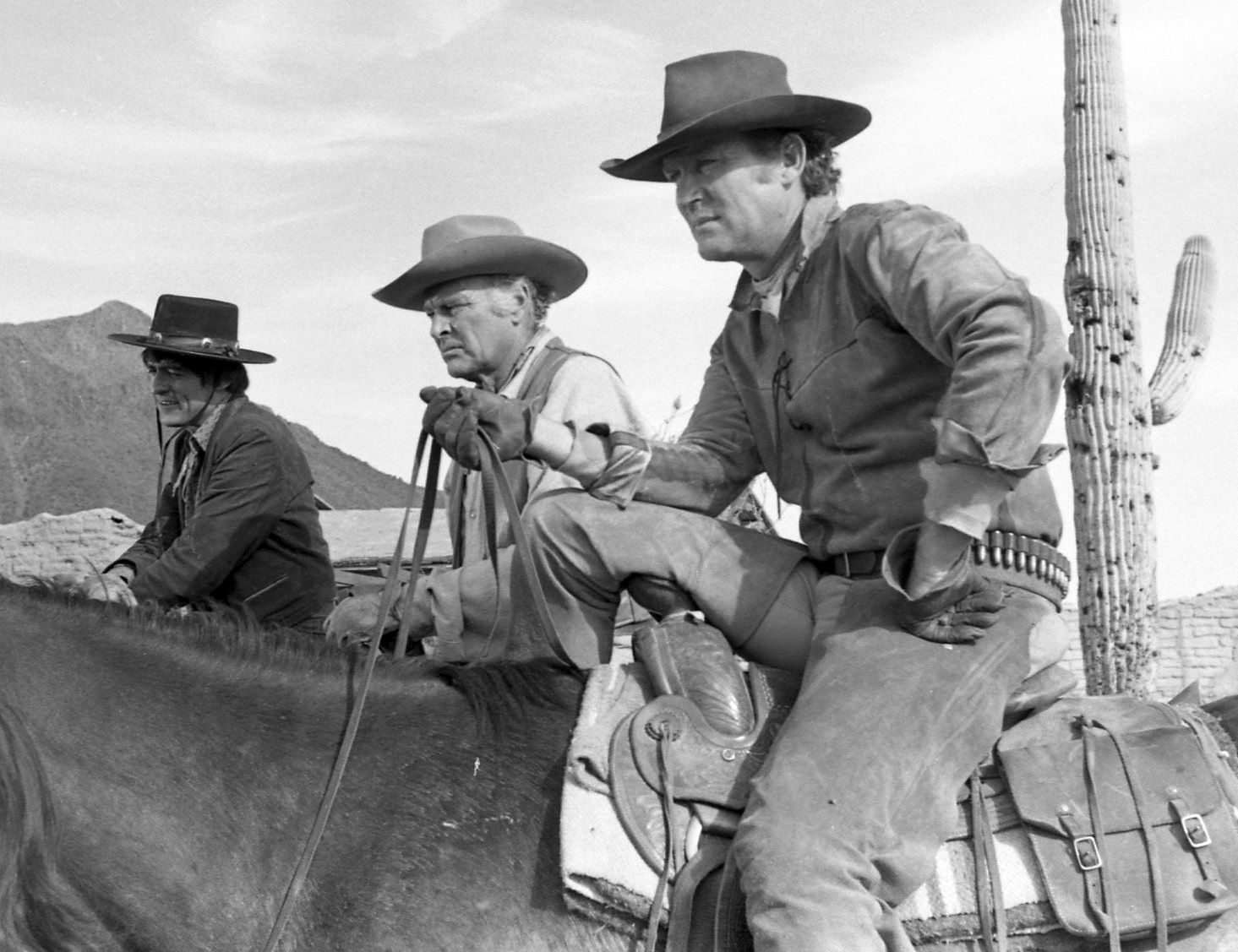
The cast of the televsion show "High Chaparral" on set at Old Tucson in May, 1968. From left, Henry Darrow, Leif Erickson and Don Collier, who lived in Tucson.

Actor Robert Redford during a press conference before a fundraiser for Rep. Morris K. Udall's at the Doubletree Hotel in Tucson on September 25, 1981.

Actor Brian Keith works with a movie camera on horseback on the set in the Tucson Mountains of "Scandalous John" in 1970. It's the story of a one-cow cattle drive and the efforts of an old man to save his historic land from obliteration.

Paul Newman gets makeup on the set of "The Life and Times of Judge Roy Bean" at Old Tucson Studios in 1971.

Actress Lilia Skala, left, with actor Sidney Poitier on the set of "Lilies of the Field" in Tucson in December, 1962. Poitier won an Oscar for Best Actor for the movie. He was the first African-American to win the award.

Actor Clayton Moore on the set of the long-running TV series, "The Lone Ranger," at Old Tucson in 1957.

Actor James Hampton as Howard Clemmons on a camel on the set of the movie comedy "Hawmps" at Old Tucson in 1975.

Actor John Saxon, left, with legendary actor/director John Huston on the set of "The Life and Times of Judge Roy Bean" at Old Tucson on December 2, 1971.

Actor Craig T. Nelson, who attended the University of Arizona on a drama scholarship, waves to the crowd at the 1990 UA Homecoming parade on the UA Mall. Nelson struggled after college, but got a good role in the Al Pacino film, "And Justice for All." He went on to a lead role in Steven Spielberg's "Poltergeist." But he may be best known for the TV series, "Coach."

Cleveland Indians baseball players take a break from Spring Training in the 1950s to visit Old Tucson Studios. From left, Early Wynn, Don Mossi, Bobo Lemon Hal Narango, Jim Hegan, Jim Hegan, George Strickland, Bobby Avila, Hank Aguirre, and Hoot Evers chat with actor John Ireland, with rifle. Ireland played Johnny Ringo in "Gunfight at the O.K. Corral," filmed at Old Tucson in the mid-1950s.

Actress Jayne Mansfield with boyfriend (later husband) MIckey Hargitay, left, and notable actor Broderick Crawford at Tucson International Airport in March, 1957. The trio was in town for a party at a local dude ranch. Actress Mariska Hargitay is their daughter.

During rehearsal at the Santa Rita Hotel, actors Loyal T. Lucas, Jean Engstrom, Donald Cook and Harvey Korman (later known for "The Carol Burnett Show" and the movie "Blazing Saddles") get ready for their performance of the play, "The King of Hearts," as part of the Tucson Winter Playhouse in January 1956. The play was to be under a tent at the Rillito Park.

Ricky Nelson gets manhandled by co-stars Dean Martin and John Wayne on the set of Rio Bravo at Old Tucson on May 10, 1958.

(Drew Barrymore, left, and Whoopi Goldberg with Matthew McConaughey in "Boys on the Side" in 1995, which was filmed at historic Teatro Carmen, the Elysian Grove Market, and Tucson General Hospital.

Actors Anthony Edwards, far right and Robert Carradine, center, stumble with their suitcases during a scene for the film, "Revenge of the Nerds" on Jan. 30, 1984. Annette Knapp, far left and Susan Schellmeyer, were extras who played the part of picnickers on the University of Arizona Mall. The movie was filmed on areas in and around the campus.

Actor Cliff Robertson, right, and Rep. Morris K. Udall, D-Ariz., second from right, discuss the arts and the prospects for federal supporting funds with representatives of Tucson theater groups at the Invisible Theatre on Aug. 21, 1978. Robertson was black-listed after unraveling major fraud at Columbia Pictures in the 1970s.

Ross Hunter, left, and actor Peter Finch, standing, right, on the set of "Lost Horizon" at Ryan Field west of Tucson on May 1, 1972. 500 extras were recruited for the remake of the original film from 1937. Finch won a posthumous Oscar for Best Actor for the movie "Network" in 1976.

Actor Josh Brolin, who played Jimmy Hickok in the television show "The Young Riders" on the set at Old Tucson Studios in August, 1989. Brolin is now an accomplished actor, with noted roles in "American Gangster" and "No Country for Old Men."
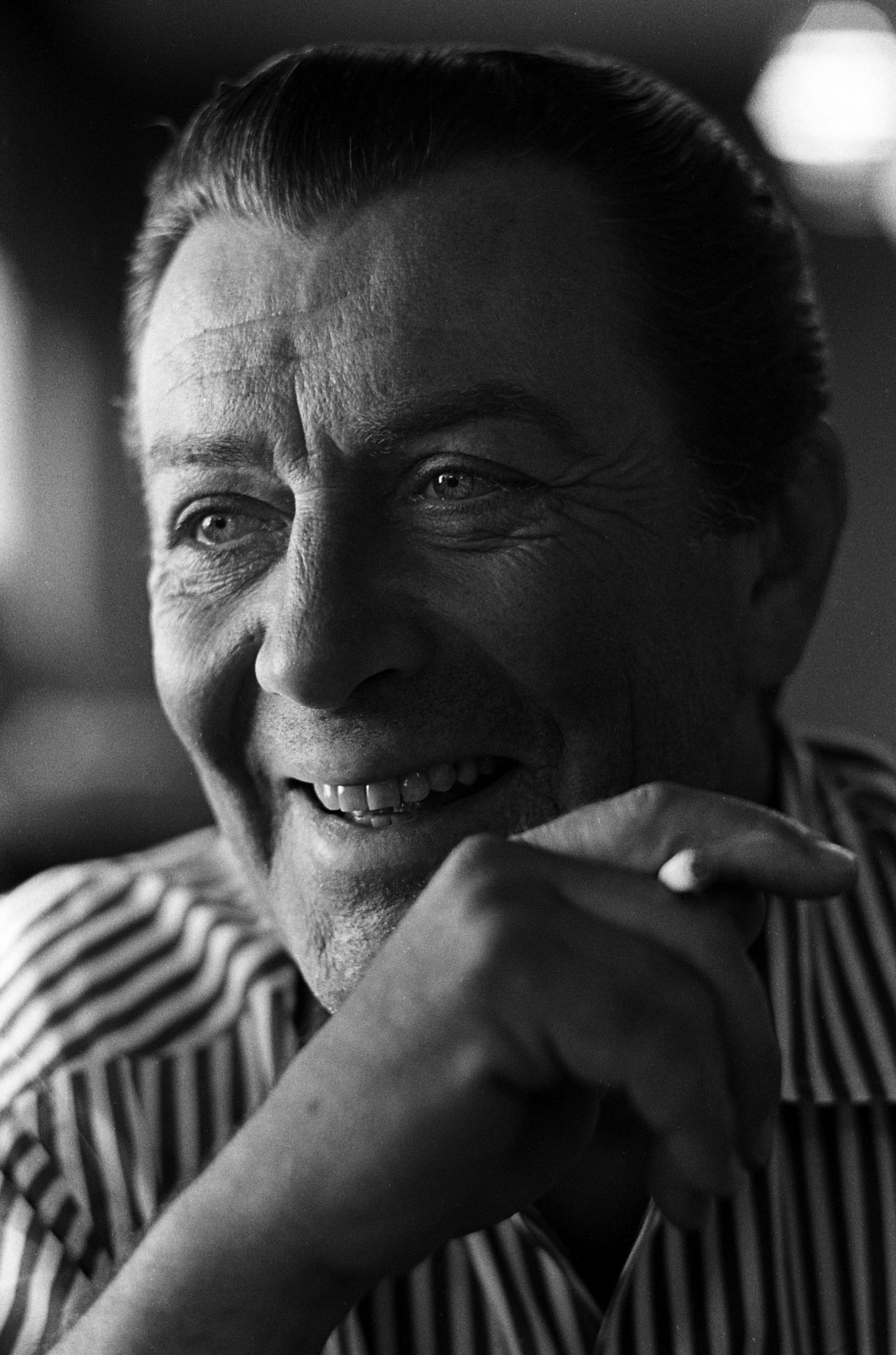
Actor Robert Taylor at the Sands Hotel in Tucson in May, 1966. He was filming the movie "Johnny Tiger" at Old Tucson Studios.
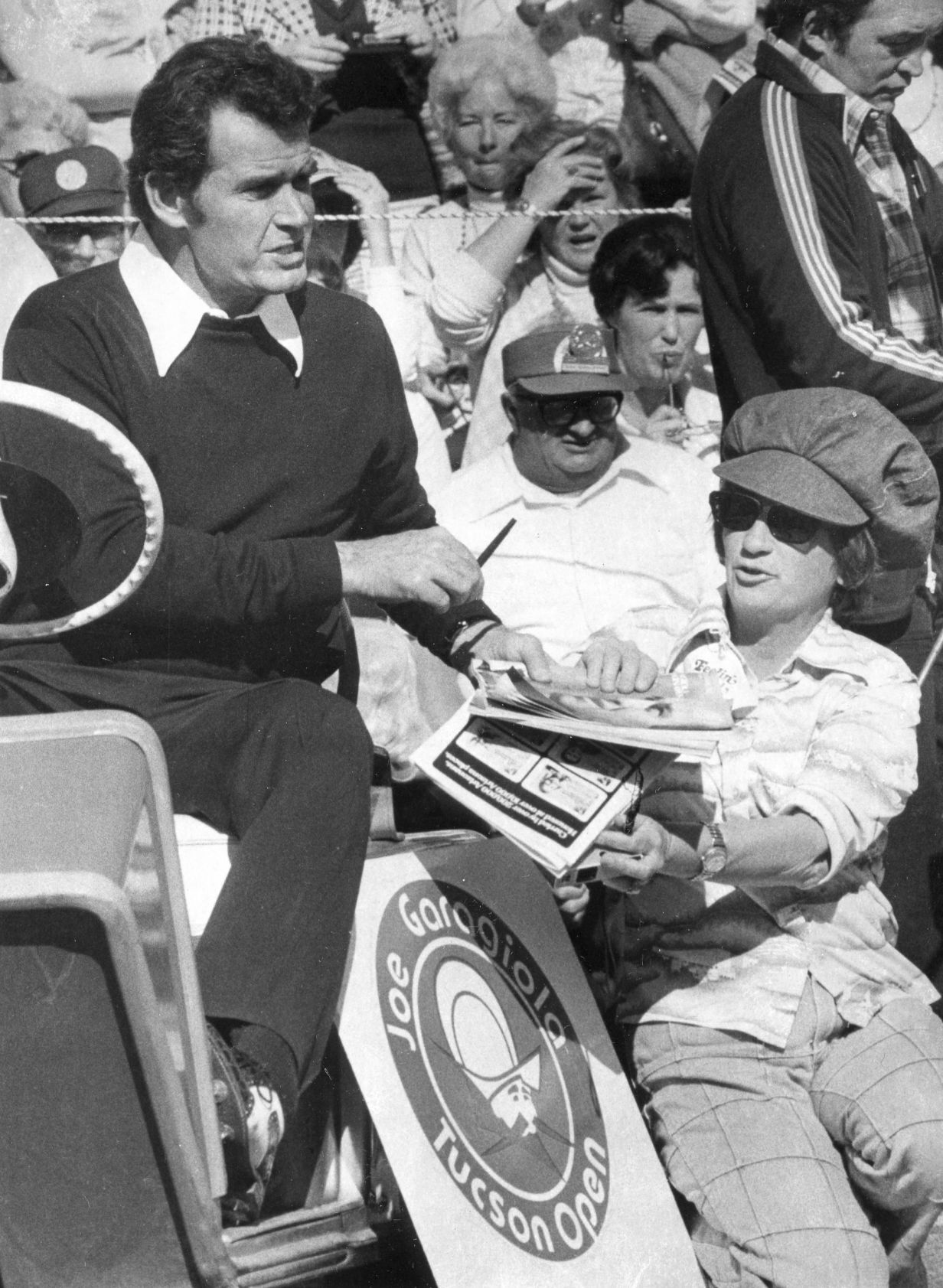
Actor James Garner signing autographs during the the Joe Garagiola Tucson Open in 1970s.

Actor Jack Lemmon shivering on a cold day in November, 1955, during filming of "It Happened One Night" at the Lewis Douglas ranch near Sonoita. Lemmon was forced to spend long periods of time in the water for a "dunking" scene.
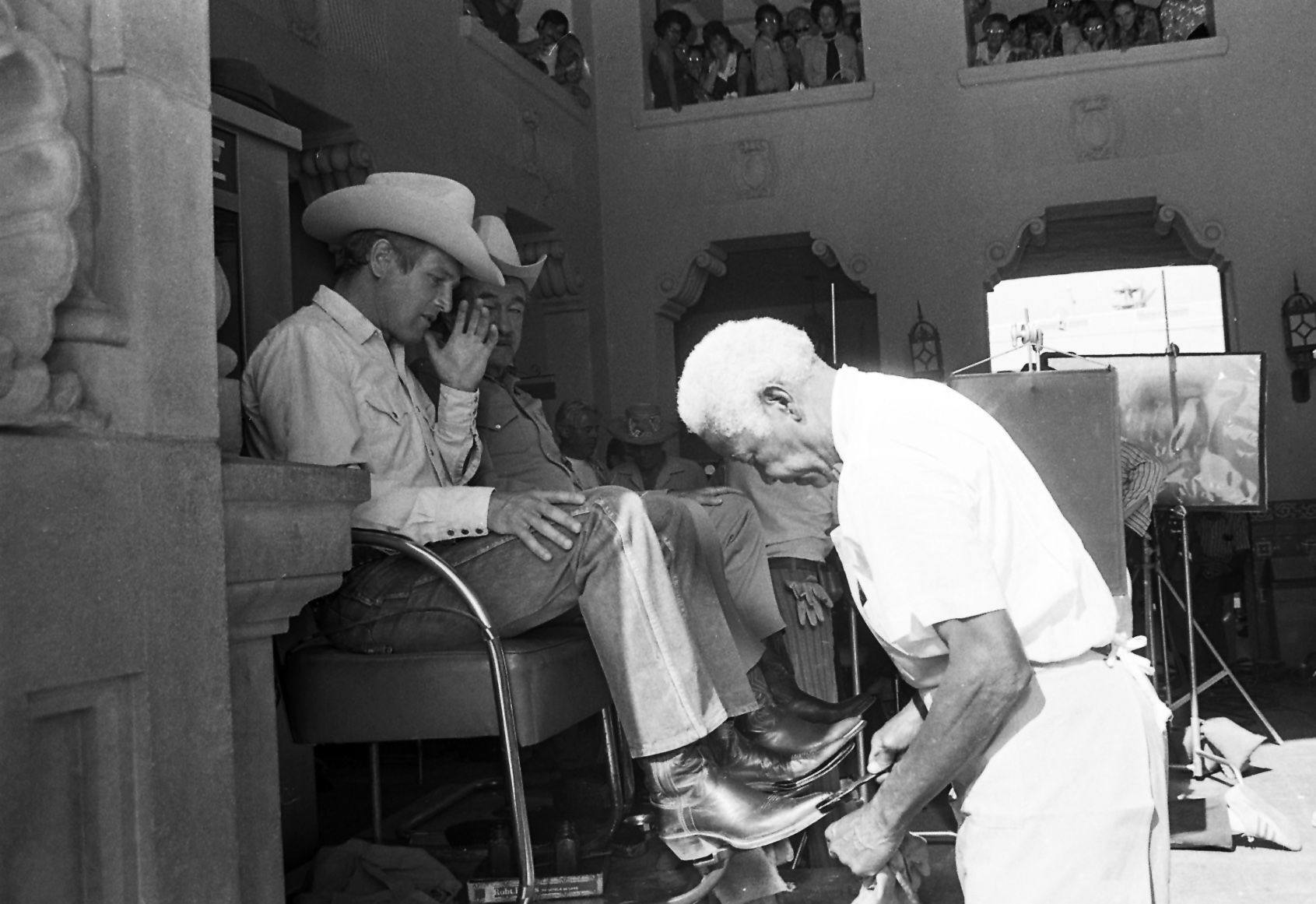
Paul Newman gets his shoes shined at the historic Pima County Courthouse on the set of the movie "Pockey Money" in 1971. Onlookers packed the balcony to watch the legendary actor at work. The movie was filmed throughout S. Arizona, including Patagonia, Empire Ranch and Ajo.

Actor Sebastian Cabot, also known as the narrator for the first three Disney "Winnie the Pooh" movies, at the Pioneer Hotel in Tucson on Oct. 2, 1963. Tucson Citizen

Actor, author and conservationist Ted Danson talks with Mindy Miller before the start of his presentation during the fifth Tucson Festival of Books at the University of Arizona in 2013.

Actor Stewart Granger in a truck on his Yerba Buena Ranch outside Nogales, AZ. in 1958. It was a favorite getaway for actors, including John Wayne

Actor Bill Murrary watches from courtside seats as Arizona hosts Cal basketball at McKale Center in 2010.

Actor Michael Landon signs autographs at the Cigna Michael Landon Tennis Classic at Randolph Tennis Courts in Tucson on April 11, 1987.
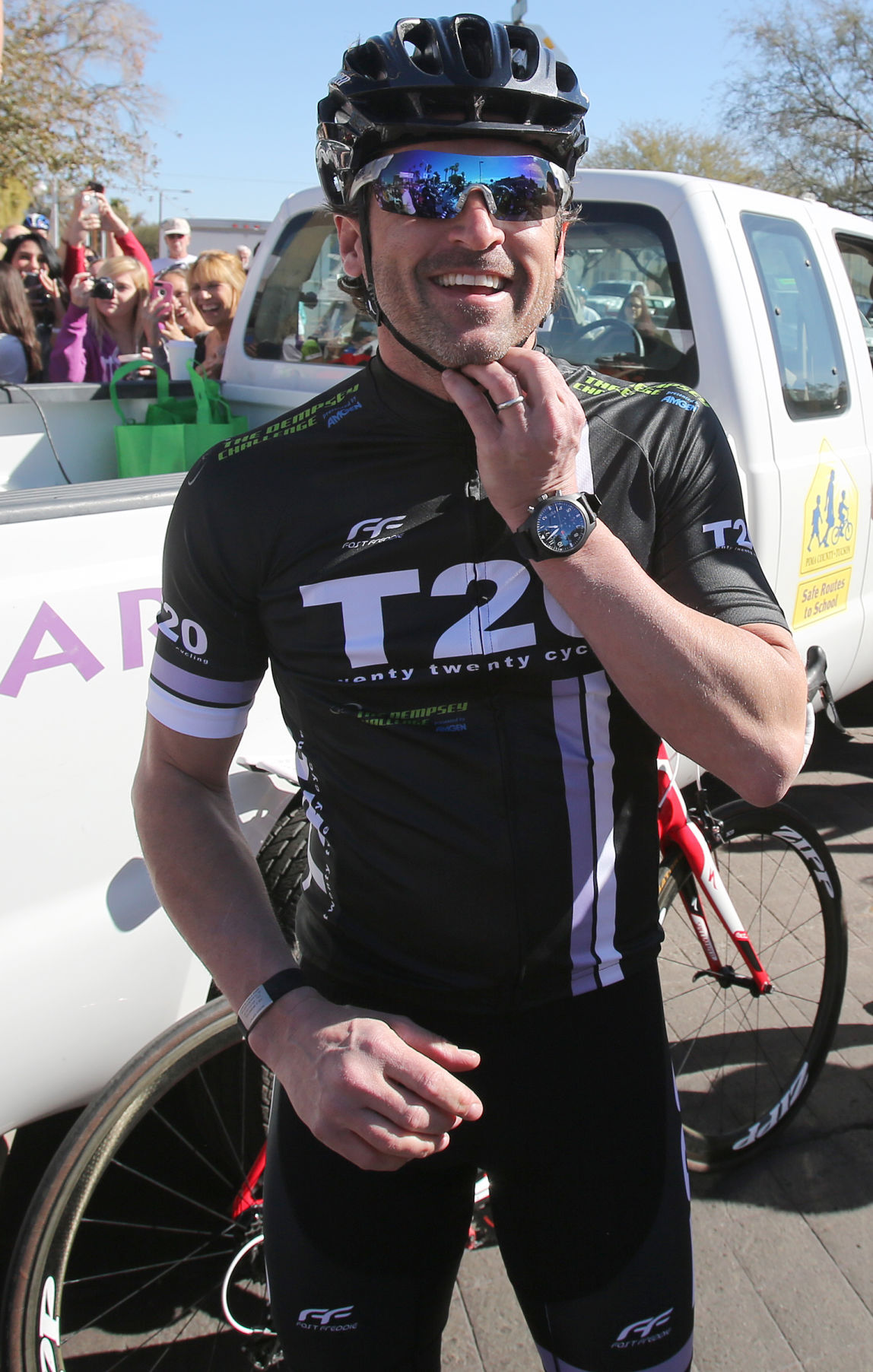
Actor, Patrick Dempsey strapping on his helmet as he is getting ready to take part in the Rode On bicycle race in Tucson in 2013.
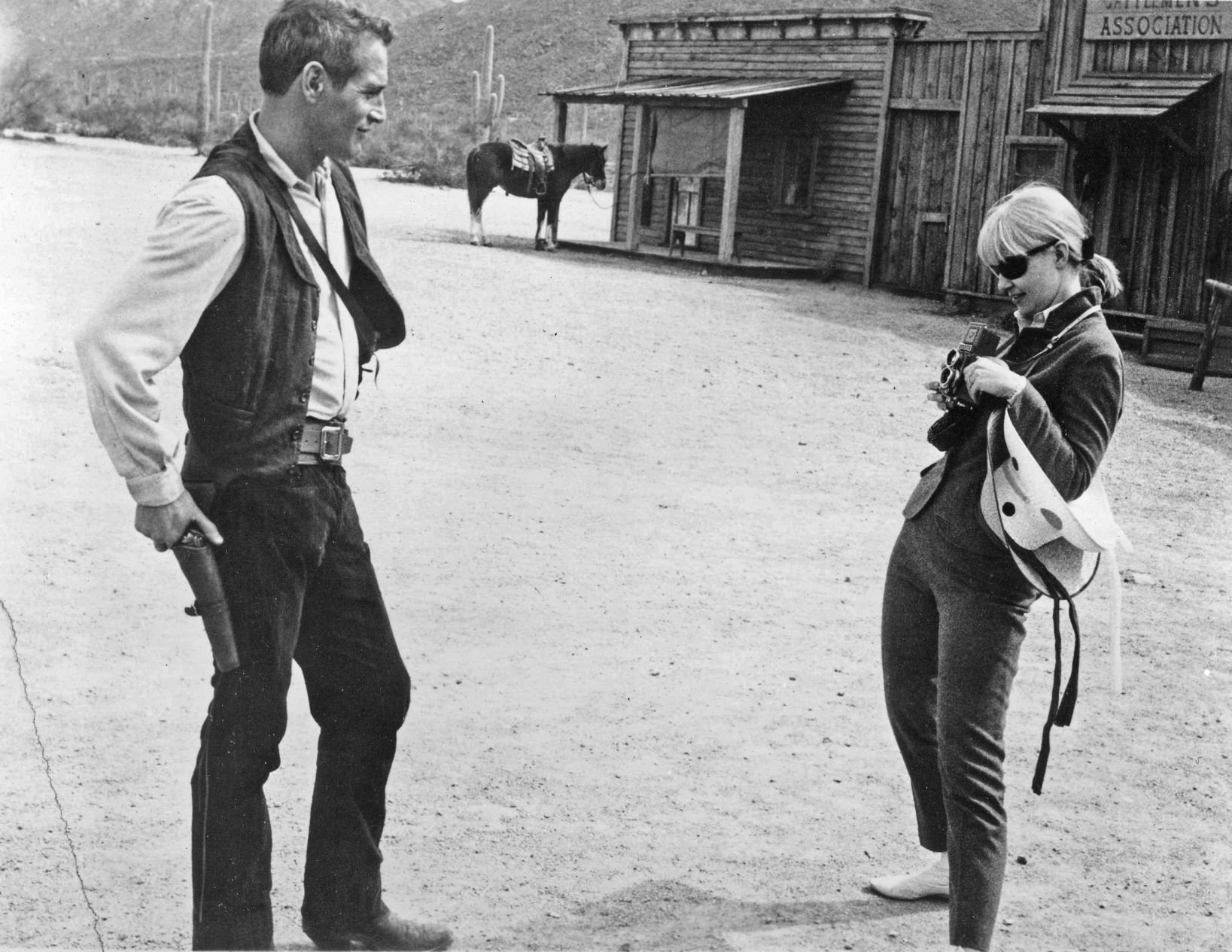
Actor Paul Newman has his photo taken by his wife, actress Joanne Woodward, during a break in filming of "Hombre" at Old Tucson in 1967.
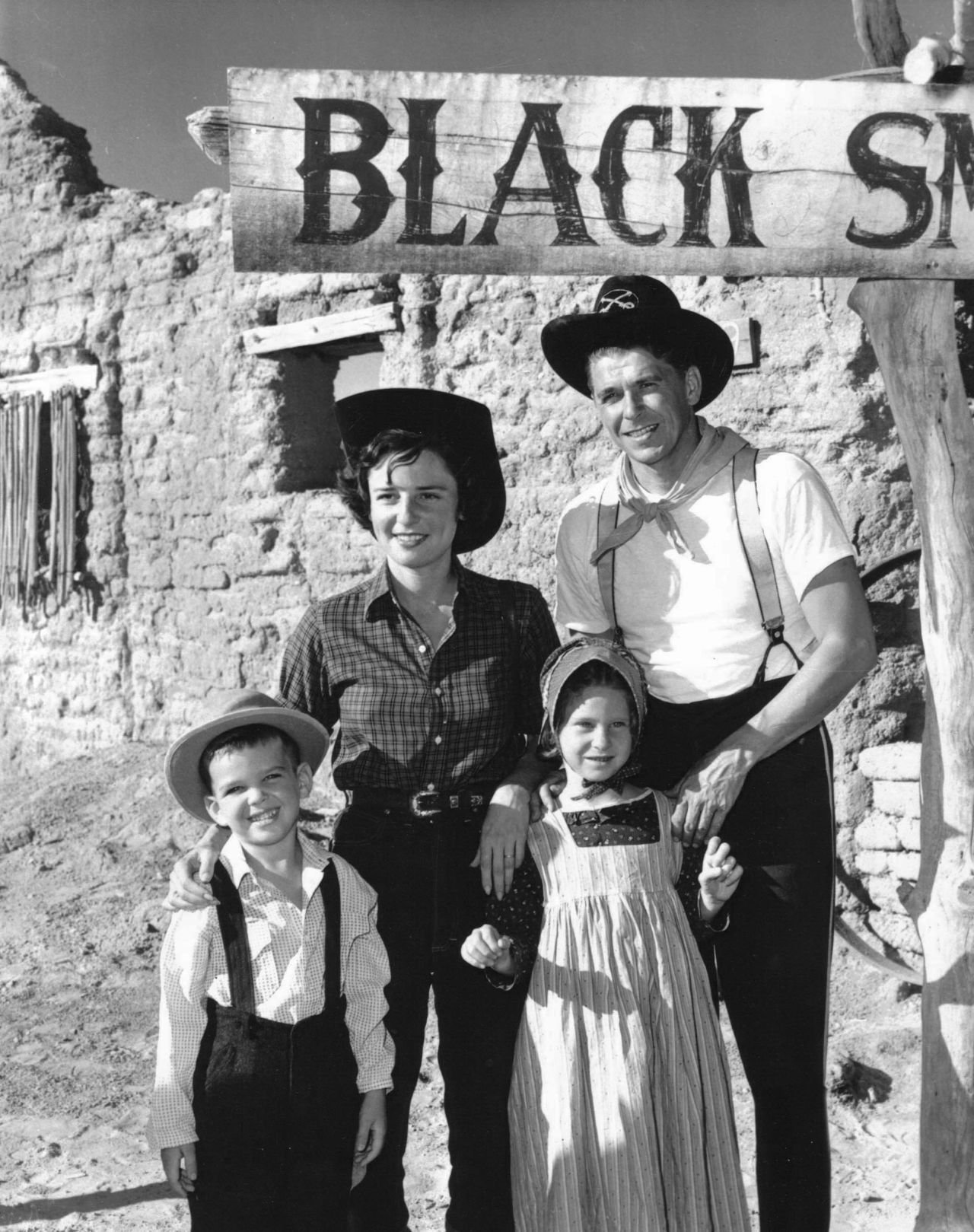
Jane Loew, with children Boyd Jr. and Lynda, posing with Ronald Reagan at Old Tucson during the filming of "The Last Outpost," circa 1950.

Moses Gunn (left) and Merlen Olsen (right) rehearse a scene from one of the many episodes of "Father Murphy" filmed at Old Tucson from 1981-83.Old

Actors Josh Brolin, left, Stephen Baldwin, center with hat, Gregg Rainwater and Ty Miller in between takes on the set of the televsion show "The Young Riders" at Old Tucson Studios in August, 1989.

Director John Sturges, left, with actor Clint Eastwood on the set of "Joe Kidd" at Old Tucson on December 2, 1971.
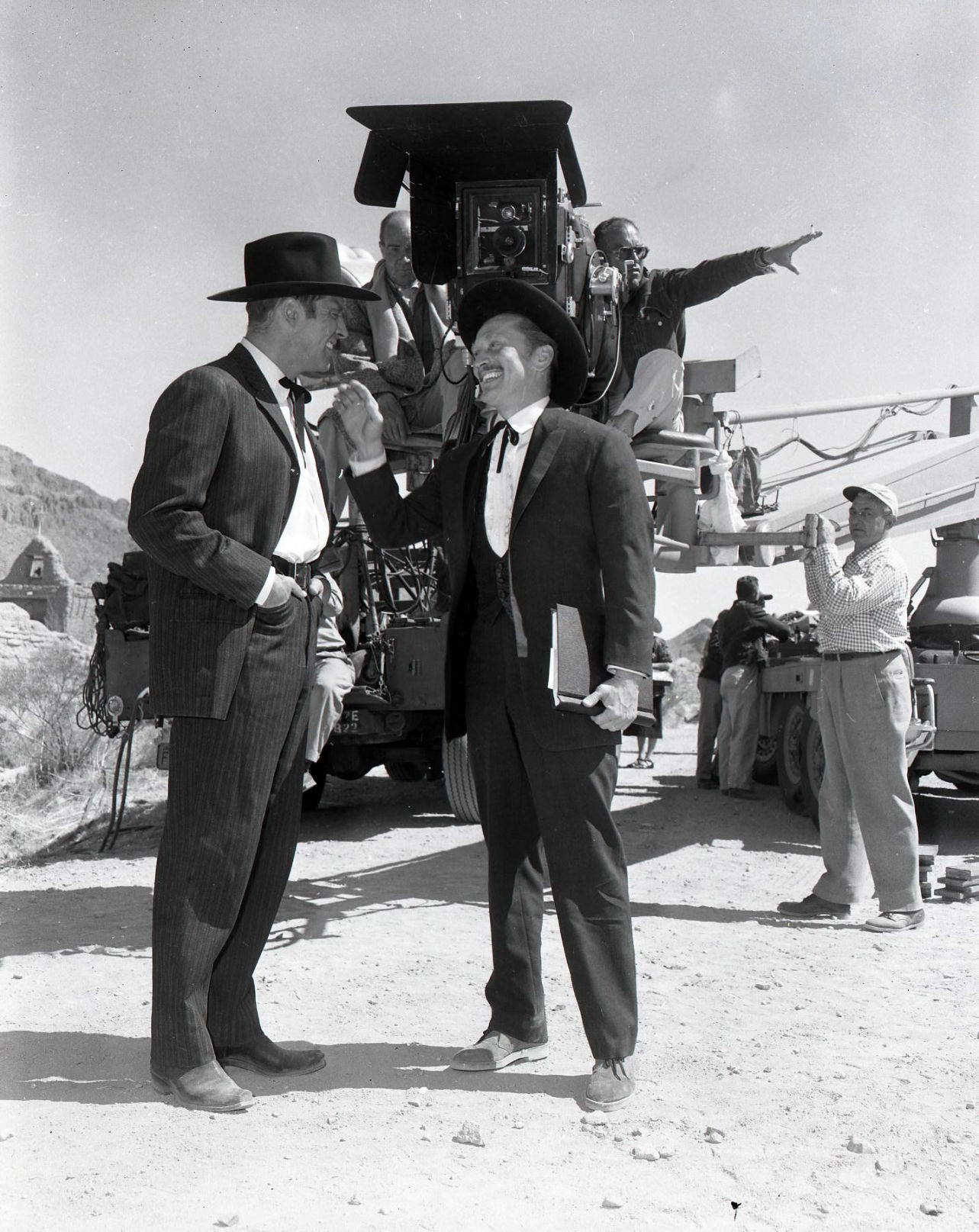
Burt Lancaster, left and Kirk Douglas chat during a break in fliming, "Gunfight at the O.K. Corral" at Old Tucson in 1957.

Actor Efrem Zimbalist Jr. catches some rays on the set of "Reward" at Old Tucson on June 15, 1964. Director is Serge Bourguignon who directed part of the movie from the saddle as he is an expert horseman.

Actress Michelle Carey (best known for her role in "El Dorado" with John Wayne) on the set of "Scandalous John" at Old Tucson in November, 1970. Carey spent most of her career in supporting TV roles, including three appearances in "The Wild Wild West."

Writer-director Burt Kennedy, right, on the set of "Young Billy Young," aka "Who Rides with Kane" at Old Tucson in July, 1968. Actor John Anderson is at left. Kennedy, a decorated WWII veteran, also directed "The War Wagon," "Support Your Local Gunfighter," and episodes for several TV show.

Actors Gene Wilder, left, and Sidney Poitier during filming of the movie "Hanky Panky" at 6th Ave. and 18th St. in Tucson on Oct. 8, 1981.
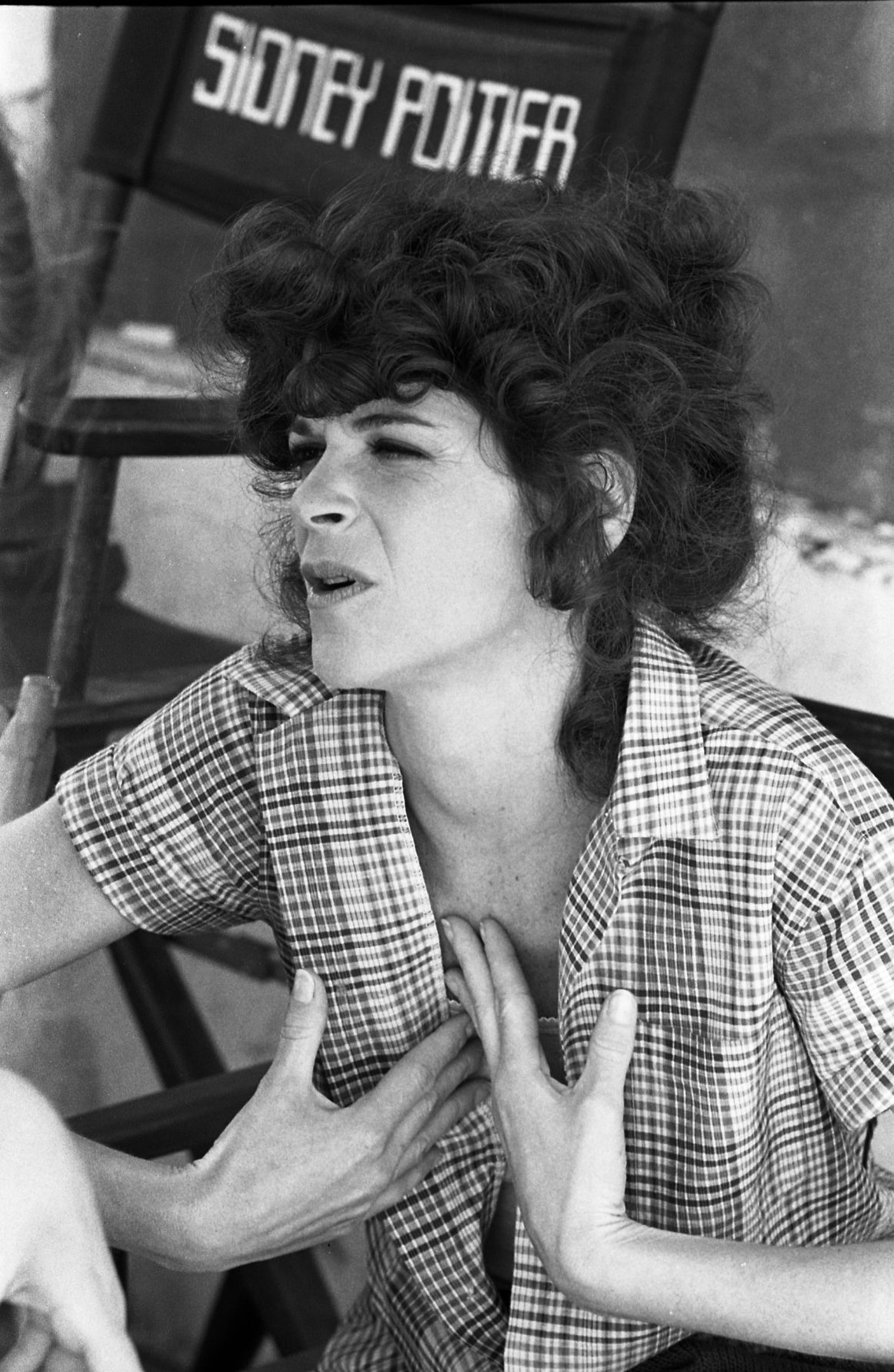
Actors Gilda Radner during filming of the movie "Hanky Panky" at 6th Ave. and 18th St. in Tucson on Oct. 8, 1981.

Actor Harrison Ford takes a break while reading his script during filming for "The Frisco Kid" on the road to Sasabe southwest of Tucson on Nov. 30, 1978.

New York Jets quarterback Joe Namath, left, and actress Ann-Margaret arrived at Tucson International Airport on April, 10, 1970, and were greeted by a "posse" who branded them as horse thieves. The two were in Tucson for filming of the movie, "C.C. Ryder and Company," written by Ann-Margaret's husband, Roger Smith (a University of Arizona graduate).
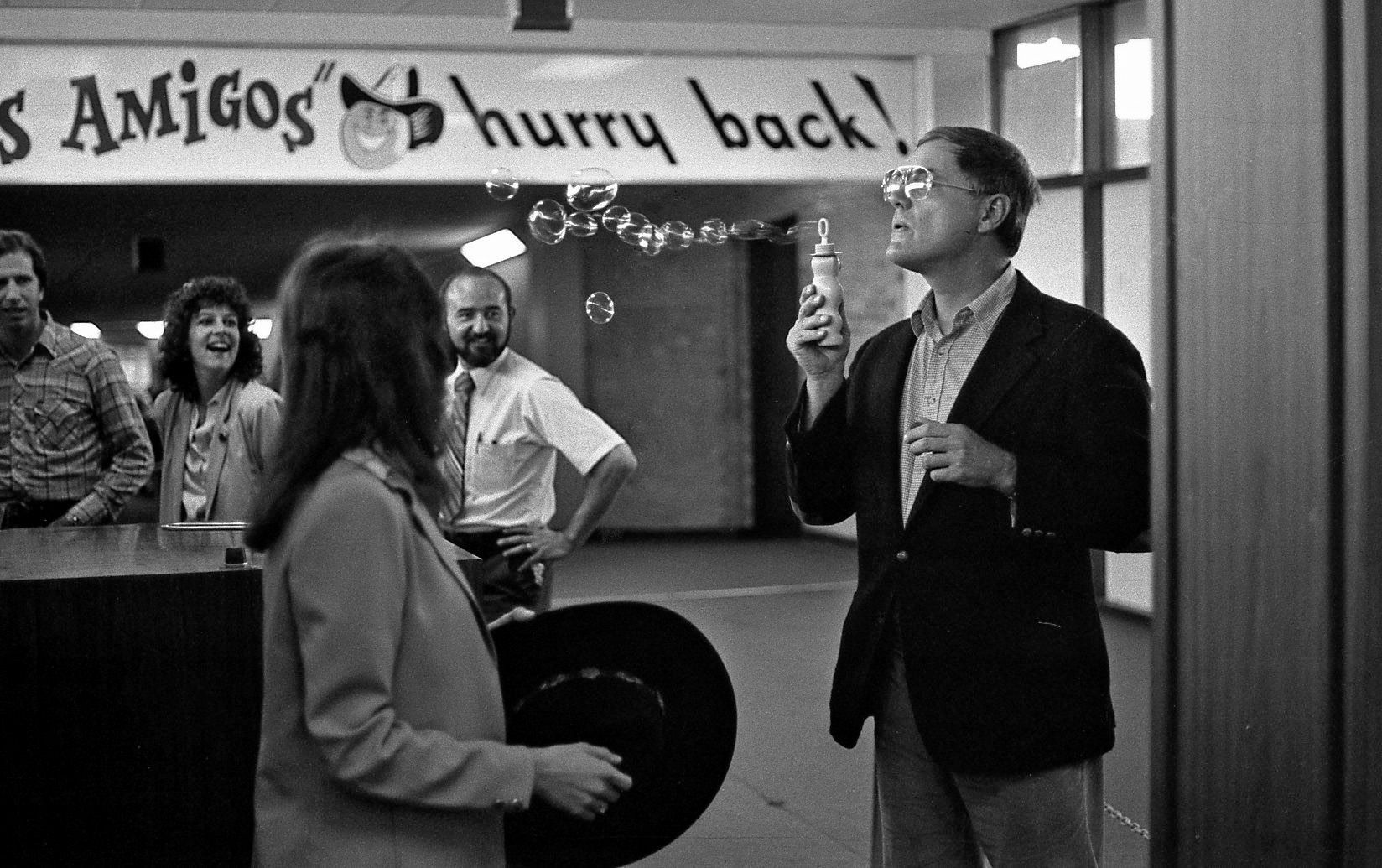
On his way to Mexico to film a movie, actor Larry Hagman had a two-hour layover in Tucson on March 10, 1982. While waiting, Hagman, better known as J. R. Ewing of the popular TV show "Dallas," showed off his anti-smoking device to airport employees. A reformed smoker, Hagman carried a teddy bear-shaped plastic bottle. When he pressed its tummy a ring would pop up so he could blow bubbles. Hagman said it helped when he had the urge to smoke.
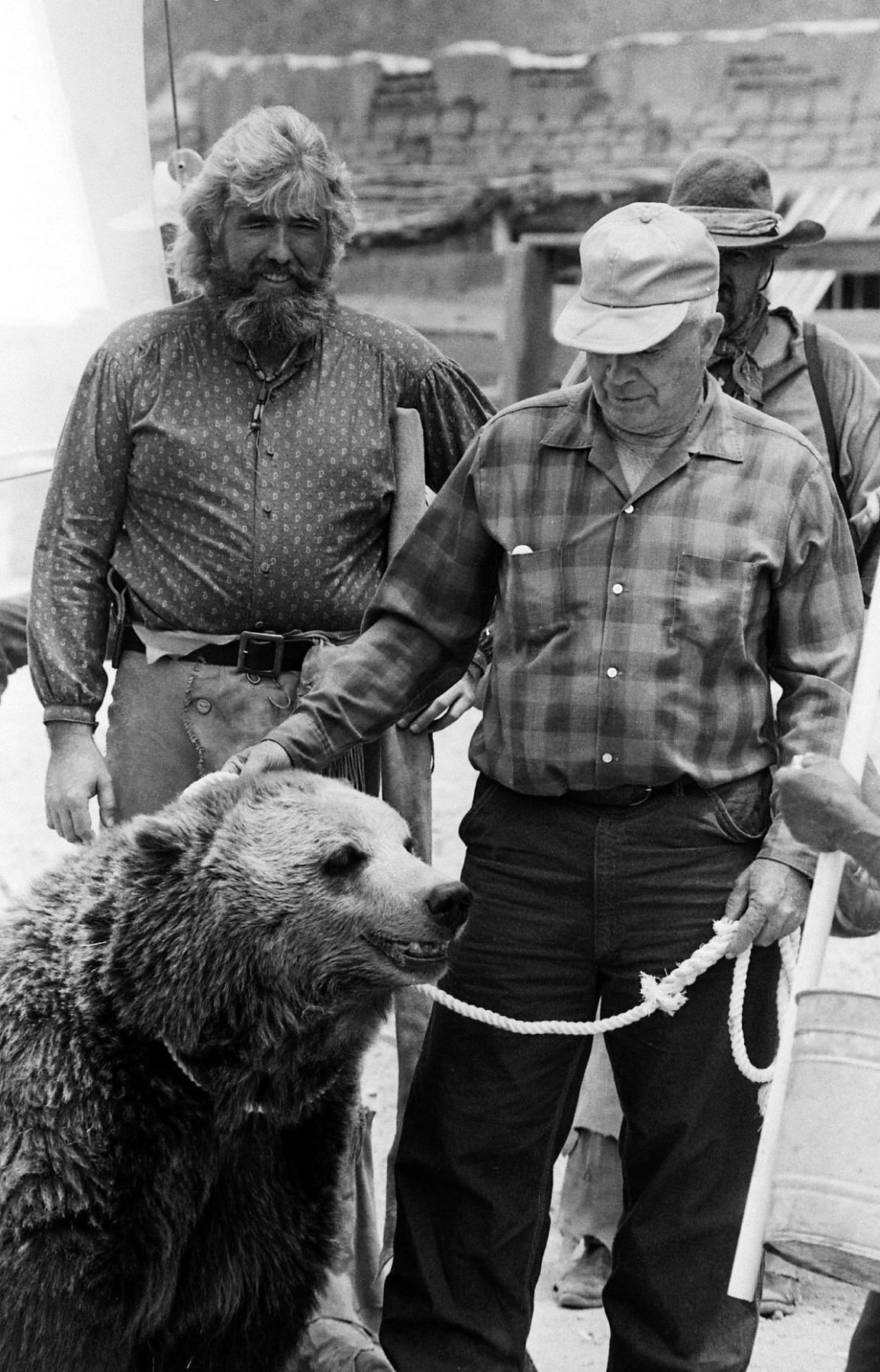
"Bozo", the grizzly bear, is petted by owner and trainer Lloyd Beebe as actor Gene Edwards stands by on the set of "The Legend of Grizzly Adams" at Old Tucson in 1989.

Tourists watch actor Cameron Mitchell, foreground on horseback, during filming at Old Tucson in 1977. It was likely for "How the West Was Won," starring James Arness and filmed at many locations throughout the West.

Before he was the Governator, the Terminator or even Conan the Barbarian, Arnold Schwarzenegger was a 28-year-old aspiring actor promoting his movie, "Stay Hungry," during a visit to Tucson in August 1976. The Austrian-born newcomer was a relative unknown except for those in the international body-building world who knew him as the former Mr Universe and Mr Olympia. During his stay he gave interviews to the local media, worked out at the gym of a friend, Carlos Rodriguez, and took a dip in the pool at the Doubletree Inn.
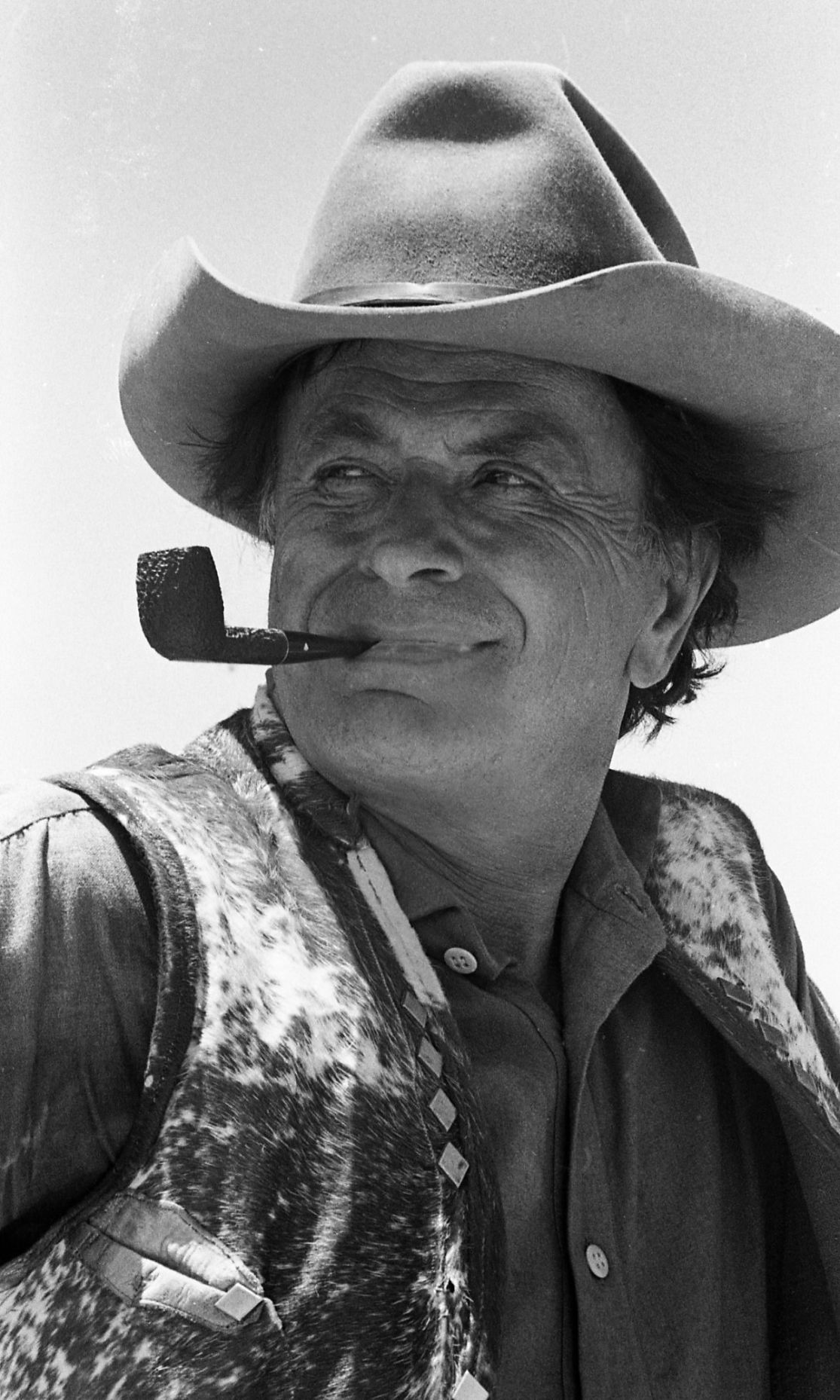
Actor Noah Beery Jr. at Old Tucson on June 5, 1968. Beery was best-known as James Garner's on-screen father in "The Rockford Files."

Actor William Wintersole and crew of the movie "Moonfire" chat with Tucson Mayor Jim Corbett at Tucson City Hall on August 20, 1970. The synopsis on imdb: "Truckers battle a Nazi who has hidden out in Mexico." Probably not one of the bigger film productions in Tucson's history.
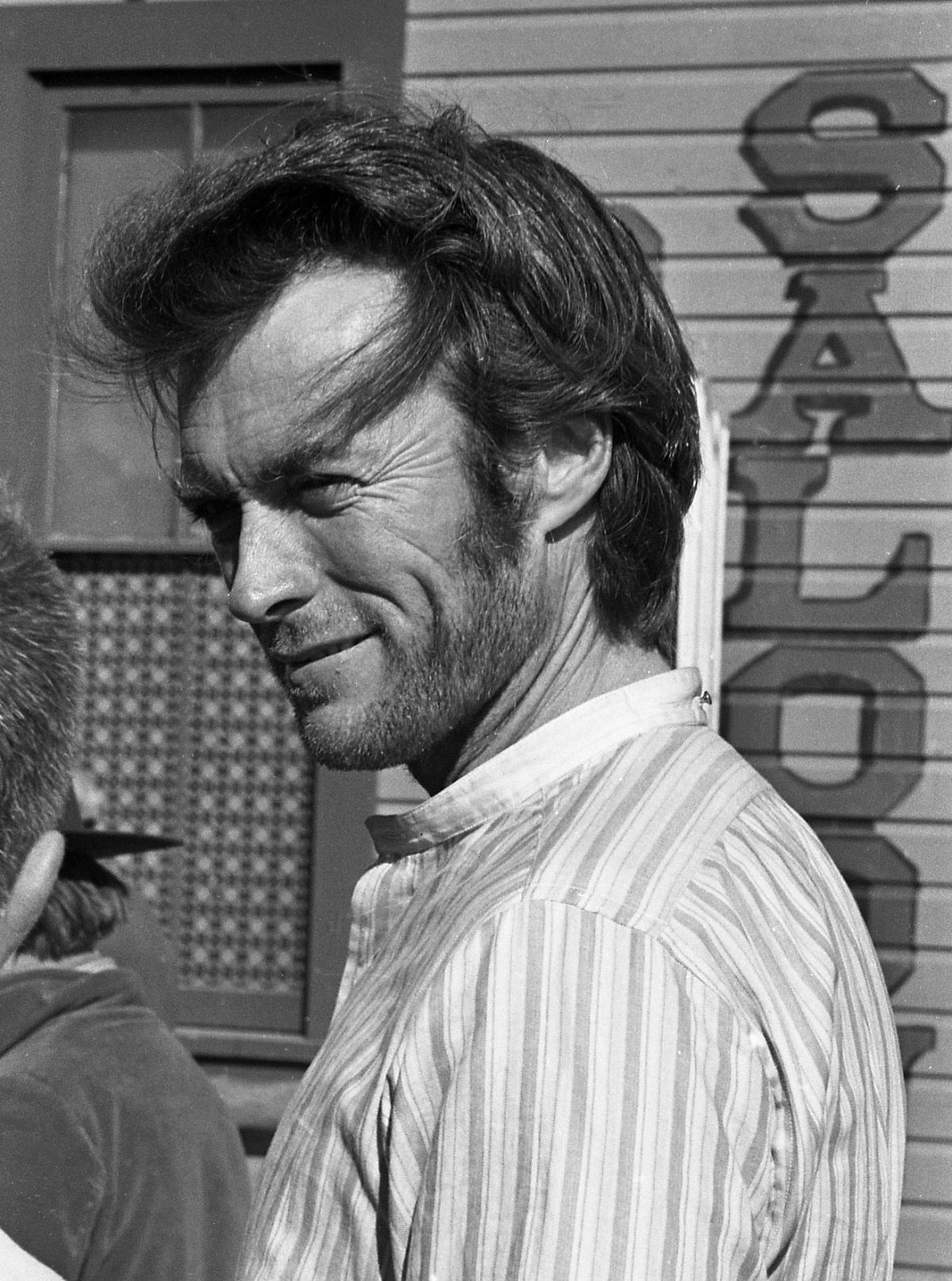
Clint Eastwood as "Joe Kidd" in Old Tucson on Dec. 2, 1971. The original screenplay for the movie was written by Elmore Leonard.
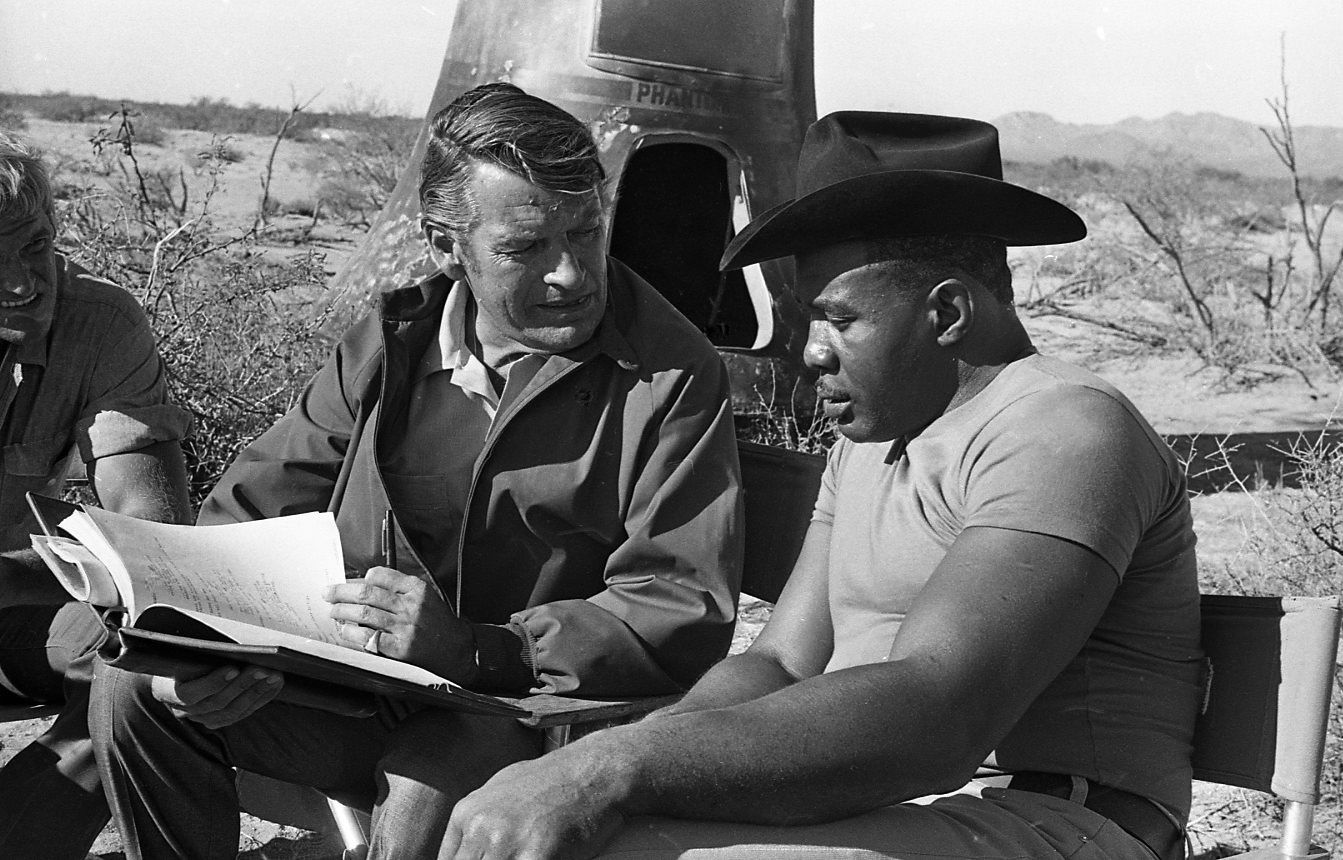
Actor Richard Egan, left, goes over script with former heavyweight champion Sonny Liston on the set of "Moonfire" at El Rancho Diablo west of Tucson in November, 1969. Liston died on Dec. 30, shortly after filming.
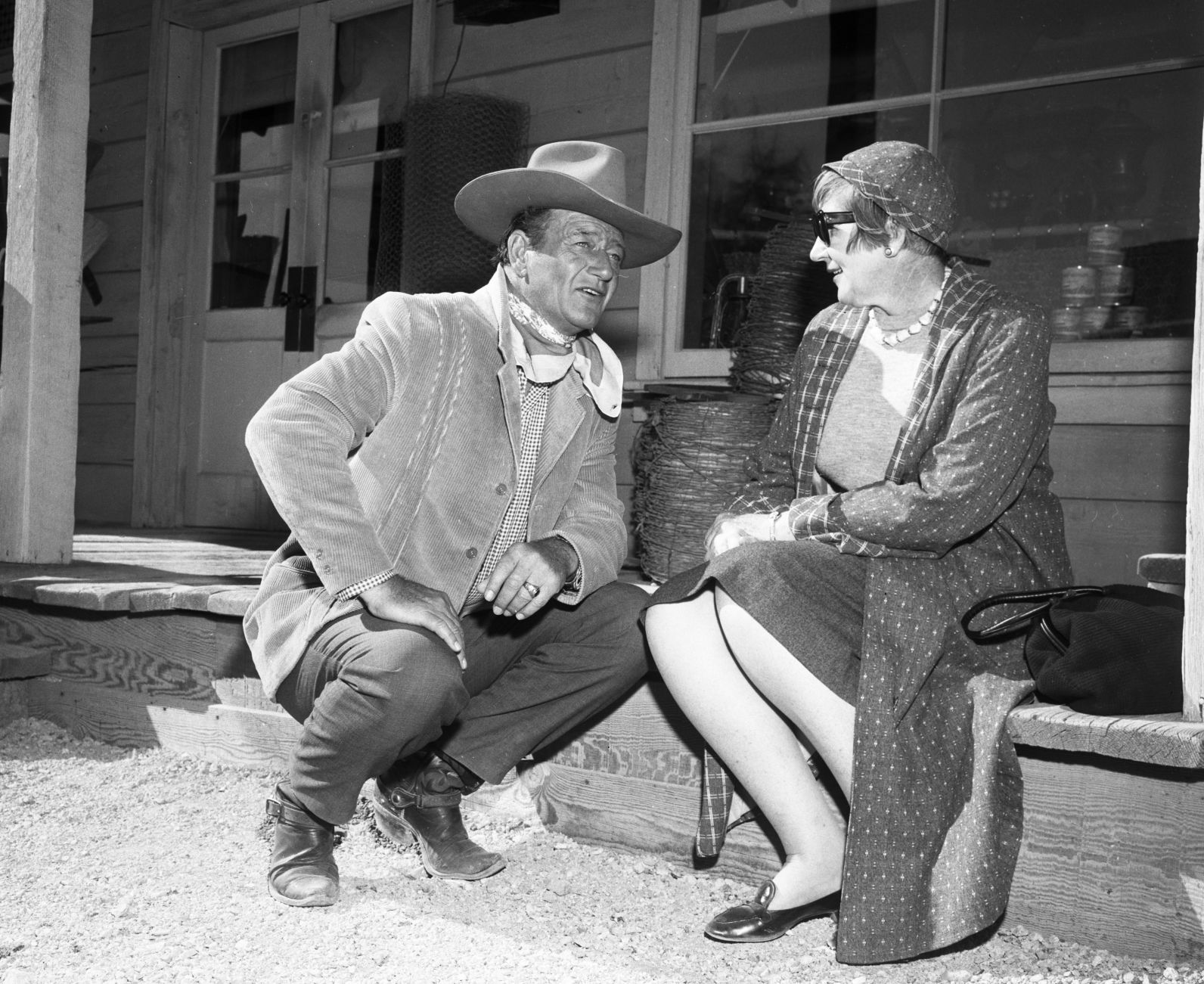
John Wayne chats on the set of "McLintock!" at Old Tucson in 1962.
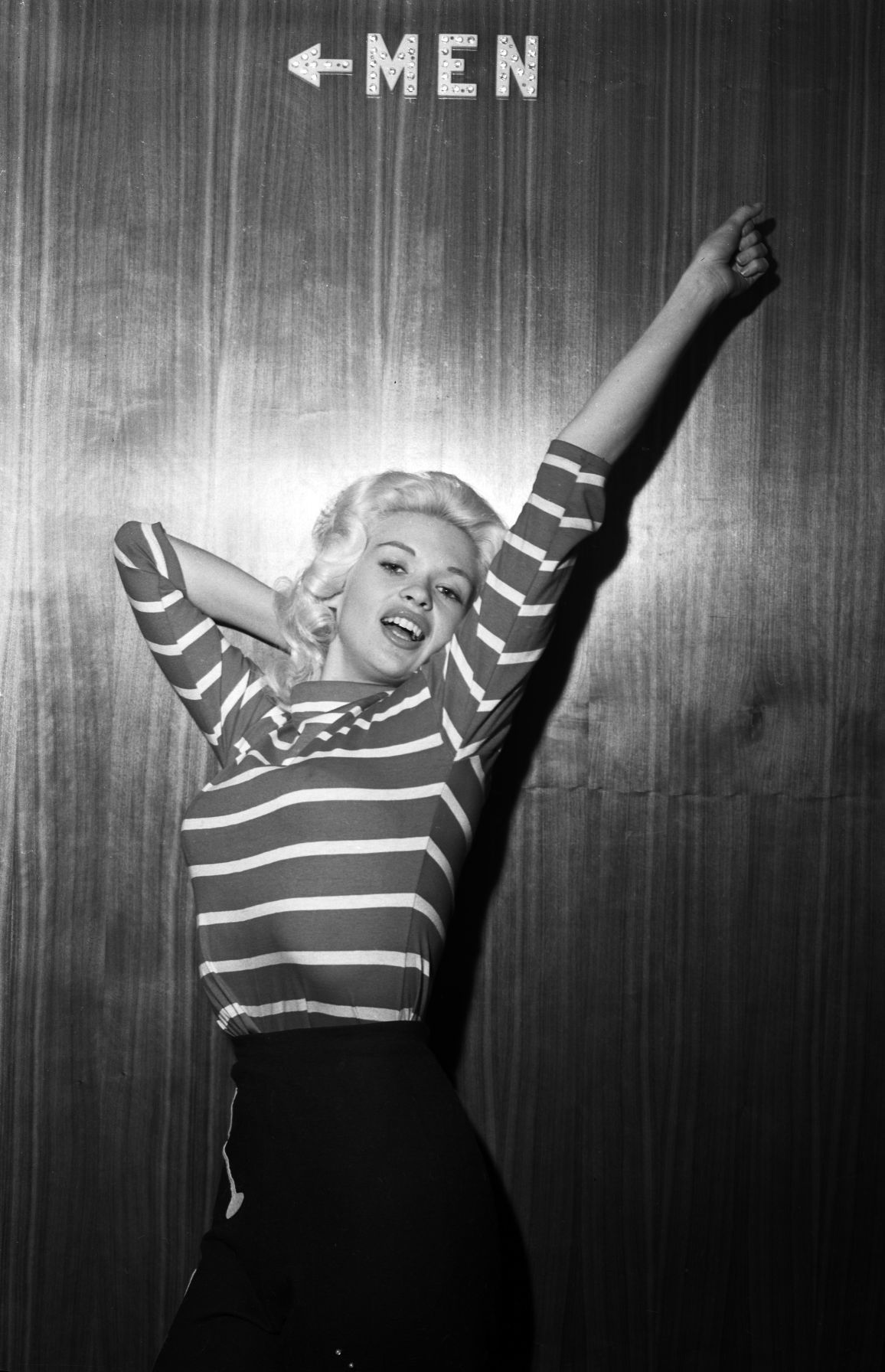
Actress Jayne Mansfield at Tucson International Airport in March, 1957. She was accompanied by her boyfriend, Mickey Hargitay, and her pregnant chihuahua, Charla, and actor Broderick Crawford for a party at a nearby dude ranch.

Sarah Gorby and actor Lee Marvin hold baby javelinas before a fundraising dinner at the Tucson Racquet Club for the Sarah Gorby Wildlife Rehabilitation Fund in 1983.
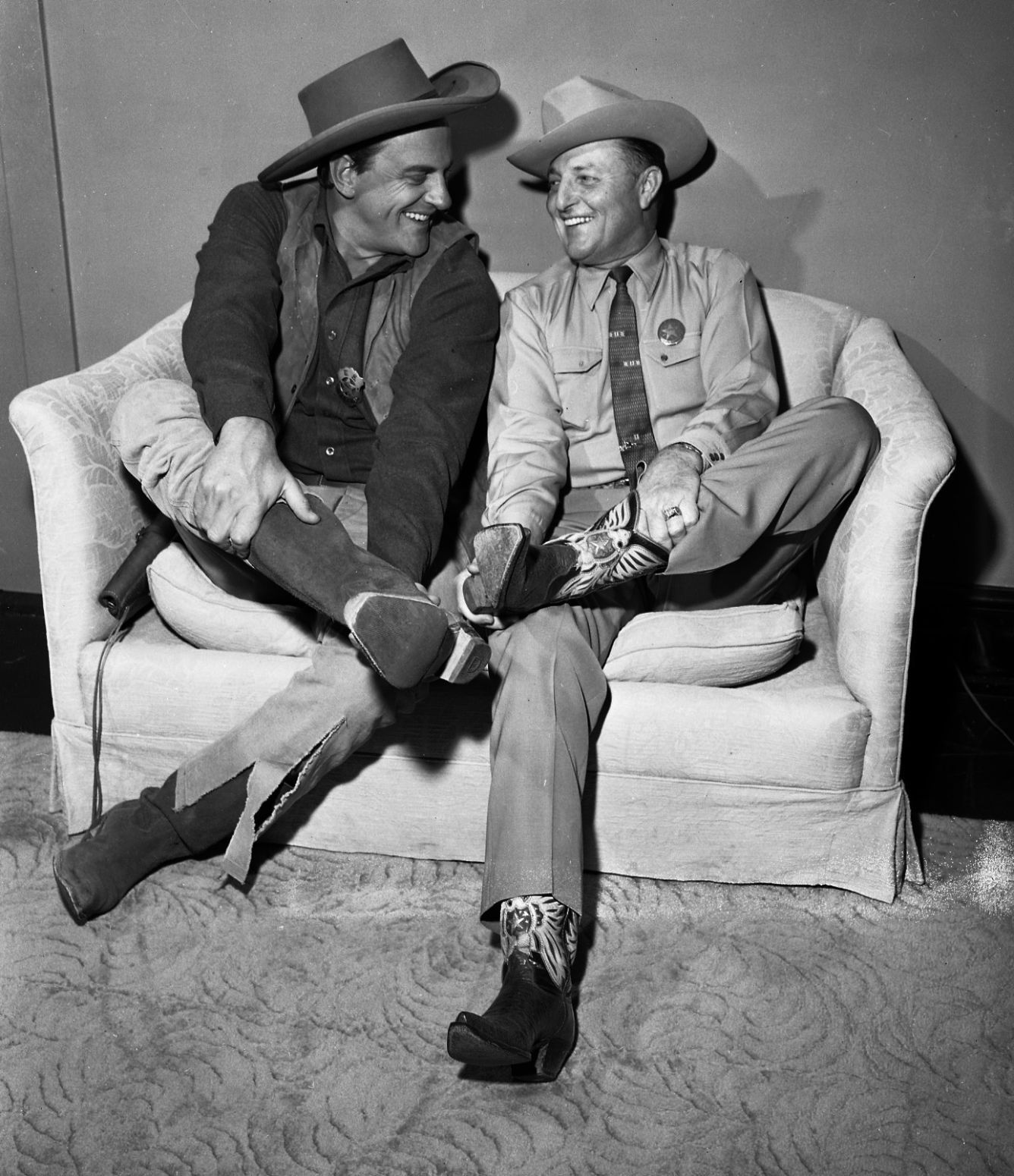
Actor James Arness from the "Gunsmoke" television series, compares boot sizes with Texas Ranger Capt. Clint Peoples while in Tucson on January 30, 1959. Peoples extended an invitation to Arness to attend a dinner in Austin where he would be made an honorary Ranger.

Groucho Marx accompanied his wife, Eden Hartford, to Tucson in April, 1963, to perform the stage play, "Time for Elizabeth."

Charles Bronson gets makeup on the set of "A Thunder of Drums at Old Tucson on April 8, 1961.
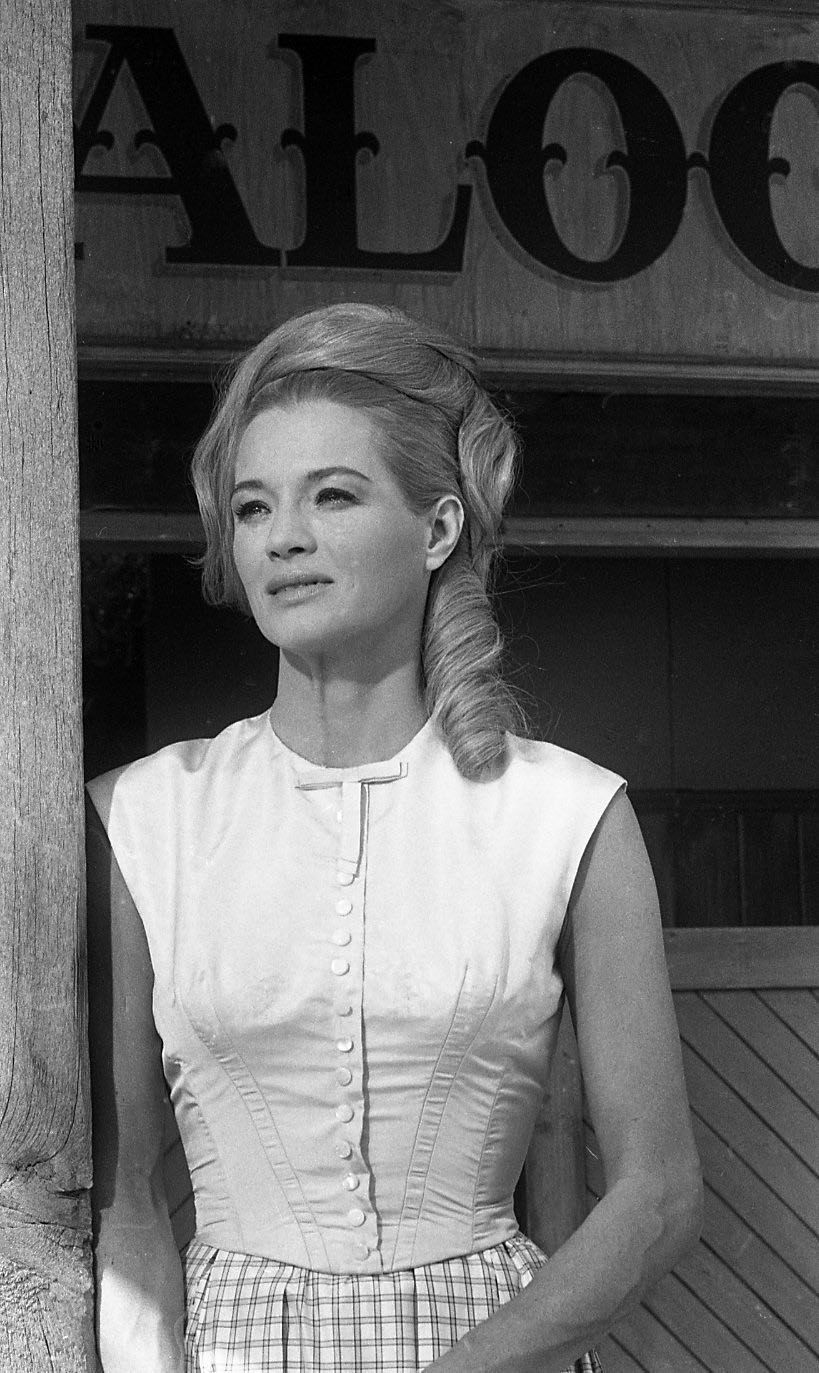
Actress Angie Dickinson on the set of "Pistolero" at Old Tucson in October 1966. Dickinson became known for TV show "Police Woman," 1974-78,
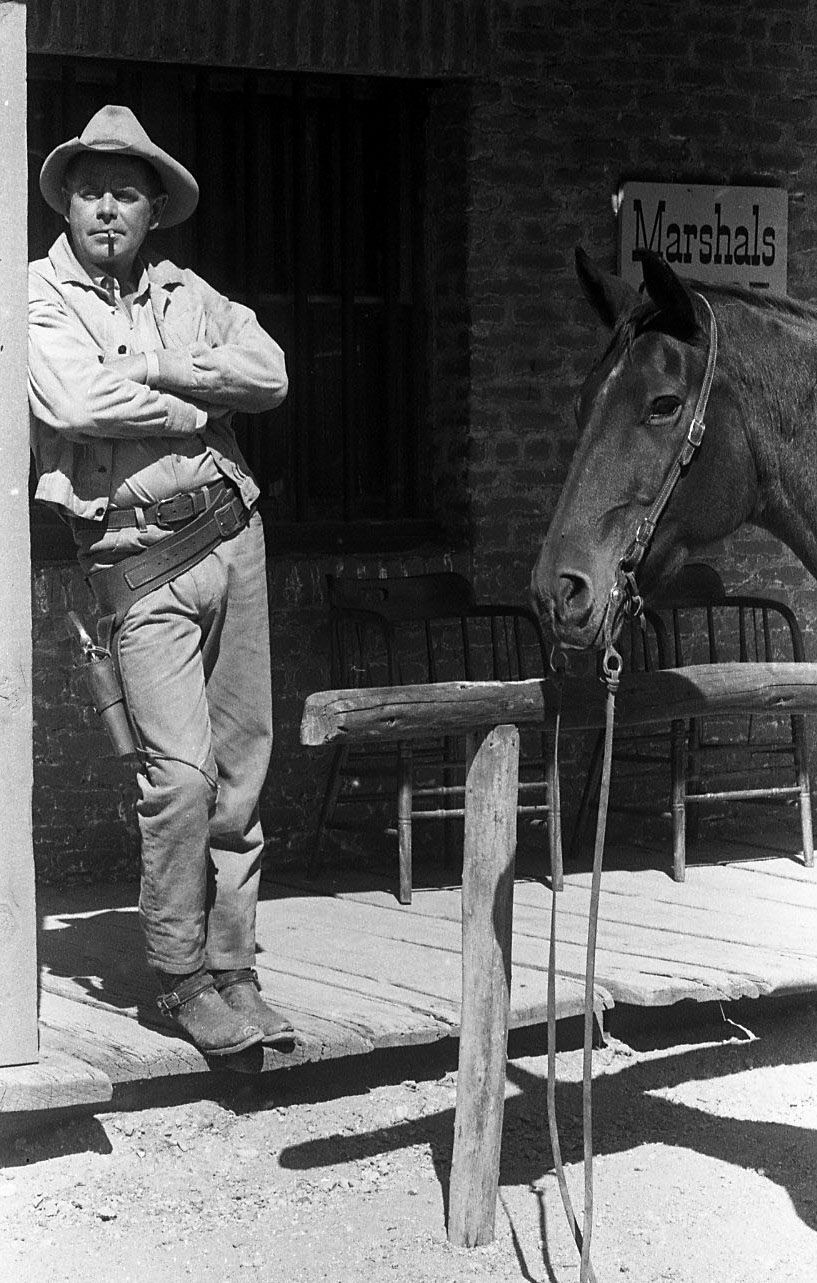
Actor Glenn Ford and a classic pose during "Pistolero" at Old Tucson in October, 1966. The other filming location of Sabino Canyon. Ford was the villian in "3:10 to Yuma," also filmed at Old Tucson and Southern Arizona.

On May 3, 1988, Betty White visited the Reid Park Zoo while filming a television promotion for the Tucson Zoological Society. Above, Steve McCusker, the zoo's administrator at the time, shows White the rhino exhibit.
They stayed at the Nick C. Hall-managed Santa Rita Hotel (now the site of the Tucson Electric Power building) downtown on Broadway. Hall had already brought many Hollywood filmmakers to Tucson to make their movies. Learning the purpose of the Ruggles-Binyon visit, he began his campaign to get the movie Arizona, about Tucson, actually filmed in town instead of the normal spot, the studio-owned ranch in Burbank, California.
In April 1939, the Arizona Hotel Association held a convention in Chandler for its members, including Hall. Among the luminaries that night were Arizona Gov. Robert T. Jones, Dr. Alexander J. Chandler (namesake of the Arizona city), and author Kelland, the master of ceremonies. Hall may have used this opportunity to gain Kelland’s support for filming the movie in Tucson.
Hall also took several trips to Hollywood to meet with Columbia executives to get final approval for the local filming.
In July 1939, Hall began assisting Columbia officials in any way he could, including chaperoning construction superintendent Jim Pratt around as he planned the building of the movie set, located on Kinney Road about five miles north of Ajo Road, based on what Tucson looked like in the 1860s. Hall also set up in his hotel the many different cast and crew, including actress Jean Arthur, who would portray the lead Phoebe Titus.
List: 40 movies filmed in Tucson and southern Arizona
The Fabelmans (2022)

This image released by Universal Pictures and Amblin Entertainment shows Gabriel LaBelle in a scene from "The Fabelmans."
Tucson locations: Tucson Mountain Park and the Sonoran Desert
Cast: Michelle Williams, Gabriel LaBelle, Paul Dano, Judd Hirsch, Seth Rogen
Genre: Drama: Growing up in post-World War II era Arizona, young Sammy Fabelman aspires to become a filmmaker.
Tombstone (1993)

Kurt Russell stars as Wyatt Earp in "Tombstone" filmed at Old Tucson Studios in 1993. Copy photo taken at Quality Inn Flamingo in Tucson, Ariz., on Thursday March 31, 2011.
Tucson and Arizona locations: Old Tucson, Babocomari Ranch in Sonoita, Texas Canyon, Little Dragoon Mountains, Skeleton Canyon, Empire Ranch in Sonoita, Elgin, Sonoran Desert, Chiricahua National Monument, San Simon Valley, Mescal, Tucson Mountains, San Pedro River, Las Cienegas National Conservation Area, Patagonia, Whetstone Mountains, Turkey Creek, Mount Lemmon, Fort Crittenden, Tucson, Harshaw, St. David, Granite Mountains in Prescott, Sierrita Mountains, Benson.
According to the Internet Movie Database, Tombstone was not a location for the movie shoot.
Cast: Kurt Russell, Val Kilmer, Sam Elliott, Bill Paxton
Genre: Biography, drama, history: A dramatic retelling of the events leading to and following the famous Gunfight at the OK Corral.
Box office gross: $56.51 million
Almost Famous (2000)
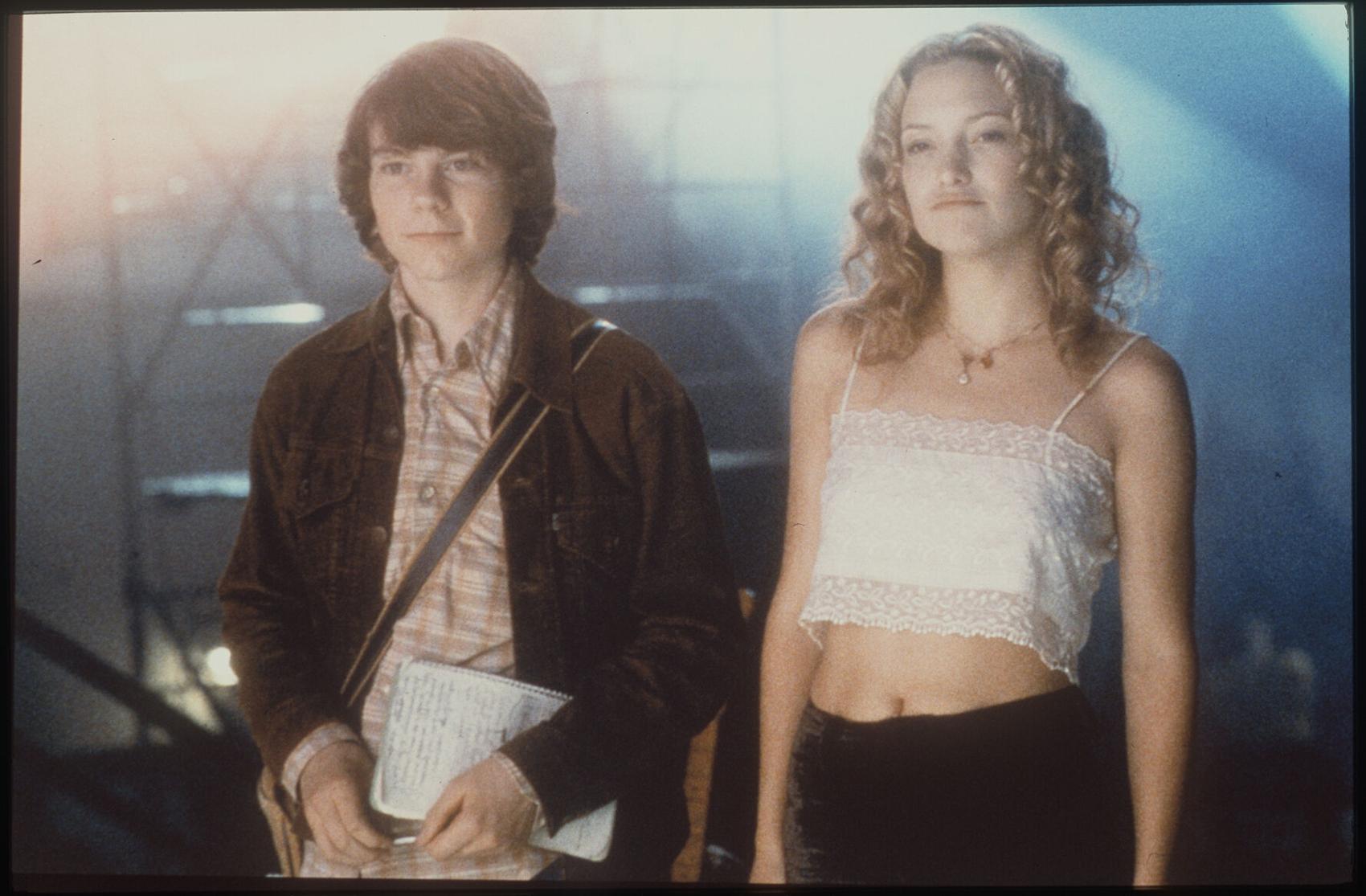
Amost Famous
Tucson and Arizona locations: Old Ajo Highway, Tumacácori, Interstate 19, Amado, Tucson
Cast: Billy Crudup, Patrick Fugit, Kate Hudson
Genre: Adventure, comedy, drama: A high schooler travels with a rock band for a story in Rolling Stone magazine.
Box office gross: $32.53 million
A Star is Born (1976)

In this Dec. 23, 1976, file photo, producer Jon Peters, from left, Barbra Streisand and Kris Kristofferson appear at a preview of the film "A Star is Born" in New York. (AP Photo/Suzanne Vlamis)
Tucson and Arizona locations: Tucson Convention Center, Pima County Courthouse, Old Tucson Studios, Sonoita and Tempe.
Cast: Barbra Streisand, Kris Kristofferson, Gary Busey, Oliver Clark
Genre: Drama, romance, musical: A has-been rock star falls in love with a young, up-and-coming songstress.
Box office gross: $80 million
Major League (1989)

The north side of Hi Corbett Field, 700 S. Randolph Way., in Tucson, Ariz. on January 23, 2020.
Tucson locations: Hi Corbett Field, Tucson
Cast: Tom Berenger, Charlie Sheen, Corbin Bernsen, Margaret Whitton
Genre: Comedy, sport: The new owner of the Cleveland Indians puts together a team she hopes will lose so she can move the team. The team disagrees.
Box office gross: $49.8 million
Transformers: Revenge of the Fallen (2009)

Rows of B-52's sit on the hard desert soil in Tucson, Arizona. The dry air and hard soil are the two main reasons the "Boneyard" is located here.
Tucson location: Davis Monthan Air Force Base, Boneyard
Cast: Shia LaBeouf, Megan Fox, Josh Duhamel, Tyrese Gibson
Genre: Action, adventure Sci-fi: The Autobots and Decepticons battle in this sequel.
Box office gross: $402.11 million
Wild Wild West (1999)

Will Smith in a scene from the movie "Wild Wild West."
Tucson location: Old Tucson
Cast: Will Smith, Kevin Kline, Kenneth Branagh, Salma Hayek
Genre: Action, comedy sci-fi: Based on the old TV show of Secret Service agents after the Civil War.
Box office gross: $113.81 million
Public Enemies (2009)

Johnny Depp stars as legendary Depression-era outlaw John Dillinger, in "Public Enemies." (AP Photo/Universal Pictures, Peter Mountain)
Tucson location: Congress Hotel front
Cast: Christian Bale, Johnny Depp, Christian Stolte, Jason Clarke
Genre: Action, biography, crime: Feds try to take down John Dillinger.
Box office gross: $97.1 million
Can't Buy Me Love (1987)
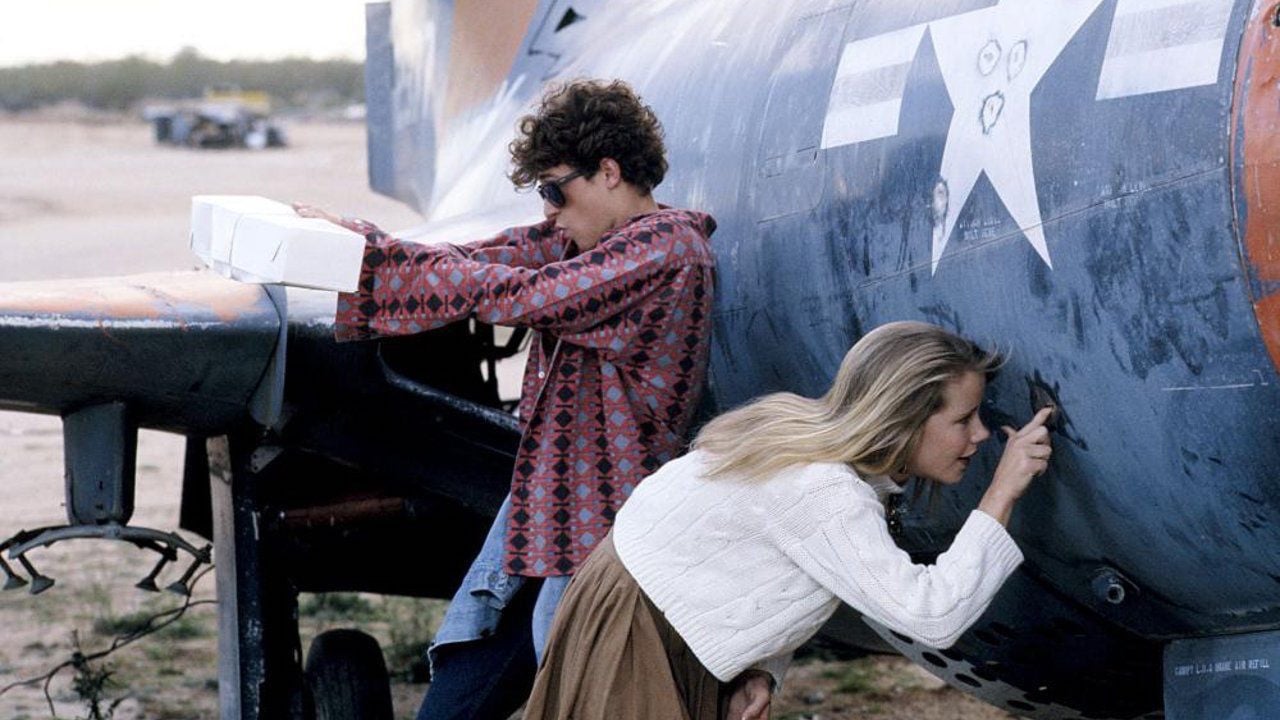
Patrick Dempsey (in his pre-“McDreamy” era) stars as a high school nerd trying to be a cool kid in “Can’t Buy Me Love.”
Tucson locations: Davis-Monthan Air Force Base boneyard, Scoops on Speedway, a house on North Hill Farm Drive, a house on North Christmas Avenue, The Loft Cinema, Pima Air and Space Museum, Tucson High School, Tucson Mall, Arcade on Speedway, Speedway boulevard, Winterhaven neighborhood, Hill Farm
Cast: Patrick Dempsey, Amanda Peterson, Courtney Gains
Genre: Comedy, drama, romance: An outcast pays the most popular girl in school to be his girlfriend for a month.
Box office gross: $31.62 million
Young Guns (1988)

Main Street in Old Tucson in 1991.
Tucson locations: Old Tucson, Tucson, Sonoran Desert
Cast: Emilio Estevez, Kiefer Sutherland, Lou Diamond Phillips, Charlie Sheen
Genre: Action, western: Young gunmen led by Billy the Kid become deputies and take their authority too far.
Box office gross: $45.66 million
Young Guns II (1990)
Tucson and Arizona locations: Old Tucson, Bisbee, Sonoran Desert, San Rafael Ranch State Park in Patagonia, Tucson Mountains, Ironwood Forest National Monument, Sierrita Mountains, Warren, Tumacácori National Historical Park
Cast: Emilio Estevez, Kiefer Sutherland, Lou Diamond Phillips, Christian Slater
Genre: Action, western: Patrick Floyd Garrett receives a bounty to kill Billy the Kid.
Box office gross: $44.14 million
Revenge of the Nerds (1984)

Actors Anthony Edwards, far right and Robert Carradine, center, stumble with their suitcases during a scene for the film, "Revenge of the Nerds." Photo taken: January 30, 1984.
Tucson locations: Catalina Park Inn, Catalina Park, Bear Down Gym at the University of Arizona, Friends Meeting House on Fifth Avenue, University of Arizona, Cochise Hall at UA, Old Main at UA, Scottish Rite Temple on Scott Avenue, Old Tucson
Cast: Robert Carradine, Anthony Edwards, Timothy Busfield, Andrew Cassese
Genre: Comedy: A group of bullied college outcasts and misfits fight back.
Box office gross: $40.9 million
The Quick and the Dead (1995)

Extras for the movie "The Quick and the Dead," during filming at the Mescal Exit 297.
Tucson and Arizona locations: Old Tucson, Mescal, Sierrita Mountains, Sonoran Desert, Tucson Mountains, Ironwood Forest National Monument, Sonoita, Las Cienegas National Conservation Area
Cast: Sharon Stone, Gene Hackman, Russell Crowe
Genre: Action, romance, thriller: A female gunfighter enters a dueling tournament to avenge her father's death.
Box office gross: $18.64 million
Romy and Michele's High School Reunion (1997)

Lisa Kudrow and Mira Sorvino in a scene from Romy and Michele's High School Reunion.
Tucson locations: Tucson streets
Cast: Mira Sorvino, Lisa Kudrow, Janeane Carofalo
Genre: Comedy: Two dimwitted friends concoct an elaborate lie to impress classmates at their high school reunion.
Box office gross: $29.21 million
Stir Crazy (1980)

"Stir Crazy" filming at the Tucson Rodeo Grounds April 10, 1980. Citizen file photo by H. Darr Beiser.
Tucson locations: Downtown, Tucson Rodeo Grounds, Pima Community College West Campus, former Whistle Stop bar on Craycroft Road, Pima County Courthouse; other Arizona locations: Arizona State Prison in Florence, Arizona
Cast: Gene Wilder, Richard Pryor, Georg Stanford Brown, JoBeth Williams
Genre: Comedy: Two friends are set up and wrongfully accused of a crime they didn't commit.
Box office gross: $101.3 million
The Trial of Billy Jack (1974)
Tucson locations: Old Tucson Studios and Colossal Cave Mountain Park
Cast: Tom Laughlin, Delores Taylor, Victor Izay, Teresa Kelly
Genre: Action, drama
Box office gross: $89 million

Movie sets at Old Tucson in 2012.
The Cannonball Run (1981)
Tucson location: Old Tucson
Cast: Burt Reynolds, Roger Moore, Farrah Fawcett, Dom DeLuise
Genre: Action, comedy: Eccentric competitors participate in a cross-country road race.
Box office gross: $72.18 million

A scene from the movie, "Three Kings." (AP Photo/Warner Bros., Murray Close)
Three Kings (1999)
Arizona locations: Tucson, Casa Grande. Sacaton Mine in Casa Grande, Yuma, Eloy, Sonoran Desert, Coolidge, Marana, Phoenix
Cast: George Clooney, Mark Wahlberg, Ice Cube, Spike Jonze
Genre: Action, adventure, comedy: After the Persian Gulf War, four soldiers plan to steal gold that was stolen from Kuwait.
Box office gross: $60.65 million
The Postman (1997)

Release date: Dec. 25, 1997
Tucson and Arizona locations: Tucson, Sahuarita, Green Valley, Sopori Ranch, Amado and Nogales
Cast: Kevin Costner, Will Patton, Larenz Tate, Olivia Williams
Genre: Action, adventure, sci-fi: In post-apocalyptic America in the year 2013, an unnamed wanderer retrieves a postman's uniform and undelivered bag of mail, which he delivers to a nearby town
Box office gross: $17.6 million

Rene Russo, Don Johnson and Kevin Costner star in "Tin Cup."
Tin Cup (1996)
Tucson and Arizona locations: Hotel Congress, Tubac, Sonoita, Nogales.
Cast: Kevin Costner, Rene Russo, Don Johnson, Cheech Marin
Genre: Comedy, drama, romance: A washed up golf pro tries to qualify for the US Open.
Box office gross: $53.85 million
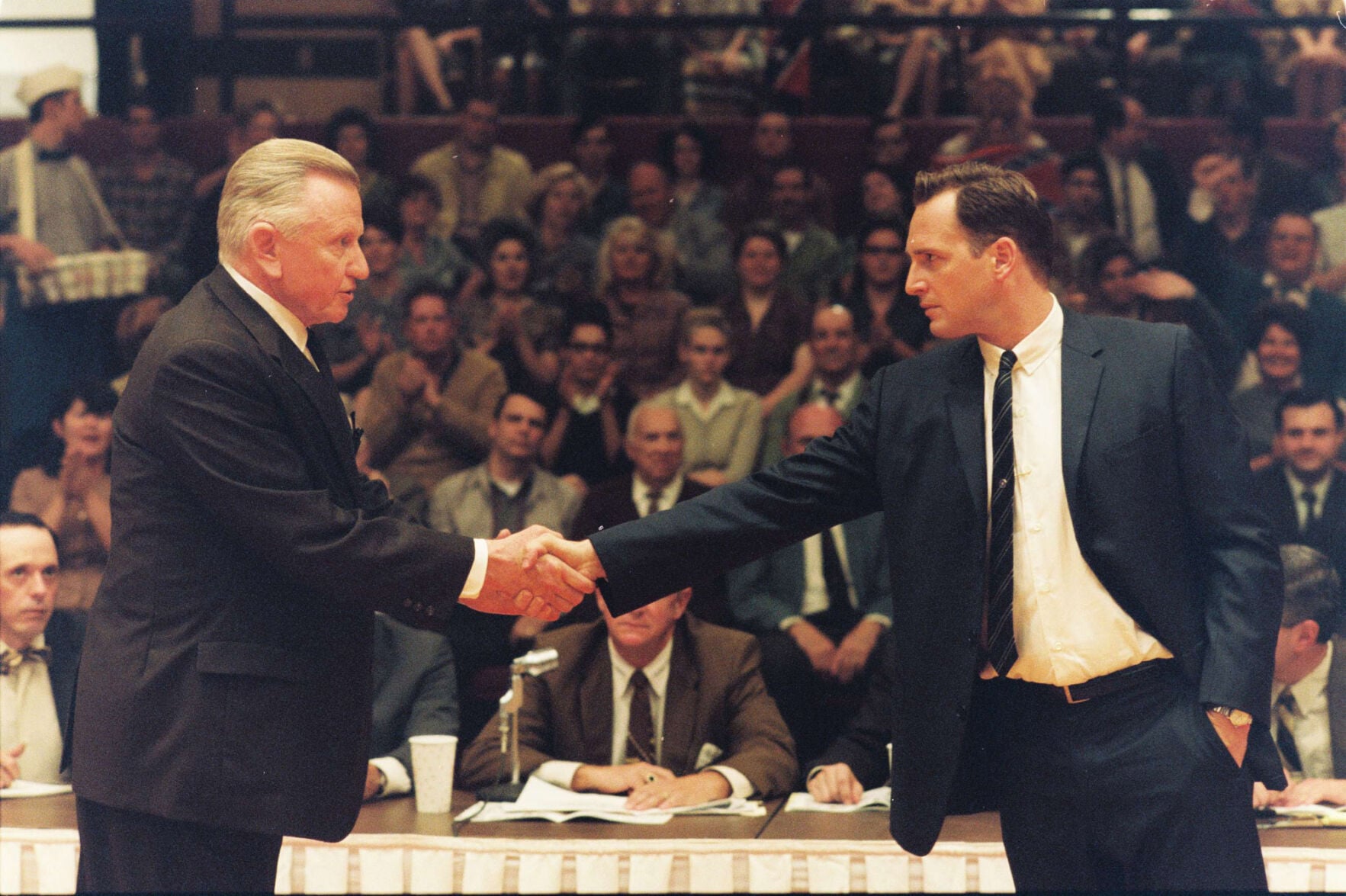
In this undated photo released by Disney, John Voight, left, portraying Kentucky coach Adolph Rupp, shakes hands with Josh Lucas, right, playing Texas Western coach Don Haskins in a scene from the motion picture "Glory Road." (AP Photo/Disney Enterprises, Inc., Frank Connor)
Glory Road (2006)
Tucson location: Bear Down Gym at the University of Arizona
Cast: Josh Lucas, Derek Luke, Austin Nichols, Jon Voight
Genre: Biography, drama, sport: Texas Western coach leads the first all-black starting line-up college basketball team to the NCAA championship.
Box office gross: $42.64 million

Chevy Chase, Steve Martin, and Martin Short in The Three Amigos.
Three Amigos (1986)
Tucson and Arizona locations: Old Tucson, Coronado National Forest, Florence, Apache Junction, Superstition Mountains, Apache Trail, Superstition Wilderness, Sonoran Desert, Gold Canyon
Cast: Steve Martin, Checy Chase, Martin Short
Genre: Comedy, western: Three actors go to a Mexican village to perform their onscreen roles unaware they are in a real fight.
Box office gross: $39.25 million

The cast and producer of Tyler Perry's feature "The Family That Preys." (PRNewsFoto/Lincoln Mercury)
The Family That Preys (2008)
Tucson and Arizona locations: Tucson, Sonoita
Cast: Kathy Bates, Alfre Woodard, Sanaa Lathan
Genre: Drama: Two families from different walks of life learn to work together.
Box office gross: $37.02 million
Murphy's Romance (1985)
Tucson and Arizona locations: Tucson (street scenes), Florence, Tubac, Keating Building in Florence, Eloy, Coolidge, Main Street Vault in Florence, Valley Art Theater in Tempe, Tempe, Main Street in Florence
Cast: Sally Field, James Garner, Brian Kerwin
Genre: Comedy, drama, romance: A divorcee and her son move to a ranch and she befriends a local man.
Box office gross: $30.76 million

Sammy Davis JR, and Dean Martin are cornered by mobsters (L to R) Alex Rocco, Michael Gazzo, Abe Vigoda and Henry Silva, all after the million-dollar purse offered for Cannonball Run II. Photo by Arcafin V.V./Claridge Pictures Inc.
Cannonball Run II (1984)
Tucson and Arizona locations: Tucson, Bisbee, Old Tucson, Arizona State School for the Deaf and the Blind Campus
Cast: Burt Reynolds, Dom DeLuise, Dean Martin
Genre: Action, comedy: This sequel features another cross country race.
Box office gross: $28.08 million

The Fox Theater on 17 W. Congress, Wed April 25, 2012.
Escape from New York (1981)
Tucson location: Fox Theater
Cast: Kurt Russell, Lee Van Cleef, Ernest Borgnine
Genre: Action, adventure, sci-fi: Manhattan is now a maximum security prison and the U.S. president has crashed into it.
Box office gross: $25.24 million

Holly (Drew Barrymore, left) introduces Jane (Whoopi Goldberg) to her new boyfiend, Abe (Matthew McConaughey, in Warner Bros.' "Boys on the Side." Photo by Suzanne Hanover
Boys on the Side (1995)
Tucson and Arizona locations: Tucson, Tumacácori, Teatro Carmen, Elusian Grove Market in Barrio Viejo, Tucson General Hospital (since demolished), Big Horn Restaurant in Amado, Tucson Elks Lodge, Amado
Cast: Whoopi Goldberg, Mary-Louise Parker, Drew Barrymore, Matthew McConaughey
Genre: Comedy, drama: Three very different women drive cross country and become close friends.
Box office gross: $23.45 million
Madhouse (1990)
Tucson and Arizona locations: Tucson, Phoenix
Cast: Richard Alexander, Kirstie Alley, John Larroquette
Genre: Comedy: A yuppie couple's villa is overrun by uninvited guests.
Box office gross: $21.04 million
8 Seconds (1994)
Tucson location: Tucson Rodeo Grounds, other Tucson locations
Cast: Luke Perry, Stephen Baldwin, James Rebhorn
Genre: Biography, drama, sport: The life of Lane Frost, 1987 PRCA Bull Riding World Champion.
Box office gross: $19.6 million

Wes Studi stars as Geronimo, the legendary Apache leader and medicine man who defied the U.S. Cavalry.
Geronimo: An American Legend (1993)
Tucson and Arizona locations: Old Tucson, Monument Valley, Kayenta, Red Mesa, Kaibab National Forest, Williams (Grand Canyon Railway), Mexican Water, San Francisco Peaks, Skeleton Canyon, Teec Nos Pos, Tucson
Cast: Jason Patric, Gene Hackman, Robert Duvall
Genre: Drama, history, western: The story of the Apache chief and his resistance to the U.S. Government's subjugation of his people.
Box office gross: $18.64 million

Kirk Douglas shows other actors how to draw and whirl during the filming of "Posse" at Old Tucson.
Posse (1993)
Tucson and Arizona locations: Old Tucson, Florence, Sonoran Desert, Empire Ranch in Sonoita, Sierrita Mountains, Tucson Mountains, Benson, Tucson
Cast: Mario Van Peebles, Stephen Baldwin, Charles Lane
Genre: Western: Buffalo soldiers find gold, desert and help defend a black town from the KKK.
Box office gross: $18.29 million

Old Tucson
Lightning Jack (1994)
Tucson and Arizona locations: Old Tucson, Page, Sonoran Desert, Tucson Mountains, Sierrita Mountains, Flagstaff
Cast: Paul Hogan, Cuba Gooding Jr., Beverly D'Angelo
Genre: Comedy, western: An Australian outlaw in the wild west.
Box office gross: $16.82 million
Terminal Velocity (1994)
Tucson and Arizona locations: Old Tucson, Douglas, Little Colorado River Canyon, Tucson, Flagstaff, Phoenix
Cast: Charlie Sheen, Nastassja Kinski, James Gandolfini
Genre: Action, mystery, romance: A maverick skydiver and a former KGB agent team up to stop the Russian mafia.
Box office gross: $16.48 million
The Getaway (1994)
Tucson and Arizona locations: Tucson, Prescott, Phoenix International Raceway, Hotel Del Sol in Yuma, Downtown Yuma, Flagstaff, Sonoran Desert, Coolidge, Maricopa County Courthouse and Old Phoenix City Hall, Apache Lodge in Prescott, Arizona Biltmore Resort in Phoenix, Phoenix Greyhound Park, Union Station in Phoenix
Cast: Alec Baldwin, Kim Basinger, Michael Madsen
Genre: Action, adventure, crime: An ex-con and his wife flee after a heist goes wrong.
Box office gross: $16.1 million

Cast member Drew Barrymore attends the premiere of Confessions Of A Dangerous Mind at the Mann Bruin Theatre in Westwood, California, Wednesday December 11, 2002.
Confessions of a Dangerous Mind (2002)
Tucson and Arizona locations: Tucson, White Stallion Ranch, Nogales
Cast: Sam Rockwell, Drew Barrymore, George Clooney
Genre: Biography, comedy, crime: Adaptation of the cult memoir of game show impresario Chuck Barris.
Box office gross: $16 million
Flirting with Disaster (1996)
Tucson and Arizona locations: Tucson, Cave Creek, Phoenix, Scottsdale, Carefree, Marana
Cast: Ben Stiller, Patricia Arquette, Téa Leoni
Genre: Comedy: A young man searches for his birth parents.
Box office gross: $14.89 million
Fire Birds (1990)
Tucson and Arizona locations: Army Pilot Training Post in Tucson, Mammoth, Mesa, Sonoran Desert, Apache Leap Mountains in Superior, Superstition Mountains, Davis-Monthan Air Force Base, Superior, Picketpost Mountain in Superior, Superstition Wilderness, Miami, Globe, Reymert, Tonto National Forest, Apache Junction, Amphitheater High School
Cast: Nicolas Cage, Tommy Lee Jones, Sean Young
Genre: Action, adventure: Elite Apache helicopter pilots must destroy powerful drug cartels.
Box office gross: $14.76 million
Stay Tuned (1992)
Tucson and Arizona locations: Old Tucson, Florence, Tucson
Cast: John Ritter, Pam Dawber, Jeffrey Jones
Genre: Adventure, comedy, fantasy: a husband and wife are sucked into television sets and must survive twisted versions of TV shows.
Box office gross: $10.74 million

The Titan II Missile which is part of the Titan Missile Museum, is outside Tucson in Sahuarita, Ariz, on Nov. 14, 2018.
Cyborg (1989)
Tucson and Arizona locations: Titan Missile Museum in Green Valley, The Domes in Casa Grande, Davis-Monthan Air Force Base, Casa Grande, Green Valley, Tucson
Cast: Jean-Claude Van Damme, Deborah Richter, Vincent Klyn
Genre: Action, sci-fi, thriller: Hunt for a killer in a plague-infested future.
Box office gross: $10.17 million
The Wraith (1986)
Tucson locations: North Sixth Avenue, Fourth Avenue, Sabino Canyon, Catalina Highway, Davis-Monthan Air Force Base, East Fifth Street, West Ajo Way and East Benson Highway.
Cast: Charlie Sheen, Nick Cassavetes, Sherilyn Fenn, Randy Quaid
Genre: Sci-fi, horror: A high-schooler returns from the dead to get revenge on the psychotic drag racer who killed him.
Box office gross: $3.5 million
In late August 1939, the cast of the film “elected” Hall the mayor of Old Tucson — also known then as “Hollywood on the Santa Cruz.” That was half in jest and half in seriousness, due to the fact that he brought the filming of “Arizona” to Tucson, which resulted in construction of the Old Tucson movie set, and in appreciation that he took care of the needs of cast and crew. Soon after, Gov. Jones officially proclaimed Hall the honorary mayor of Old Tucson.
In early September 1939, even before filming had begun, it was canceled due to what was referred to at this point as the European War, later called World War II. The war seriously affected the European film market, reducing the potential profit of the movie significantly, which later caused the film to be made in black and white instead of Technicolor, as was originally planned. The expected delay in filming was a month and a half to two months. Only a small crew remained to look after the movie set and animals.
For several months, the Old Tucson movie set was left to the elements as a ghost town. However, on a couple of occasions, Tucson Police Chief Don J. Hays and the Arizona Police Officers Training School turned the abandoned adobe set into a Hogan’s Alley (a firearms practice course for law enforcement officers).
During this period Kelland enjoyed the success of yet another magazine serial, this one published in Women’s Home Companion magazine. Hall continued to ply his trade in hostelry and director Ruggles, screenwriter Binyon and actress Arthur all returned to Hollywood to work on the film Too Many Husbands, which premiered in March 1940.
In April 1940, Ruggles, along with the rest of the cast and crew, returned to the Old Pueblo and the Santa Rita Hotel. Soon after, the official dedication of Old Tucson took place with a ribbon-cutting ceremony.
After the ceremony, Ruggles and his cameraman perched on a camera boom, shooting the first shots of what would be several months of filming, as they brought Kelland’s novel of Tucson’s history to life.
Throughout the filming, many promotional contests were run by the publicity department of the movie studio, including one by Columbia Pictures and the Arizona Daily Star working together. The newspaper shared: “… descendants of the early Tucson residents mentioned in the story are asked to send in the name, present address and picture along with the explanation of the degree of relationship with the character in the story … to the Pioneer Contest Editor, Arizona Daily Star.
To the 10 most closely related, Columbia gave copies of the “Arizona” novel, autographed by Kelland, Ruggles, Arthur and William Holden.
The story had many real pioneers in it: Solomon Warner, Grant Oury, William Oury, Hilario Gallego, Pete Kitchen, Confederate Capt. Sherod Hunter, Union Gen. James H. Carleton, Charles Meyer, Sam Hughes, Pauline Weaver, Sylvester Mowry and Estevan Ochoa.
By October 1940, the real-life early pioneers in Kelland’s novel and Ruggles’ film “Arizona” had not only stirred up pride in the community but also a strong interest among Tucsonans, in particular Prof. Frank Lockwood of the University of Arizona. Beginning early that month and in preparation for the upcoming premiere of the film, he wrote in the Star a series of short biographies on the pioneers in the story and a few who didn’t appear in it. This bio series in the Star would be compiled into a book a few years later called Life in Old Tucson, 1854-1864.
During the day on Nov. 15, 1940, Kelland, Cohn and Arthur visited a gathering of pioneers — some having arrived in Tucson as early as 1870 —at the Arizona Pioneers Historical Society (now Arizona Historical Society), then located in the basement of the Arizona football stadium, along with special guests Arizona Gov. R.T Jones, Colorado Gov. Ralph Carr and Sonora Gov. Anselmo Macias.
Jean Arthur was the first to talk. She thanked Tucsonans for “all the fun I had doing that picture of ‘Arizona.’ It was more fun than any picture I’ve made in my life. At night after work I enjoyed your beautiful country, lay between two ant hills watching the stars — you have millions more here than any place else in the world — loving every moment of being in Tucson.”
Anne E. Rogers (namesake of the now-closed Anne E. Rogers School), a pioneer educator, paid tribute to Kelland. The author himself thanked Arizona “for the wonderful material your state gave me to write about.”
That night of Nov. 15, 1940, the world premiere of the film “Arizona” took place in downtown Tucson at four movie theaters, Rialto Theatre, Lyric Theatre, Fox Theatre and State Theatre. The film’s stars, Arthur and Holden, were in town, as was Kelland.
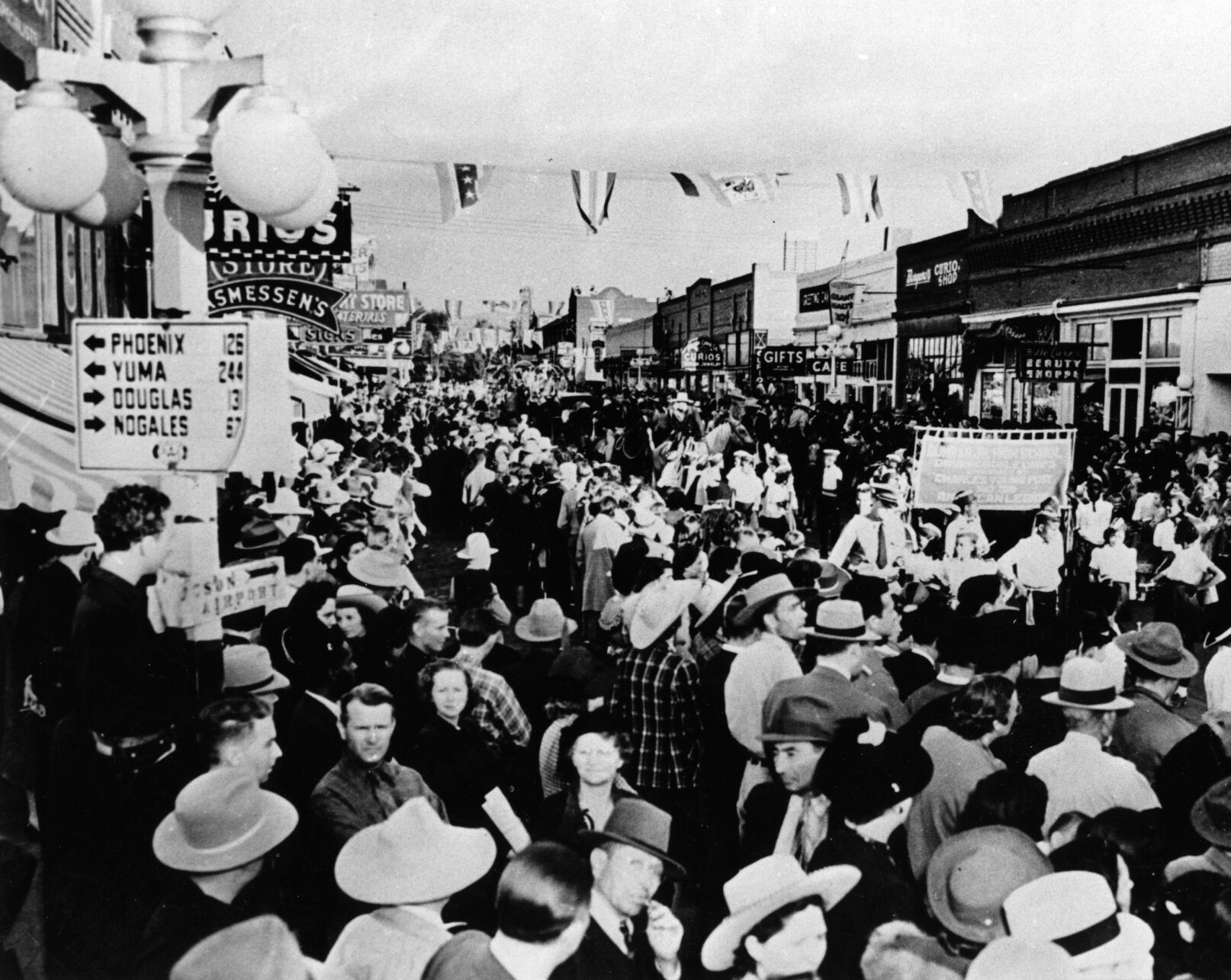
A parade in Downtown Tucson during the world premiere of the movie "Arizona" in 1940. It was the first full-length movie filmed at Old Tucson Studios.
The other two novels that comprise the “Arizona” trilogy were “Valley of the Sun” (Phoenix) and “Sugarfoot!” (Prescott). “Valley of the Sun” was turned into a film of the same name starring James Craig and Lucille Ball and “Sugarfoot!” followed suit with actor Randolph Scott (not to be confused with the TV series of the same name). Later on Kelland also penned the novel Tombstone and the story “The Red Baron of Arizona,” about the life of land swindler James Addison Reavis.

