




Fifty feet of tall chain-link fence fronts one camp.
A patchwork of pallets and metal pieces barricades another.
Lashed-together wrought iron remnants fence off a third camp.
These residences are among a string of them along the northern edge of Tucson’s biggest homeless encampment, the 100-Acre Wood. These homes look almost permanent, the sound of a generator buzzing over the area, but they’re all going to have to go by May 15.
That’s when the city has promised Davis-Monthan Air Force Base that it can have free and secure access to an area where D-M must start underground testing for PFAS chemicals. The testing means expulsion for the residents of one part of the huge camp on the north side of East Golf Links Road, where it meets South Alvernon Way.
It’s the first wave of what is likely to be a general clearing out of the 100-Acre Wood, often called “The Acres,” this year as the city prepares to renovate the area’s mountain biking trails.
I first visited The Acres years ago as a bicyclist, then returned a few times in September, when I noticed the homeless camp there had grown large, with dozens of tents clumped about. Now it’s larger yet, with maybe 100 or more residents scattered among different neighborhoods on the property.
The northern strip, called Zone 1 by city officials, is known around The Acres as the rougher area. Gunshots occur regularly. There are rumors of worse.
Cece Kon, who lives in another part of the Acres likened the impending move of those residents to mixing the populations in a jail.
“They’re getting ready to move the violent crime over here to the general population,” she said.
But the people who live in that northern strip, people like Billy Owens, have made a home of it and don’t want to leave. They especially don’t want to leave the shade of the invasive African sumac trees that dominate the area.

Billy Owens talks from behind the fence around his tent and lean-to in the northern edge of the homeless encampment in 100-Acre Wood, April 10, Tucson, Ariz.
“There’s no shade over there,” he said of the part of The Acres where officials suggested they move.
Owens’ neighbor, longtime resident Matt Mullins, has the massive spread with the wrought iron fence and the generator running. It will take an equally massive effort to move.
“I don’t like to be a last-second kind of guy,” Mullins said. “I like to prepare.”
Billy Owens talks from behind the fence around his tent and lean-to in the northern edge of the homeless encampment in 100-Acre Wood, April 10, Tucson, Ariz.
A complicated dwelling place
The growth of the Acres has made it a more complicated place for those who live there and those who live in nearby houses. The city put up a post-and-cable fence along East Golf Links Road in January. That has largely cut off vehicle access to The Acres.
While in the past, residents, donors, charity workers and officials could freely drive in goods like water, fuel and food, now it’s a tough slog, often over the high berm that forms the northern border of The Acres and separates it from adjacent neighborhoods.
Mullins said he has been ordering groceries from Walmart for delivery at the nearest house over the berm. He’s not the only one who uses that address. One of the men who live there told me it’s become a problem.
“They use my address,” Luis Delgado said. “They (sometimes) come at 11 o’clock at night. It is annoying.”
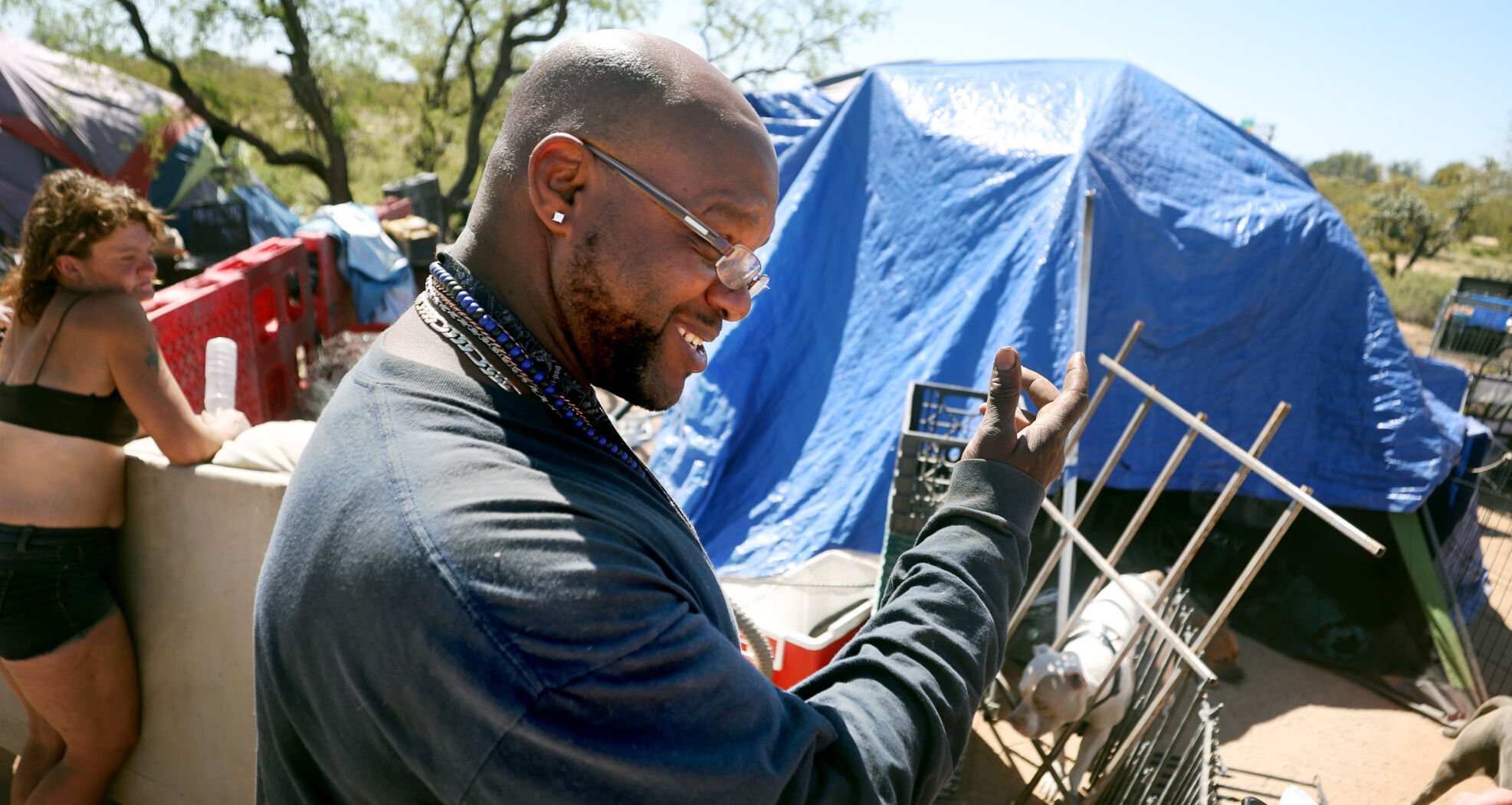
Recently unhoused Frankie Tate tells about being out on the streets for the first time outside his lean-to in the homeless encampment in 100-Acre Wood, April 10, Tucson, Ariz.
Other people’s deliveries show up at his address three or four times per week, he said.
It’s not just that. He regularly hears gunshots, one of the most recent times being March 28. That day, Tucson police and Delgado said, a man walking up South Columbus Avenue from The Acres said he had shot himself in the leg. Who knows what the full story was.
Thieving, often a problem in homeless camps, also has grown with the number of newcomers settling in The Acres. In fact, it’s the reason for the big fences along the north end of the camp.
Without the fence, Mullins said, “People will walk up, take what they want, and leave.”
And of course, drugs pervade the place, which serves in part as a refuge for people with addictions. That creates its own underground economy and its own rules.

A mud wall complete with a variety of cacti keeps unwanted guests out of a shelter inside of the 100 Acre-Wood bike park.
‘More community here’
While all these things are true and can lend a dystopian image to the place, there are also hints of utopia in life at The Acres. Many residents are eager to emphasize that cooperation and mutual assistance remain the rule, mistreatment the exception.
“There’s more community here than anywhere else out there,” said a woman named Monica, who asked me not to use her last name because she is a domestic violence victim. “Every single one of those people I’m friends with here. They’ve made it an easier transition. They make sure I’m safe.”
“I’m more safe here than I had been out there,” she added.
Even neighbors on East 32nd Street, a street that borders The Acres, told me they still haven’t had big problems, seven months after I first spoke with them. They hear the occasional gunshot or smell a fire on the other side of the berm, but Acres residents they see mostly just walk by.
When I was visiting April 10 and caught site of Frankie Tate, something about him told me he was new. His face had a fragile expression, like he still couldn’t believe he was living there. Indeed, he had been in the central part of The Acres for about a month and was still getting used to it.
Recently unhoused Frankie Tate tells about being out on the streets for the first time outside his lean-to in the homeless encampment in 100-Acre Wood, April 10, Tucson, Ariz.
Tate said he and his girlfriend had been living in an apartment, but the owners raised the rent, and they couldn’t keep their pit bull dogs there. Tate’s girlfriend moved to her grandmother’s house, and Tate and the dogs went to the streets.
“They kicked us out of the parks and stuff like that. A couple of officers told us, ‘Hey go to the Acres. You’ll be alright there.’ So this is where I came. It’s been an experience, man.”
“There’s people here welcomed me with open arms. Everybody takes care of my dogs,” he said. “This is like a safe haven, man.”
When I found Tate a week later, on Thursday, that newbie expression I had noticed before was gone, and he was content with life in The Acres for now, especially for his dogs.
“They roam around — they love everybody and everybody loves them. I don’t have to keep them on a leash.”
‘Now I feel homeless’
As useful as the 100-Acre Wood has been as a gathering place for the unhoused ousted from other places, it is doomed.

Arizona Daily Star columnist Tim Steller
The Sonoran Desert Mountain Bicyclists constructed the original trails on the city-leased land, and gave the place its name, derived from Winnie The Pooh. The group has raised $28,000 of its own money, plus $116,000 from Trek to build new trails on the land. The state of Arizona has also given a grant of $170,000 for the project, and the city is putting $27,000 toward it.
That’s a $341,000 bicycling project, targeted toward city kids, that is incompatible with the unhoused community there now. As someone who biked down there several times before it became a camp, I don’t see how loose dogs, pop-up residences and scattered drugged-out people will work alongside teens cycling.
It’s not just the northern strip, Zone 1, that is endangered. The whole place is expected to be cleared out sometime this year, before construction begins in the final months of 2024. After I interviewed Tucson Police Chief Chad Kasmar on the Bill Buckmaster Show Friday, he hinted that the end of The Acres may come sooner than that.
City officials and social-service agencies go regularly and offer services, along with test-strips for the drugs people take. At least 70 people have moved from the broader encampment into housing, said Mari Vasquez, who coordinates the city and county’s homeless response.
A mud wall complete with a variety of cacti keeps unwanted guests out of a shelter inside of the 100 Acre-Wood bike park.
They’re planning a bigger push to get people into housing or shelters before the final clear-out. But undoubtedly, there will be some who won’t leave willingly and will just camp elsewhere.
When I interviewed her in September, Cece Kon still didn’t consider herself homeless. She owned a RV that sort of worked, which was her vehicle for getting out if she needed to. But in recent months it was stolen from the parking lot of a nearby repair shop.
“Guess what? Now I feel homeless,” she told me.
“I almost went under roof (into housing) when I got tired of the wind,” Kon said. But then she considered her dogs. “Right now they have all of this. I couldn’t live with them with the doors closed.”
So it will be up to the city to eventually break up this encampment, rousting some against their will. It leaves me with mixed feelings, because The Acres have served as an important outlet for those on Tucson’s margins, even if there’s too much gunfire and too many impacts on neighbors.
And while the bike trail is a good thing that I’ll certainly use again, it isn’t as essential as a place to live.
Photos: Tucson's biggest homeless camp, at the "100-Acre Wood" bicycle park
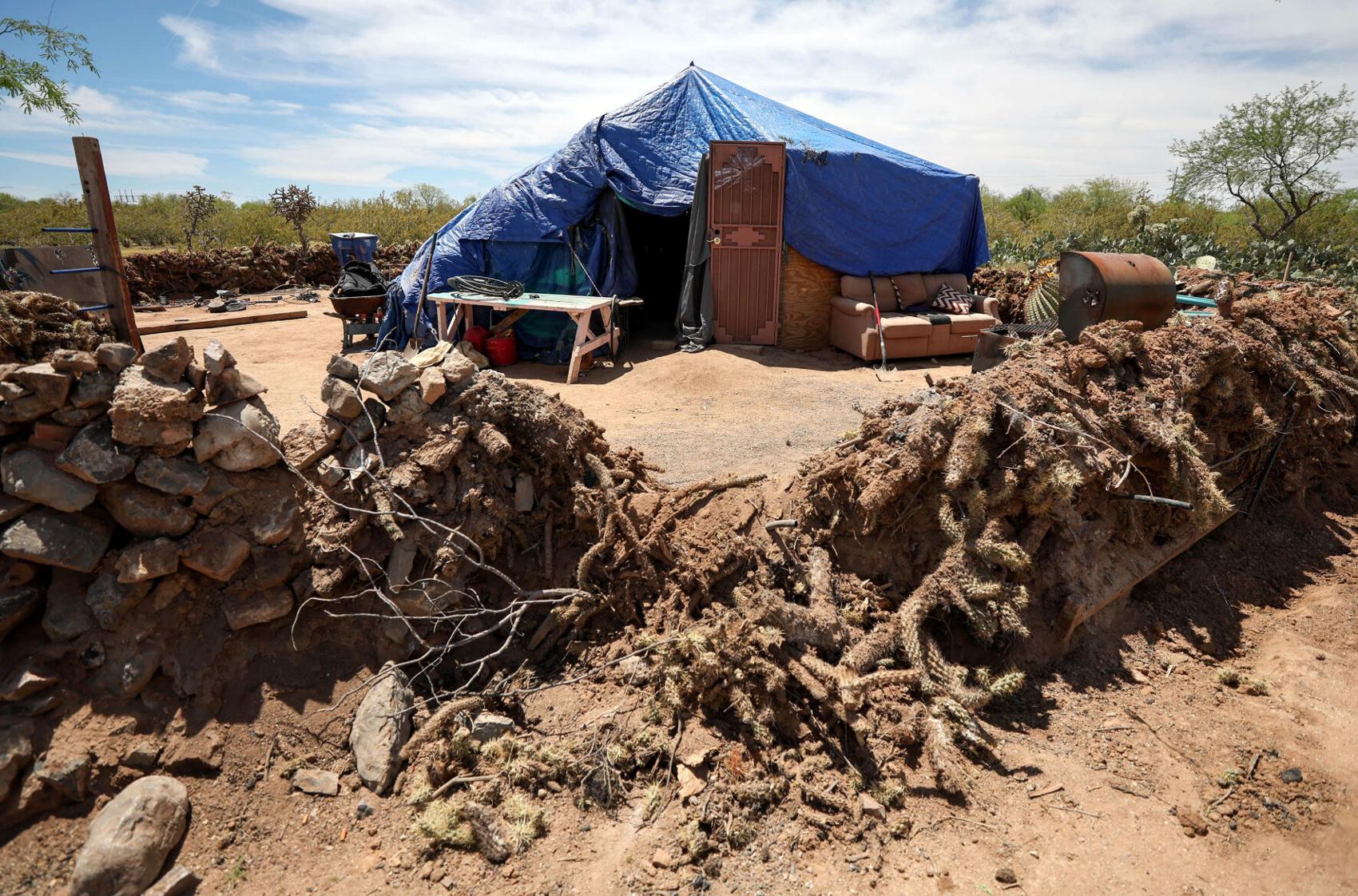
A mud wall complete with a variety of cacti keeps unwanted guests out of a shelter inside of the 100 Acre-Wood bike park, 2801 South Alvernon Way, Tucson, Ariz., April 18, 2024.
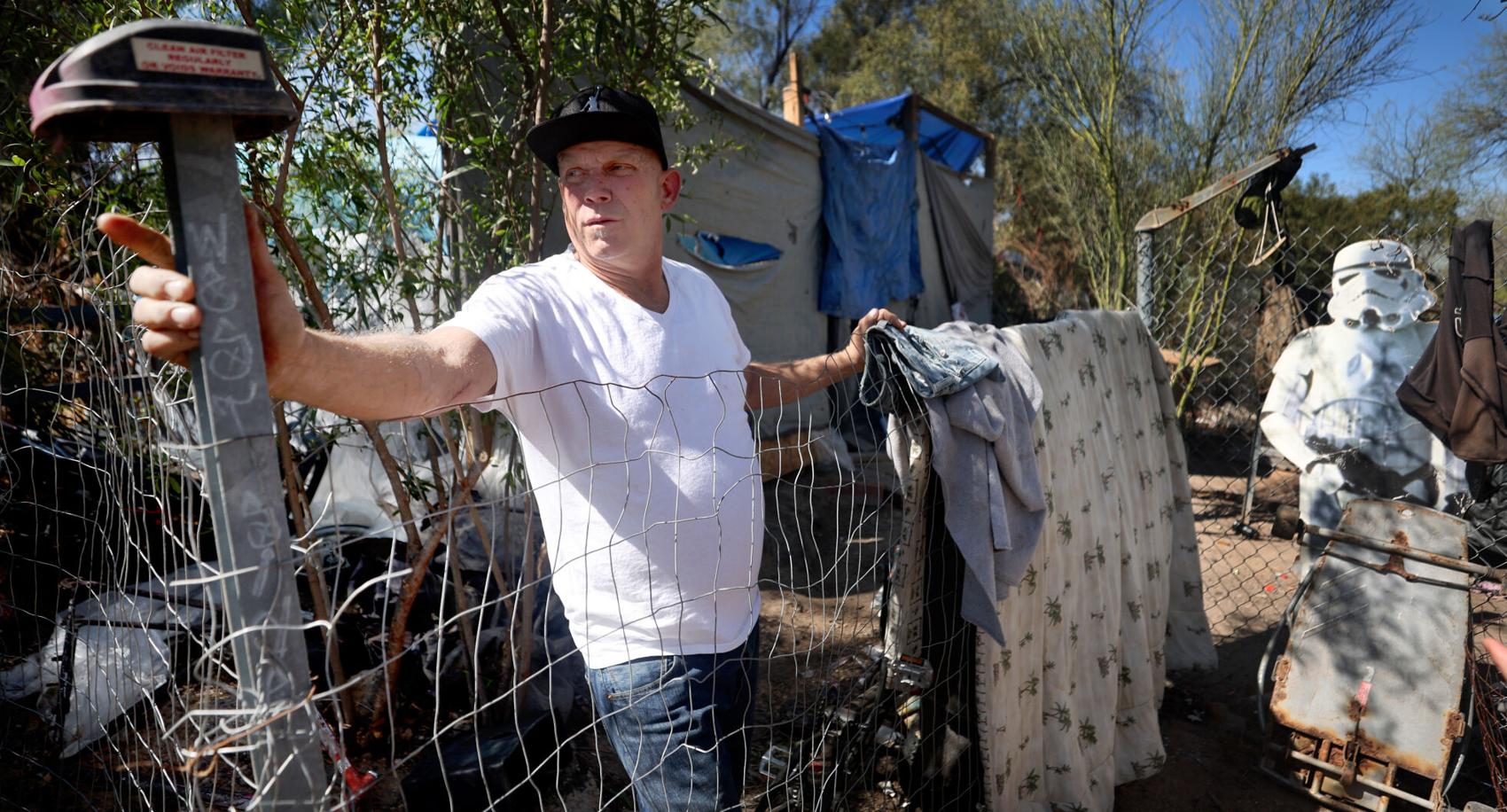
Billy Owens talks from behind the fence around his tent and lean-to in the northern edge of the homeless encampment in 100-Acre Wood, April 10, 2024, Tucson, Ariz.

Large piles of trash can be found near tents inside of the 100 Acre-Wood bike park, 2801 South Alvernon Way, Tucson, Ariz., April 18, 2024.
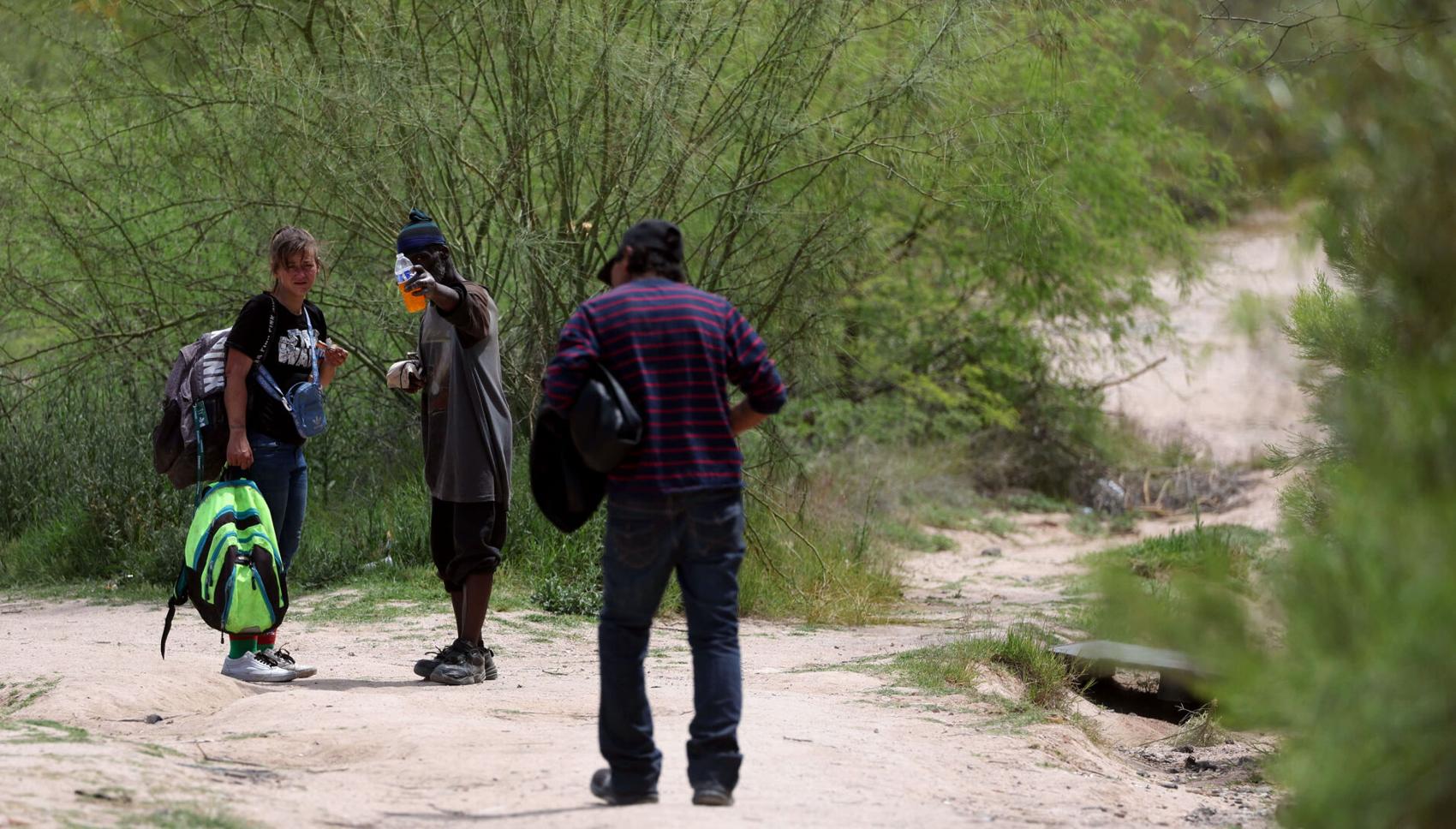
People walk inside of the 100 Acre-Wood bike park, 2801 South Alvernon Way, Tucson, Ariz., April 18, 2024.

An army of shopping carts keep unwanted guests out of a woman’s shelter inside of the 100 Acre-Wood bike park, 2801 South Alvernon Way, Tucson, Ariz., April 18, 2024.
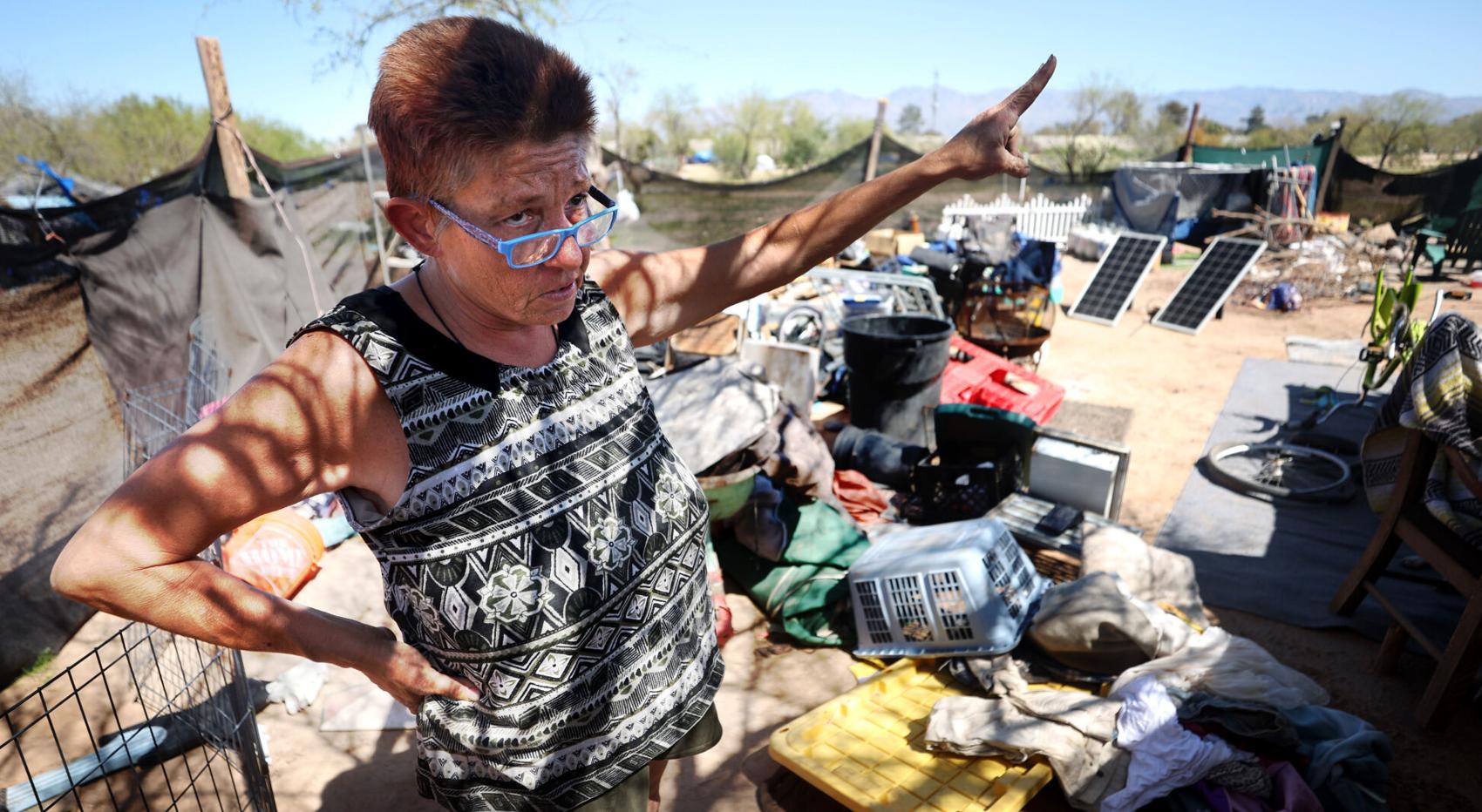
Cece Kon talks about her set-up fenced out in the homeless encampment in 100-Acre Wood, April 10, 2024, Tucson, Ariz.

A shelter inside of the 100 Acre-Wood bike park decorates the space with the official 100 Acre-Wood bike park sign, 2801 South Alvernon Way, Tucson, Ariz., April 18, 2024.

Matt Mullins has a large shelter inside of the 100 Acre-Wood bike park, 2801 South Alvernon Way, Tucson, Ariz., April 18, 2024.
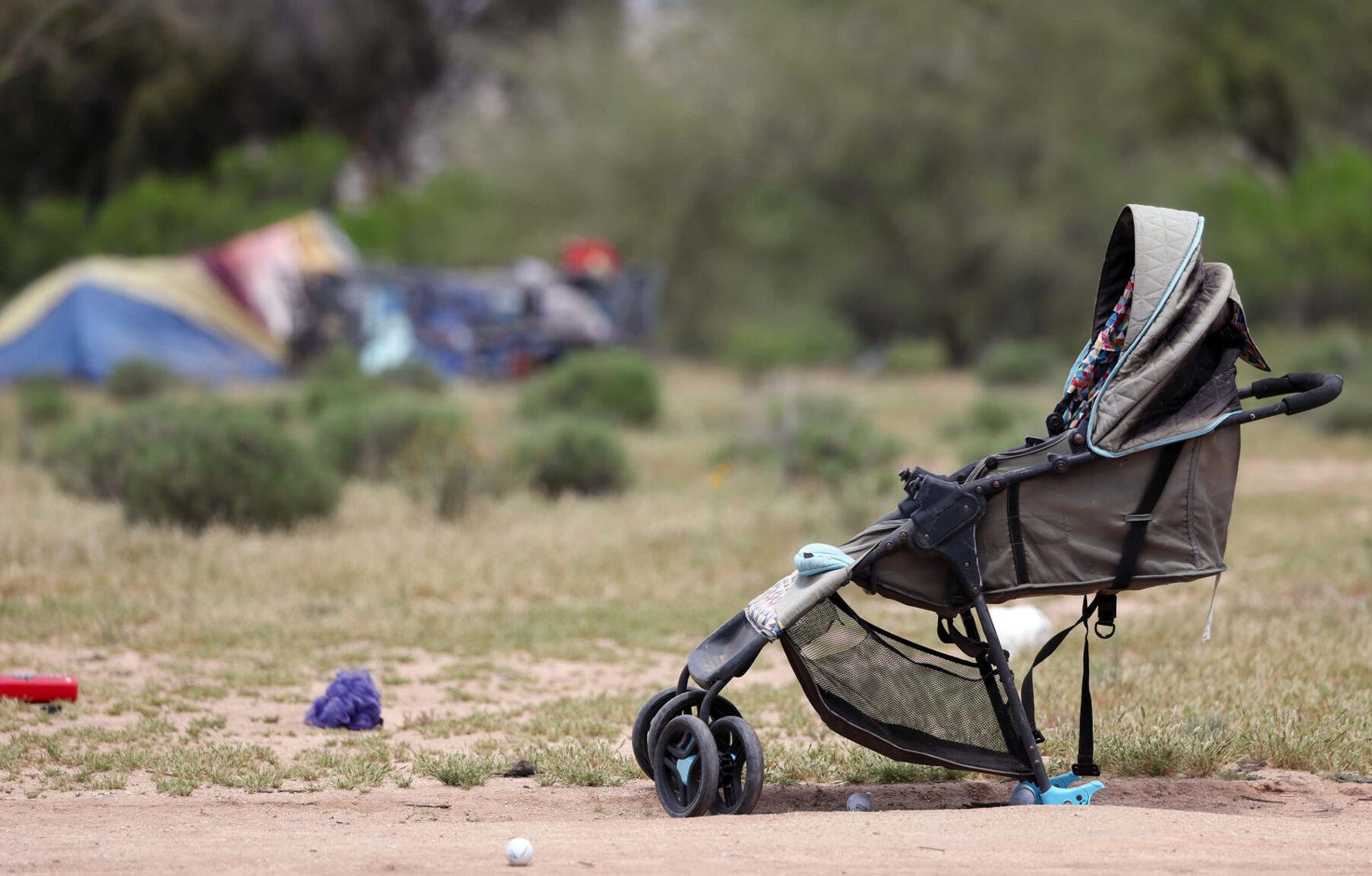
An abandoned stroller sits on a dirt road inside of the 100 Acre-Wood bike park, 2801 South Alvernon Way, Tucson, Ariz., April 18, 2024.

Recently unhoused Frankie Tate tells about being out on the streets for the first time outside his lean-to in the homeless encampment in 100-Acre Wood, April 10, 2024, Tucson, Ariz.
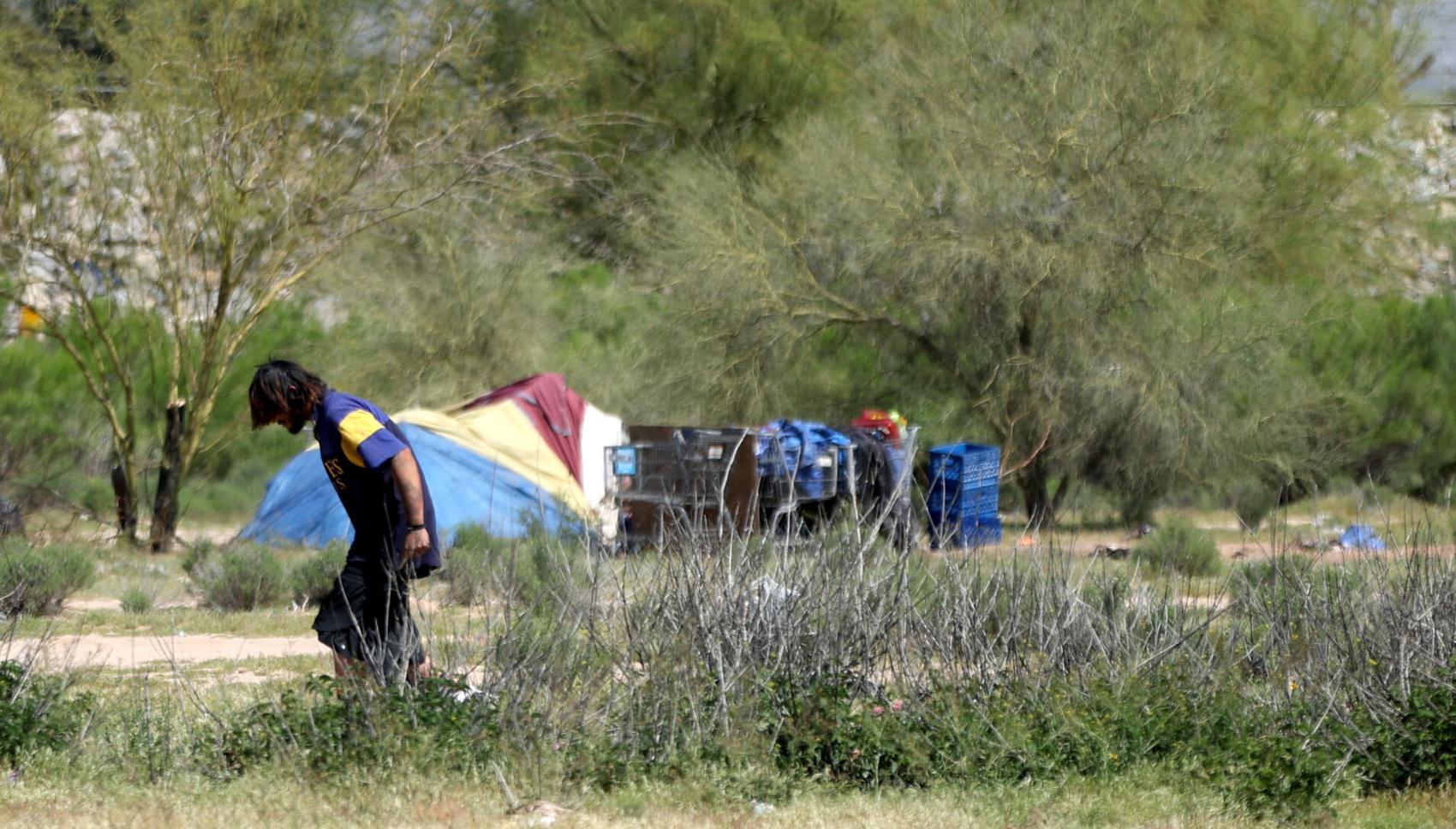
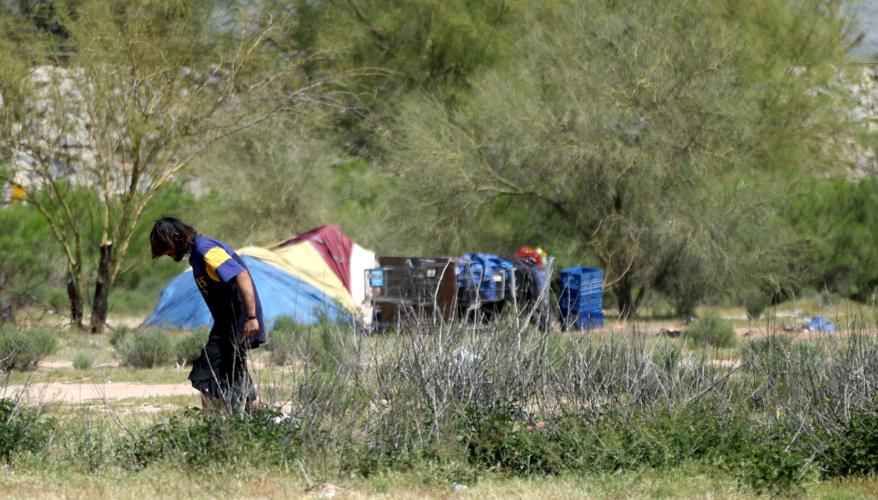
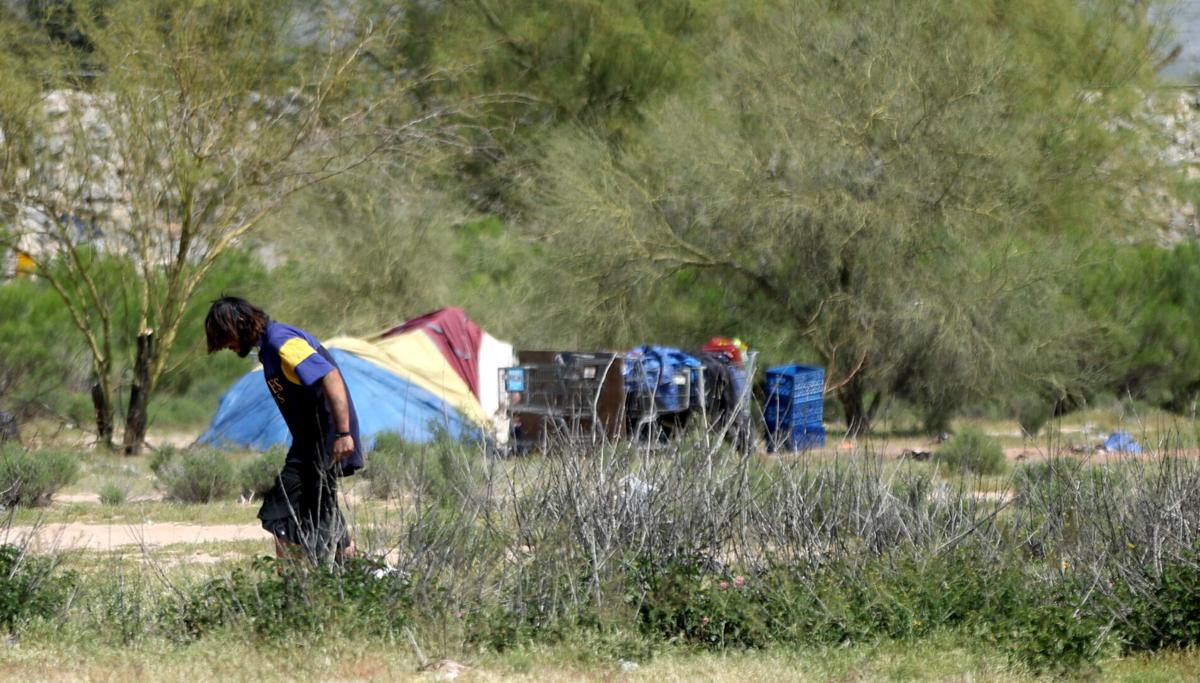
A man walks by a cluster of tents among the homeless encampments living in 100-Acre Wood, April 10, 2024, Tucson, Ariz.

A group of men hangout in front of Matt Mullins, right, shelter inside of the 100 Acre-Wood bike park, 2801 South Alvernon Way, Tucson, Ariz., April 18, 2024.
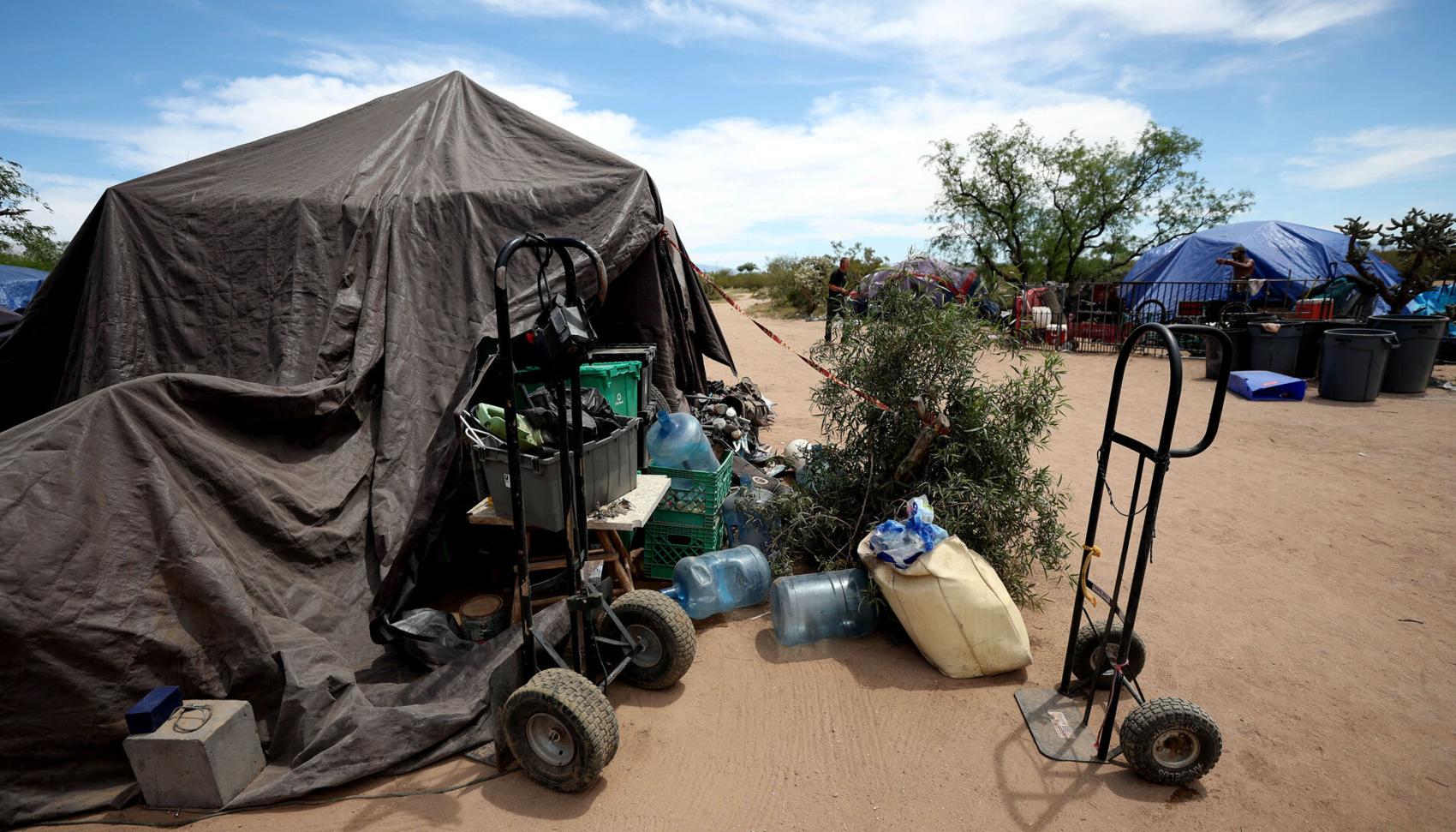
100 Acre-Wood bike park, 2801 South Alvernon Way, Tucson, Ariz., April 18, 2024.
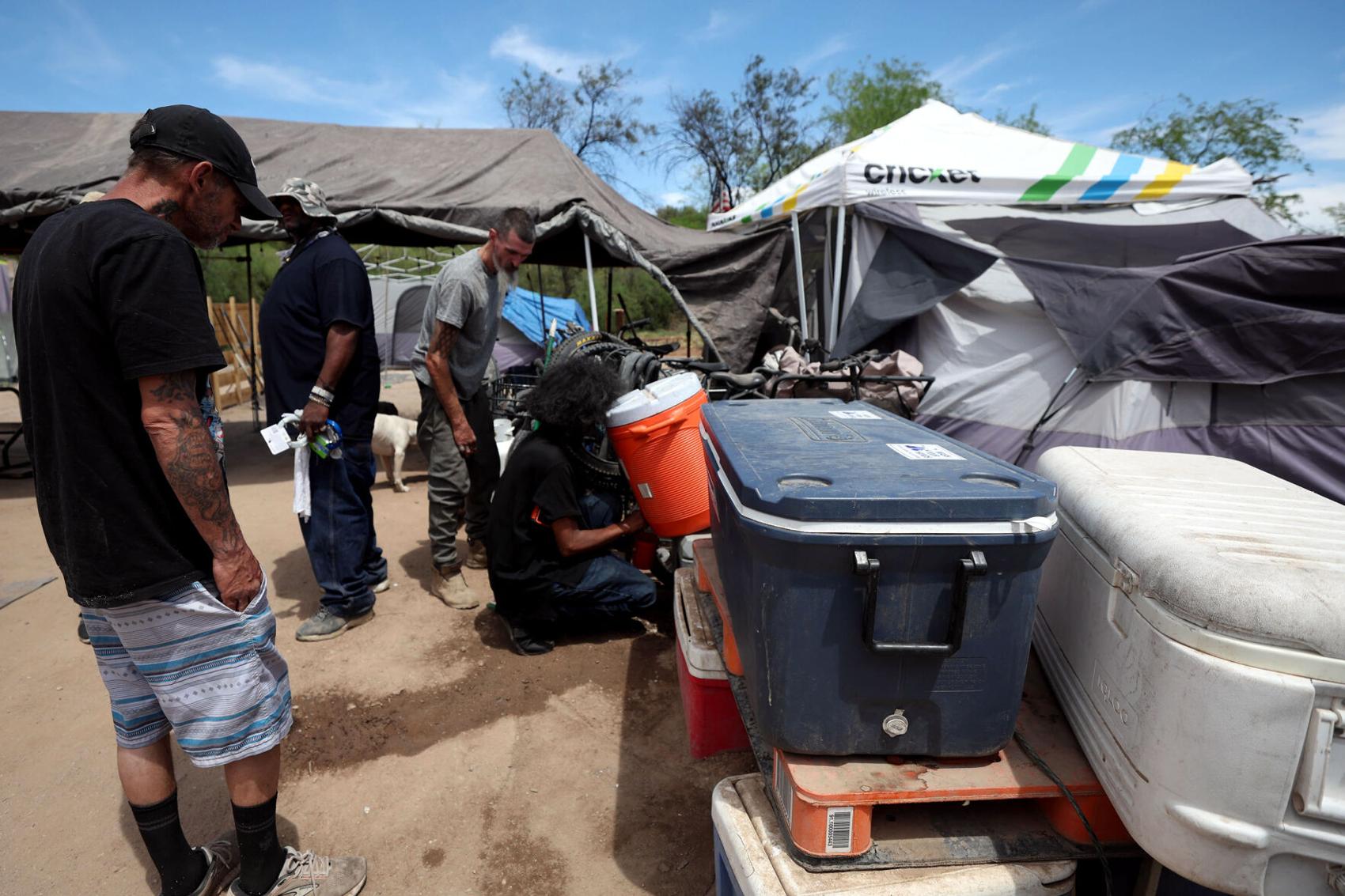
Residents of the 100 Acre-Wood bike park have accessibility to water and soda, 2801 South Alvernon Way, Tucson, Ariz., April 18, 2024.

A woman bikes by a string of abandoned shopping carts inside of the 100 Acre-Wood bike park, 2801 South Alvernon Way, Tucson, Ariz., April 18, 2024.
Get your morning recap of today's local news and read the full stories here: tucne.ws/morning

