



The University of Arizona’s top officials say harnessing fusion energy on Earth “will transform the planet forever,” and they want UA to become the leading academic institution partnering with the private sector and the U.S. government on that mission.
“We’re now in a race to commercialize fusion, to bring fusion to the market — to put electrons from fusion energy, from fusion reactions, on the grid,” Tomás Díaz de la Rubia, UA’s senior vice president for research and innovation, told the Arizona Daily Star in an interview.
UA President Suresh Garimella and Díaz de la Rubia, who both joined the university in fall 2024, list fusion energy among their top three research initiatives for the UA.

Garimella
“Fusion is the process that powers the stars, including our sun, which is the original source of energy that sustains life on Earth,” UA spokesperson Mitch Zak explained.
“And so, the question becomes, ‘Can we harness that energy on Earth?’” Díaz de la Rubia said.
The source of this energy is the fusion of hydrogen atoms under very high pressures and temperatures, Díaz de la Rubia said. This process of achieving fusion in a controlled way on Earth is very difficult, and it’s been a quest of the scientific community, the engineering community and of humankind for decades, he said.
The UA won’t be building a fusion power plant, he said, but will instead work on the technologies to reduce the associated risk so that ultimately, the private sector can build “the reactor, a fusion engine that would drive electricity into the grid.”
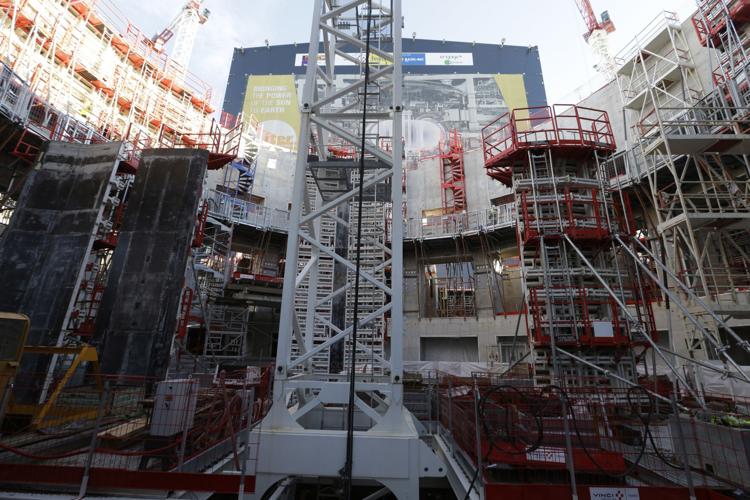
In France, for instance, a fusion energy demonstration project operated for a record 22 minutes on Feb. 12, topping the amount of time China ran one in January. France is also the site of a 35-nation effort to build a massive fusion reactor.
In an opinion piece published Monday in the national news site The Hill, Garimella and Díaz de la Rubia noted estimates that fusion energy commercialization could increase global Gross Domestic Product by $68 trillion.
They also said fusion would create a trillion-dollar industry requiring a highly skilled workforce, new infrastructure and diverse supply chains.
“We have over a billion people that live in energy poverty around the world — we live in a world of energy scarcity,” Díaz de la Rubia told the Star. “So, to go from that world to a world of energy abundance is the ultimate solution. There’s many things along the way, but the ultimate solution is fusion energy.”

de la Rubia
Energy scarcity is the “gap between rising global energy demand and the limitations of our existing systems to provide reliable, affordable, and clean energy at scale,” said Zak. “Today approximately 750 million people still lack access to electricity and more than 2 billion rely on unsafe, polluting fuels for cooking.”
The UA is making the point, Zak said, that “fusion has the potential to change that by offering virtually limitless carbon-free energy and that U of A is uniquely positioned to be a catalyst to help lead the effort to commercialize it.”
And, honing in on a local level, “We worry about water in Arizona,” Díaz de la Rubia noted. “If you have an abundant source of low-cost, clean, sustainable, base-load energy, you can have all the water you want. You can desalinate water, you can clean water. So, it’s a mentality that we go from a world of energy scarcity to one of energy abundance. That is why it’s so exciting.”
The goal in Tucson
The UA intends to be a major contributor to engineering the technologies that will take fusion energy from the scientific breakthrough to building commercial power plants, Díaz de la Rubia said in the Star interview.
This process will be done through collaborations with other universities; private sector companies; national laboratories such as the Lawrence Livermore National Laboratory in California, Sandia National Laboratories at various sites, and the Oak Ridge National Laboratory in Tennessee; the U.S. government; and other countries, he said.
The private sector — mostly in the U.S., but also in Germany, France, and other countries — has invested approximately $7 billion in future startup companies in fusion energy over the last five years or so, Díaz de la Rubia said.
The UA wants to be attractive to those companies, so they come here, set up their facilities to create jobs and build an ecosystem in Tucson and Southern Arizona, along with the federal government’s support, he said.
The UA’s fusion energy commercialization project is being funded as a part of its Technology and Research Initiative Fund or TRIF plan, led by the Arizona Board of Regents.
TRIF funds for the UA amount to $20 million for three specific research areas here: Space and national security, fusion energy, and artificial intelligence and health. These three research areas reflect the university’s priorities, where it has “nationally recognized scholars and areas of expertise,” said Zak.

A vast international experiment is designed to demonstrate that fusion energy can be a viable source. Here, the construction site of a fusion reactor, the International Thermonuclear Experimental Reactor in southern France, is shown in 2017 when it was halfway finished. In the U.S., meanwhile, the University of Arizona wants to be the leading university partnering with the private sector and the government on fusion energy commercialization. The UA won’t be building a fusion reactor.
For now, there are no estimates or concrete breakdowns on how the $20 million will be divided across the three different research areas, but the UA hopes to have a roadmap by the end of the summer. However, space and national security and fusion energy will require more equipment, facilities and laboratories in comparison to artificial intelligence, which is done on computers, Díaz de la Rubia said.
Harnessing fusion energy will be 100% safe, clean and sustainable since it doesn’t create any radioactive waste or emit any greenhouse gases when it burns, he said. He added that outside the usual safety measures taken in any laboratory while working with certain chemicals, there are no extra safety steps that need to be taken.
“My goal is to raise capital, raise funds from the federal government and from the private sector,” Díaz de la Rubia said. “To advocate for the funding necessary to do this in a public-private partnership. I think we’re very fortunate that the Arizona Board of Regents enabled us to get started. Our job now is to take that seed and turn it into a significant program of federal research.”
Earlier this month, the university announced the hiring of Horst Hahn, a materials scientist, as special advisor to Díaz de la Rubia on fusion energy commercialization. Hahn was not available for an interview with the Star, Zak said, saying Díaz de la Rubia is “best positioned” to speak on behalf of the UA on the initiative.
Securing US leadership
Díaz de la Rubia‘s focus and work on fusion energy research isn’t new.
He began his career at Lawrence Livermore National Laboratory, helping lead the development of the Laser Inertial Fusion Engine — a laser fusion power plant that uses “high-power lasers to create continuous fusion ignition reactions” — and its associated patents. The effort enabled the laboratory to achieve the first instance of scientific fusion ignition and energy gain, in December 2022, he said.
Laser fusion, “a virtually limitless energy source,” is about using hydrogen fuel pellets containing hydrogen isotopes, firing them into a laser fusion power plant at a rate of approximately 600 per minute to cause the fuel to ignite and give off more energy than went in, as described on the Lawrence Livermore website. “That excess energy could then be converted into a clean, abundant source of electricity when connected to the power grid,” it said.
Díaz de la Rubia is a professor of physics and chemical, biological and materials engineering, and Garimella is a professor of mechanical and aerospace engineering as well as UA’s 23rd president.
In The Hill article, the two said the most effective step towards commercializing fusion within a decade and securing U.S. leadership in it would be to establish a National Fusion Technology Center.
The two said they believe that with a 10-year mission and a $15 billion budget, “the National Fusion Technology Center would develop testing and evaluation facilities at national labs and universities that would serve as independent validators of progress, reducing private-sector investment risk and streamlining the commercialization process.”
Díaz de la Rubia told the Star he thinks this is a high priority for the federal administration, saying new U.S. Energy Secretary Chris Wright has been very vocal about how important it is to conquer fusion energy and bring it to the market. “The federal government already invests significant amounts of money on fusion energy, but I think we’re going to see an even larger investment,” Díaz de la Rubia said.

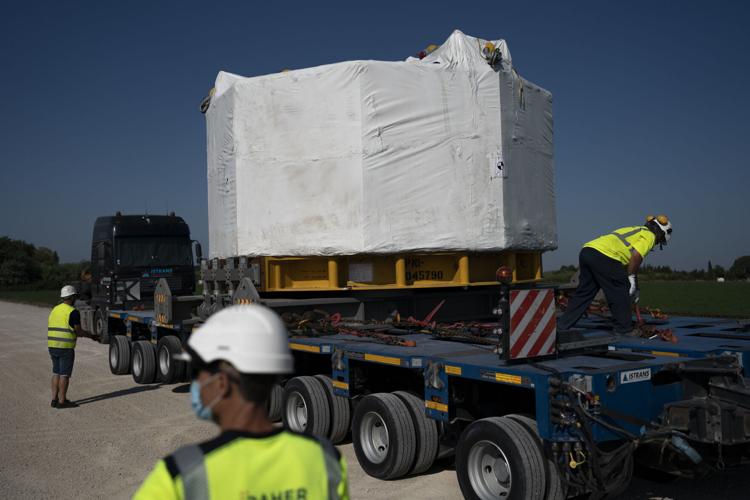
The University of Arizona won’t be building a fusion energy reactor, like one underway in France (which the massive magnet shown in this photo is part of). Instead, the UA wants to be a leader in helping to commercialize fusion energy uses. In France, meanwhile, a 35-nation effort is underway to harness on Earth the power of fusion, “the nuclear reaction that powers the sun and the stars.”
On Feb. 5, Wright signed an order titled “Unleashing the Golden Era of American Energy Dominance,” listing priorities including achieving “true technological breakthroughs” such as nuclear fusion.
“This (fusion) is exciting new technology with huge room to run and has moved very rapidly — the last decade has seen more progress than in my lifetime — and I would love to see that come to commercial power in the next decade,” Wright said at his nomination hearing for energy secretary on Jan. 15.
However, in The Hill story, Garimella and Díaz de la Rubia said the U.S. Department of Energy has allocated only $20 million out of its annual budget of $48 billion for reducing the critical risks necessary to advance laser-based inertial fusion, which they said was “the only approach with a basis in experimentally demonstrated physics.”
“Meanwhile, nations like China and Russia are investing aggressively in fusion, with potentially crippling scenarios for U.S. economic and national security,” wrote Garimella and Díaz de la Rubia. “China is constructing a massive laser facility similar to the National Ignition Facility, aiming to master fusion energy for commercial application and advance its own national security priorities. If the U.S. does not act decisively, and China succeeds in this endeavor before we do, they will control the world’s most advanced power source and thus, the global energy market.”
“Fusion will provide long-term energy security, shielding the U.S. from hostile nations weaponizing energy resources,” Garimella and Díaz de la Rubia wrote.
And, on the Arizona level alone, “Energy abundance produced by fusion would offer a solution to the looming issue of water scarcity and serve as a catalyst for the AI industry’s growing energy demands,” they said.

