


When two elderly sisters named Enedina and Ubaldina were killed on the way to Caborca, Sonora, in August, we were already deep in campaign season.
The two Arizona residents, a U.S. citizen and a legal permanent resident aged 72 and 82, were traveling to the town they’re from, along a dangerous highway in Sonora, when they were murdered.

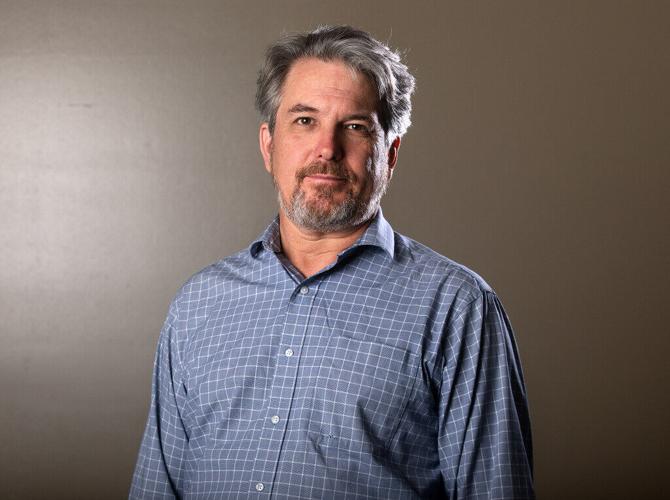
Arizona Daily Star columnist Tim Steller
No campaign brought it up.
The campaigns also were silent about the shootings of Mexican immigrants living in Oregon who were traveling back home to Michoacán for the holidays in December and were fired on along the same highway between Altar and Santa Ana, Sonora. One of them died.
But when a similar attack on the same highway killed Tucsonan Nicholas D. Quets on Oct. 18, that incident became a campaign issue. It also exposed a deep misunderstanding of Mexico, its problems, and our country’s relationship to them.
It appears Quets, 31, was killed when he was driving with friends along the dangerous Highway 2 after dark and did not stop for a criminal group’s illicit checkpoint. They responded with gunfire.
This is a notorious stretch of highway that the U.S. State Department has long warned against traveling as a route to Rocky Point, especially at night. Stopping for such checkpoints may be scary, but it’s the thing to do, and not stopping is much riskier.
Quets’ death is a tragedy that should not have happened — any Mexican will agree. They’ve suffered hundreds of thousands of such tragedies. But the case says very little about us and our policies and everything about Mexico and its weak governance.
Nevertheless, when Republican vice-presidential candidate JD Vance was in Tucson Tuesday, he used Quets’ status as a former Marine to launch into threats.

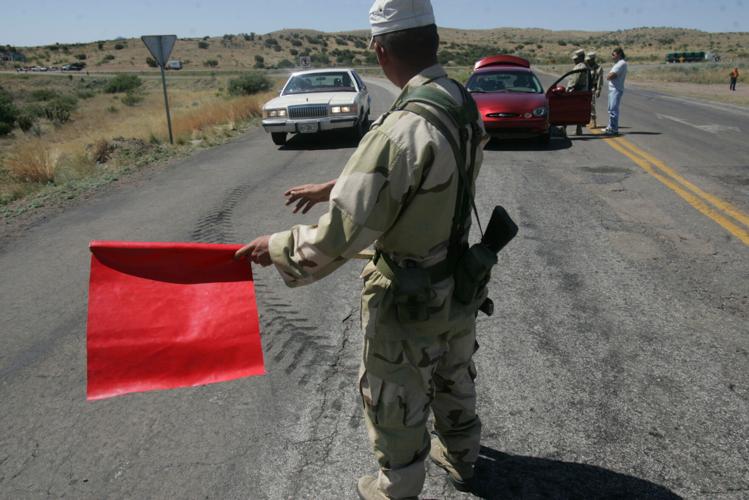
Mexican Army personnel conduct a checkpoint in 2007 on Sonora’s Highway 2 south of Naco, connecting Agua Prieta and Cananea.
“Over the next couple of weeks, we all need to work to apply pressure on the cartels who murdered this innocent young Marine,” Vance told supporters at the Pima County fairgrounds. “I think we’ve got hundreds of thousands of very fine Marines, soldiers, sailors and airmen, who are pretty pissed off at the Mexican cartels. I think we’ll send them in to do battle with the Mexican drug cartels, too.”
Members of Quets’ family from the Tucson area have been unhappy that only the U.S. State Department, not other high officials, have reached out to them. I can understand their rage and anguish, but the truth is, 313 American citizens died in Mexico by homicide in the latest five-year period for which data is available, 2018-22. This is a sadly routine occurrence handled by our consulates.
Family members met with Donald Trump before he spoke in Tempe on Thursday. At that speech, Trump said: “Under the Trump administration we will achieve compete and total victory over these sadistic monsters.”
“We will reclaim our territory, we will restore the sovereign borders of the United States of America, and we will put the cartels quickly out of business. They’re gonna be gone.”
Tough talk won’t help
The thing is, this all took place on Mexican territory, within the sovereign borders of the Estados Unidos Mexicanos.
This tough talk may feel good, but it has vanishingly little to do with fixing the real problems that killed Enedina and Ubaldina, one of the men from Oregon, and now Quets, who worked in Pima County’s wastewater management department.
That’s because what has killed all those people — the occasional American and the many, many, many Mexicans — is Mexico’s weak rule of law and crumbling governance. To the extent they’ve tried to fix it, they’ve so far failed.
And lately, Mexico’s federal government doesn’t seem to be trying. The six-year presidency of Andrés Manuel López Obrador, which ended Oct. 2, was marked by denial and defensiveness as criminal control crept across new swaths of the country.
I came face-to-face with this when I traveled to the state of Guerrero in February 2020 to document the conditions displacing residents and sending them to the border at Nogales. After talking with people forced from their hometowns by warlords taking over territory, I attended one of then-president López Obrador’s daily press conferences and asked him what he would do to help Mexicans forced to flee.
“In the majority of cases, it’s because of poverty, it’s due to the lack of opportunity,” he said of these migrants.
That was false. They fled due to fear, not poverty. But he did not want to confront the real problem: Criminal groups forming armies and taking over territory to tax and exploit all the money-making activities in the region, not just drug trafficking.
Things in Guerrero have only gotten worse since then. On Oct. 6, four days after the new president, Claudia Sheinbaum, took office, the mayor of Guerrero’s capital city, Chilpancingo, was murdered and decapitated.
Nothing much has improved in the triangular region of Sonora south of Arizona, between Nogales, Sonoyta and Caborca, either. Violence between criminal groups seeking to control smuggling routes has occasionally emptied out entire towns, such as Sasabe.
The responses of Lopez Obrador and his protege Sheinbaum, both leaders of the Morena Party, have been tepid. Confronting the problem with violence, in the past, has only led to more violence, they’ve noted. But they haven’t figured out how to help civil authorities take the levers of power back from criminal groups in the many areas controlled by them.
Party’s misplaced priorities
Instead, Mexico’s ruling party has been focused on something that every aspiring autocracy aims for: Taking over the judicial branch. They’ve passed and begun implementing a new system of electing judges, rather than appointing them, that many fear will cement control of the ruling Morena party over the courts and eliminate any independence they’ve had.
The Biden administration and international business interests have opposed the change, the most important thing happening in Mexican politics today. But it’s not the sort of thing Donald Trump talks about on the campaign trail, because it doesn’t directly involve violence and drugs and migration, the things that interest him.
Still, it’s these boring internal policies and political changes within Mexico that ultimately will determine whether criminal groups can continue putting up illicit roadblocks and shooting at those who don’t obey them. The U.S. could send in thousands of soldiers to kill off capos and traficantes, and that wouldn’t make the difference, because it wouldn’t fix Mexico’s internal problems of governance.
The price of that failure is paid almost entirely by Mexicans. But occasionally, an American, too, dies as a result. And, more rarely, it’s a U.S. military veteran who suffers from Mexico’s lack of governance, making their death easier to exploit politically in the peak of our campaign season.

