


NOGALES, Ariz. — Venturing into customs officers' turf, agents with U.S. Immigration and Customs Enforcement have been posted at three Nogales ports of entry for much of the past two weeks, questioning some and at times checking immigration documents as travelers try to leave the U.S., locals say.
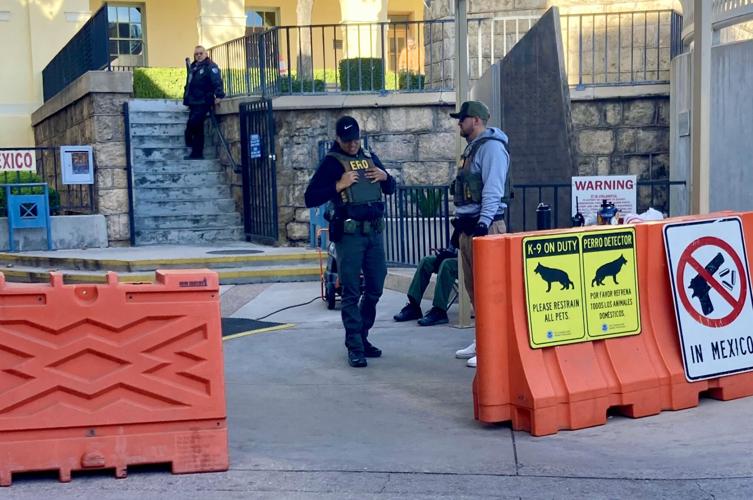
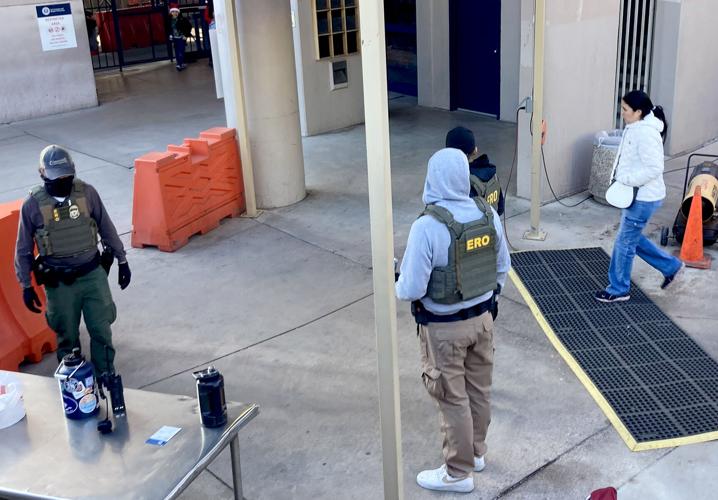
On Wednesday, an Arizona Daily Star reporter saw three agents wearing vests that read "ERO," for ICE's Enforcement and Removal Operations branch, stationed just north of the pedestrian exit at the DeConcini port.
Taxi drivers who work near the port said the agents have been there almost every day, as well as in the southbound vehicle lanes, since the week of Dec. 8. Locals also report seeing ICE agents questioning travelers before they leave the U.S. through the Morley pedestrian crossing and the Mariposa port of entry.
"They ask where you're from, where you live, how many days you were here" in Arizona, Rosario Díaz, 68, said in Spanish, moments after entering Arizona on foot through the DeConcini port on Wednesday.

Agents with ICE's Enforcement and Removal Operations have been newly posted just north of the DeConcini pedestrian port and southbound vehicle lanes, where locals say they've been questioning some travelers and asking for immigration documents. Three agents with ERO vests were stationed at the DeConcini pedestrian exit on Wednesday. A recent ICE memo described a Department of Homeland Security plan to deploy ICE agents to the border this month, in order to detain undocumented migrants, or people who have overstayed their U.S. visas, as they try to return home for the holidays.
The Nogales, Sonora, resident said she regularly visits her U.S. citizen son in Arizona, and the interrogations bother her.
"This has never happened before," she said.
Agents aren't stopping all travelers; a white Star reporter crossed on foot without being questioned. Regular border-crossers say agents seem to be targeting people who look Hispanic.
The presence of ERO agents in Nogales appears to be related to a recent ICE memo, reported this month by HuffPost and Texas Public Radio. The memo described a Department of Homeland Security plan to deploy ICE agents to the border this month, in order to detain undocumented migrants, or people who have overstayed their U.S. visas, as they try to return home for the holidays.
Agents will target commercial buses heading to Mexico, HuffPost's story said.
Neither ICE nor DHS have responded to the Star's requests for clarification of the new operation at the southern border.
A spokesman for U.S. Customs and Border Protection said he had no information on ICE's mission at Nogales ports of entry. CBP employees typically handle operations in the border region — CBP officers man the ports of entry, and Border Patrol agents patrol between the ports — whereas ICE usually operates in the U.S. interior.
By formally deporting violators before they can leave voluntarily, ICE can boost its deportation statistics as the Trump administration seeks to fulfill its campaign promise of "mass deportations." ICE can also impose penalties or prohibitions on deportees' return to the U.S.
'Ghost town'

Agents with ICE's Enforcement and Removal Operations have been newly posted just north of the DeConcini pedestrian port and southbound vehicle lanes, where locals say they've been questioning some travelers and asking for immigration documents.
The heightened scrutiny at the ports is unnerving for residents of Nogales, Arizona, and Nogales, Sonora, border towns commonly referred to as "Ambos Nogales," especially as ICE agents' mission remains unclear, travelers and shop owners said Wednesday.
Business owners say Mexican shoppers have been staying away from Nogales, Arizona, this Christmas season, which some attributed directly to ICE agents' presence, as well as factors like inflation and heightened immigration enforcement broadly.
Nogales shopkeeper Lidia Lopez gestured around her empty dress store Wednesday morning. Normally, she said, it would be filled with families from Sonora and Sinaloa doing their Christmas shopping.
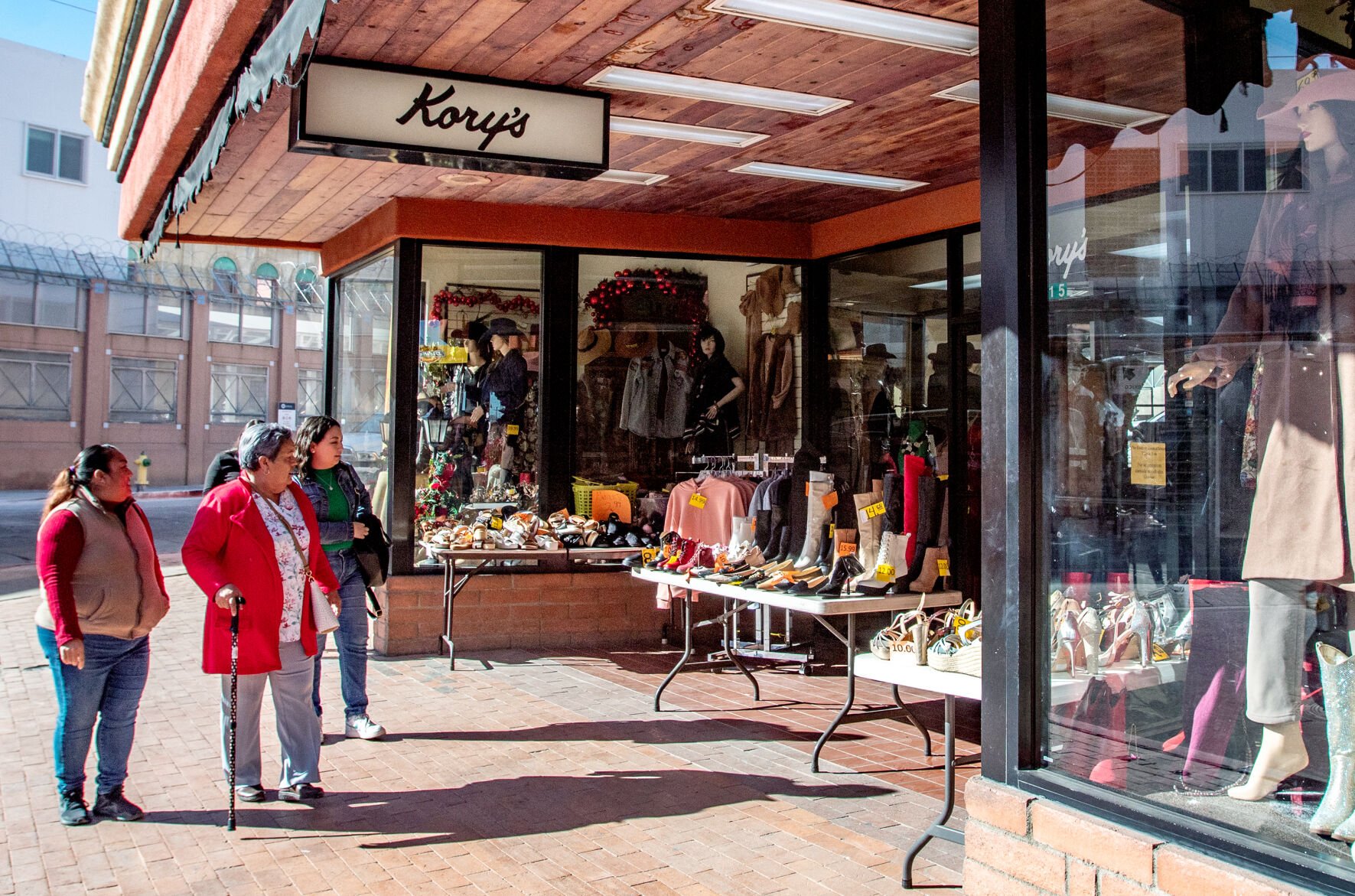
Kory's office manager Claudia Ramirez said the Morley Avenue business is hoping a surge of last-minute shoppers will help counter the slower-than-usual foot traffic in Nogales, Arizona, this month, which she attributed both to inflation and ICE's presence at the border deterring Mexican shoppers.
But since ICE agents started questioning travelers, "There aren't any sales, there aren't people in the streets," said Lopez, an employee at Sam's Perfumes and Fashion on Grand Avenue, just north of the DeConcini port. "The businesses here are becoming like a ghost town."
Speaking in Spanish, she described the timing of the ICE operation during the holidays as "cruel."
"This is the high season," she said. "People are afraid. They're afraid of not knowing how to answer (ICE's questions) and that they might use it as a pretext to take away their passports."
La Cinderella and its sister store Kory's, both on Morley Avenue, have seen reduced foot traffic lately, employees said. Owner Sandra Kory attributes slower business not only to heightened enforcement, but also reported plans for mandatory facial scans at the southern border.
"There are so many new rules," she said.
In a plan that a CBP spokesman called "completely unrelated" to ICE agents at the ports, DHS will start doing biometric screenings for all non-U.S. citizen travelers on Dec. 26, scanning travelers' faces as they enter and exit the U.S., including at air, land and sea ports.

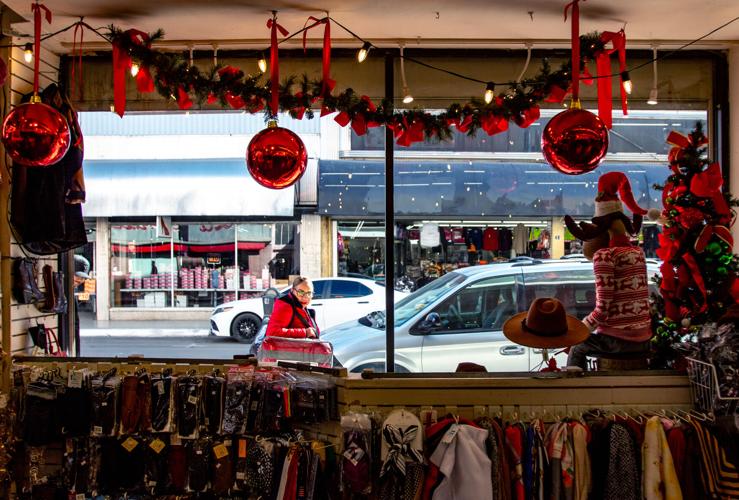
A passerby glances through the window of La Cinderella on Morley Avenue in Nogales, Arizona. Just south of the store, as well as at other Nogales ports, ICE agents have been spotted questioning travelers before they leave the U.S. through the Morley pedestrian crossing, local business owners say. Some believe the scrutiny has contributed to lower foot traffic this holiday-shopping season.
Even for international tourists and shoppers with their documentation in line, the surveillance is unnerving, Kory said.
"People are just so nervous to come in (to Arizona) because they’re afraid," she said. "It's all over the news that people even with legal status are being taken (by ICE), and they don't know where they take you."
Greater Nogales Port Authority board chairman Josh Rubin said this year, non-commercial border crossings — pedestrians, personal vehicles and bus passengers — at Nogales ports are on track to reach an estimated 10.5 million by the end of the year, about 300,000 fewer than in 2024, he said.
That's based on reported monthly data from the Bureau of Transportation Statistics, for which the most recent reliable data is for September 2025. The projection wouldn't account for any fluctuations in December.
It's not a big drop, but will likely be felt by local businesses, he said. Multiple factors are at play in that slight decline, including lingering impacts from the COVID-19 pandemic, he said.
"I know it's crazy to continue talking about the pandemic five years later, but the pandemic really changed the way Mexican shoppers shop," he said. "They were forced to find new ways to get what they wanted" without coming to the U.S.
For the Port Authority board, safe and efficient operations at Nogales ports of entry are the top concern, and DHS is a partner in that goal, he said. As long as ICE's operations don't hinder cross-border flows, Rubin said he doesn't have a problem with their presence.
"At the end of the day, we live in an international border here in Nogales, and the laws are the laws," he said. "From the Port Authority standpoint, our priority is to keep Nogales a reliable, efficient and welcoming port of entry for lawful travelers and trade. That consistency is what supports jobs, businesses and the regional economy on both sides of the border."

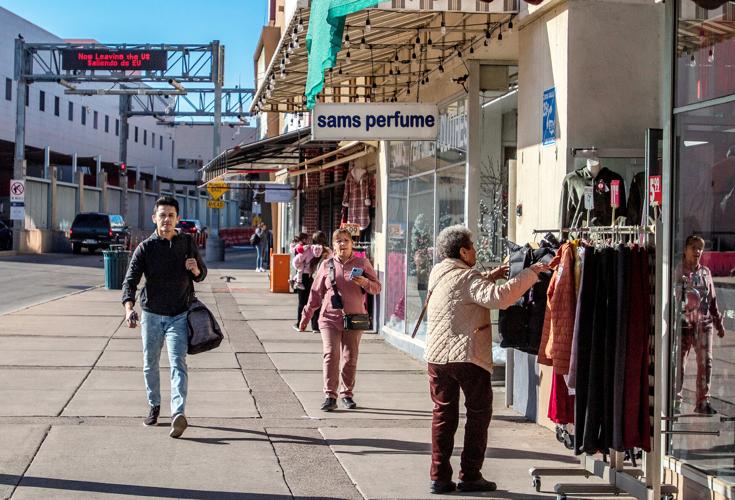
In recent weeks agents with Immigration and Customs Enforcement have been questioning drivers, and asking for immigration documents, before southbound vehicles exit Arizona through the DeConcini port in Nogales. Some shopkeepers on Grand Avenue, just north of the port of entry, say heightened immigration enforcement at the border is deterring Mexican shoppers from doing their holiday shopping in Nogales, Ariz. "The businesses here are becoming like a ghost town," said Lidia Lopez of Sam's Perfumes and Fashion.
Roberto Contreras lives in Nogales, Sonora and works just over the border, at Pinnacle Charter School on Morley Avenue. The slowdown in foot traffic there has been dramatic this month, said Contreras, who is a dual citizen and crosses the border daily.
He's noticed the ICE agents at the ports over the past two weeks, which he says contributes to the already rising hesitation among would-be border-crossers. Normally, there would be a line down the avenue of "paisanos" — people with Mexican roots who live in the U.S. — returning to Mexico to visit family for the holidays, but not this year, he said.
The nonprofit charter school helps students get their high school diplomas online and offers in-person English classes, mostly to U.S. citizens who live in Nogales, Sonora.
Fear is keeping many of the students away in recent months. Contreras' co-worker Jessica Leal said they're doing more outreach lately, "to try to keep the place alive."
Aggressive immigration enforcement 'is killing the economy," Contreras said.
Shop owners say they're hoping for a surge in last-minute holiday shoppers before the month is out. Kory said DHS oversight will continue to be front of mind for many local businesses.
Over the summer, La Cinderella was hit with an I-9 audit, in which DHS agents — likely from Homeland Security Investigations — asked for proof of store employees' legal status, Kory said.
Kory and her staff scrambled to gather all the documents, but didn't hear back from the agents for months, she said.
"We didn’t have anything to hide," she said, but the audit was especially stressful, as Kory was dealing with health issues.
"I'd just had surgery, and I had to be standing up trying to help my secretary to make all the copies they needed," she said. "It was terrible."

