


Global copper prices have soared so much and so fast that “copper is the new oil,” a global commodities expert says, and the Wall Street Journal reports “the world has gone cuckoo for copper.”
Copper prices vaulted to over $5 a pound in recent days for the first time ever on various metals and other commodity exchanges. They’re risen steadily all year and now stand about 25% higher than at the start of this year.
Prices have risen for eight straight days. The gain has been fueled in part by expectations of increased copper demand for the “green energy economy,” for use in artificial intelligence data centers providing cloud storage and other services, and to respond to increased demand from the military, experts said. On top of that has come short-term upward pressures from speculators.
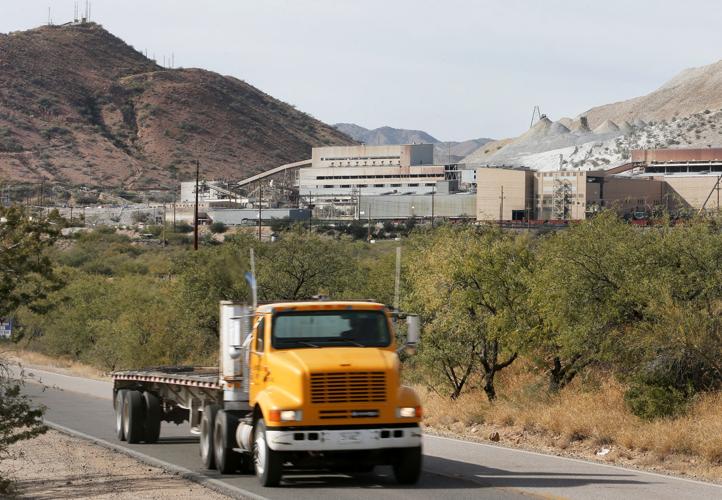
Arizona mines, including three near Tucson, generate about 70% of the U.S.’ total copper production.
But two natural resource economists in academia don’t expect the price spike to trigger significant increases in copper production or jobs at mines here or nationally until it becomes clear the boost is sustainable for a long term, they told the Arizona Daily Star Tuesday. Copper prices have been quite varied and at times very volatile for decades, having risen and fallen repeatedly since the COVID-19 pandemic sent them crashing in 2020, noted the two, Ian Lange of the Colorado School of Mines and Charles Sims of the University of Tennessee.
What’s more likely in the short term is for mines in Arizona and elsewhere to pump more money into local economies from price-driven higher profits by buying more mining equipment and supplies, said Lange, of the Payne Institute for Public Policy at the Colorado school.
“We tend to find more production doesn’t tend to stimulate the local economy as much as revenue from the price rise,” Payne said. “More prices doesn’t mean necessarily more production. It takes awhile to get more from the ground.”
A local expert, Rick Grinnell of the Southern Arizona Business Coalition, said continued high demand for copper due to green energy needs and other forces will ultimately lead to more production and employment — not immediately, but in the next five to 10 years.
“You are going to see in Arizona production an increase, simply because the need is going to continue to go up,” said Grinnell, whose coalition has long been a strong proponent of the mining industry.
Tom Aldrich, executive director of the Mining and Minerals Education Foundation, agreed that higher prices will lead to increased production and employment in Arizona copper mines, but mainly after new mines get their permits and start operating.
“They can improve on their efficiencies, that type of thing. (But) to see a big shift in production and output, you have to see more facilities being built,” said Aldrich, a former top official of Asarco’s Mission Mine south of Tucson.
“The fact of the matter is there is not enough copper being produced to go around to support the initiatives in clean energy and the revolution that’s taking place now in terms of everything we need,” he said. “Conversely, permitting is still slow in Arizona. There are a number of deposits that they’re trying to get underway. It all depends on how fast those go through the process.”
The rising copper prices of this year have already helped copper giant Freeport McMoRan, which runs Arizona mines near Green Valley south of Tucson, in Morenci in eastern Arizona and in Miami near Globe. It reported higher first-quarter earnings and greater sales volume for the first three months of 2024 compared to the same period in 2023.
Hudbay Minerals Inc., which proposes to build a major copper mine in the Santa Rita Mountains south of Tucson, reported first-quarter revenue of nearly double that of a year ago, and net earnings that were more than three times higher than the same period of 2023. But earnings for Grupo Mexico, Asarco’s parent company, declined in the first quarter of 2024 compared to that period a year ago.
This week, commodities expert Jeff Currie made the “copper Is the new oil” comment to Bloomberg TV.

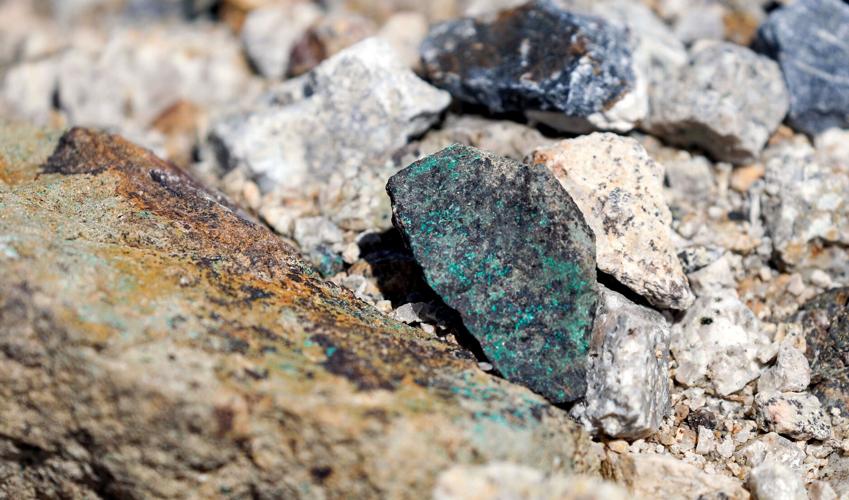
Copper ores can be seen along the mountainsides on the Hudbay Mineral Inc. property in the Santa Rita Mountains south of Tucson.
He added, “If you go back to the 2000s and I was as bullish on oil then as I am copper today. You know oil ended up going up from $20 to $140 — (up) seven times. The upside on copper here is very significant.”
Currie is the London-based chief strategy officer of Energy Pathways at Carlyle Investment Group and is former global head of commodities research at Goldman Sachs. He has predicted that copper prices will reach as high as $6.80 per pound, or $15,000 a ton, in the coming years.
He said he had been “telling this story” — predicting $5 a pound copper — for three years but it hadn’t worked out until now. And even now, copper prices won’t match their all-time record in inflation-adjusted dollars until they reach $15,000 a ton, he said. That would put them at the same level they were in real dollars in 1968, when a housing boom sent prices soaring to a then-high figure of 72 cents a pound.
“All we know is bringing on supply is really difficult” now, Currie told Bloomberg in explaining part of the reason for the current copper price spike.
Last week, the Wall Street Journal’s report on world demand for copper noted growing competition between the U.S. and China for global copper supplies. It also noted the Australian-based BHP Group’s unsuccessful, $43 billion takeover bid for Anglo American, a major commodity producer whose assets include copper.
Copper is used in the power and construction industries and is widely expected to benefit from the green energy transition via additional demand from the electric vehicle sector and new applications including data centers for artificial intelligence, the wire service Reuters reported.
Equipment manufacturing is currently the largest end-use sector for copper, followed by construction and infrastructure, Reuters said.
Global apparent use of refined copper has spiked by more than 150% from the late 1980s to more than 29 million tons in 2023, as Asia became the largest consumer with a 70% share of consumption. As of 2022, China was the largest consumer of refined copper with usage of 14.7 million tons, Reuters reported.
In the short term, prices of the metal have been on a tear in recent weeks amid growing optimism over lower interest rates this year, as well as stimulus measures in top importer China, the website Investing.com reported this week. Bets on tighter supplies — amid refinery cuts in China and stricter sanctions on Russian metal exports — also fueled buying into copper, that site said.
But the biggest boost to the metal was from a “short squeeze” on the Comex Exchange last week, where heavy buying of long-term copper contracts boosted prices and rattled short positions on the metal, Investing.com added. The Comex Exchange is the world’s largest futures and options trading exchange for metals.
U.S. copper futures in particular shot up last week on the squeeze, while traders were also seen racing to procure copper supplies for delivery on the July contract. A short squeeze happens when a price of a commodity or another item rises much faster than analysts have projected, catching by surprise investors who were trying to “short” a stock and cash in on an expected fall in prices.
The long term is really fueling this big, speculative run in prices, Bloomberg television commentator Clara Ferreira-Mareuez said Tuesday. “It’s really about long-term demand, the energy transition, about EVs and whether there could be a shortage of the metal.”
But how much the price increase affects copper production and jobs will depend on how sustained this increase will be, Professor Charles Sims, a University of Tennessee natural resources economist, told the Star Tuesday. Over the last few decades, copper prices have fluctuated repeatedly, rising, falling and then rising again one or more times even since the pandemic began in March 2020.
“Part of it will depend on how quickly other countries are going to respond to this price shock,” Sims said. “The price is going up because there’s an increase in demand and limited supply. If other countries take advantage of this and can easily increase their production that will increase the supply in the market and the price will come back down again.”
The longer price increases last, the more of an incentive will exist “for people to make that plunge, the commitment for investment in expanded production,” Sims said.
Grinnell said, “Copper prices are going to fluctuate up and down for the next 10-20 years.” But because the need for copper will continue to go up, that will bring copper prices to a new, long-term baseline of $5 a pound, he said.
Ultimately, the big producers will be increasing, “and it will be a great benefit to Southern Arizona in particular,” Grinnell said.
Get your morning recap of today's local news and read the full stories here: tucne.ws/morning

