



PHOENIX — Arizona’s largest electricity provider notched two huge financial wins in the 2025 legislative session with last week’s approval of new laws by Democratic Gov. Katie Hobbs.
The victories by Arizona Public Service Co. can in large part be credited to the utility’s years-long efforts to curry favor with not just Hobbs and lawmakers from both parties but local politicians and community and business groups across the state.
Getting that influence involves APS or its corporate parent, Pinnacle West Capital Corp., giving millions of dollars in donations to politicians, business groups like chambers of commerce and through the company’s well-organized community giving operation, which doles out money to a broad range of entities like food banks, schools and many, many others.
Hobbs alone has benefited from at least $350,000 in Pinnacle West donations to special funds set up for her inaugural and to pay her legal bills. And the publicly traded company, worth nearly $11 billion, has donated to scores of sitting lawmakers’ political campaigns, according to filings with the Arizona Secretary of State.
The company is unapologetic about its role in the legislative process and in spreading around cash.
“We engage in the public policy process for the benefit of our customers, shareholders, employees, communities and other stakeholders,’’ said APS spokesman Mike Philipsen.
“We advocate for sound, forward-looking public policy that creates shared value for our business, our community and a vibrant Arizona economy,’’ Philipsen said. “We believe that this participation helps to create more robust and better-informed policy outcomes.’’
The resulting goodwill from all that gives APS the ability to mobilize support for its proposals in the Legislature and tap into a broad range of people and politicians outside the Capitol to ask their lawmakers to back its plans.
And it paid off big last week. Hobbs signed a bill shielding APS from most lawsuits if its equipment sparks a wildfire and a second allowing it to issue bonds to pay itself for assets like old power plants it needs to sell at a loss.
Issuing bonds will mean a new, separate charge will be tacked on to monthly bills paid by 1.4 million Arizona households or businesses. And the liability protection could potentially save APS billions of dollars if a blaze its equipment sparks destroys a town like Prescott or Show Low.
That lawsuit number isn’t speculation. Utilities in Hawaii, California and Oregon have paid out tens of billions of dollars to victims of wildfires in the past decade. And although Arizona has so far not had a similar event, APS was concerned it could be the next company to face a threat to its business in the event of a major conflagration.
Both bills affect other regulated utilities as well, including Tucson Electric Power, as well as public power providers like Salt River Project and smaller co-ops. They signed on in support and lobbied for the measures.
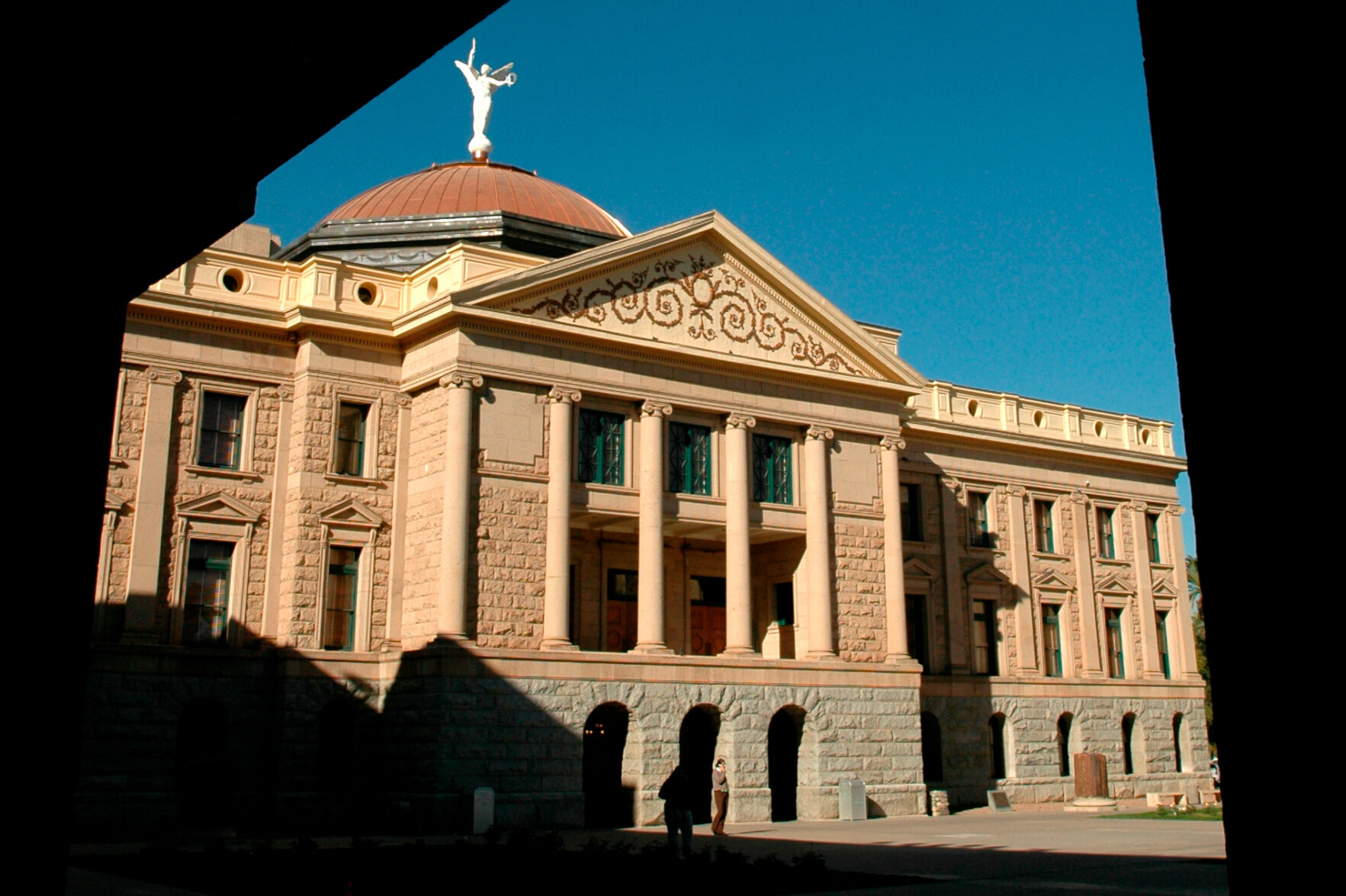
But it was mainly APS that initially crafted the measures, garnered the support of the other utilities — and deployed its numerous lobbyists to sell them to lawmakers.
“It shows the kind of political influence they have,’’ said Sandy Bahr, director of the Sierra Club’s Grand Canyon chapter.
“It’s especially concerning, however, because of what they represent — they are a monopoly utility,’’ she said. “If we don’t like what they’re doing, how they’re spending our ratepayer dollars, we can’t just go somewhere else for our electricity unless we want to move.’’
That leaves state oversight.
“We rely on government entities to help hold them accountable — the Corporation Commission, the Legislature and the governor,’’ she said, “and that’s just not happening.’’
Bahr, whose group joined many others in opposing the bills, said the regulated utility’s influence was readily apparent as the proposals moved through various hearings. She noted that following one Senate committee hearing there were so many utility lobbyists in the hall — most from APS — that she could hardly get through the hallway.
The first new law gives APS protection from most lawsuits if their power lines cause a fire, even if it obliterates a large town. Initially, the measure gave such sweeping protections from lawsuits that it almost certainly ran afoul of a provision in the state constitution that says lawmakers can’t limit the right to sue or recover damages.
Class action lawsuits — where community members can band together to sue — would have been banned, and it barred the right to recover for things like lost businesses or the use of a destroyed car. And the level of proof needed to win a suit claiming a utility caused a fire would have been raised to near-unattainable levels.
Minor changes in the House and a major Senate amendment restored much of those rights. But as signed by the governor APS still got a lot of what it wanted.
In exchange for creating and largely following a “Wildfire Mitigation Plan,’’ utilities get assurance they can’t be sued for failing to take steps to shield the public from equipment-sparked wildfires. But the liability protections remain even if a utility doesn’t completely follow its own plan to minimize fire danger.

Senate Minority Leader Priya Sundareshan
“They are now protected from a lot of wildfire damage liability,’’ said Sen. Priya Sundareshan, D-Tucson, the Senate minority leader.
Sundareshan voted against HB2201, the wildfire liability measure, but several minority Democrats joined with nearly all Senate Republicans in backing the measure. The same was true in the House, where most Democrats and nearly all majority Republicans voted for the liability shield bill.
The bonding measure, called “securitization,’’ was sharply opposed by Senate Democrats and a host of health, environmental and consumer advocacy groups. That was mainly because APS wants to sell its stake in the coal-fired Four Corners Power Plant in northwestern New Mexico rather than shutting down the polluting plant, operated by APS but owned by a consortium that includes APS, a company owned by the Navajo Nation, SRP and Tucson Electric Power.

APS wants to sell their stake in the coal-fired Four Corners Power Plant in northwestern New Mexico rather than shutting down the polluting plant, operated by APS but owned by a consortium that includes APS, a company owned by the Navajo Nation, SRP and Tucson Electric Power.
The plant was supposed to be closed by APS in 2031. But with the securitization law in place, it gives the owners the ability to sell it at a loss, recover their investments through bonds paid by ratepayers and allow the new owners to keep running it.
“This plays into Trump’s coal agenda,’’ Sundareshan said in an interview before Hobbs signed the securitization bill, HB 2679. She pointed to executive orders signed by the president that encourage continued use of coal and could lead to the restarting of old, polluting coal plants in Arizona and beyond.
“Why should we enable actions that support Trump’s coal agenda?’’ she asked.
All Senate Democrats opposed the bonding measure, but it earned unanimous support from GOP senators. In the House, all 35 Republicans voted yes, along with 10 of 25 Democrats voting.
The coalition opposed to the securitization bill — normally aligned with Hobbs — issued a blistering news release after the Democrat signed the measure.
“HB 2679 saddles Arizona families with the cost of bad corporate decisions, keeps outdated coal plants running, and offers zero transition support to impacted communities,’’ JoAnna Mendoza of VetsForward wrote in the news release. “Our communities deserve cleaner air, not corporate bailouts disguised as policy.’’
And, in a clear slap at the governor, she said, “Leadership means standing up to powerful interests, not bending to them.’’
In addition to the lack of a requirement for plants to be shut down if utility customers are forced to pay off bonds, opponents are concerned that utilities can use bonds for an unlimited number of reasons.
“The bill will benefit Arizona’s largest monopoly electric utilities — APS, TEP, and SRP — to the detriment of ratepayers,” the news release said.
Hobbs issued a lengthy defense of her decision to sign the bill giving utilities the right to issue bonds that would be paid off by their customers. She said she acted to help constituents who complain about high power prices and negotiated with lawmakers to address concerns raised by the opponent groups.
“That’s why I stepped in and fought to make HB 2679 a common-sense, middle-of-the-road solution for Arizona families,’’ she said.
“HB2679 will lower costs for everyday Arizonans, improve grid resiliency by growing our energy economy, and ensure utilities are being held accountable to deliver cost savings to Arizonans,’’ Hobbs continued. “I heard the concerns from clean energy and consumer protection advocates who opposed the original version of this bill, and I made it better.’’
Bahr, the Sierra Club’s Arizona director, said the wildfire liability bill and the bonding measure showed just how powerful APS is in the state.
“It is concerning that they are able to spread dollars around in such a way that they’re able to snap their fingers and everyone comes running,’’ Bahr said. “And that’s on top of being able to have an army of lobbyists to work the bills.’’
Philipsen, asked earlier about the utility’s efforts to pass the bills, defended its actions.
“We routinely work with elected representatives to advocate for legislation that impacts APS, our customers or our rates,’’ wrote.
But Bahr called the utility’s ability to get what it wants “really disturbing.’’
“I don’t know how to rein them in,’’ she said. “If the corporation commission isn’t going to do it, the governor isn’t, I guess it’s up to the attorney general, because the other branches are just not doing it.’’

