

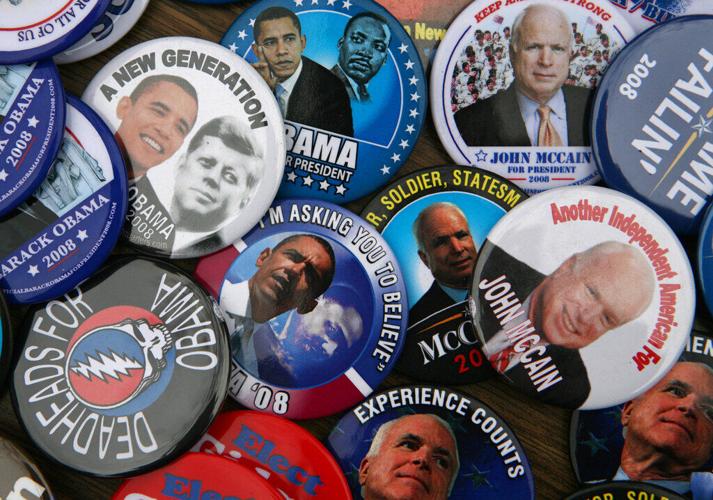

Sure, it’s nice to buy a cap, a T-shirt or a coffee mug with the name of your favorite candidate.
But new research suggests you’re then far less likely to turn out on Election Day to help that candidate than if you had donated the same amount of money.
Those who participate in high-visibility support by purchasing campaign swag also are less likely to volunteer to help that candidate’s campaign than those who gave small amounts of money, according to Anastasiya Ghosh, a marketing professor at the University of Arizona who headed the research team.
Ghosh said her research gives her a pretty good idea why: People who do things that are visible to others, vs. what feels like an anonymous donation, seem to believe they’ve done their bit for the cause. And at that point, she said, they are less likely to follow through with the less-visible things, like volunteering — and, in this case, voting.
“Me, buying something and carrying it around, using it in my household, others observing me, seems (to me) that I have done more for the candidate,’’ she explained of the attitude of those who flaunt campaign items.
But Ghosh said there’s a certain “irony’’ in that, given her research findings.
That provides a crucial lesson for those running candidate campaigns who think that selling buttons and bumper stickers is going to translate into victory on Election Day, she told Capitol Media Services.
“If I’m a campaign manager, you buying a T-shirt from me is a lot less lucrative for me, if you will, than you giving me that money right away,’’ she said. “I have to create a T-shirt, I have to ship it to you, and the money that’s left over is really small. But me, as a consumer, I feel like I’ve done more for you.’’
Desire to be seen
Her study also found it matters whether others will notice the item.
One experiment cited is where people were asked to wear a candidate T-shirt. Some were told they would be wearing it in a nearly empty grocery store; others were told they would be in a more crowded spot.
“The effect was much stronger when other people were around,’’ Ghosh said, with those who were more visible less likely to then do other things such as convince undecided voters.
That ties to her conclusion that visibility matters. It’s called “impression management,’’ which includes a desire to be seen.
“If I have made my donation to a candidate, in most cases nobody knows about it,’’ Ghosh said. “If I spend an equivalent amount of money to put a T-shirt on myself with the name of my candidate, I understand that other people will see. If I’m surrounded by people who are similar to me, that’s probably a positive impression.’’
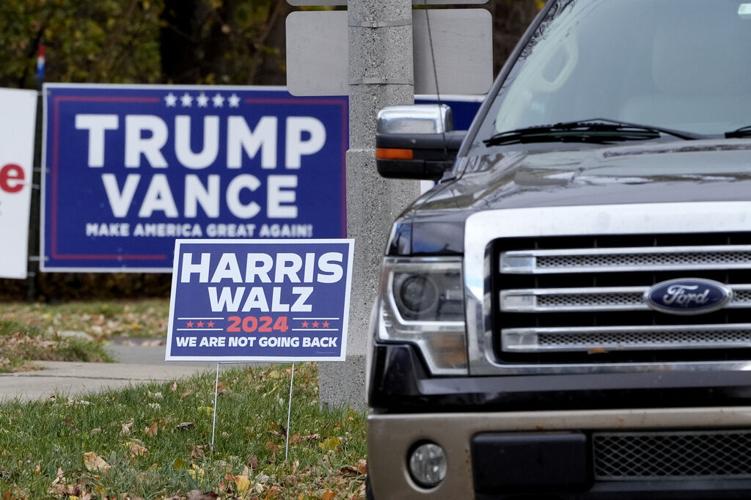
Still, she said, there may be times when the more visible signs of support, like the T-shirts and the yard signs, are more valuable to a candidate — even if the people buying the items or erecting the signs ultimately don’t turn out at the polls.
“When you’re starting out the campaign ... your goal is to signal to the world or your constituents that you have a very popular candidate,” Ghosh said. “Maybe it’s worth investing into asking for merchandise that will be publicly worn. Maybe the person who bought it is not going to be a voter. But maybe others who will observe it will.’’
But that effect only goes so far.
“As you move along the election cycle you really need commitment from people to show up and vote,’’ she said. “And then is when you need to move into direct donations.’’
Put another way, Ghosh said, a candidate may have to tell someone that it’s great that someone put out a yard sign, “but I need you to show up.’’
“Slacktivism”
She even has given a name to all this: political slacktivism, a term Ghosh said was suggested by one of her students.
Those buying or displaying merchandise or signs are demonstrating that they’re engaged in the election and supporting their candidate. But they’re “not doing the hard thing which is actually showing up to vote.’’
It isn’t just about voting. Ghosh said she found the same effect about volunteering. People who purchase candidate campaign items are less likely to be the ones to volunteer their time, make phone calls and go door-to-door to drop off campaign materials, she said.
All of this is based on multiple sources of information, she said. There is some historical data in which people were asked whether they had yard signs and bumper stickers and whether, in the end, they voted. That was considered, to ensure that any new findings were not aberrations, she said.
Second were surveys during the 2020 national election of people who declared themselves to be supporters of one party or the other. Monitoring started during the national conventions and ran through November.
What that showed, she said, is that those who bought political swag were 91% less likely to go to the polls than those who made financial donations.
Finally, there were studies done with students. In one case, some students were told they made a small donation in the form of buying a $5 political button. Then they were given the button and told to wear it.
Other students were simply told that a $5 donation was made on their behalf.
In both cases, students were asked how many text messages they would be willing to send out on behalf of the party and how many calls they would make for the party. Ghosh found that those who got the merchandise were less likely to have further engagement with their political party than those who were told they had given money.

