


Editor's note: This is the fourth of six stories for "Colorado River reckoning: Not enough water," an investigative series by the Arizona Daily Star that observes, at length, the future of the Colorado River.
The debate over how to manage Lake Powell has been almost radioactive since the 1990s.
Environmentalists have pushed hard to drain the lake and "Fill Mead First," to let Powell's waters run downhill into Lake Mead so Glen Canyon will reappear in its natural state.
Water officials have denounced this proposal as unfeasible, saying Powell is still too important because it stores water in wet years to be called upon during droughts.
And today, all the water stored in both reservoirs would barely fill Mead halfway.
So now, the environmentalist Glen Canyon Institute is taking a different tack.
It’s asking the U.S. Bureau of Reclamation and the National Park Service not to decommission the dam, but to prepare for what the group sees as inevitable: that Lake Powell will keep dropping, and much more of the natural Glen Canyon will reappear, absent a sudden change in the climate, said Eric Balken, the institute’s director.
If Balken were at the bureau, he would commission a full-scale study, to start now, on reengineering the dam as a backup facility, where water would flow through or around the dam down to its original river bed elevation, he said. “Things are happening too fast to use a ‘wait and see’ approach.”
Recently, his group and two other environmental groups issued a report asking the bureau to study such a possibility, not for deliberately restoring Glen Canyon, but to prepare for when Lake Powell drops too low to keep delivering water.

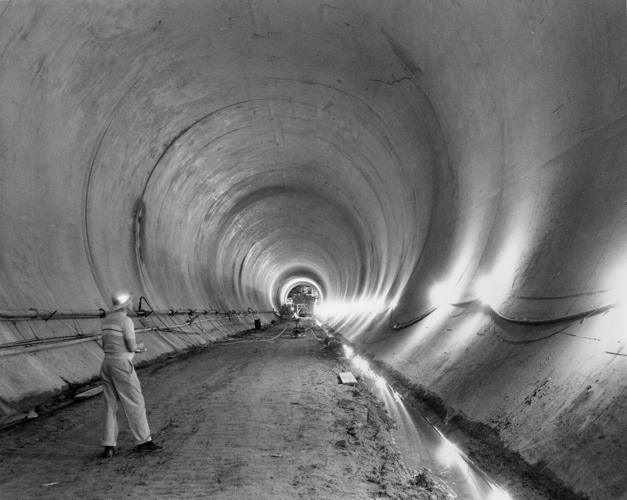
Construction of the Colorado River diversion tunnels around the base of Glen Canyon Dam in 1959. Environmental activists long pushed to decommission the dam because it flooded out a particularly scenic canyon, but the effects of drought and climate change have shifted that debate.
Surprising historical echo
More than 25 years ago, Glen Canyon Institute founder Rich Ingebretsen got a similar recommendation from none other than Floyd Dominy, a retired Bureau of Reclamation commissioner who was the dam’s driving force.
In February 1997, Ingebretsen and Glen Canyon Institute activist Eleanor Inskip were having dinner with Dominy near his home in Boyce, Virginia when Dominy first mentioned, then eviscerated a plan by environmentalist David Brower to drill through the dam’s bypass tunnels in the dam's main structure to drain Lake Powell.
“Well, you can’t do that. It is 300 feet of reinforced concrete,” Ingebretsen recalled the former commissioner saying, whereupon Dominy lowered his glasses and added, “There is a better way. All you have to do is drill new bypass tunnels around the old ones in the sandstone, on the sides of the dam. Then you can put waterproof valves at the bottom of the lake. They can be raised and lowered as you need, to let water out.”
With that he pulled over a cocktail napkin and drew a sketch of Glen Canyon Dam, the old bypass tunnels, the lake, the river, and the new tunnels with the waterproof valves that would be used to drain the reservoir, Ingebretsen said. His hands worked busily as he explained what he was sketching. Dominy concluded, Ingebretsen said, “This has never been done before, but I have been thinking about it, and it will work," Ingebretsen recalled.
After more than a decade of construction, Glen Canyon Dam was officially dedicated by First Lady Ladybird Johnson on Sept. 22, 1966.
Recounting the story in a written presentation for the Returning Rapids Project, Ingebretsen wrote, “I must admit I was a little stunned. First, I was fascinated at how draining such a large reservoir could be accomplished, because it seemed so simple. But to think that it was Floyd Dominy who had just sketched the plan was beyond belief. The man who built the dam, the man who called Lake Powell his own, had actually sketched for Eleanor and me the method to drain his reservoir.
“I said, ‘Mr. Dominy, no one will believe me when I tell them that you drew this. Would you sign and date it?’
“He answered, ‘Sure I will,’ and signed the napkin, which I keep in a safe and special place,” wrote Ingebretsen, who included with his writeup a scanned version of the napkin containing Dominy’s signature.
Dominy has been dead since 2010. David Wegner, a retired bureau official who later worked for the Glen Canyon Institute, was also a friend of Dominy’s and held a 100th birthday party for the ex-commissioner shortly before his death in 2010. Wegner says Ingebretsen's story is true and that he and Dominy had discussed this plan when they debated the dam at Colorado College in Colorado Springs back in 1999.
“Floyd’s point was that it was easier to drill through sandstone than concrete,” said Wegner. “He was not advocating that, just bringing it up as a possibility.”
Nothing has come of that idea since Dominy signed the napkin.

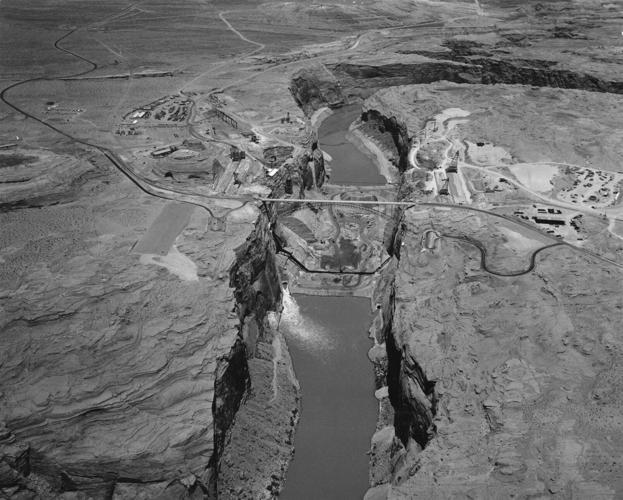
Glen Canyon Dam construction in June 1959, looking upstream, showing the completed highway bridge, among other features.
Officials to evaluate modifications
But at a news conference in mid-August this year, officials of Reclamation and the Interior Department said they’ll evaluate whether physical modifications are feasible to both Glen Canyon and Hoover dams to allow them to keep sending water downstream if those reservoirs fall to critically low levels.
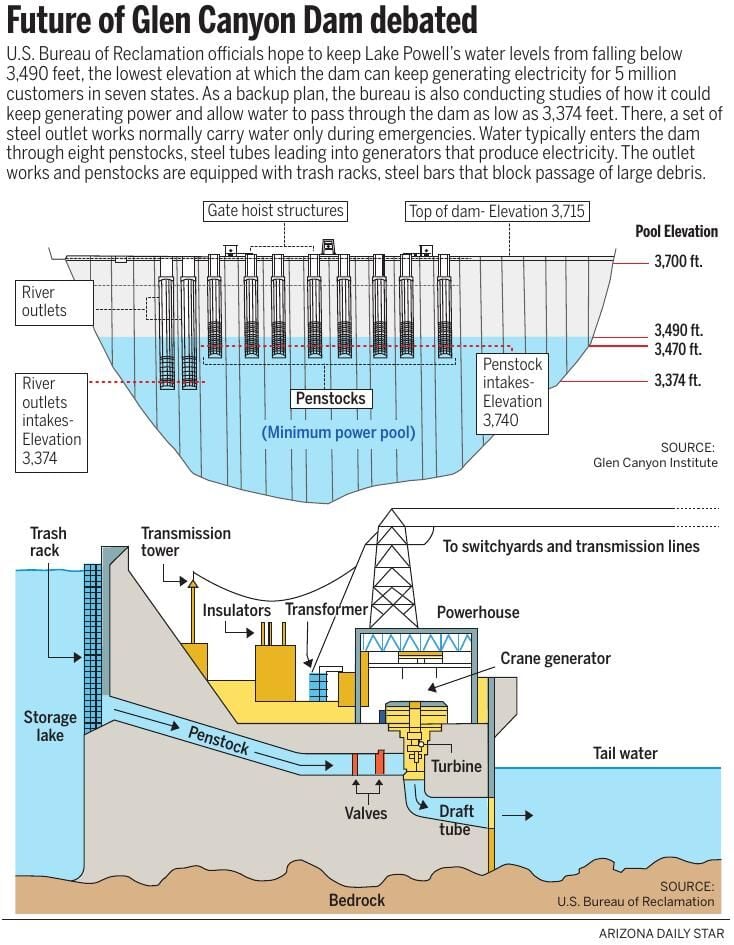
Those include water levels below the point at which the dams can generate power and below “dead pool.” That’s the point where normally no more water can be physically extracted from their reservoirs.
They made no reference to Dominy's idea. But that scheme would allow water to keep flowing in large quantities from Glen Canyon downstream into the Grand Canyon and the Lower Basin, and lowering Lake Powell, while keeping the dam intact.
Such modifications could follow Dominy’s 1997 blueprint. But at their news conference, Interior Department officials didn't respond to reporters' questions about whether they'd decommission the dam or even whether they'd rule that out.
“We will continue to rely on our expert technical staff to help us evaluate what additional measures we should be taking to protect the infrastructure. That could include a wide range of options,” said Tanya Trujillo, Interior’s assistant secretary for water and science.
“We’re focused on maintaining the integrity of existing structures. The existing system. That’s our highest priority,” Trujillo said. “We need to be sure we have the infrastructure intact, to protect water supplies for everyone who relies” on them.
Longtime Arizona Daily Star reporter Tony Davis explains what "dead pool" means as water levels shrink along the Colorado River.
That Trujillo didn’t outright deny interest in decommissioning Glen Canyon Dam “speaks volumes,” said former bureau scientist Wegner.
“They didn’t absolutely come out and say we are not going to even consider” decommissioning the dam, Wegner said. “It could be she didn’t want to consider the question; it could be they don’t want to take anything off the table," Wegner said.
“Often, what is not said is more significant than what is said. The lack of a direct response to your question, which should have been a softball for her, ended up with a nonspecific answer. It was just a non-answer when historically it was an adamant ‘no,’” Wegner said.
The bureau hasn’t responded directly to questions from the Star about Balken’s comments.

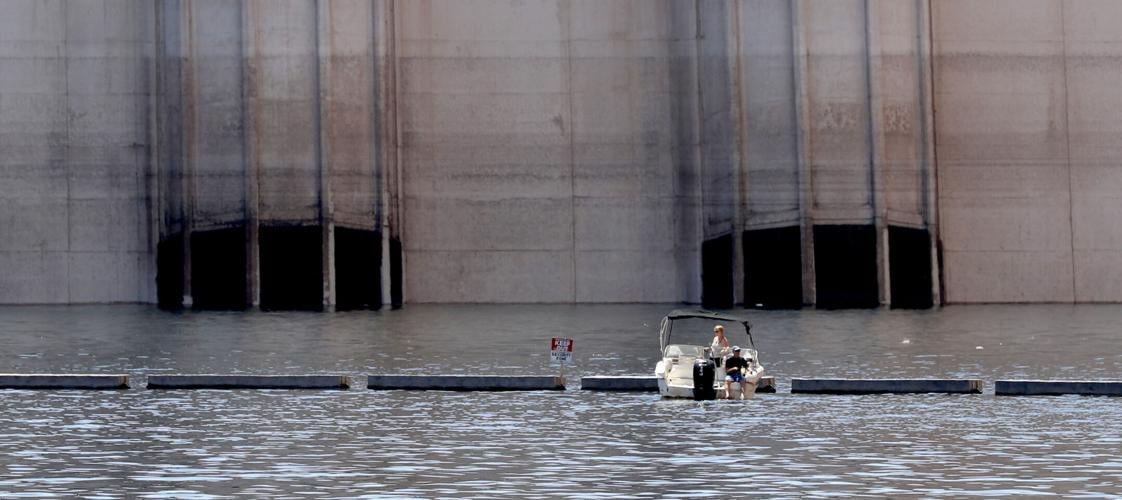
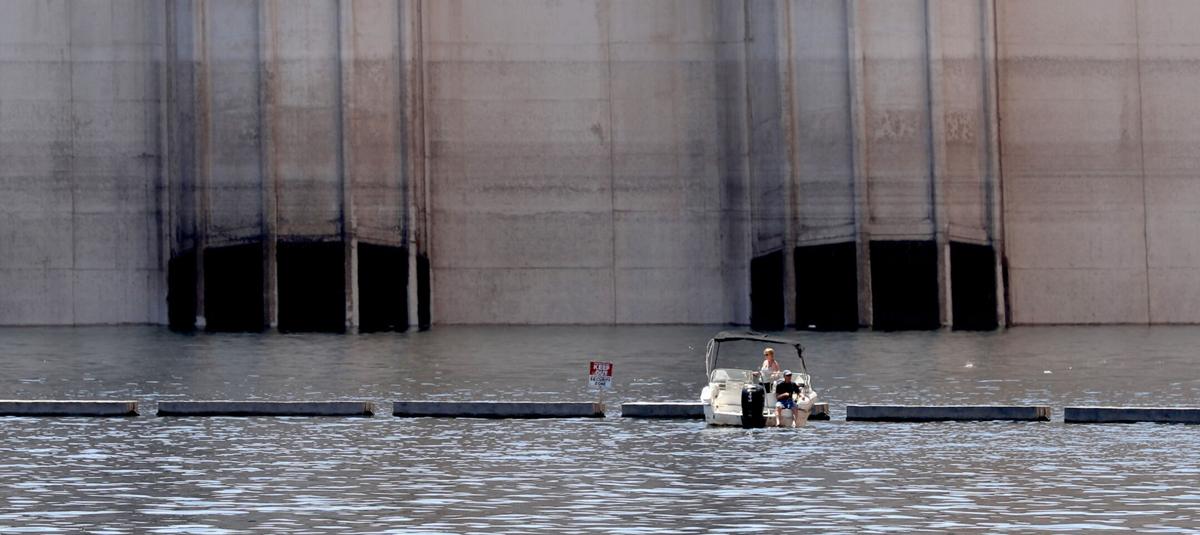
A small fishing boat ties up on the breakwaters at the security perimeter behind Glen Canyon Dam. The drop in water level has revealed the trash racks, steel bars that trap large debris, covering eight huge intakes that feed water to the power turbines deep inside the dam. Federal officials say they’ll study whether modifications are feasible to allow the dam to keep sending water downstream if Lake Powell falls to a critically low level.
Focus now is keeping Powell high enough
The bureau has, however, made it very clear that, for now, it will take all measures that are feasible and practical measures to keep Powell from falling below 3,490 feet, the elevation at which Glen Canyon Dam could no longer generate power.
Twice this year, for instance, it has held back water in the lake that it had planned to release to Lake Mead. Both in 2021 and 2022, it’s released additional water into Powell from its Flaming Gorge Reservoir, lying on the Green River at the Utah-Wyoming border.
Then in June, the bureau told the seven Colorado River Basin states to cut their total water use by 14% to 28%, to prop up Lakes Mead and Powell. It has since given the states more time to come up with a plan, rather than impose its own solution as it had threatened to do.
Wegner, a now-retired Bureau of Reclamation engineer for 22 years, said he talks to someone from the bureau virtually every day and believes its number one goal is to keep Powell above 3,490 feet if possible.
“That being said, if we go into another bad year in the basin, a fourth bad year in a row, they don’t have a choice” but to let the lake decline below 3,490, said Wegner, who was the bureau’s program manager for environmental studies of Glen Canyon Dam’s downstream impacts in the 1980s and ‘90s — studies that led to changes in how the dam was managed.
“There’s not enough water in the system to move to prop up Powell further. If we were to have another year of low snowpack, there’s going to be little room for flexibility,” said Wegner. He is a founding trustee and former science director of the Glen Canyon Institute but doesn’t support deliberately draining the lake — he wants the canyon restored by other means.

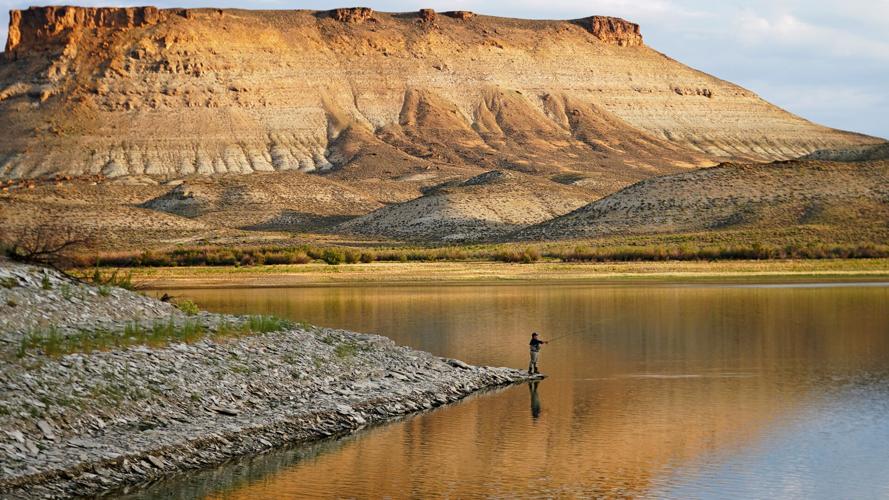
Twice in the past year, federal officials released additional water into Lake Powell from Flaming Gorge Reservoir on the Green River, shown here, at the Utah-Wyoming border. But Flaming Gorge is also beginning to feel the effects of the two-decade megadrought gripping the southwestern U.S.
“You may be able to get one more year of releases out of Flaming Gorge, but then there will be no refill. You are living on borrowed time in these La Niñas now," he said, referring to the weather phenomenon that often brings warm, dry weather to the Southwest and the Southern Rockies. "You just won’t have enough snowpack to fill the upstream reservoirs if the climate pattern holds.”

Photos: The receding waters of Lake Powell, Glen Canyon National Recreation Area

Tom Wright hikes past the beached marker for Willow Canyon where it joins with the Escalante River, Glen Canyon National Recreation Area, Utah.

A big horn sheep stands with the moon as a backdrop, looking over Fiftymile Creek, Glen Canyon National Recreation Area, Utah.
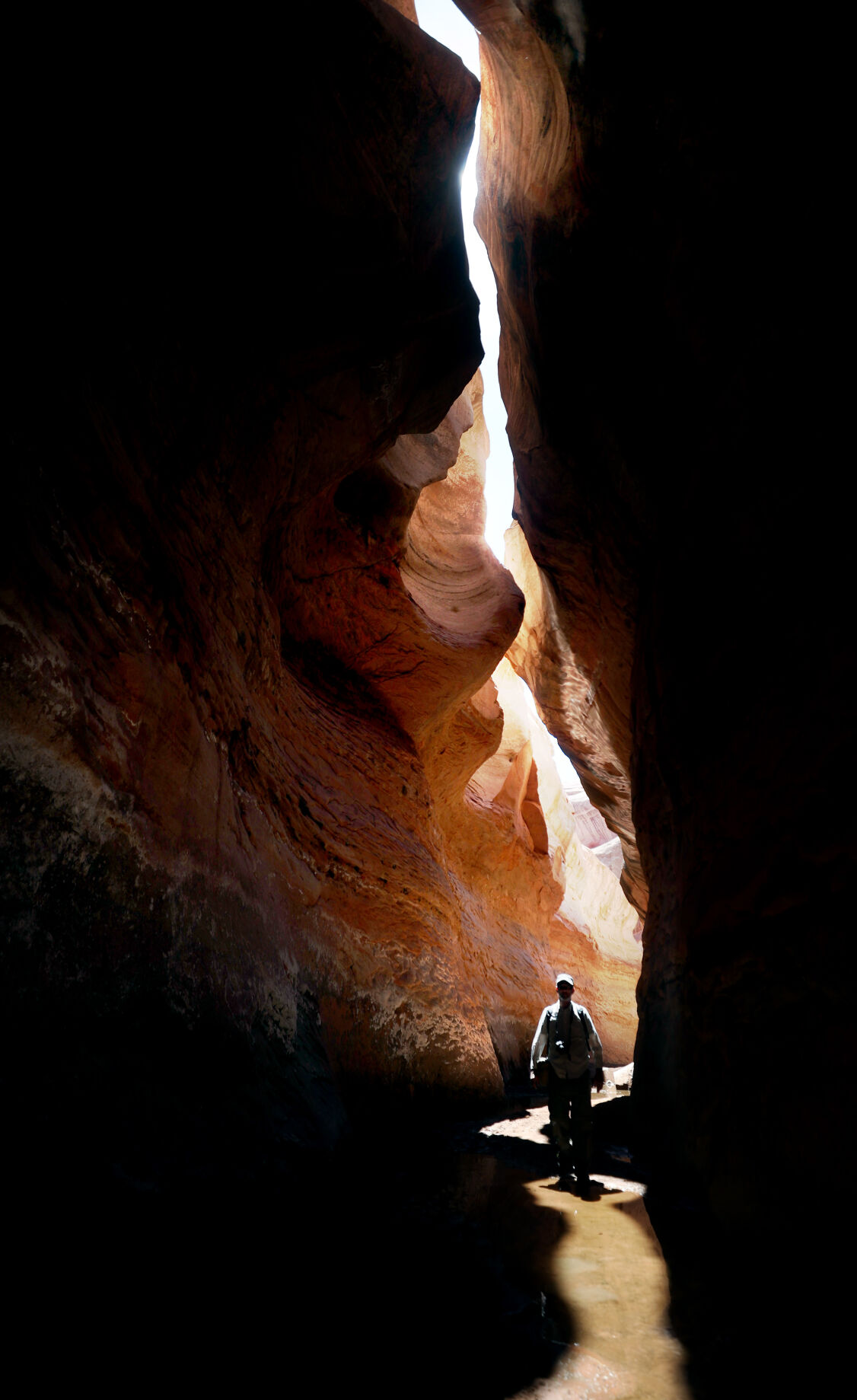
Tom Wright walks through the shaft of light peeking through the narrow openings of the formation called the Subway in Fiftymile Creek, accessible since the waters of Lake Powell have fallen dramatically.

A narrow sliver of sky is visible overhead through the narrow opening of the formation called the Subway, Fiftymile Creek, accessible since the waters of Lake Powell have fallen dramatically.

The dark streaking, called Desert Varnish, is from the seepage of oxidation in the rocks, and is beginning to erase the "bathtub ring", the lighter colored marks left by the waters of Lake Powell on canyon walls, Fiftymile Creek, Glen Canyon National Recreation Area, Utah.

The remains of a small boat, underwater for years, reemerges due to receding water levels of Lake Powell in the Glen Canyon National Recreation Area, Utah.
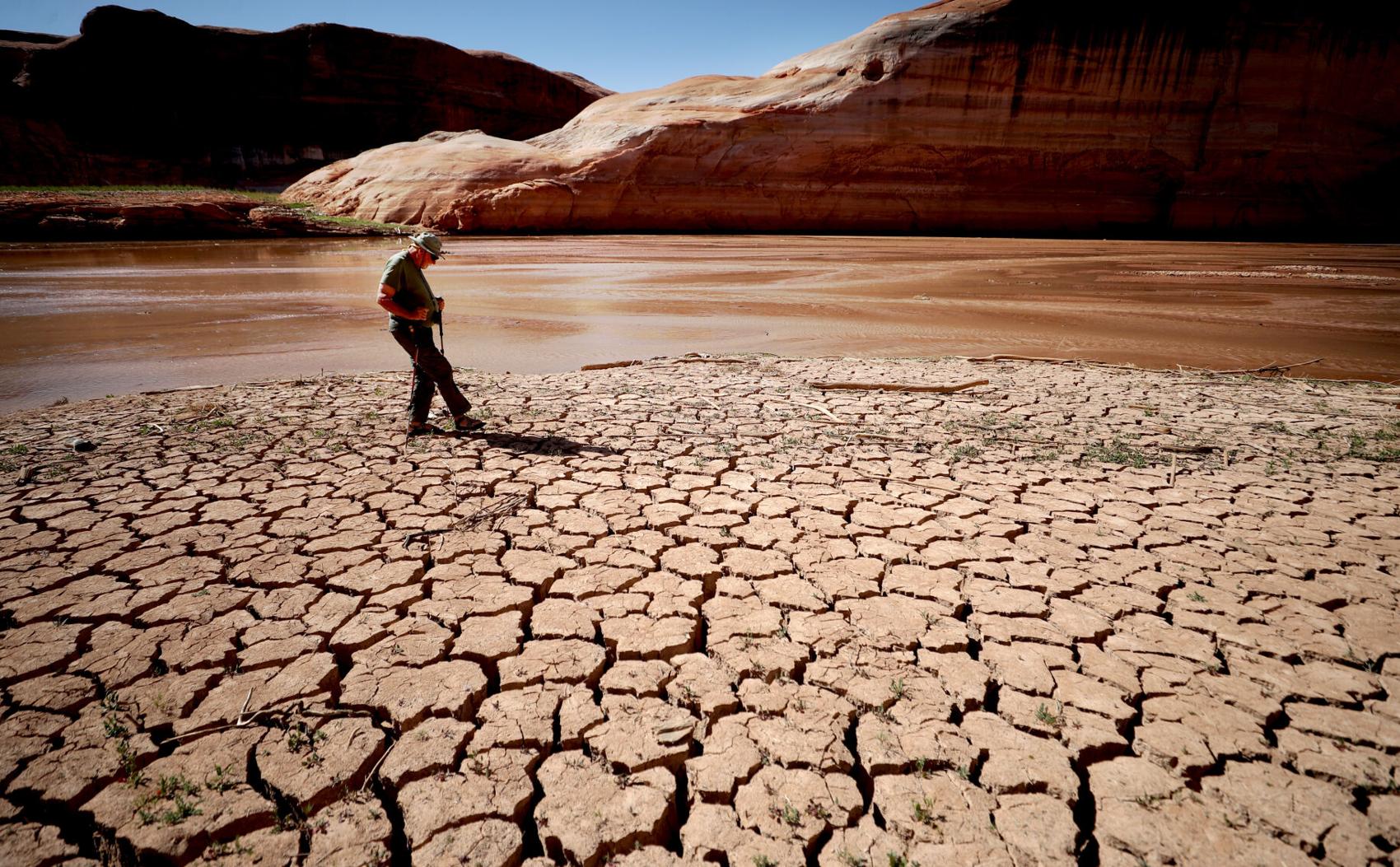
Frank Colver makes his way over the dried and cracking silt left where the Escalante River joins Lake Powell, Glen Canyon National Recreation Area, Utah. The receding water of the lake has the river cutting through the decades of accumulated silt to form a delta where it meets the lake.

A warning buoy sits high and dry far from the end of the closed public boat ramp at Bullfrog Bay, Glen Canyon National Recreation Area.

A line of tires that were once breakwaters at Bullfrog Bay Marina are now stranded on the rocky landscape high above the current water levels at the Glen Canyon National Recreation Area, Utah.
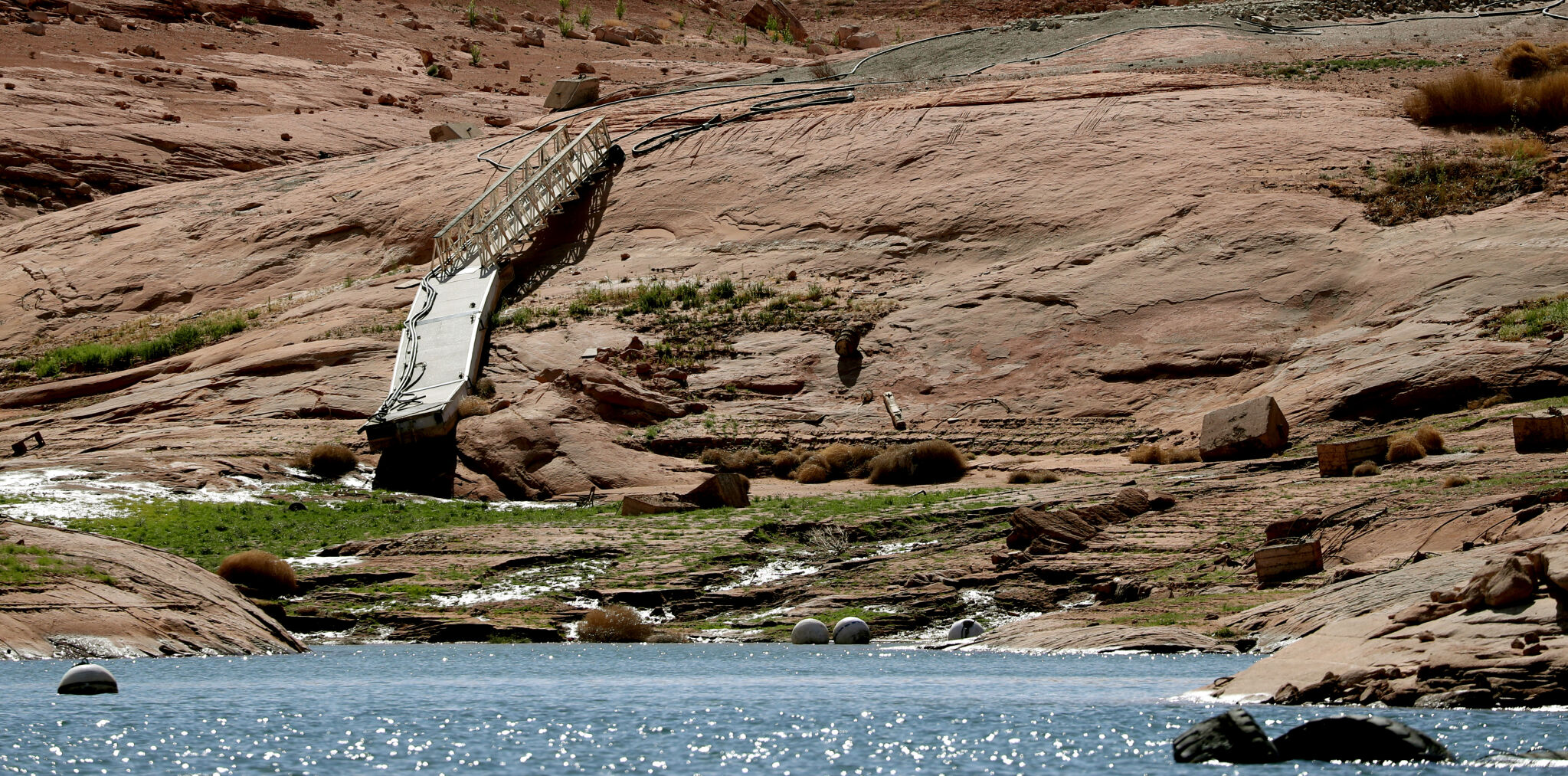
A pedestrian ramp lies well above the water levels at Bullfrog Bay in the Glen Canyon National Recreation Area, Utah.

A stranded wakeless zone buoy sits on the cracking silt outside the new shores of the Bullfrog Bay Marina, Glen Canyon National Recreation Area, Utah.

The end of the ferry ramp ends well short of the new water levels of Bullfrog Bay on the Glen Canyon National Recreation Area, Utah.

An early riser watches the sun come over the low waters of Bullfrog Bay Marina, Glen Canyon National Recreation Aria, Utah. The lighter colored areas on the canyon wall mark previous water levels.

A group of river rafters drift west on the current of the San Juan River outside Mexican Hat. The San Juan feeds Lake Powell.

The tops of a few cottonwood trees begin to poke out of shrunken water of Lake Powell, Fiftymile Creek, Glen Canyon National Recreation Area, Utah.

The remaining large water craft and house boats are crowded together in one of the last areas of water deep enough to support them at Wahweap Mariana, Glen Canyon National Recreation Area, Page, Ariz.

The waters of Lake Powell are twenty to thirty feet below the end of the public boat ramp at Wahweap Mariana, Glen Canyon National Recreation Area, Page, Ariz. Personal non-powered craft still use the ramp to unload, but must be carried up and down the banks to reach the water.

A view north from the Wahweap Marina Overlook show the shrunken waters around the marina in Glen Canyon National Recreation Area, Page, Ariz.

The underside of Gregory Natural Bridge, passable for the first time in almost 50 years, over the Fiftymile Creek, Glen Canyon National Recreation Area, Utah.

The moon rises over Gregory Natural Bridge, passable for the first time in almost 50 years, over the Fiftymile Creek, Glen Canyon National Recreation Area, Utah.

The exposed penstocks (intakes to the power turbines) on Glen Canyon Dam in the Glen Canyon National Recreation Area, Page, Ariz. The water level is at its lowest since 1967, when the dam was still being initially filled.

A group of sightseers get a look at the Glen Canyon Dam during a boat tour of Lake Powell, Glen Canyon National Recreation Area, Page, Ariz.

A small fishing boat ties up on the breakwater just outside the intakes for the Glen Canyon Dam, Glen Canyon National Recreation Area, Page, Ariz.. The penstocks (water intakes to the power turbines) are revealed for the first time since 1967 when the Lake Powell was being filled.

Swimmers and bathers use the jagged shores of the newly exposed banks of Lake Powell just above the Glen Canyon Dam, Glen Canyon National Recreation Area, Page, Ariz.

The Glen Canyon Bridge lies in front of electrical towers with feeder lines rising from the hydroelectric plant in the Glen Canyon Dam, Page, Ariz.

Glen Canyon Dam from Glen Canyon Bridge, Page, Ariz.

Small power boats on the Colorado River head upstream just below the Glen Canyon Dam, Page, Ariz.

Wade Quilter walks through the remains of cottonwood and Russian olive trees washed down and joined with silt to form a natural dam where Willow Canyon joins with the Escalante River, Glen Canyon National Recreation Area, Utah,

The remains of a big mouth bass lay in the silt just above where the Escalante River joins Lake Powell, Glen Canyon National Recreation Area, Utah.

The formation known as The Cathedral in the Desert on Clear Creek, Glen Canyon National Recreation Area, Utah. The re-emergence of the formation is drawing sightseers after being submerged for some 50 years.

Tom Wright feels the water oozing from the rocks in the formation known as Cathedral in the Desert on Clear Creek, Glen Canyon National Recreation Area, Utah. The re-emergence of the formation is drawing sightseers after being submerged for some 50 years.

Frank Colver takes a quiet moment and plays a handmade flute near the waterfall in the formation known as Cathedral in the Desert on Clear Creek, Glen Canyon National Recreation Area, Utah. The re-emergence of the formation is drawing sightseers after being submerged for some 50 years.

Jake Quilter walks down the newly cut banks of Clear Creek just outside Cathedral in the Desert, Glen Canyon National Recreation Area Utah. The sand is silt left behind by the receding waters of Lake Powell.

The tops of cottonwood trees that used to be under a hundred feet of water in Lake Powell are visible again in Clear Creek, Glen Canyon National Recreation Area, Utah. The deep water preserved the remains of the trees.

Boaters have to zig-zag through the rocks emerging due to receding waters of Lake Powell, Glen Canyon National Recreation Area, Page, Ariz.

Several images combined for a panoramic view of the Colorado River where it runs through the what once was Hite Marina in the Glen Canyon National Recreation Area, Utah.

A couple of sightseers take in the view from Hite Overlook over the Colorado River and the closed Hite Marina, Glen Canyon National Recreation Area, Utah.

Lone Rock, jutting out of the dry bed, would usually be surrounded by Lake Powell but is now well clear of the water, Glen Canyon National Recreation Area, Utah.

Tires that used to hold the lines well below the surface of Lake Powell are suspended over the water at Antelope Point Marina, Ariz.

Sightseers twenty or thirty feet above get photos of the low water levels of Lake Powell from the public boat ramp at Antelope Point Marina, Ariz.

The pedestrian access ramp ends abruptly twenty feet over the new Lake Powell surface at Antelope Point Marina, Ariz.

The entrance to the pedestrian access ramp of the Antelope Point Marina is taped off after being cutoff from the docks due to receding waters of Lake Powell.
 The Colorado River we rely on is likely to get even drier
