


PHOENIX — Arizona is dropping another $30 million to buy — or, at least, rent — some water rights to help stave off further drought-related cuts in Arizona’s supply from the Colorado River.
Plans are to negotiate with tribes and others who have guaranteed allocations of water to leave it in the river in exchange for cash, said Tom Buschatzke, director of the Arizona Department of Water Resources.
That’s on top of $10 million the Legislature gave him earlier this year for the same purpose and is coupled with another $30 million that already was given to one tribe years ago to defer some of its water rights for three years.
But Buschatzke acknowledged this does not solve the fact that decades of unusual drought have left Arizona and other states along the river with less water than they hoped to be able to draw. In fact, he said, what it is mainly designed to do is get the state to 2026 in hopes that there will be bigger — and more permanent — solutions.
Those could include a plan to desalinate water from the Sea of Cortez. But aside from the cost — potentially $2,500 an acre-foot, or about seventh-tenths of a cent per gallon — there are other issues with that concept ranging from politics to technology.
“And honestly, that kind of project is seven to 10 years away,” if it happens at all, Buschatzke told Capitol Media Services.
There are other options, including what would amount to domestic reuse of treated effluent. Buschatzke is apparently aware of the “ick factor” in the minds of some. “We don’t call it ‘toilet to tap,’” he said. “We call it ‘direct potable reuse.’”
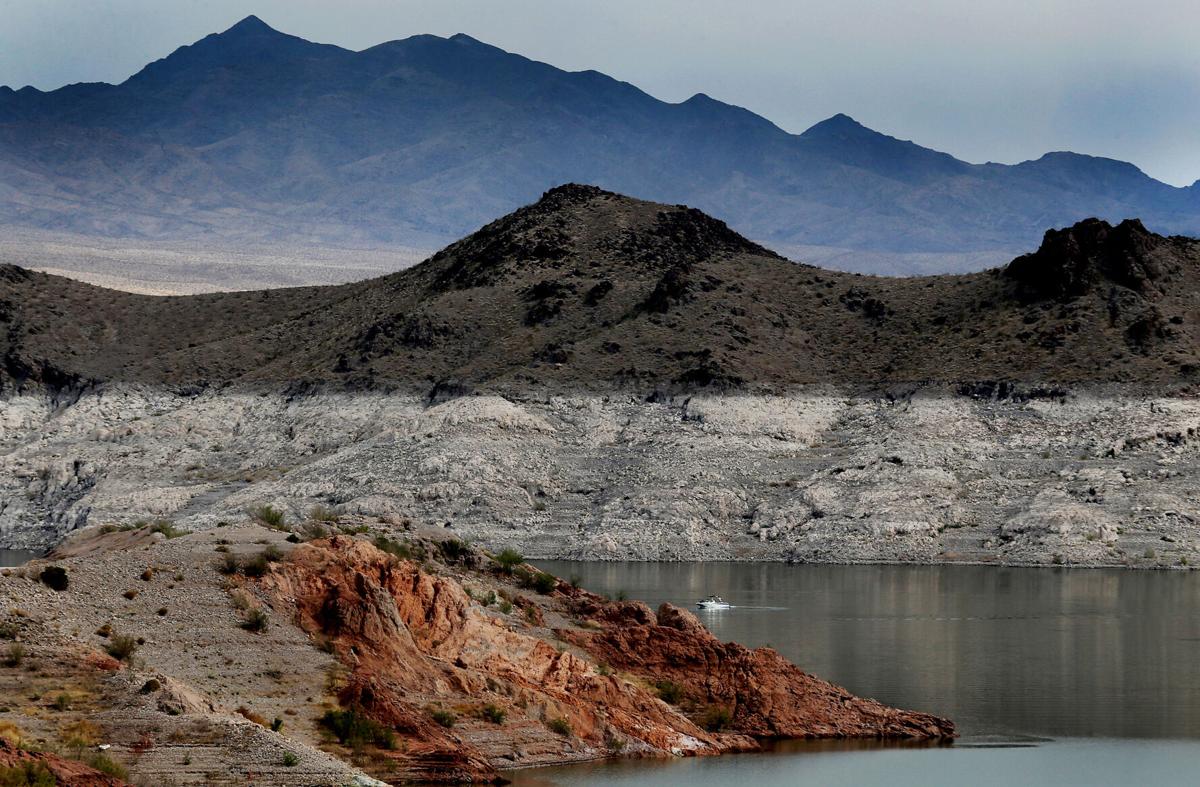
New projections suggest Lake Mead’s level will drop to 1,051 feet by the end of next year. Another projection says the lake will hit 1,026 feet in July 2023, forcing even deeper cuts than the already planned reductions.
About 70% of the water being used in Arizona goes to agriculture, including crops such as cotton, pecans and alfalfa. Buschatzke called the question of getting rid of desert farming a policy question.
Gov. Doug Ducey, who does get to make policy along with the Legislature, has no interest in looking at such options to cut water use.
“I don’t accept the premise that it’s finite,” said his press aide C.J. Karamargin. He said Ducey is counting on yet-to-be developed technology as an alternative to having to go that route.
That leaves the kind of interim actions that are happening now, like giving tribes and others another $30 million to not use their Colorado River allocation, at least for a while.
These are the latest steps in the drought contingency plan approved two years ago by lawmakers here, officials in other states and the U.S. Bureau of Reclamation, which controls the Colorado River.
In that deal, the seven states and Mexico that all have rights to Colorado River water have agreed to make cuts in what they draw in a bid designed to restore the lake back to about 1,090 feet.
But it also means Arizona needs to reduce its draw from the river by up to 700,000 acre-feet between now and 2026, against the state’s current annual pre-drought allocation of 2.8 million acre-feet. An acre-foot is about 326,000 gallons of water, considered enough to serve a typical family of two for a year.
The first $30 million was paid to the Colorado River Indian Community. In exchange, the tribe left 50,000 acre-feet of water each year for three years.
That agreement ends, however, at the end of 2022 — about the same time Lake Mead could hit even new lows.
Ducey is using federal COVID-19 relief money to provide the new $30 million. Buschatzke said this isn’t just kicking the can down the road.
“It’s not just trying to buy time and hope the river recovers,” he said. “It’s trying to stabilize the lake levels as we work towards what the next set of guidelines will be.”
However, the lake is now barely above 1,067 feet. “We are seeing that the historic flow of the river is not what we’re seeing in the last 30 years or so,” Buschatzke said.
There are no answers yet about what happens after 2026, he said.
So, in the interim, what does $30 million buy — or lease — in water that can be left in the river each year?
“Within Arizona, we are probably targeting a couple of hundred thousand acre-feet,” he said.
He acknowledged that’s not enough, even as a short-term solution. So Buschatzke said Arizona is working with California and Nevada, the other lower-basin states, to see what they could do to lower their demand, though the director said he has no specific numbers in mind.
That still leaves the question of all the water being used by farms.
The 2019 deal did reduce what farmers get from the Colorado River. But that did not result in a commensurate decrease in farmland, as they were allowed to replace some of what they lost with groundwater.
The assumption was that by the time the first cuts in river water came, much of the farmland in Pinal County would have been converted to new home subdivisions. But that didn’t happen, as population growth last decade slowed at times to a crawl.
Karamargin said Ducey sees no need to address any cutbacks in three of the five C’s that define Arizona: cotton, citrus and cattle.
“Right after the C’s, there’s a D,” he said. “And the biggest topic in this D is desalinization,” Karamargin said, calling it “part of a possible solution.”
He said he is convinced the cost will come down, just as it has for solar and wind energy. And he said the fact that places drier than Arizona, such as Israel, depend on desalinization shows that it is a realistic option.
As to toilet-to-tap, or whatever you want to call it, the state already is pursuing that — but very indirectly.
Buschatzke said there is a plan for Arizona and Nevada to pay California to start using its own sewage, now dumped into the Pacific Ocean, for drinking water. In turn, California would leave more of its allocation in the Colorado River, helping stabilize the level of Lake Mead.

