





PHOENIX — The newly enacted so-called Big Beautiful Bill could blow a not-so-beautiful hole in the just-enacted $17.6 billion state budget.
New figures from legislative budget analysts say that having state income tax laws conform with the changes made by Congress and signed by President Trump would reduce revenues in the fiscal year that just started by $381 million.
And that’s without considering another $57 million in possible effects.
Strictly speaking, none of that has to happen.
That’s because the losses would occur only if state lawmakers and Gov. Katie Hobbs agree that what the state considers taxable should mirror federal law.
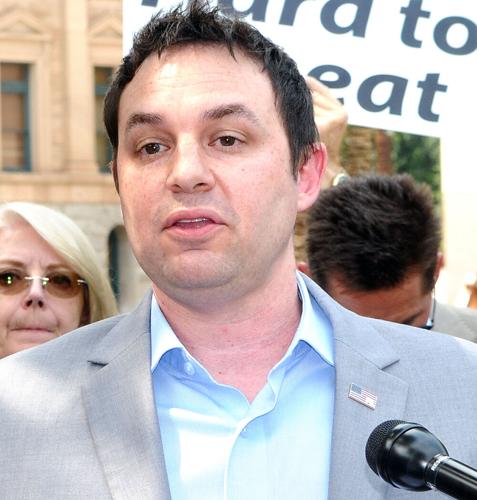
But Senate Majority Leader John Kavanagh said not conforming to the feds is an unrealistic option.
The Fountain Hills Republican pointed out that right now the starting point for Arizonans to compute their state income taxes is the federally adjusted gross income. That simplifies the process for filers.
By contrast, he said that any decision not to conform would be “an accounting nightmare.’’ It would require Arizonans to make additional calculations and add back income into the state form that the federal government has decided is no longer taxable. And there is little appetite, Kavanagh said, to create new hassles for taxpayers.
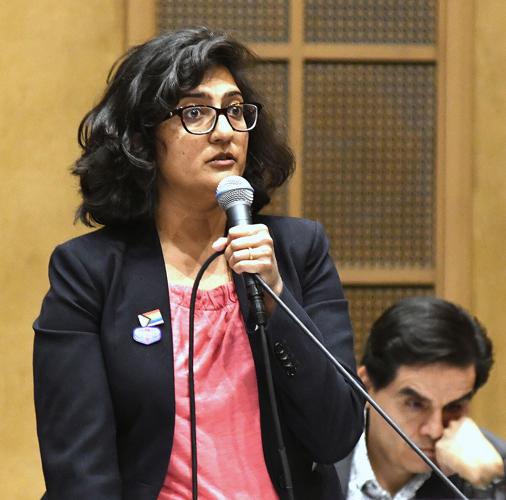
Senate Minority Leader Priya Sundareshan agreed with a lot of that.
“The taxpayer burden is absolutely real,’’ said the Tucson Democrat.
That, however, still leaves the question of whether, given the number of dollars involved, lawmakers believe the state can afford to lose those revenues.
Kavanagh, who helped craft the newly enacted budget, said he believes that the reduction in revenues is “do-able.’’
“The economy seems to be picking up, so I don’t really see a problem with that,’’ he said. Anyway, Kavanagh noted that the loss revenues amount to less than 3% of the total $17.6 billion state budget.
Sundareshan, however, said that $17.6 billion just covers — and, from her perspective, just barely — the needs of the state.
She also said trimming that much in state revenues will simply provide an excuse for Republicans who, during the just-completed budget negotiations, were interested in deeper cuts. That includes a proposal by some GOP lawmakers — ultimately defeated and not made part of the final budget — to take more than $100 million out of the Arizona Health Care Cost Containment System, the state’s Medicaid program.
“I guess they’re salivating at the mouth, really, to be in a position to cut more programs and to start kicking people off of AHCCCS and other things, services that we all rely on,’’ she said.
Even Sen. J.D. Mesnard, who chairs the Senate Finance Committee that crafts tax policy for Arizona, questions whether the state can handle such a large hit.
What may have to happen, the Chandler Republican said, is that he and his colleagues may be forced to pick and choose among which changes to the federal tax code to make their own and which income to conclude that, federal law or not, should remain taxable in Arizona.
Central to all this are the series of changes made by Congress to the federal tax code.
One of the biggest is allowing individuals to deduct — and not pay taxes on — overtime.
It is a little more nuanced than that.
There is a limit of $12,500 in such income for individuals and twice that for couples. And only the extra pay is exempt.
So, someone who normally earns $20 an hour but gets $30 in overtime would be able to deduct only that $10 difference.
Even with those restrictions, legislative budget staffers figure that change in federal law alone, if adopted by the state, would reduce Arizona revenues by $76.5 million.
Federal lawmakers also had sought to make Social Security income tax free. But finding that too complicated, they substituted language to create an additional $6,000 standard deduction for taxpayers over 65, though there are some income limits.
Of note, this deduction is available whether taxpayers itemize or not.
While Social Security is not taxed at the state level, there’s still a cost of $53.7 million to Arizona.
Further complicating matters, the federal law allows that deduction for only three years, meaning it goes away in 2029 unless renewed.
There’s also a reduced tax on tips — also for only three years — with as $25,000 limit. And it applies only those occupations the Treasury Secretary certifies “customarily and regularly’’ received tips before 2025.
Cost to Arizona — about $23.6 million.
And then there are a series of changes to allow businesses to write off the cost of new equipment faster, reducing their taxable income. All those total more than $110 million in losses to Arizona if lawmakers here follow suit.
But can the state afford the losses?
The last time members of the state Finance Advisory Committee met they predicted there would be a dip in tax collections. At the same time, the economists on the panel said state expenses in providing health care for the poor could jump.
Kavanagh said he isn’t buying those predictions.
“Most of the dire warnings were based on a belief that Trump was going to put tariffs on everybody,’’ he said. “But, instead, he’s making tariff deals.’’
And Kavanagh said predictions that the price of oil would spike were based on the possibility of war in the Middle East, “which Trump has calmed down.’’
Sundareshan does not read the economic indicators that way, saying that tariffs are, in fact, being increased, meaning higher costs for businesses in Arizona.
“And so prices are going to increases for consumers,’’ she said. “But I don’t see that resulting in positive gains for the economy and, therefore, by translation, to revenue for the state.’’
Sundareshan acknowledged there was a boost in state income tax collections in the past few months. But Sundareshan said that is attributable to people paying taxes on the capital gains on their stocks — something she said was occurring because people were selling off their holdings “in anticipation of a negative downturn in the economy.’’
And House Minority Leader Oscar De Los Santos has his own views about the federal package, including the tax benefits for businesses.
“What we know is this: Massive tax cuts for corporations and the ultra wealthy never trickle down to the working class,’’ said the Laveen Democrat.
Kavanagh said he expects lawmakers to take up the issue of conformity when the Legislature reconvenes in January.
Hobbs, for her part, was noncommittal about whether to have state tax laws conform with the changes in the federal package.
“The administration is going through every provision with a fine-tooth comb to understand the full implications of this legislation and how to best protect Arizonans,’’ said gubernatorial press aide Christian Slater.
While Arizona lawmakers historically generally have tried to conform state tax code with its federal counterpart, that is not a hard and fast rule. And sometimes that can benefit Arizona taxpayers.
One notable example deals with medical expenses.
Under federal law, only those expenses above 7.5% of income are deductible. But in Arizona, there is no minimum.
That can create a situation where a taxpayer with some medical expenses chooses to take the standard deduction in filing federal taxes but finds it financially advantageous to itemize on the state form.

