




The Tucson area saw big gains in tourism this past winter season as COVID-19 let up, though the area did not quite recover to pre-pandemic levels by some measures.
Hotel occupancy in the Tucson market averaged 71% from January through April, up 28% from the same period in 2021 but still short of the 77% occupancy posted in 2019, according to the global hospitality data and analytics company STR.
The local occupancy rate in February, which includes most of the Tucson gem shows, was just over 75%, compared with 52% in same month in 2021 and 85% in February 2020 — just before the COVID-19 shutdowns hit.
The occupancy improvement came even though Tucson added hundreds of rooms since 2019.
In its survey, which generally captures about 80% of all hotel properties, STR tracked 160 respondent hotels representing 16,126 rooms in April 2022, compared with 152 properties comprising 15,451 rooms in April 2019.
While Tucson’s hotels welcomed more guests, they were also able to command much higher room prices, STR’s data show.
Rooms in Tucson-area hotels, motels and resorts fetched an average $158.39 per night from January through April, up nearly 42% from the same period in 2021 and about 19% higher than 2020, according to Tennessee-based STR.
And revenue per available room — a key indicator of hotel financial performance calculated by multiplying a hotel’s average daily room rate by its occupancy rate — was up more than 80% compared to 2021, at $112.63 for the year to date through April.
The head of the Tucson area’s main convention and visitor bureau said the hotel data shows continued recovery from the ravages of the pandemic, citing room rates and revenues in particular.
“We’re starting to see a very strong recovery, with occupancy starting to climb back. We’re almost back to our top numbers,” said Felipe Garcia, president and CEO of Visit Tucson.
“But when you look at the average daily rates and the revenue per available room, I mean, we’ve never seen numbers like those in Tucson,” said Garcia, who was named head of Visit Tucson in December after serving as an executive vice president and head of Mexico marketing efforts since joining the agency in 2004.
Garcia attributed the higher rates and revenue partly to tourism marketing that Visit Tucson kept up with the increased support of the city of Tucson and Pima County during the pandemic, as well as some federal COVID-19 aid money.
Pima County in February 2022 awarded $750,000 in federal recovery funding to Visit Tucson to promote Southern Arizona, as well as $250,000 to Tucson City of Gastronomy, which promotes the city’s UNESCO designation.
“We were still in a very cautious way promoting Tucson even during the pandemic, so we kept our brand alive,” Garcia said, noting that other “peer” Western cities Visit Tucson tracks had pulled back on marketing.
“We were telling people, our open space is great, the time is ready to travel and you feel comfortable,” he said.
“So those individuals who were able were out there appreciating open spaces, and that story we’re telling them about the multiculturalism, the richness of our community, and I think also during the pandemic we started to appreciate and value other things as consumers, as visitors and tourists,” Garcia said. “These elements have played into helping us with a really nice recovery to our tourism community.”
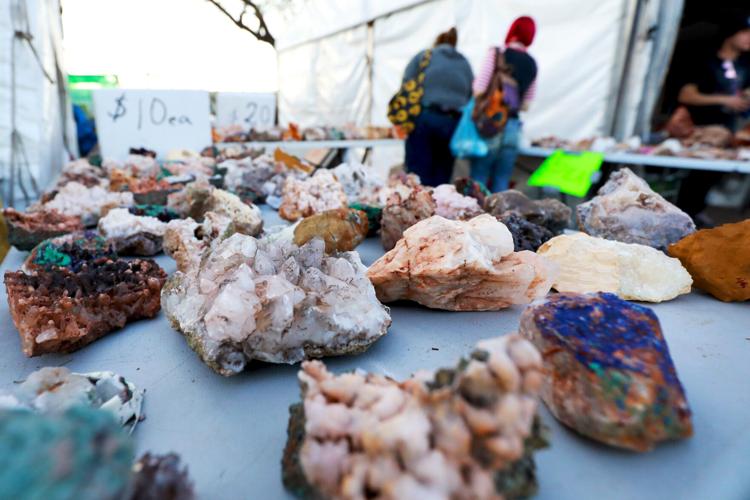
The return of the Tucson Gem, Mineral & Fossil Showcase in late January and February helped buoy hotel results, even though some attendees were still kept away by federal COVID-19 testing requirements for international air travelers, Garcia said.
In 2021, the main Tucson Gem Show was canceled and most other smaller shows that make up the showcase were dropped or shortened.
But the return of Major League Soccer and the lower-level United Soccer League teams to Tucson for training this spring also gave local hotels and tourism-related businesses a boost, he added.
Garcia noted that the gains in occupancy and room rates and sales came despite the fact that some larger Tucson-area hotels limited room availability due to lack of staff.
At the same time, more rooms are becoming available in Tucson as new hotels keep sprouting up.
Last year, the six-story, 170-room DoubleTree by Hilton Tucson Downtown Convention Center opened adjacent to the convention center, with 4,000 square feet of meeting space and a second-story pool.
Nearby, Tucson’s tallest office building, One South Church, is adding a 145-room Marriott Tribute branded hotel on its first nine floors with plans to open by year’s end.
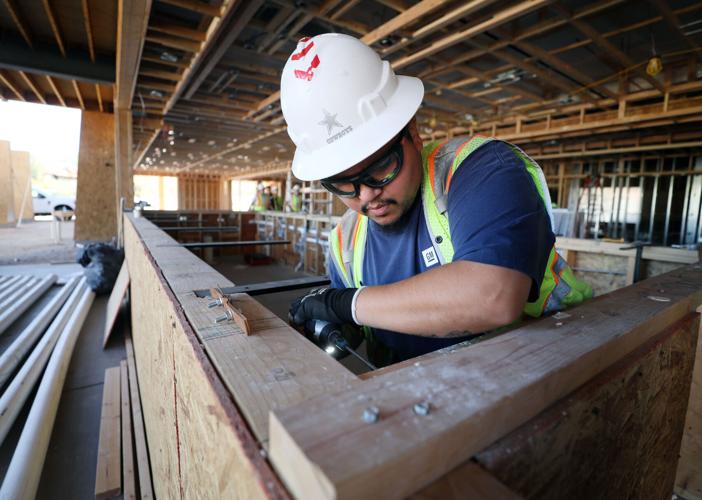
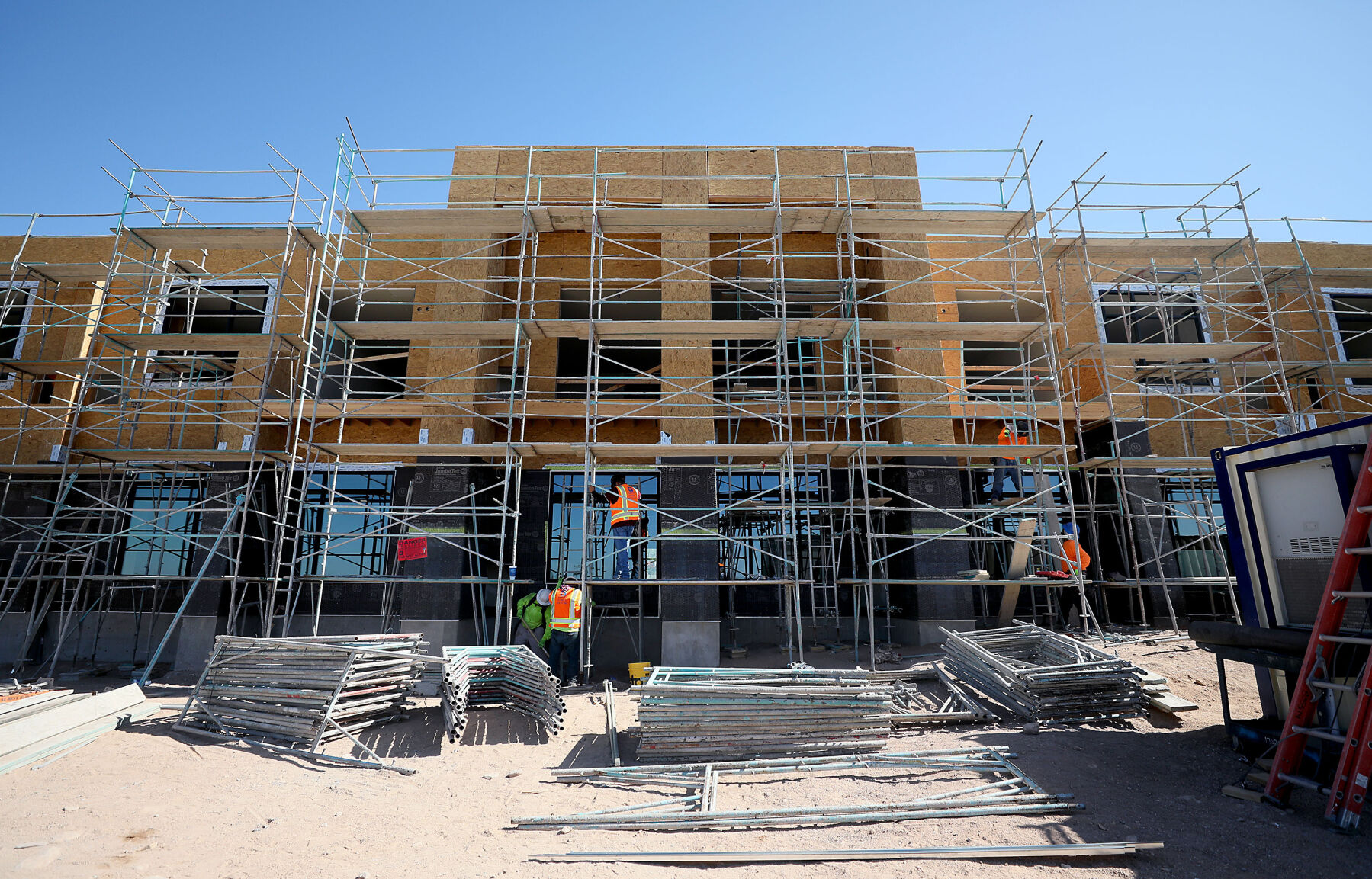
Meanwhile, The Eddy, a Tapestry Collection by Hilton hotel with 106 rooms, is under construction at 4626 N. Campbell Ave. and on track for opening this fall.
Construction continues on The Eddy Hotel. The building is a two-story, 106-room hotel next to St. Philip’s in the Hills Episcopal Church on Campbell Avenue, north of River Road. The 68,000-square-foot project is expected to be completed by mid-November. Video by: Mamta Popat, Arizona Daily Star
The Tucson results mirror ongoing improvement for the hotel industry nationwide.
STR and research partner Tourism Economics recently upgraded their nationwide 2022 U.S. travel industry forecast to predict that revenue per available room will surpass 2019 levels this year, though occupancy rates are expected to fall short of pre-pandemic levels.
Beyond the hotel industry, the Tucson area has seen gains in other tourism-related industries.
Employment in the leisure and hospitality “supersector” — including the arts, entertainment, recreation, accommodation and food services — was up 22% in February and nearly 17% in April, compared to the same months in 2021, according to the University of Arizona’s Economic and Business Research Center.
Tucson-area sales in the “amusements” category — including sporting and arts events and attractions like the Arizona-Sonora Desert Museum – were up nearly 85% in February and 79% in March.
UA Economist George Hammond, director of the Economic and Business Research Center, said business travel probably is not back to pre-pandemic levels, so that may be holding hotel occupancy down a bit.
But Hammond sees the travel and tourism sector having a busy summer, with strong sales and rising employment.
“The labor market will remain tight, so hiring will be a challenge, probably necessitating higher wages,” he said.
Photos: Pueblo Gem and Mineral Show
Pueblo Gem and Mineral Show
Updated
Rebecca Elwell, right, jeweler from Maui, Hawaii, laughs with friend and fellow jeweler Sigal Couchron while they look at gem stone beads from Jaipur Jewellery Store at Pueblo Gem and Mineral Show, 777 W. Cushing St., in Tucson, Ariz. on Jan. 30th, 2022.
Pueblo Gem and Mineral Show
Updated
Angela Luberger, right, and her husband Chad Luberger look at minerals inside Uruguay Minerals's booth at Pueblo Gem and Mineral Show, 777 W. Cushing St., in Tucson, Ariz. on Jan. 30th, 2022.
Pueblo Gem and Mineral Show
Updated
Surya Shrestha, owner of Gallery Tibet House, shows a song bowl from Nepal to an attendee at Pueblo Gem and Mineral Show, 777 W. Cushing St., in Tucson, Ariz. on Jan. 30th, 2022.
Pueblo Gem and Mineral Show
Updated
Zhamayra Gomez poses on a crystal throne from Bookbinder Crystals while her brother Zhammyl Suarez takes a picture at Pueblo Gem and Mineral Show, 777 W. Cushing St., in Tucson, Ariz. on Jan. 30th, 2022.
Pueblo Gem and Mineral Show
Updated
An attendee points to a display of crystals in Decor Stones booth at Pueblo Gem and Mineral Show, 777 W. Cushing St., in Tucson, Ariz. on Jan. 30th, 2022.
Pueblo Gem and Mineral Show
Updated
Mineral Lamps from MineraliA are on display while an attendee looks at other items from MineraliA at Pueblo Gem and Mineral Show, 777 W. Cushing St., in Tucson, Ariz. on Jan. 30th, 2022.
Pueblo Gem and Mineral Show
Updated
Attendees walk past a display of large crystal sculptures from Brazilian company Decor Stones booth at Pueblo Gem and Mineral Show, 777 W. Cushing St., in Tucson, Ariz. on Jan. 30th, 2022.
Pueblo Gem and Mineral Show
Updated
A group of Orthoceras stones are on display while attendees check out the variety of orthoceras stones at Pueblo Gem and Mineral Show, 777 W. Cushing St., in Tucson, Ariz. on Jan. 30th, 2022.
Pueblo Gem and Mineral Show
Updated
Attendees walk past multiple National Minerals booths at Pueblo Gem and Mineral Show, 777 W. Cushing St., in Tucson, Ariz. on Jan. 30th, 2022.
Pueblo Gem and Mineral Show
Updated
Steve Tobin, left, artist, signs some of his work next to a piece of his art work called "Exploded Earth" inside Grounded Life + Home's booth at Pueblo Gem and Mineral Show, 777 W. Cushing St., in Tucson, Ariz. on Jan. 30th, 2022. Tobin created the Trinity Root sculpture originally placed in front of Trinity Church in New York, N.Y. in memory of the sycamore tree that saved St. Paul's Chapel during the Wold Trade Center Attacks on Sept. 11, 2001.
Pueblo Gem and Mineral Show
Updated
Erika Ciamares, jeweler and owner of ModernOpus, looks at gems from Arthur Gem and Jewellery Co. at Pueblo Gem and Mineral Show, 777 W. Cushing St., in Tucson, Ariz. on Jan. 30th, 2022.
Pueblo Gem and Mineral Show
Updated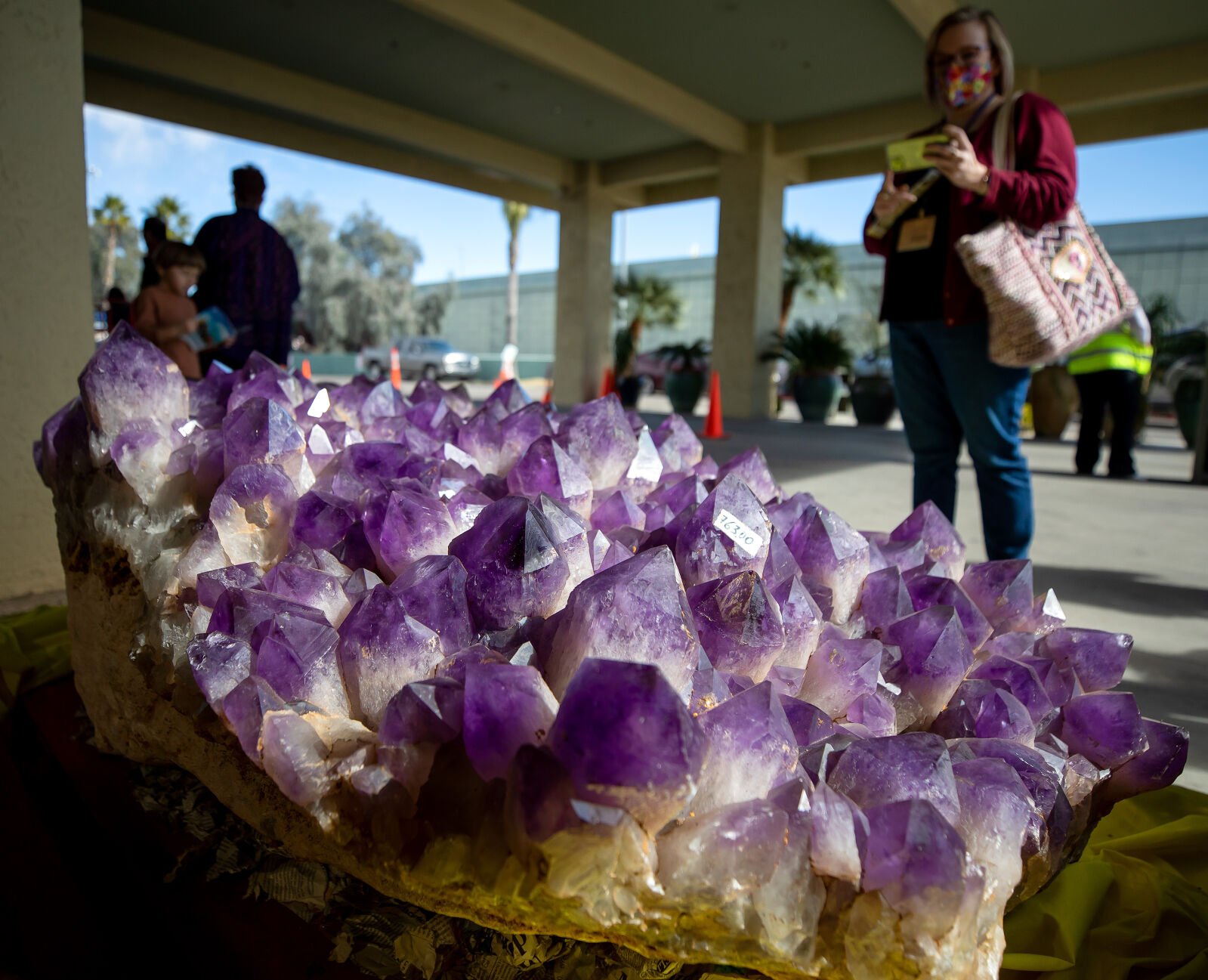
Shireen Carter takes a picture of an Amethyst cluster formation in front of Grounded Life + Home's booth at Pueblo Gem and Mineral Show, 777 W. Cushing St., in Tucson, Ariz. on Jan. 30th, 2022.
Pueblo Gem and Mineral Show
Updated
Lemurian Quartz Spheres by Brazilian company SM Cristais are on display at Pueblo Gem and Mineral Show, 777 W. Cushing St., in Tucson, Ariz. on Jan. 30th, 2022.
Pueblo Gem and Mineral Show
Updated
Christopher Jones, left, and his girlfriend Michelle Everett check out designs and jewelry from Mercurious at Pueblo Gem and Mineral Show, 777 W. Cushing St., in Tucson, Ariz. on Jan. 30th, 2022.
Pueblo Gem and Mineral Show
Updated
Nancy Freeland, center, organizes jewelry while her husband David Freeland Jr., owner of David R. Freeland Jr. Designs, talks with a customer inside their booth at Pueblo Gem and Mineral Show, 777 W. Cushing St., in Tucson, Ariz. on Jan. 30th, 2022.
Pueblo Gem and Mineral Show
Updated
Attendees check out the different booths at Pueblo Gem and Mineral Show, 777 W. Cushing St., in Tucson, Ariz. on Jan. 30th, 2022.
Pueblo Gem and Mineral Show
Updated
Bella Nugent and her husband Chuck Nugent take a picture of a crystal by Decor Stones at Pueblo Gem and Mineral Show, 777 W. Cushing St., in Tucson, Ariz. on Jan. 30th, 2022.
Pueblo Gem and Mineral Show
Updated
Digby Bertram, right, owner of Avalon Trading, talks with an attendee about some stained glass pieces at Pueblo Gem and Mineral Show, 777 W. Cushing St., in Tucson, Ariz. on Jan. 30th, 2022.

