Your favorite restaurant has reduced hours of operation, and the service is slow.
A note in your hotel room says daily room service is now an add-on and there is no bellhop to help with your luggage.
The move-in date for your new office is delayed because contractors are behind schedule.
Everyone is touched by the labor shortage in the country.
Data from the U.S. Bureau of Labor Statistics shows there were over 11.2 million job openings in the first half of the year.
The biggest shortages were in the hospitality and food service industry, with 1.4 million job openings; the retail industry had 1.1 million openings and the construction industry had 434,000 openings in that time.
“The younger generation is more interested in getting into the tech industry, leaving construction with a smaller pool of workers to perform manual labor,” said Russell Higgins, a carpenter and superintendent for Tucson-based Barker Contracting Inc. “Because construction is such a physically demanding job, it already doesn’t interest the younger generation.”
He laments that some don’t understand the pleasure of working with their hands.
“I love the physical appreciation of it,” Higgins said, “being able to look at what I’ve built and accomplished.”
A mix of factors led to the worker shortage, which existed before but was exacerbated by the pandemic.
Following nearly a year of lockdown, employees found their savings had grown because there had been no splurging on dinners, movies and travel.
That, combined with federal stimulus checks, gave these workers the ability to be more discerning about their jobs, and there was more demand for flexible schedules, better benefits and pay.
Many decided it was time to be their own boss.
The Census Bureau reports more than 4.4 million new business were started just in 2020 — a 24% increase from 2019.
And, a lot of day care facilities increased rates because of their worker shortage, and some parents found it less expensive to stay home a while longer.
But, many Tucsonans continue to show up for what have become hard-to-fill jobs each day. In honor of Labor Day, we’d like to introduce you to a few of them.
Building opportunity
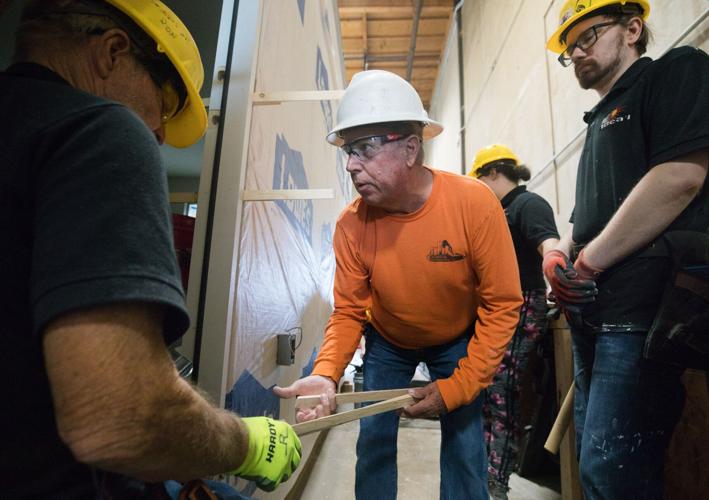
Ron Boveington doesn’t ascribe to the notion that young people don’t want to swing a hammer.
The lack of vocational training in public schools means they never got exposed to such career choices.
“In my time, we had trade school in high school,” said Boveington, 65. “You took different disciplines and learned different stuff, and now they don’t teach that.”
A cross-trained construction worker since 1984, he has worked as a welder, mechanic, carpenter, electrician and tile worker.
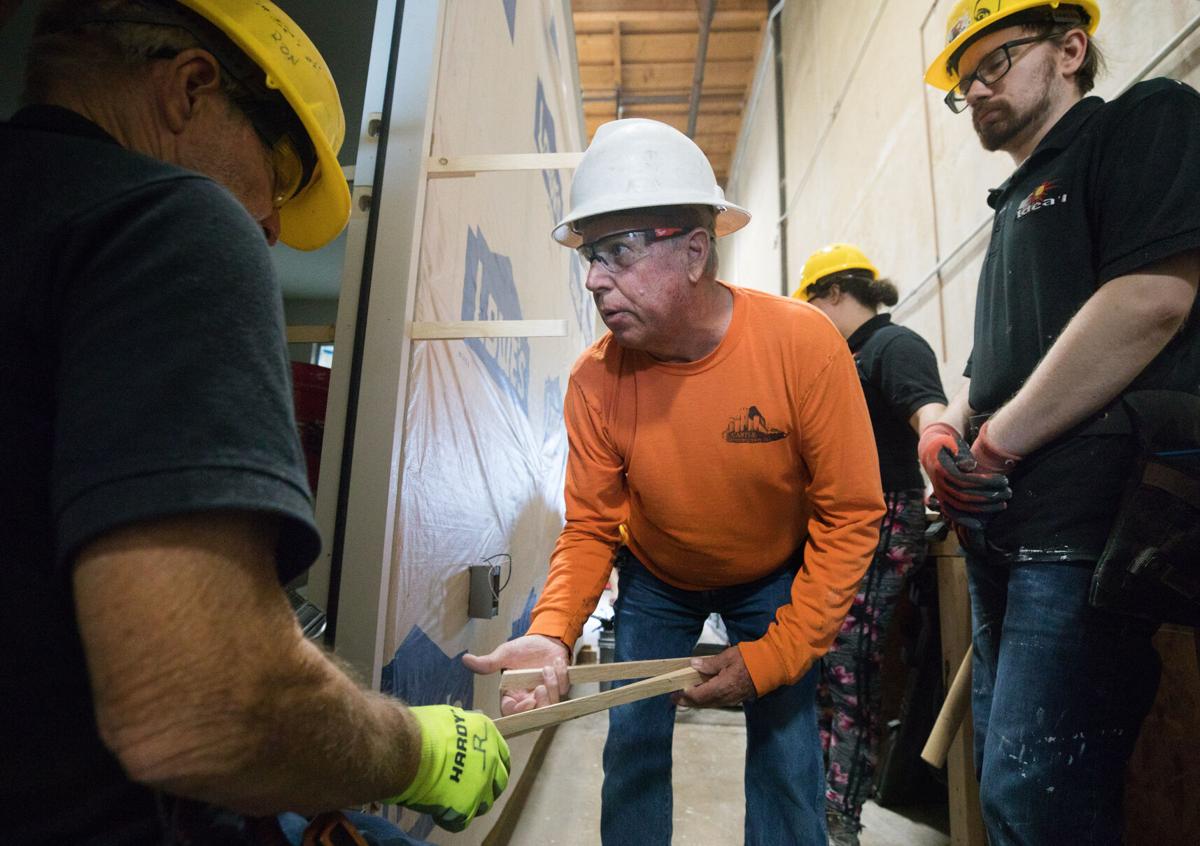
Boveington currently works for Castle Construction and teaches at Idea’l Trade Institute.
“It’s changed a lot since I started,” he said. “When I started, the older guys weren’t very nice to the young guys until you learned to do stuff correctly.”
Now, the goal is to motivate students to pursue a career in construction.
“When I see these young people, they are having fun,” Boveington said. “Hopefully they’ll see there’s a lot of opportunity after they get trained and get their license.
“They can pick any job or do it themselves and go out and start a business.”
The median pay for construction workers is about $40,000 a year, but specialized work, such as elevator installation and repair workers can earn more than $85,000 a year.
The best part of the job, Boveington said, are the hours.
“Yes, you start at sunrise. But then you get off early.”

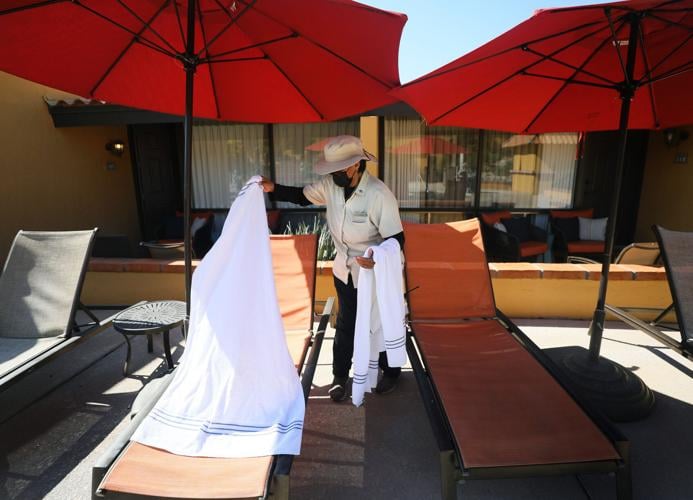
Rosa Martinez picks up towels left by guests at a pool at the Westward Look Wyndham Grand Resort and Spa. Martinez has worked at the resort for more than 10 years.
A lifetime of service
Rosa Martinez learned the ideals of service and helping people from family and her time in the military.
And after retiring from the Army as a sergeant, she returned to her native Tucson and more than 10 years ago found a new career, keeping guests comfortable at the Westward Look Wyndham Grand Resort and Spa.
Martinez works as a public-space attendant at the historic resort on East Ina Road, mainly taking care of the pool and fitness areas and making sure guests at the 241-room resort have everything they need.
She sometimes helps out the bell staff and with the laundry.
“I’m a multi-tasker chick — whatever they ask me to do, I go above and beyond. That’s my military ethics,” she said.
Martinez enjoys sharing the history of the Westward Look — built in 1912 as a hacienda-style family home before it became a dude ranch in the 1940s and later, a resort that hosted the likes of John Wayne and Dean Martin.
Martinez also likes sharing the history of her family, which traces its roots to Southern Arizona from the 1800s and includes a Civil War veteran, and her military service including her stints in Japan, the Philippines and Korea.
“I look forward to coming to work every day,” Martinez said, adding that she likes working weekends so she can attend to personal business and help her elders with their appointments.
Martinez said the Westward Look offers an excellent package of employee benefits. She said she makes over the state minimum wage of $12.80 per hour and recently got a pay increase.
Nationally, average hourly earnings for non-supervisory hotel workers rose from $15.06 in May 2020 to $19.44 per hour in June, according to the U.S. Bureau of Labor Statistics.
Martinez said working conditions can be challenging amid staffing shortages, but her supervisor is flexible and manages to work things out.
“We make it easier for other people, to make people comfortable, and to come and work, it’s pretty flexible,” she said. “My supervisor works with each person, according to their abilities and what they can do, and there’s no peer pressure — they look forward to coming to work.”

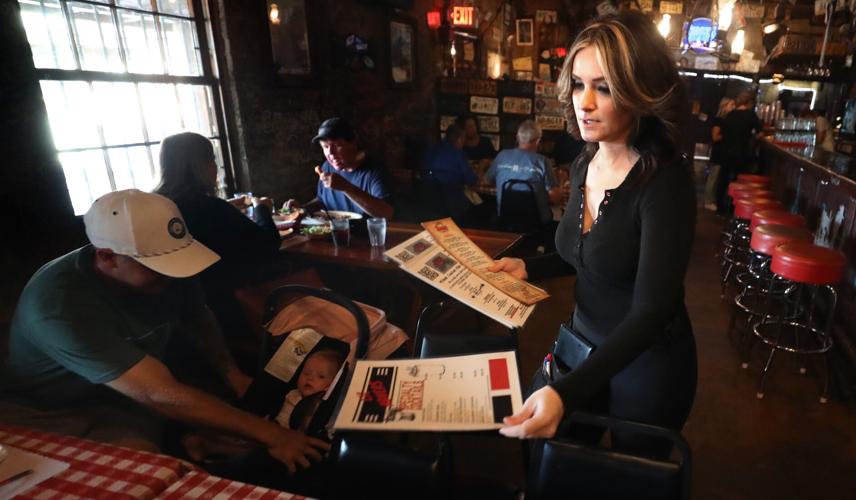
Server Kalie Engen brings out menus to customers during her shift at Li’l Abner’s Steakhouse in Marana.
Restaurant family
Marana native Kalie Engen spends a few days a week serving grilled steaks with a side of how-do-you-do to diners at Marana’s storied Li’l Abner’s Steakhouse on North Silverbell Road.
Even during the pandemic, when the restaurant whose history goes back 80 years had to close its dining room, Engen never left. She snagged what hours she could to help with the restaurant’s takeout service before jumping back on the schedule once the restaurant reopened in May 2021.
“This was my first job, and I worked through high school, and I just never left,” said the Marana High School alumnus, who started working at the restaurant when she was 16. “Everyone here is a family. … I can’t leave.”
Engen, a single mother of two, including a newborn, works around 20 hours a week as a server. She also fills in on occasion as a bartender and shift manager when the managers are gone. Between her hourly wage and tips, she said she makes the equivalent of someone working 40 hours a week at minimum wage ($12.80 an hour).
“The money is good,” said the 27-year-old, who rents a house in nearby Gladden Farms.
Abners pays its servers the state minimum cash wage of $9.80 an hour and pays its cooks between $15 and $17 an hour, said longtime manager Connie Gilbert.
But she knows plenty of restaurant workers who took different paths after being sidelined during the pandemic. Some got used to the enhanced unemployment pay, and others decided to take full-time work in other industries.
“We had the lockdown for two months, and I think a lot of people at first just didn’t know what to do; they didn’t know how not to work,” Engen said. “And then they got comfortable being at home. They didn’t want to come back.”
Nationwide, restaurants and the food service sector lost more than 2 million workers between February 2020 and May 2021, according to the U.S. Bureau of Labor Statistics. In the state, the hospitality sector, of which restaurants make up a large portion, reported a drop of nearly 43,000 employees over the same period, the statistics showed.
Many of those jobs have rebounded, although the National Restaurant Association reports that staffing levels nationwide are still off by 9% — by more than a half million jobs — over pre-pandemic levels.
Engen said she has seen an uptick in interest in restaurant jobs among some of her friends.
“I have friends asking me if Abner’s is hiring, and I tell them to wait,” she said. “We’re almost in our busy season.”
ICYMI: Watch the Star's top videos from the past week
New Javelina Statue unveiled along River path
Updateda new art sculpture was unveiled along the river path near Campbell Avenue. The statue features a javelina on a bike with an extra seat behind for the community to interact and sit on. Video by Pascal Albright/ Arizona Daily Star
Student led rally about school safety at the University of Arizona
UpdatedAbout 40 students and supporters showed up in front of Old Main to rally for change in school policies and administration on the University of Arizona campus, May 4. Video by Pascal Albright / Arizona Daily Star
New Mural highlights wildlife along River Walk
UpdatedA new mural is bringing color to the river walk. The new mural located near country club features vibrant depictions of Arizona wildlife. Video by Pascal Albright / Arizona Daily Star
Pima County Board of Supervisors discusses end of Title 42
UpdatedWatch now: Pima County is preparing to receive an increased number of asylum seekers when Title 42 ends on May 11. Video courtesy of Pima County
ChronicCon is canceled
UpdatedChronicCon, which had been scheduled for May 20th out at Cocoroque Ranch and Pavilion, has been canceled due to a reorganization of the Arizona Daily Star.
Forest Service officials looking for suspect in wildfire on Mount Lemmon
UpdatedForest Service Fire Investigators are trying to identify a man seen on video shooting a gun where the Molino basin wildfire started April 30. Officials are asking anyone with information to call 520-388-8343 or email the Coronado National Forest at Mailroom_R3_Coronado@usda.gov. Video courtesy of the U.S. Forest Service.
A trip to Tucson's year-round farmers market at Rillito Park
UpdatedHeirloom Farmer Markets' weekly offerings at Rillito Park near the Chuck Huckelberry Loop can be found every Sunday morning. The market's current hours are 8 a.m. to noon.
Tucson police release video of fatal March 3 shootout
UpdatedAaron Martinka, 28, was shot and killed by Tucson police after firing at them during a traffic stop near North Campbell Avenue and East Grant Road, authorities say. Video courtesy of the Pima Regional Critical Incident Team.
Take a tour of the Blue Moon Community Garden
UpdatedBlue Moon Community Garden is one of 17 gardens overseen by the nonprofit Community Gardens of Tucson. Through regular events for gardeners and neighbors, CGT aims to bring people together to grow not only healthy foods, but also relationships. Video by Caitlin Schmidt / Arizona Daily Star
Rep. Stahl Hamilton apologizes for hiding copies of the Bible
UpdatedRep. Stephanie Stahl Hamilton, D-Tucson, apologized Wednesday to colleagues for moving and hiding copies of the Bible in the House members’ lounge, saying she was trying to make a “playful” point about the separation of church and state. Video courtesy of Arizona Capitol Television.
Arizona lawmakers propose bill to limit access to online pornography
UpdatedAfter being initially shot down, a new version of State Bill 1503, is being considered by Arizona lawmakers. Video courtesy of Arizona Capitol Television.
President of TUSD board voices support for LGBTQ+ students and staff
UpdatedTucson Unified School District's Governing Board President Ravi Shah spoke in support of LGBTQ+ students and district staff members during a board meeting Tuesday. Shah also showed support for an upcoming student-led drag show at Tucson High.
Footage shows Rep. Stahl Hamilton moving Bibles
UpdatedRep. Stephanie Stahl Hamilton, D-Tucson, was recently filmed hiding copies of the Bible inside a state Capitol lounge. Video courtesy of the Arizona House of Representatives.
Mountain lion caught on doorbell camera outside Bisbee home
UpdatedA mountain lion was recently seen in Bisbee on the porch of a home about 80 miles southeast of Tucson. The Arizona Game and Fish Department asks that sightings are reported at 623-236-7201 so officials can track the movement and behavior of wildlife. Video courtesy of AZGFD.
Time lapse: Northern Lights seen over Tucson
UpdatedThis footage showing the aurora borealis was captured by a camera belonging to the NASA-funded Catalina Sky Survey at Mount Bigelow on April 23 from sundown to about 10 p.m. Video courtesy of David Rankin.
Trail camera catches a busy beaver on the San Pedro River
UpdatedThe river's beaver population is hanging on almost 25 years after being reintroduced by wildlife officials.