





The future of Arizona’s energy policies is on the line as voters select three candidates for the Arizona Corporation Commission.
Voters can decide between two radically different philosophies over how to manage utilities and energy use when they choose among three Republicans and three Democrats, including one in each party from Tucson.
The five-member body sets electricity and natural gas rates and other policies affecting regulated utilities statewide, including Tucson Electric Power and Southwest Gas Co. here and Arizona Public Service Corp. in the Phoenix area.
The Democratic slate wants the commission to do more to promote solar and wind energy — or at least remove what they see as rate-based obstacles to them — for environmental and economic reasons.
Republicans favor an “all of the above” energy strategy, including renewable and fossil fuel-based sources and nuclear energy. They oppose mandates or other tools to promote one form of energy.
Republicans say they don’t want the commission to pick “winners and losers” among competing energy sources. Democrats say some of their policies are doing exactly that. Republicans say they want the free market to decide what forms of energy should predominate. Democrats say their policies interfere with market mechanisms.
Said Rene Lopez, a Republican candidate who serves on the Chandler City Council, “I’m not for subsidies for any industry. An industry should be standing on its own merit and let the free market decide what moves forward. That’s the only way we can make sure we have a stable and supportable grid.

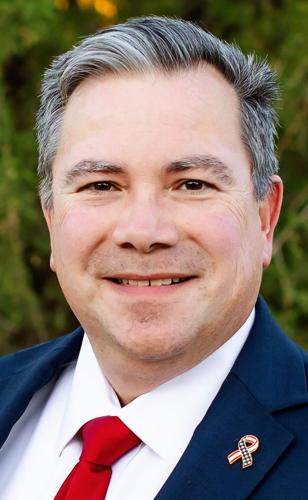
Lopez, (R)
“We do not know what the future of technology will come from. We don’t know (where) the cost of the gas industry and coal industry is going to go. If natural gas prices go down, we’re doing ratepayers a disservice by not having that available to them.”
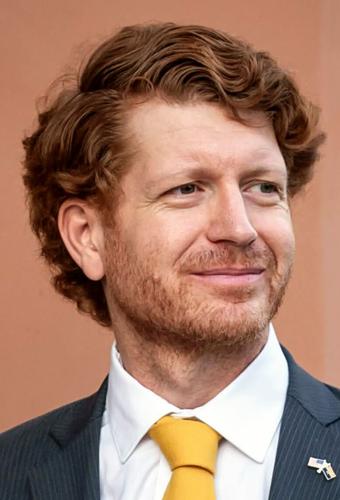
But Joshua Polacheck, a Democratic candidate from Tucson, said, “We are running as the pro-business candidates, but we may not be pro-fossil fuel candidates. We don’t want Arizona to become an unaffordable place to make medium and long-term investments in our state.

Polacheck (D)
“But if we keep on the path that Republicans have put forward, doubling down on what we’ve been doing the last 80 years in the grid, we will see nothing but continuous double-digit increases in our energy prices every year,” because fossil fuel plants are now more expensive to build than solar and wind, said Polacheck, a former foreign service officer for the U.S. State Department.
Today, Republicans hold a 4-1 commission majority.
More electricity demand predicted
A startling backdrop to this ideological standoff over Arizona’s energy future is that utility officials and federal government experts are suddenly predicting rapid growth in customer electricity demand for at least the next decade, following a long period of virtually stagnant demand.
The growth projections will fuel efforts by utilities to ramp up their electricity infrastructure to meet the demands. That, in turn, will likely accelerate already fierce differences between Democrats and Republicans, environmental and energy efficiency advocates and pro-business advocates over how best to do that.
TEP’s total electricity use since 2019 has risen about 2.7%. For the next decade, the utility this month forecast total customer electricity demand will rise more than 50% — 5% a year. A year ago, the utility projected total demand would rise about 1% annually.
Arizona Public Service Co., which serves much of the Phoenix area, projects its total electricity demand will rise 38% by 2031 and 57% by 2038. Peak-hour demand — the demand during times customers use the most energy — is expected to rise more than 40% by 2031, the utility said.
Nationally, electric grid planners anticipate annual electricity demand growth of 5% to 6% through 2030, after a decade of about .5% annual growth, David Crane, undersecretary for infrastructure at the U.S. Department of Energy, told an industry conference in April.
TEP’s outlook reflects increasing interest from “data center developers and others proposing projects with significant energy needs,” TEP said on its website this month. Since making its earlier forecast, “we’ve since engaged in preliminary discussions of potential projects” that could trigger the steeper boost in energy demand, the utility said.
TEP spokesman Joe Barrios declined to identify specific projects, saying, “We’re not at liberty to share more details about companies engaged in the site selection process. Our efforts are in response to preliminary proposals from data service providers and other businesses that have expressed interest in establishing operations here.”
Other factors driving demand projections include manufacturing growth in the Phoenix area and nationally, population growth in Arizona, and increasingly hot summers that spike air conditioning use.
Increased electrification, including growth in electric vehicles use, and the boom in artificial intelligence, are also driving the expected increase, said APS officials and national energy experts.
‘All-of-the-above approach’
“The more we embrace artificial intelligence, the more and more need we have for data centers,” said Republican Corporation Commissioner Lea Marquez Peterson of Tucson, the only incumbent seeking re-election this year.

Peterson (R)
“We’ve had a huge growth in the semiconductor industry. We have the American Battery factory going up here and the Kore Power battery factory planned for Buckeye. A lot of companies like this come to the state. More customers means more energy demand.”
“My priority is reliable energy, especially after watching the blackouts in California. It’s a life-or-death issue in Arizona if we have blackouts and no air conditioning,” Marquez Peterson said.
“We need to make sure there are affordable rates and reliable energy supplies. We need to do this with an all-of-the-above approach. We support gas, wind, solar, nuclear power, hydroelectric, coal as long as it lasts, new innovative technologies we are still exploring, like hydrogen, small nuclear reactors and demand response programs.”
The commission has supported utility efforts to issue “all source RFPs (requests for proposals) when they seek bids for new energy projects, and having them come up with the least cost option,” she said. “We have a lot of developers coming to the state, replying to all source RFPs.”
Democrat Polacheck, however, says the increased demand projections show the commission must reform Arizona’s utility regulatory environment, to encourage building smaller-scale projects to generate solar and wind energy and for batteries for energy storage, matched by energy efficiency improvements to extend the life of existing plants.
“Arizona must be able to scale our power grid to respond to these unprecedented requirements and that will not come by concentrating our investments in large, centralized projects that take years to approve and build,” at high costs, he said.

Hill (D)
He and fellow Democratic candidate Jonathon Hill say the commission’s traditional practices in determining electricity rates offer a “perverse incentive” for utilities to build more expensive fossil fuel plants instead of wind and solar plants, whose costs have dropped dramatically over the past decade.
Utilities “are building gas plants. Once they build the plant, the operating costs of that plant are passed directly onto the consumer. Consumers are being directly exposed to the global commodities market to power these gas plants,” Polacheck said. “Clean energy on the other hand, the inputs to power them, sunshine and wind, are free. It’s a totally different paradigm for how we power our grids.”
The commission allows fossil fuel plants to pass on their costs for buying oil and natural gas directly to the consumer. Solar and wind plants have no costs to buy fuel, but that economic advantage is taken from them when utilities can simply pass the fossil fuel costs onto consumers, he said.
Hill sees this rate-based disparity between fossil fuels and renewables as a structural problem.
“It’s the structure of how utilities make money. They’re allowed a certain percentage profit on any money they invest; they are incentivized to pick the most expensive option.”
Because the ability of utilities to recover their fossil fuel costs is “baked into the recipe of how rates are made, it’s going to be a difficult nut to crack to fix it,” he said. One of the easiest fixes would be to give renewable supplies financial incentives to compete, he said.
Republican candidate Rachel Walden defends the commission’s rate structure as a way of promoting transparency by utilities in how their costs are allocated and shown on their bills to customers.

Walden (R)
“You have a line item to see what they paying for,” said Walden, now a Mesa school board member. “In the Salt River Project (whose rates aren’t regulated by the commission), they don’t do that, they don’t break down the costs. (With commission-regulated utilities), you look at the bill and you learn why you’re paying those fees.”
The commission’s role is not to use its rate structures to promote certain energy uses, she said. It’s to insure ratepayers have just and reasonable rates.
“We need to look at operating expenses and the capital costs of utilities to insure costs are reasonable. Nothing in the constitution says we should be mandating energy use,” she said.
Retreat from renewable energy requirements
Only a few years ago, the commission was seriously considering a proposal to require that electric utilities in its jurisdiction, including TEP and APS, get 100% of their energy from renewable sources by 2070.
But in 2022, the commission, which then had a 3-2 Republican majority, voted along party lines to kill it.
This year, the commission voted 4-1, again along party lines, to kill an existing requirement that utilities get 15% of their energy from renewables by 2025.

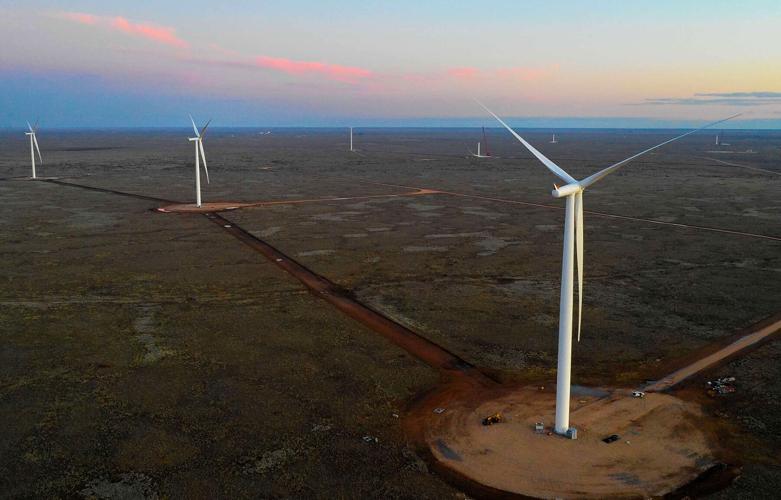
TEP says the Oso Grande Wind farm in southeast New Mexico is its largest renewable resource producing clean energy for Southern Arizona. TEP gets 20% of its energy from solar and wind. When you add rooftop solar panels purchased by customers separately from utility-installed solar, a total of 27% of energy used in the utility’s service area is renewable, TEP says.
Commissioners also proposed eliminating an energy efficiency standard requiring electric and gas utilities to achieve 22% energy savings by 2020. The commission staff is putting together a formal proposal on that issue to be heard in the next two months, Marquez Peterson said.
As of 2023, both TEP and APS had met the 22% energy efficiency standard. TEP has also exceeded the renewable standard, getting 20% of its energy from solar and wind. When you add rooftop solar panels purchased by customers separately from utility-installed solar, a total of 27% of energy used in the utility’s service area is renewable, TEP says.
TEP has also set a goal of achieving “net zero” greenhouse gas emissions by 2050. Statewide, electric utilities get 14% of their electricity from renewable sources. APS gets about 11% of its power from renewables.
The commission’s actions sparked outrage among renewable energy and energy efficiency advocates, who say the elimination of renewable energy standards could drive away developers of lower-cost wind and solar projects. They say energy efficiency requirements have saved consumers billions of dollars by reducing their uses of electricity and gas and reducing the need for more power plants.
Commissioners said both standards ended up costing ratepayers who don’t use renewable energy, or efficiency programs such as weatherization, billions of dollars to subsidize customers who do use them.
“The (commission) majority does not support subsidizing one type of energy customers who don’t use that kind of energy,” Marquez Peterson said. “Weatherization programs should be paid for by those who are using it.”
The commission’s No. 1 priority for determining energy sources is and should be based on costs, Walden said. The renewable energy requirement treated costs as irrelevant, she said.
“We’re letting markets determine this. We let prices fluctuate, so we can get the best rate possible. I’m not opposed to wind and solar. We have a really good mix of wind and solar,” she said.
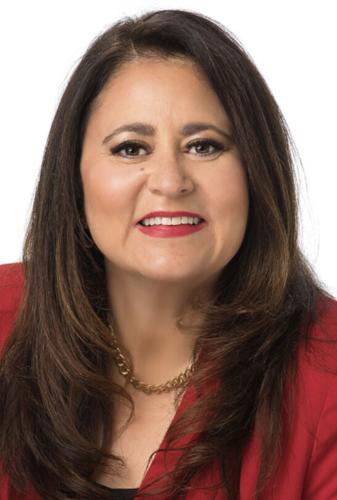
Democratic candidates Hill and Ylenia Aguilar want to bring the renewable standards back. As public service companies, utilities are granted monopoly status that comes with additional responsibilities, Hill said.

Aguilar (D)
“As a baseline, we need to have some type of guidelines to direct us: how do we get to whatever percentage that’s going to be?” said Aguilar, who serves on the Central Arizona Project’s governing board. “Hopefully, it will get us to 100% solar and independent of all fossil fuels. We should be at a minimum of 50%.
“You have to have policies in place, that the utility companies can take direction from towards future investments. Otherwise, they are not going to do it on their own,” said Aguilar, who does consulting for the environmental group Mom’s Clean Air Force.

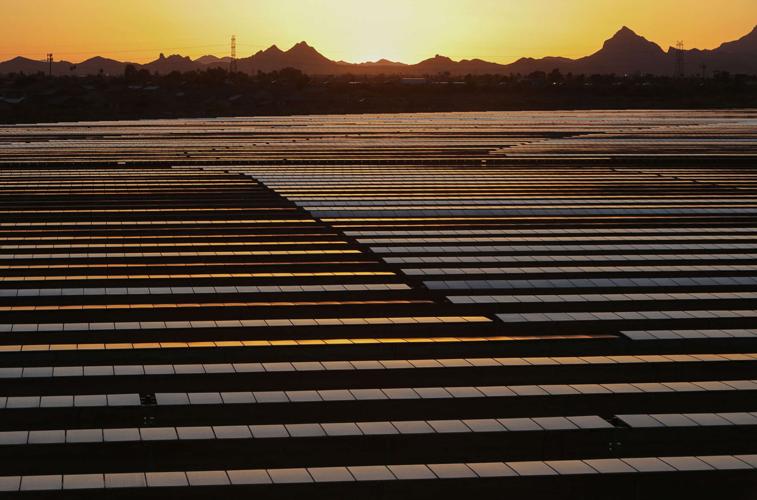
Tucson Electric Power says its 12.5 megawatt Raptor Ridge system in Tucson has been generating clean energy for homeowners and renters participating in our TEP GoSolar Home program since June 2022. The array, which features more than 35,000 photovoltaic modules installed on 100 acres near Valencia Road east of Interstate 10, is designed to produce enough power to meet the annual electric needs of about 2,500 homes, TEP says.
Polacheck, however, said action on restoring the renewable standard should wait until the commission tackles its rate structure to better encourage construction of more renewable energy facilities.
As for energy efficiency, “We prefer to align incentives for the utilities to make the obvious investments in efficiency rather then mandates. If the utilities can profit from efficiency investments while also reducing costs to consumers, then the commission needs to implement those reforms,” he said.
Marquez Peterson countered, “Any ‘incentive’ will result in extra costs for ratepayers. Joshua apparently does not understand this. This is the reason the mandates were problematic.”
Split on human-caused climate change
Philosophical differences between the two parties’ candidates extend to their views on whether human-caused climate change triggered by greenhouse gas emissions such as carbon dioxide and methane is a real phenomenon.
All three Democratic candidates say they believe humans are definitely causing our continuously warming temperatures, and that coal and natural gas plants that burn fossil fuels are part of the problem.
Among the Republicans, Marquez Peterson said, “I believe that humans are impacting the climate.”
Lopez and Walden aren’t ready to agree.
“You can find data on both sides of the aisle to talk about climate change, about emissions, and CO2 is what makes plants grow,” Walden said. “I don’t think that’s the role of the commission, to get involved in the science and temperatures.
“It’s not the commission’s role to get into the scientific arena, to make one point or another. They’re there so people can have access to affordable energy.”
Lopez said after reading two books on the science behind climate change, he believes the jury is sill out on whether it’s human-caused.
“There are models that say it could be manmade. Some would say it’s (naturally) environmental only. When you see eruptions of volcanoes, it produces as much sulfur and carbon as all cars in the U.S.
“In my opinion, it doesn’t matter. We want to make sure we’re doing what’s best for the environment. To do it, we need to be responsible stewards for power production.”
The overwhelming majority of scientists who study global climate issues, however, say the science is clear that climate change is human-caused.
Democrat Aguilar said Republican candidates who question whether humans cause climate change should be called out for their “denial.”
“Ignoring the consensus among climate experts is not just reckless. It’s irresponsible,” Aguilar said. “It’s not conservative to gamble on the idea that the vast majority of scientists are wrong.”

