


While ousted Venezuelan President Nicolás Maduro should be brought to justice, it should be done “in Venezuela by Venezuelans,” says a University of Arizona assistant professor of Latin American studies.
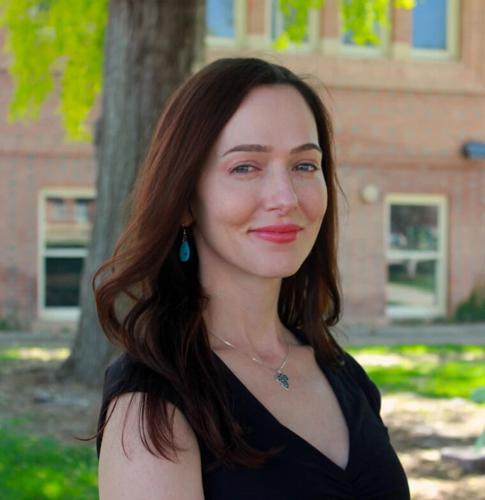
“I think one important aspect of this that we need to keep in the front of our minds is that the case against Maduro — who was a dictator who should be brought to justice but in Venezuela by Venezuelans — is the pretext of him as this drug kingpin and this being the main justification for the (U.S.) intervention. This for me is a false premise,” said Susan Brewer-Osorio, who works in UA's School of Government and Public Policy and researches conflict, peace-building and organized resistance to militarized drug policies.

Susan Brewer-Osorio, an assistant professor of Latin American studies at the University of Arizona.
“There’s no evidence of fentanyl trafficking out of Venezuela, which has been our major concern. At best, Venezuela has a secondary role in cocaine trafficking out of Latin America. We don’t know of any maritime routes between Venezuela and the U.S. with respect to cocaine trafficking,” Brewer-Osorio told the Arizona Daily Star in an interview after the U.S.’s Jan. 3 invasion of Venezuela and capture of Maduro under President Donald Trump.
The U.S. incursion on Jan. 3 began with strikes on Venezuela’s military infrastructure and ended with a raid on Maduro’s residence in Caracas, in which he and his wife, Cilia Flores, were captured, then flown to New York to face drug-trafficking charges.
The Trump administration has given many reasons for the incursion — including drug trafficking, leveraging oil, and Maduro’s dictatorship not aligning with U.S. values. Trump cited oil as a key motivator, saying American oil companies would modernize Venezuela’s oil production and refinement capabilities.
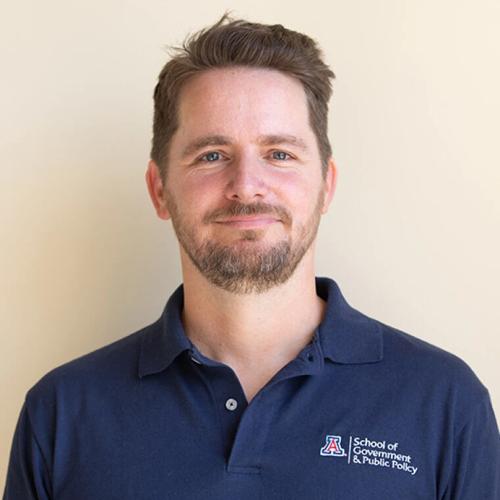
Alex Braithwaite, a UA professor in international relations at the School of Government and Public Policy, said he was shocked by the news the morning of Jan. 3 since the attack wasn’t consistent with the way foreign policy tends to be practiced in the U.S. or in democracies generally. Braithwaite said stability in the international system is predicated on a set of deep underlying connections or interactions between states and the ability for states to develop trust with one another.
“And I think this kind of action of foreign policy behavior speaks to uncertainty, dismantling norms that have existed for decades and engenders massive amounts of distrust in the international system,” said Braithwaite, who researches international relations and conflict processes.

Alex Braithwaite, a University of Arizona professor in international relations.
Thomas Volgy, a UA distinguished professor emeritus of political science, said there doesn’t seem to be a plan here beyond the action plan to get Maduro. He said the U.S. has learned the hard way that “regime change is very, very difficult to execute by outside power” and “much of that regime change ultimately happens inside the country, and that means extensive conflict inside of Venezuela (with) heavy military forces supporting the status quo.”
Volgy listed reasons Trump may have been motivated to act, beyond seizing the oil and claiming to fight drug trafficking, including:
— Deflecting from the “Epstein Files” about the politically-connected child sex offender Jeffrey Epstein;
— Taking attention away from Trump’s decreasing polling numbers;
— Reasserting the Monroe Doctrine (Trump now dubs it the Donroe Doctrine in a play on his first name) as justification for the U.S. claiming dominant influence and intervening in Latin America;
— The administration wanting to establish that the U.S. is “willing to use force or the threat of force to achieve foreign policy objectives;”
— And Trump’s need to create “constant, continued chaos” to exhaust domestic and foreign critics.
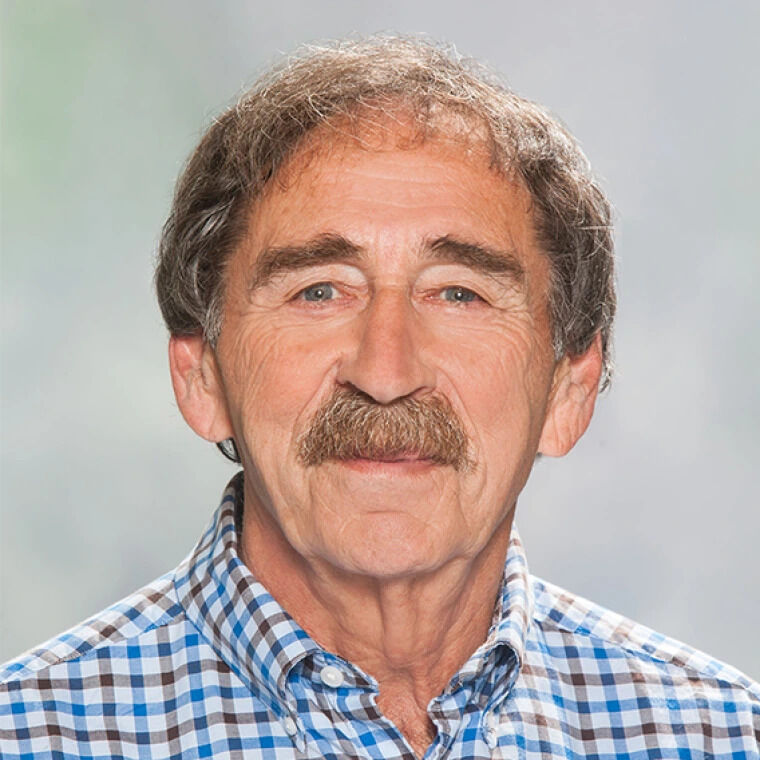
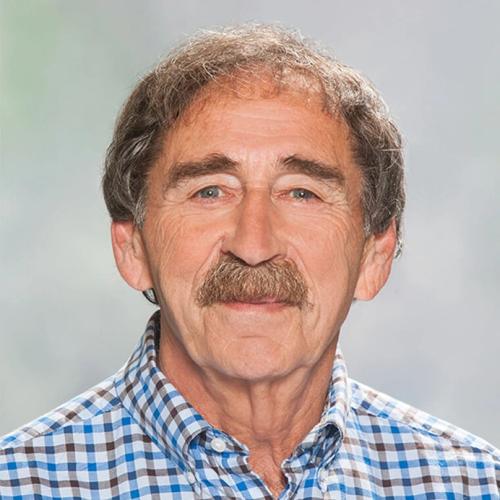
Thomas Volgy, a distinguished professor emeritus of political science at the University of Arizona.
Michael Schaller, a UA Regents’ professor emeritus of history, said he wasn’t totally surprised by the Jan. 3 events. He pointed to “historic American bullying” of Latin America and what he called “Trump’s fixation on 19th century metrics of power, the oil industry, the coal industry, the steel industry, battleships” and “his projection of U.S. power the traditional way.”
“At the same point in time, it’s sort of implicitly acknowledging that China and Russia have a right to throw their weight around in their backyards — Eastern Europe or South Asia and East Asia,” Schaller told the Star.
He added that all those things aside, “almost no one is a member of the ‘Maduro Fan Club’” and that he was “a petty tyrant, a thug, and at some level, Venezuela is better off without him,” but not necessarily this way. It doesn’t excuse the “breaking of norms and laws abroad, just the same way Trump breaks them at home,” Schaller said.
Jeanne Clarke, a political science and public policy professor emerita at UA’s School of Government and Public Policy, said she wasn’t surprised by the incursion into Venezuela and Maduro’s capture since “Trump and his administration act impulsively and there’s no thought, no knowledge of history.” “They’re just out for whatever they can get materially at any point in time,” she said.
“This invasion of Venezuela is an act of war on the part of the United States government, pure and simple. There are other countries invading their neighbors and it’s following in the footsteps of dictatorships elsewhere in the world,” Clarke said.
“We don’t learn from our mistakes,” Clarke said, referencing past presidents, including George W. Bush, who authorized the invasions of Afghanistan in 2001 and Iraq in 2003. “If we ignore history, it’s going to repeat itself, and tragically, Trump is amassing more and more power in the presidency," she said.
Drug trafficking charges
Pointing to the drug trafficking charges against Maduro, Brewer-Osorio said it's important to remember that Trump recently pardoned former Honduran president Juan Orlando Hernández, who was convicted of U.S. drug trafficking charges, to possibly sway an election there.
“And so, in my mind, we need to stay focused on the political and economic motives that are driving this policy, and not be swayed into thinking this has anything to do with U.S. security or the security and well-being of Americans,” she said.
Schaller said targeting the drug trade is often used as an excuse for other goals.
“Trump, in the last few months, attacking these small boats carrying drugs. They probably are, but it’s such a minor factor in the global drug trade; Venezuela is a bit player compared to many other countries,” he said. “And in any case, the drug they’re carrying is mostly cocaine bound for European markets, not fentanyl bound for American markets. But historically, for 100 years, Americans and other countries have used the threat of drugs as a sort of moral pretext for intervention.”
As for Venezuela’s oil industry and vast oil reserves, Brewer-Osorio said, “The infrastructure for extracting that oil is going to be very expensive. Venezuela has struggled in recent years to maintain that infrastructure and has been significantly under-producing."
There are potential long-term benefits from the U.S. intervention to U.S. oil companies and business interests, but not really to everyday consumers in the country, she said.
Roles of Russia, China; US reactions
Tracing the larger geopolitical connections, Clarke said there are four major players in this situation — the U.S., Venezuela, Russia and China. Russia is a major importer of Venezuelan oil and a supporter of Maduro, but its response to his capture was akin to “merely a slap on the wrist,” she said. China, on the other hand, issued a strong statement after the U.S.’s capture of Maduro and told Trump it was illegal and against international law.
Clarke said it’s quite plausible that Russia and China are working together to undermine the U.S. and Trump since they view him as “a fool and ignorant.”
Schaller said that while Russia and China are supporters of Maduro, they’re probably pleased with Trump’s move because it gives them a “moral cloak” for China’s threatening of Taiwan and Russia’s ongoing war after its invasion of Ukraine.
“Trump gives them added cover to do what they want to do in Ukraine and Southeast Asia,” he said. “So, I think despite their nominal support of the Maduro regime, they’re actually sort of pleased that they now won’t be seen as lawbreakers (and) ‘they’re just following the lead of Trump’.”
Domestically, Schaller said it’s revealing to see that the only Republicans who were criticizing Trump’s actions in Venezuela are the ones who are leaving Congress or retiring, such as Marjorie Taylor Greene and a few others. “The rest of the elected base and the voter base are pretty unshakeable, because I don’t think MAGA (Make America Great Again) is really a set of principles,” he said.
“It’s something of a personality cult, and Democrats often feel themselves in a bind — they don’t want to criticize the bravery of American special forces, who in terms of technique are terrific, whatever the policy is. They’ve mostly criticized procedure, that Congress should’ve been notified in advance as per the War Powers Act and other things,” Schaller said.
Future threats to Colombia, Greenland
Brewer-Osorio noted that Trump is now threatening Colombia, a country she focuses on in her research and studies. She said that while relations between the U.S. under Trump and Colombia under leftist leader Gustavo Francisco Petro are tense, a similar military operation there is “extremely unlikely.”
She cited three reasons: Colombia’s oil sector is open to foreign investment and has no history of nationalization and expropriation of U.S. company assets, as Venezuela's did; Colombian democracy is an established, competitive democracy in contrast to Venezuela; and Colombia has been the U.S.’s most consistent and important ally in South America for decades.
Schaller said Trump’s Venezuelan actions contradict his “America First” pledges as a candidate in 2016, 2020 and 2024. “I think his lack of reliability, his whimsical willingness to change policy at the drop of a hat is likely to cause real doubts abroad, if not at home,” he said.
“The reliability issue is liable to be taken more seriously by America’s foreign allies, our NATO (North Atlantic Treaty Organization) allies, where he’s threatened to seize the territory of one NATO member — Denmark.” If allies say they can’t trust or rely upon this administration, “once that trust is broken, it’s very hard to build,” Schaller said.
Braithwaite said there’s very little to suggest the U.S.’s actions in Venezuela will improve its position in the international system. Russia and China have always been competitors, opponents or enemies to the U.S., depending on how you want to describe them, he said, so the relationship with them doesn’t change dramatically with this.
“But what does change is the relationship U.S. has with its many, many allies around the world, most of whom now are going to be less certain about the extent to which they can rely on the U.S. or trust the U.S.,” he said. “So, that’s where I would see the biggest concern is.”
Schaller said the U.S. has discovered, especially in the last year, if not in the first Trump administration, how much of its democracy depends on observing democratic norms — the role of Congress, courts, free speech, press, universities, etc.
“I think that’s the real danger — that a forceful president can get away with much more than we realized. We look back historically, you know, I look back at the (Richard) Nixon administration, who broke norms, but was called to account and ultimately forced from office, right? Trump has not been and in fact, it’s expanding his power by breaking norms and threatening institutions. That’s what worries me about the future more than any particular policy.”

