

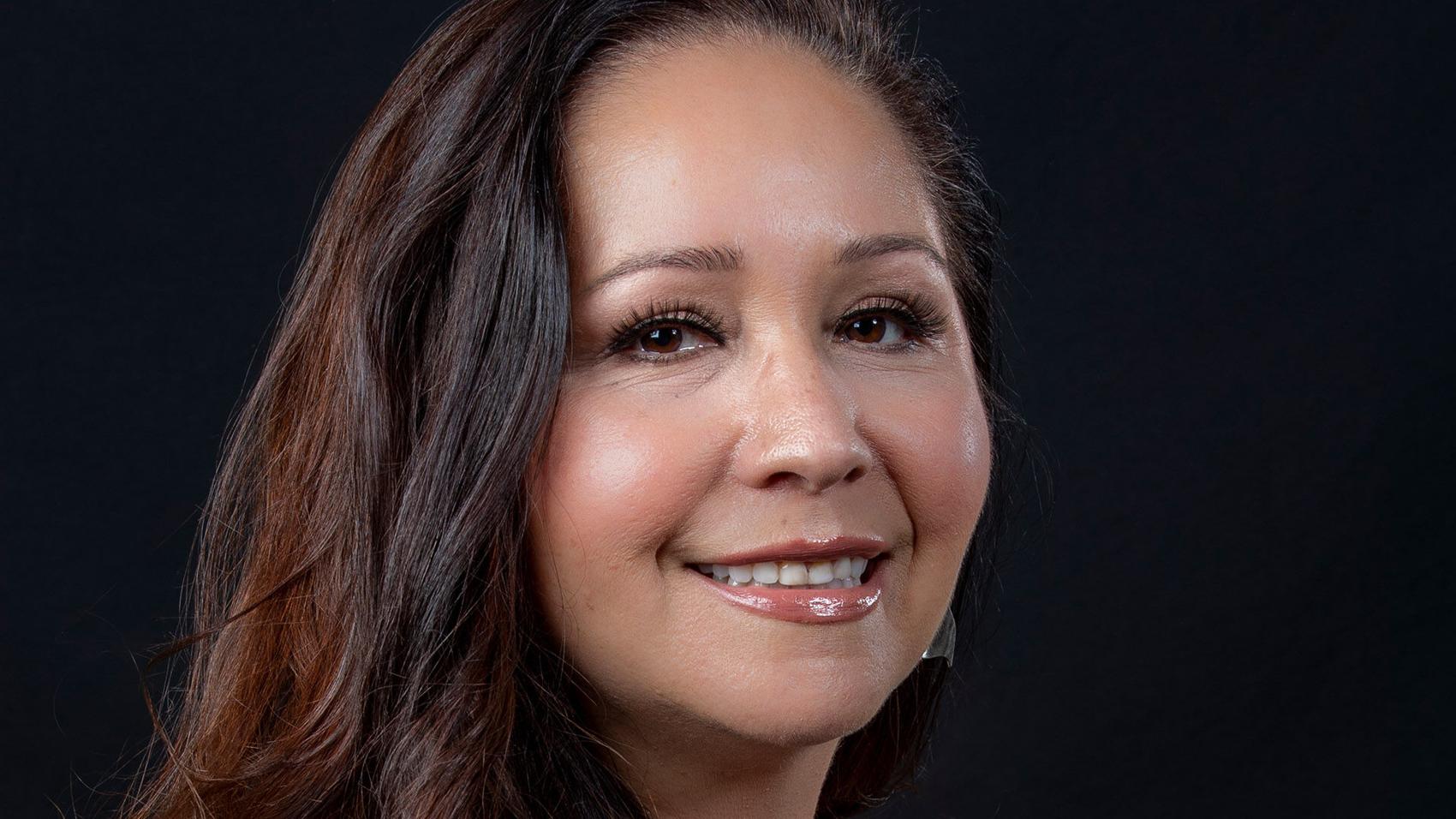

As Jen Wagner spoke to the Pima County Board of Supervisors April 18, derisive laughter and groans rose from the audience.
Some of the conservatives in the crowd didn’t like it when Wagner said to Democratic Supervisor Matt Heinz, “I support you, and I’m incredibly sorry for the onslaught of homophobia that you’ve had to endure.”
“Oh please no!” one man near me exclaimed. And as Wagner, choking up, began reading a statement about supporting transgender people, citing the experiences of her own trans child, members of the crowd kept murmuring their displeasure. Board chair Adelita Grijalva interrupted and asked Wagner to start again.
At the April 18 Pima County Board of Supervisors meeting, attendee Jen Wagner spoke at call-to-the audience. She was jeered by a pro-GOP crowd for objecting to what she called "homophobia" against a gay supervisor.
It didn’t end there: At the next break, attendee Anastasia Tsatsakis confronted Wagner and accused her of labeling Tsatsakis and her allies in attendance as homophobes. The confrontation ended when Supervisor Rex Scott intervened, and a sheriff’s deputy approached.
You may have heard that the call-to-the-audience sessions at Pima County supervisors meetings, and some local school-board meetings, have been raucous lately. It’s in part due to an effort by the county GOP and others to make their presence known in this Democrat-dominated area.
The supervisors’ meetings have been especially contentious affairs, with one woman being suspended from attending meetings for suggesting that Heinz could be a pedophile, citing the January incident in which a Speedo-clad young man appeared in the background of his video feed. Another brought a blow-up doll as a way to mock Heinz.
Another told Grijalva in January, “You are literally nobody, Adelita — keep your mouth shut.”
The Pima County Attorney’s Office has been drawn into determining when speakers cross the line and defending consequences for them. And Supervisor Steve Christy, the sole Republican on the board, got a separate legal opinion of his own defending the raucous speakers.
The sessions raise some important questions: Should people be able to say anything they want at a call-to-the-audience session? If not, what is out of bounds? What is the purpose of our local governments’ call-to-the-audience sessions?
There’s a more practical question for those who are showing up to consider: What good does it do for a political party to have members attend, verbally attack the Democratic supervisors and sometimes jeer at opponents who dare speak? Will it help win elections?
Concerted cr
iticism
It’s nothing new to have members of the general public show up and say strong things at local government meetings. Keith Van Heyningen, who spoke at the April 18 meeting, has been appearing at county board meetings for many years, often assailing Democrats in harsh terms.
There have been some periods when liberals showed up in numbers, too, and criticized Republicans harshly. In an interview, Christy noted the period of the Red for Ed movement in 2018 as one example.
But mostly, at the Board of Supervisors, those speaking meeting after meeting have been conservatives. In recent months, the effort has grown and become concerted.
The new Pima County GOP Chair, Dave Smith, has encouraged attendance and coordinated it to an extent. One regular attendee suggested before the April 18 meeting that Republicans wear Hawaiian shirts and leis to make fun of Heinz, who wore a similar shirt to a recent meeting. Many did.
Heinz became a target of these attendees, Smith said, because of how he has treated conservatives. During the pandemic, Heinz, who is a medical doctor, referred to people who don’t get COVID-19 vaccines as “murderers,” and he interrupted speakers giving what he considered pandemic disinformation.
“When I moved back here I was stunned by how passive we are as a party,” Smith said. “I’m a big believer in participatory democracy. I want people involved.”
In an April 7 GOP newsletter, he celebrated the change: “the Left is suddenly found itself outnumbered in the Board of Supervisor’s meeting where Steve Christy had to go it alone for so long and now overlooks a room full of supporters in every meeting.”
‘I will hunt you down’
At the April 18 meeting, there were those who appealed for better representation of rural Pima County — totally reasonable. There were those who demanded that Pima County resume participating in Operation Stonegarden — a federal program for funding border-related law enforcement. A legitimate policy disagreement.
And there were those who veered into conspiracies and accusations, insisting, for example, that the Board of Supervisors, with the exception of Christy, had committed treason and should suffer the consequences.
“By allowing all that smut in our libraries for our children to get ahold of, you should be having Child Protective Services arrest you,” one man in a Hawaiian shirt and lei said to loud cheers.
“If society does collapse, that means the court of admiralty will disappear,” he went on. “That means that common law court comes back. That means I will hunt you down, and try you in common law court. And by your actions, you are guilty.”
At a Pima County Board of Supervisors meeting April 18, a speaker told board members they should be arrested by the Department of Child Safety and said he would "hunt you down" for a trial under common law if society collapses.
I asked Smith if the group could police its own better, and he acknowledged occasionally asking people to quiet down.
“I’m just a Pima County chairman,” he said. “I’m not a scold. I don’t give swats. We’re Republicans — it’s like herding cats.”
Christy said he supports almost any speech that an attendee wants to make. “Once you start to draw boundaries and lines in the sand, and parameters, I think you’re getting into dangerous territory.”
When I asked him what should happen if somebody starts uttering racial slurs, he said the microphone should be turned off, and the person told to sit down. He did not feel the same, though, about the term “pedophile” as uttered in association with Heinz.
I don’t see much of a difference. To me, the p-word used casually about a gay man in today’s political atmosphere amounts to another slur against a person’s group identity.
‘We’re not a supine party’
Grijalva, when I interviewed her, said she wants more civility at the meetings, but it’s not easy. One problem is that two hours of call-to-the-audience comments often mean less discussion of the items on the meeting agenda. It’s also a waste of time for members of the public who show up and have to wait through repetitive or off-topic three-minute speeches before the board deals with their concerns.
“I don’t know how that’s going to be resolved,” Grijalva said. “The only tools that the chair has is to go by the board policies. I want to create a space where every member of our community feels welcome.”
On April 18, Heinz took advantage of the opportunity supervisors have to respond to comments at the end of the call-to-the audience. He said he had provided evidence to the Pima County Attorney’s Office that the friend who showed up in his video feed was an adult man, 24 years old. He also told those wearing Hawaiian shirts that garb has been co-opted by white supremacist “boogaloo bois” as a symbol, which gave them another reason to despise him.
With all this tension in the air, one thing Grijalva isn’t planning on doing is calling for more of her fellow Democrats to attend. Not only would it increase conflict, it’s probably not politically useful.
And that’s the strange thing about this Republican effort to fill the meetings and rail on supervisors during call-to-the-audience. It generates enthusiasm within their group, allowing them to dominate local politics for this moment in this place. But it seems unlikely to help them with key political challenges, like winning back the District 1 seat that Democrat Rex Scott won from the GOP in 2020.
“I believe it is politically disastrous for them to do this,” Pima County Democratic Party Chair Eric Robbins told me. “The public is sick of this nonsense.”
Smith is happy, though, that he’s helped create “public awareness that we’re not a supine party.”
“Regardless of whether we win any seats back or not, we’re not gone. We’re back.”
‘We are the ones being persecuted’
But dominating a room is not the same as dominating an election. Over the last few elections in Arizona and the Tucson area, bombastic Republican candidates have lost or underperformed the party registration numbers in their districts.
Tsatsakis, who confronted Wagner, was one of them. Known for her strident critiques of the Vail school district’s COVID-19 mask policies, she ran for the board in 2022 and lost, finishing third behind the two winners.
When I asked Tsatsakis later about the confrontation, she said she considered Wagner’s phrase to be an accusation of homophobia against her and her allies, which she vehemently denied and finds offensive.
Then she went on a long ramble: “We are being forced to stomach the trans agenda. We do not subscribe to that agenda. Because we don’t, we are the ones being persecuted.”
“Do you think this is going to help anyone’s case in society,” she asked, referring to trans activists’ activities. I turned the question around: “Do you think this is going to help your case?”
But she preferred to keep talking about the school districts, the trans agenda, and how she and her friends are not homophobes.

