





Hudbay Minerals Inc. is contesting a federal agency’s order to stop grading and land-clearing on a portion of its Copper World project, while it’s under a law enforcement investigation by a second federal agency over its work at the entire site in the Santa Rita Mountains south of Tucson.
The twin agency actions — one by the U.S. Army Corps of engineers, the other by the U.S. Environmental Protection Agency — raise questions about how long Hudbay can legally keep grading at the 4,500-acre, privately owned Copper World site on the west slope of the Santa Ritas. Theoretically, either one could lead to at least a partial shutdown there until the company once again gets a federal Clean Water Act permit to grade washes in that area — after the Corps suspended an earlier such permit and Hudbay officially surrendered it.
The agency actions are:
The Army Corps wrote Hudbay in early January to stop all work on its Copper World site lying within the boundaries of a Clean Water Act permit that the Corps issued for the Rosemont Mine nearly three years ago but has since suspended. That permit covers some but not all of the washes on the west slope area as well as those on the original Rosemont site on the east slope. But Hudbay says it no longer needs to comply with conditions of that permit because it voluntarily surrendered it in April 2022.
The EPA’s San Francisco regional office has initiated a law enforcement investigation concerning Hudbay’s grading work for the Copper World project, an Army Corps spokeswoman told the Star. The Corps said, “EPA ... agreed to be the lead enforcement agency for investigating recent allegations of unauthorized activities by Hudbay.”
Joshua Alexander, an EPA spokesman, declined to elaborate last week, saying, “EPA does not comment on any possible investigations.”
EPA did send Hudbay a letter in August seeking information about whether company work at the Copper World site at least since April 2022 had placed any rock, dirt or similar material in “Waters of the U.S.” That’s a federal term for washes and other water courses that have qualified for federal regulation, “and whether that work complied with the requirements of section 404 of the Clean Water Act.”
The letter was sent under a section of the Clean Water Act that’s aimed at determining if a legal violation has occurred of various EPA limits, including on effluent discharges and other limits. The letter asked Hudbay to send a long list of documents, containing specific information about when the work began and ended and the project’s location, size, nature and purpose, among other things. It also sought all information regarding aquatic resources at the site, including maps, photos and diagrams.
The company replied that its analysis has shown that none of the washes in its west slope land qualify for federal regulation . It sent EPA more than 1,000 documents, agency spokesman Alexander said.
But the company objected to many of the requests, including those seeking information about fill material being places in federally protected washes, as “overbroad and unreasonable.”
Such requests “improperly assume that ‘waters of the United States’ are present on the Copper World property when no determination that (such waters) exist has been made and, more importantly, there is no credible evidence supporting such a determination.”
“Hudbay cooperated with the EPA’s request for information and provided our studies of the area and other documents to the agency in September 2022. We are confident that the site work that has been conducted did not violate the Clean Water Act,” the company told the Star.
Company officials also say Hudbay isn’t legally bound by the stop work order. The company also says it has has halted its grading for several months, but told the Army Corps that it could resume grading washes at the site as soon as the end of February.
Hudbay noted that the Army Corps itself had in March 2021 issued its own analysis of washes for the original Rosemont Mine project, that concluded no water courses there merit having federal control over development alongside or in them. That decision covered washes on both sides of the mountain range, in cluding a utility corridor running from Sahuarita to the Rosemont site, although it didn't cover a lot of other west slope washes included in the current Copper World project where grading is now occurring.
“As work continues on the Copper World Complex, we remain committed to protecting both the quality and quantity of the water resources in and around the project area, which includes being a net neutral water user and a zero-discharge facility,” Hudbay said.
‘A double wrong there’
Back in June 2022, Assistant Army Secretary Michael Connor wrote a letter to attorney Stu Gillespie, who represents three tribes that oppose the mine, saying he had determined the Corps' 2021 decision in favor of Rosemont was not valid. That was because the Corps had issued its 2021 decision without formally consulting with those tribes, including the Tohono O’Odham and Pascua-Yaqui in southern Arizona. Hudbay took issue with Connor’s decision, saying that the 2021 conclusion should under federal rules stand for 5 years, but hasn’t legally challenged it.
But in August 2022, Connor reversed himself, writing a memo saying that he was withdrawing his June 2022 finding. That was because he had already reached a similar conclusion withdrawing a similar finding he had made in June about water courses that would be graded at a Georgia-based titanium mine site owned by Twin Pines Minerals LLC. Connor said he had withdrawn his June memo because due to a setttlement agreement the Army reached with ?Twin Pines, after Twin Pines sued, challenging his earlier findinjg.
The Corps stop work order fo Hudbgy last month made no mention of Connor's August 2022 finding. Instead, the agency continues to push back against a second argument by Hudbay that the agency has no authority over grading in that area because the Toronto-based mining company voluntarily surrendered its Clean Water Act permit.
Environmentalists and tribal officials say, based on their own analysis of the washes’ merits, that many of them are worthy of Clean Water Act protection. They are seeking to have the federal agencies take stronger steps to halt Hudbay’s grading altogether.
“I think the evidence here is clear these are ... waters protected by the Clean Water Act, and this company is destroying the waters without a permit or in violation of a suspended permit,” said Gillespie, of the environmental law firm EarthJustice. It represents three tribes that oppose the Copper World project — the Tohono O’Odham, the Pascua Yaqui and the Hopi. “There’s a double wrong there.”
Gillespie and top tribal officials, including chairmen of all three tribes, met with Army Corps and EPA officials in Phoenix in January and early February to discuss the Hudbay grading issues in what was termed a “government to government consultation.” At the meeting, Gillespie laid out his view that the mining company is violating the Clean Water Act.
EPA, asked by the Star if it had determined whether the west slope washes merited “Waters of the U.S.” legal status, again said, through a spokesman, “EPA does not comment on any possible investigations.”

Copper World mining project in January, 2021, left, and January, 2023.
Clearing began in April 2022
Hudbay has said it wants to build the Copper World project on 4,500 acres of private land. In a preliminary economic analysis report last year, the company said it intends to mine copper from four open pits, including an open pit it has long planned to build on the original Rosemont Mine on the Santa Ritas’ east slope. That project has now been folded into the larger Copper World project and the pit is now called the East Pit.
Hudbay says it intends to operate in that area for 44 years, creating 500 direct, long-term jobs and about 3,000 more indirect jobs, and generate more than $3.3 billion in local, state and federal tax revenue in that time.
But the mine project’s opponents, including the tribes and a half-dozen environmental groups, have said the mine will pump excessive amounts of groundwater from the underlying aquifer and destroy precious wildlife habitat, Some of that land, on the east slope, is known to play host to nearly a dozen federally protected species. The environmental groups include the Tucson-based Center for Biological Diversity and Save the Scenic Santa Ritas.
The original Rosemont Mine on the east slope is now on indefinite hold, thanks to unfavorable federal court rulings in 2019 that forbade Hudbay to bury its mine wastes on federal land near the original Rosemont open pit site.
This flyover shows the Santa Rita Mountains’ west slope, where Hudbay Minerals has been grading and land-clearing since April 2022 for its planned Copper World Mining Project. Video courtesy of Center for Biological Diversity.
The company started clearing and grading on the west slope in April 2022, for what it said would be future mine tailings and waste rock disposal areas. Environmentalists and tribes sued unsuccessfully in federal court to stop the construction, and the grading continued for some time.
Until the grading work stopped, the Center for Biological Diversity said its aerial drone photos had shown the company was “tearing the hell out of that magnificent place,” meaning the Santa Ritas, in the words of Russ McSpadden, a conservation advocate for the group. McSpadden said Hudbay “seems to have been at a marked lull in activity, as I’ve been able to see, since mid-January,” compared to “really intense activity” he said he saw through the last eight months of 2022 and early 2023.
Permit surrendered by Hudbay
The Army Corps’ stop work order stemmed from the Clean Water Act permit that the Corps approved for the Rosemont Mine in March 2019, but suspended in August of that year. The suspension was due to the federal court ruling that stopped the Rosemont Mine from being built with use of U.S. Forest Service land for mine waste disposal. The permit area also includes part of the west slope area due for mining by Copper World, including a utility corridor through which electricity and water would be delivered to the mine site from the Sahuarita area.

Ridgeline above Copper World mining project on the west side of the Santa Rita Mountains.
Last April, Hudbay wrote the Corps, to surrender the permit due to the uncertainty over its fate. U.S. District Judge James Soto accepted Hudbay’s surrender the same month, in ruling against mine opponents’ lawsuit seeking to have the permit overturned. and the grading halted. He wrote, “there is no longer a live case or controversy surrounding the propriety of the Corps decision, and the relief plaintiffs request is no longer available.”
The opponents and the Corps had argued that the agency has no formal process for surrendering the permit. But Soto wrote, “It would be illogical to read the regulations such that they would prevent a permittee from surrendering its own permit when it no longer wants it and avows that it has taken no action pursuant to it and will not do so.”
Because of the ruling, Hudbay wrote the Corps last July that it “is not bound by the permit in any way,” and that it no longer has to avoid working in the areas covered by the permit.
In January, however, the Corps, saying it had learned that Hudbay was doing work within the area covered by the permit, wrote Hudbay, restating its view that no legal process exists for the company to surrender the permit, and that the Corps hasn’t decided to reinstate, modify or revoke the permit. That meant the permit remains suspended, the Corps said.
“You are reminded that you are not authorized to do work and are ordered to stop any work within the permit area that is covered by the suspended . . . permit,” the Corps’ Tori White wrote Hudbay attorney Matt Bingham. White is chief of operations and regulatory matters for the Corps’’ South Pacific Division in San Francisco.
On January 31st, Hudbay executive Javier Del Rio wrote the Corps that due to Soto’s ruling that Hudbay had legally surrendered the permit, “the Corps cannot legally order Copper World to stop work on its private land on the basis of the permit.” Del Rio is vice president for Hudbay’s U.S. and South America operations.
Del Rio added Hudbay has no plans for work impacting washes covered by the Corps permit until Feb. 27, at the earliest. The company also sent the Corps a series of maps that it said show it hadn’t performed earthwork in washes inside permit areas.
Asked by the Star how it intends to proceed based on Hudbay’s response, the Corps said in an email, “With regard to the permit, we can’t discuss any enforcement matters. We are in active discussions with Rosemont/Copper World about what work they are undertaking and plan to undertake. We’ve discussed with Hudbay a potential for doing a site visit, and they were agreeable to it.”
Conflicting responses to agencies
But in its late September 2022 reply to EPA’s request for information about Copper World, Hudbay’s response conflicted with what it later told the Corps.
It first said that once it had formally concluded all of its research by late 2021 that determined that its west slope washes don’t meet federal standards for coming under Clean Water Act jurisdiction, Hudbay began placing fill materials in some Copper World Washes. But it continued to avoid washes in its utility corridor — that were covered under the Clean Water Act permit.
But after surrendering that permit in April 2022 and later telling the Corps that July it would no longer avoid washes covered by the permit, “work in those areas commenced one week later, on August 3, 2022,” the company wrote EPA.
Earthjustice attorney Gillespie called Hudbay’s statements to the Corps and EPA “irreconcilable.” He sent photos to the Corps last week of graded areas on the Copper World site showing construction work that the environmentalists believe, based on satellite imagery, occurred in washes along the utility corridor that’s covered by the Clean Water Act permit.
Asked by the Star about its comment to EPA, Hudbay replied, “It would have been more accurate to say that” the company lifted its restriction in August on grading inside the permit area rather than saying, “Work commenced in August.”
Based on a recent internal review, Hudbay can confirm that none of the washes authorized for fill under the (Clean Water Act) permit have actually been filled,” the company said.
As for the photos, the Corps’ Tori White replied to Gillespie Friday that the agency’s review found they were taken in areas outside the boundaries of Hudbay’s Clean Water Act permit. The Corps “will forward this information to EPA, as they are lead investigating agency for Copper World,” White wrote.
It would be EPA’s responsibility to determine if new alleged unauthorized activities have occurred within federally regulated waters, and whether such work requires Clean Water Act authorization, the Corps said in a statement. “It is unlawful for Rosemont/Copper World to fill jurisdictional waters of the United States.”
Photos: The birth and life of San Manuel mine, smelter and town in 1950s-70s
Town of San Manuel

A pipe to carry concrete to the first 1,000 homes of San Manuel winds through a cholla forest in August, 1953. The first 1,000 homes were intended for "defense workers of San Manuel Copper Company," since a large chunk of money to build the town and the mine came from the federal goverment. Initially, residents could only rent homes for the first two years. Then they would have the option to purchase then.
San Manuel copper mine, refinery, smelter
Updated
A miner drills into rock that is part of the San Manuel copper ore body in December, 1955. Explosive charges were place in the holes to blast the ore free.
San Manuel copper mine, refinery, smelter
Updated
The sleepy operation, support buildings and Shaft #1 at the San Manuel copper mine near the town of Tiger, Ariz., in 1953, after an investment of more than $100 million dollars by Magma Copper.
San Manuel copper mine, refinery, smelter
Updated
San Manuel copper mine Shaft #1 at Tiger in 1953. The townsite, in in the background, was demolished.
San Manuel copper mine, refinery, smelter
Updated
The head frame of the shaft at the San Manuel copper mine in 1952, just after Magma Copper secured a $94 million loan from the Reconstruction Finance Corp to dramatically expand the mine operation. Workers had joined Shafts 1 and 2 with 18,000 feet of horizontal tunnels at 1,475-feet-deep.
San Manuel copper mine, refinery, smelter
Updated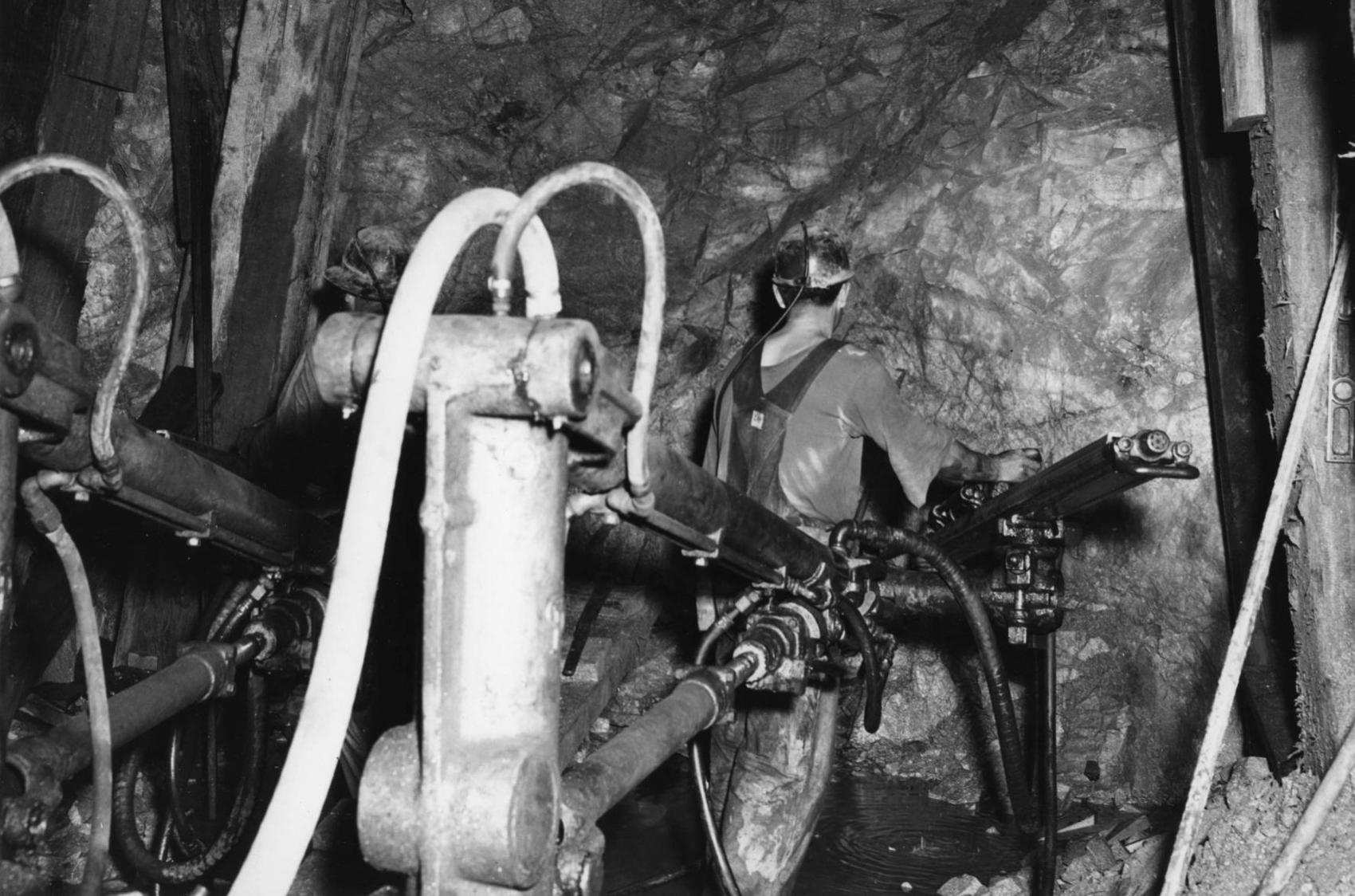
A miner drills into rock that is part of the San Manuel copper ore body in December, 1955. Explosive charges were place in the holes to blast the ore free.
San Manuel copper mine, refinery, smelter
Updated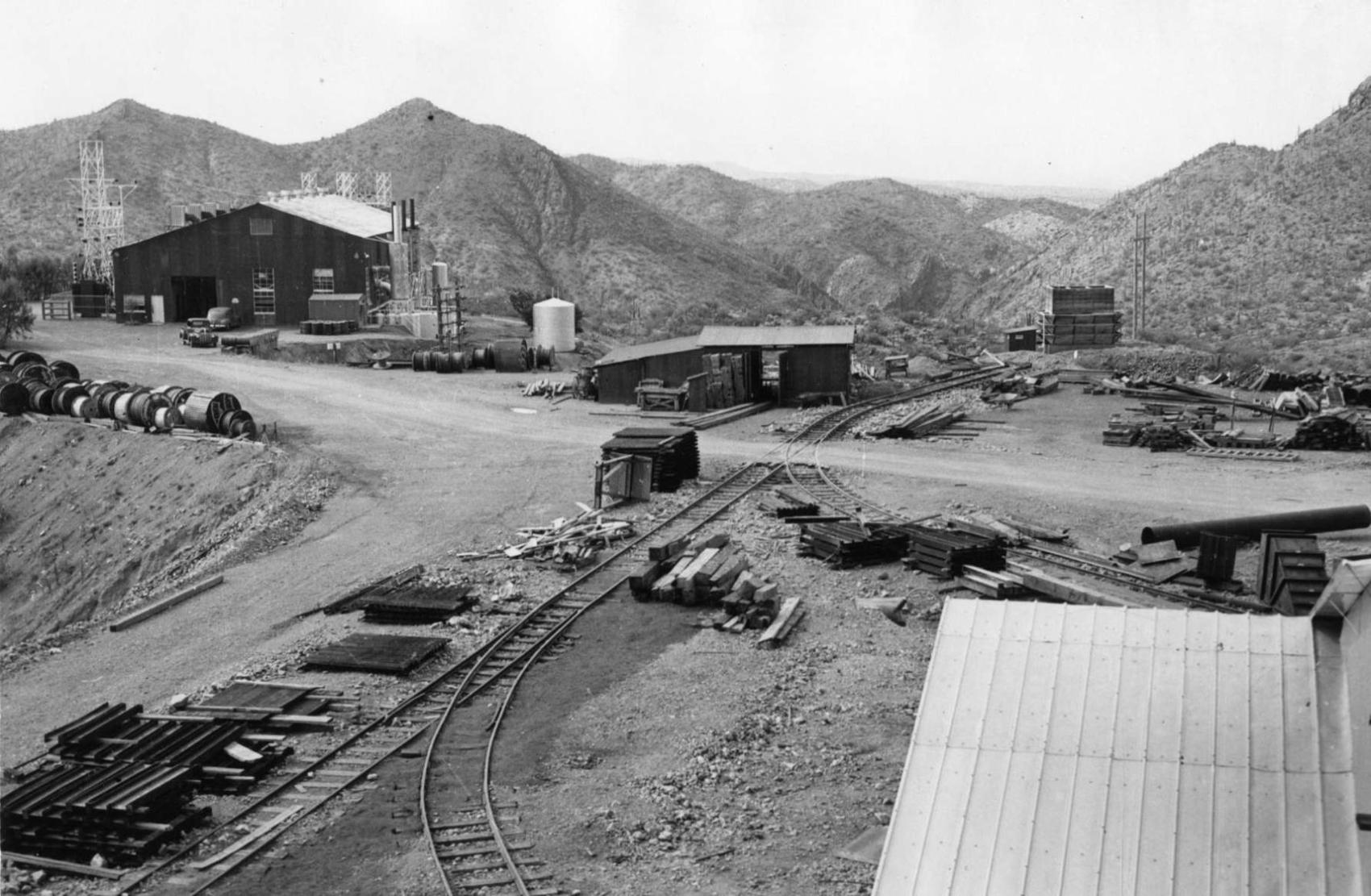
The sleepy support buildings and Shift #1 at the San Manuel copper mine near the town of Tiger, Ariz., in 1952, prior to an investment of more than $100 million dollars by Magma Copper.
San Manuel copper mine, refinery, smelter
Updated
Miners get ready to plunge hundreds if not nearly 2,000 feet below the surface at the head frame of the shaft at the San Manuel copper mine in 1952, just after Magma Copper secured a $94 million loan from the Reconstruction Finance Corp to dramatically expand the mine operation.
San Manuel copper mine, refinery, smelter
Updated
Miners in a drift (tunnel), 1475-feet underground in the San Manuel copper mine, unload shoring timber from mine cars in April, 1954.
San Manuel copper mine and smelter
Updated
The head frames of the two 2,950-feet deep production shafts into the San Manuel ore body in 1955.
San Manuel copper mine and smelter, 1955
Updated
San Manuel was once the largest underground copper mine in North America. Magma Copper began commercial underground mining in San Manuel in 1956, after sinking two 2,950-foot shafts into the San Manuel ore body in 1953.
San Manuel copper mine and smelter
Updated
Ore milling operations at San Manuel copper mine in 1955. The mine began commercial processing of ore in 1956.
San Manuel copper mine and smelter
Updated
Magma Copper managers interviewing a potential mine employee in 1955 as the company was adding a smelter operation.
San Manuel copper mine and smelter
Updated
Ore milling operations at San Manuel copper mine in 1955. The mine began commercial processing of ore in 1956.
San Manuel copper mine, refinery, smelter
Updated
Piers hold up an ore conveyor under construction at the San Manuel mine in 1954.
San Manuel copper mine, refinery, smelter
Updated
Mill concentrator building under construction in San Manuel in 1954. It was 700-feet long and 300-feet wide.
San Manuel copper mine, refinery, smelter
Updated
Huge ore storage bins atop the 185-foot tall head frames atop the 2,950-foot deep production shafts at San Manuel mine in 1955.
San Manuel copper mine, refinery, smelter
Updated
Magma Copper workers blast rock to make way for a 2,950 foot production shaft to access the San Manuel copper ore body in August, 1953.
San Manuel copper mine, refinery, smelter
Updated
Wesley P. Goss, president and general manager of Magma Copper, in 1952,
San Manuel copper mine and smelter
Updated
The new copper smelter at San Manuel in December, 1955. At bottom right is the casting wheel, which holds 22 anodes, each weighing 700 pounds. Above is the anode furnace and along the right side to the rear are three converters. Jutting out at left is the reverberatory furnace. The ladle hanging from the gantry crane in the background can hold 30 tons of molten copper.
San Manuel copper mine and smelter
Updated
Managers at the new control center for the San Manuel smelter complex in 1955.
San Manuel copper mine and smelter
Updated
Ore milling operations at San Manuel copper mine in 1955. The mine began commercial processing of ore in 1956.
San Manuel copper mine and smelter
Updated
A horizontal mine passage in the San Manuel copper mine in 1955.
San Manuel copper mine and smelter
Updated
Eight rod mills, right, and 16 ball mills in the 850-foot concentrator building at the San Manuel Mine operation in December, 1955. Steel rods and balls reduce the crusshed copper ore to granular consistency preceding the flotation process.
San Manuel copper mine and smelter
Updated
Thickeners are 300-foot basins in which processed concentrate is dried to a moisture content of seven percent. The concentrate averages 27-percent copper. It will be conveyed to the smelter for final reduction.
San Manuel copper mine and smelter
Updated
Rail line to the crusher, concentrator and smelter at San Manuel in 1955. The ore traveled nine mines from the underground mine to processing.
San Manuel copper mine and smelter
Updated
Ore cars are inverted at the top of the head frame, dumping the ore into huge storage bins that feed ore cars going to the crushers.
San Manuel copper mine and smelter
Updated
The new flotation process in the San Manuel copper mine. Finely-ground ore leaving the concentrators enters the flotation process, where it is mixed with water and reagents move the copper to the surface and tailings to the bottom, where they are carried off underground.
San Manuel copper mine and smelter
Updated
The head frames of the two 2,950-feet deep production shafts into the San Manuel ore body in 1955.
San Manuel copper mine and smelter
Updated
The head frame of the San Manuel Mine. Ore cars are brought up from the shaft and dumped into the storage bins feeding rail cars taking the copper ore to the crushers, the first stage of the copper extraction process.
San Manuel copper mine, refinery, smelter
Updated
Sparks fly from blast furnaces in San Manuel in 1975 as copper concentrate is smelted at 2,700-degrees, which turns other elements like iron into slag to be discarded. Beginning in 1975, Magma Copper recovered the sulfur dioxide emissions from the smelter and converted it to sulfuric acid.
San Manuel copper mine, refinery, smelter
Updated
Shown in 1975, molten copper as much as 99-percent pure emerges from the San Manuel smelter and poured into molds to create 700-pound anodes that were transported to a refinery to remove other impurities, like gold and silver.
San Manuel copper mine, refinery, smelter
Updated
In this photo, probably ca. 1950s, molten copper from the San Manuel smelter, right, is poured into molds which cool to make anodes (being lifted at right), which are further-refined to better-than 99-percent pure.
San Manuel copper mine, refinery, smelter
Updated
The completed crusher, concentrator and smelter at San Manuel in 1955. The company town of San Manuel rises in the background.
San Manuel copper mine, refinery, smelter
Updated
A Magma Copper handout graphic showing ore flow for the San Manuel smelter.
San Manuel copper mine, refinery, smelter
Updated
A miner standing in a tunnel more than 1,000 feet deep in the San Manuel, pauses after a electric ore cars carrying 185 tons of rock passed by in 1975.
San Manuel copper mine, refinery, smelter
Updated
San Manuel smelter at full tilt, probably in the 1970s.
San Manuel copper mine, refinery, smelter
Updated
The crusher, concentrator and smelter at San Manuel in 1971, after a $200 million explansion of the facility. The smelter got a second smoke stack. In the background, the company town of San Manuel got another 200 houses.
San Manuel copper mine, refinery, smelter
Updated
An electrolytic refinery to produce refined copper from copper anodes at San Manuel and was completed in December, 1971.
Town of San Manuel

Townsite for the mining company town of San Manuel in Pinal County north of Tucson in 1953. Magma Copper Company worked with Del E. Webb Construction Company of Phoenix to create Webb's first "master-planned community" in Arizona. M-O-W Aldon Construction of California was hired to build homes for 8,000 people. The first 1,000 homes were intended for "defense workers of San Manuel Copper Company," since a large chunk of money to build the town and the mine came from the federal goverment. Initially, residents could only rent homes for the first two years. Then they would have the option to purchase then.
Town of San Manuel

Superintendent Robert Fleming of the Del E. Webb Construction Co. and engineer John Stephens stand on the site of the San Manuel business district in August, 1953. Magma Copper Company worked with Del E. Webb Construction Company of Phoenix to create Webb's first "master-planned community" in Arizona. M-O-W Aldon Construction of California was hired to build homes for 8,000 people.
Town of San Manuel

The caption is this bandout photo read, "How can engineers do surveying in a land like this?" Engineer John Stephens at the San Manuel townsite prior to clearing. The mining company town of San Manuel under construction in 1954. Magma Copper Company worked with Del E. Webb Construction Company of Phoenix to create Webb's first "master-planned community" in Arizona. M-O-W Aldon Construction of California was hired to build homes for 8,000 people.
Town of San Manuel

A map of the mining company town of San Manuel under construction in 1954. Magma Copper Company worked with Del E. Webb Construction Company of Phoenix to create Webb's first "master-planned community" in Arizona. M-O-W Aldon Construction of California was hired to build homes for 8,000 people. The first 1,000 homes were intended for "defense workers of San Manuel Copper Company," since a large chunk of money to build the town and the mine came from the federal goverment. Initially, residents could only rent homes for the first two years. Then they would have the option to purchase then.
Town of San Manuel

Pinal County supervisors Jay Bateman, left, Frank Williams, and Joy Spray, far right, meet with Del E. Webb general manager L.C. Jacobson at the San Manuel townsite under construction in 1954. Magma Copper Company worked Del E. Webb Construction Company of Phoenix to create Webb's first "master-planned community" in Arizona. M-O-W Aldon Construction of California was hired to build homes for 8,000 people,
Town of San Manuel

The mining company town of San Manuel under construction in 1954. Magma Copper Company worked with Del E. Webb Construction Company of Phoenix to create Webb's first "master-planned community" in Arizona. M-O-W Aldon Construction of California was hired to build homes for 8,000 people.
Town of San Manuel

A brochure for the mining company town of San Manuel under construction ca. 1954. Magma Copper Company worked with Del E. Webb Construction Company of Phoenix to create Webb's first "master-planned community" in Arizona. M-O-W Aldon Construction of California was hired to build homes for 8,000 people. The first 1,000 homes were intended for "defense workers of San Manuel Copper Company," since a large chunk of money to build the town and the mine came from the federal goverment. Initially, residents could only rent homes for the first two years. Then they would have the option to purchase then.
Town of San Manuel

A brochure for the mining company town of San Manuel under construction ca. 1954. Magma Copper Company worked with Del E. Webb Construction Company of Phoenix to create Webb's first "master-planned community" in Arizona. M-O-W Aldon Construction of California was hired to build homes for 8,000 people. The first 1,000 homes were intended for "defense workers of San Manuel Copper Company," since a large chunk of money to build the town and the mine came from the federal goverment. Initially, residents could only rent homes for the first two years. Then they would have the option to purchase then.
Town of San Manuel

A food truck feeds workers clearing the site for the state's "newest city" of San Manuel in Aug, 1953. Magma Copper Company worked with Del E. Webb Construction Company of Phoenix to create Webb's first "master-planned community" in Arizona. M-O-W Aldon Construction of California was hired to build homes for 8,000 people.
Town of San Manuel

The mining company town of San Manuel under construction in 1954. Magma Copper Company worked with Del E. Webb Construction Company of Phoenix to create Webb's first "master-planned community" in Arizona. M-O-W Aldon Construction of California was hired to build homes for 8,000 people.
Town of San Manuel

Deserted streets of San Manuel in November, 1954, prior to rental to mine workers and their families. Magma Copper Company worked with Del E. Webb Construction Company of Phoenix to create Webb's first "master-planned community" in Arizona. M-O-W Aldon Construction of California was hired to build homes for 8,000 people.
Town of San Manuel

Avenue A in the mining company town of San Manuel under construction in 1954. Homes had masonry walls, "modern design" and landscaped yards. Magma Copper Company worked with Del E. Webb Construction Company of Phoenix to create Webb's first "master-planned community" in Arizona. M-O-W Aldon Construction of California was hired to build homes for 8,000 people.
Town of San Manuel
Updated
Tommy Blank was the first barber in the mining company town of San Manuel in 1953. He slept in the shop for a few months until his house was built. He raised his family in San Manuel, working as a barber for Magma Copper Company for 34 years until retiring in 1988. His wife, Helen, was a Harvey Girl at the Grand Canyon and went to work in healthcare for Pinal County. They watched San Manuel boom, and finally bust as the mine and refinery were closed in 2003. His granddaughter noted that Tommy served in the U.S. Navy in the South Pacific in WW II and survived a Japanese kamikaze attack.
Town of San Manuel

A cul du sac is paved outside the rental office at the mining company town of San Manuel in December, 1953. Magma Copper Company worked with Del E. Webb Construction Company of Phoenix to create Webb's first "master-planned community" in Arizona. M-O-W Aldon Construction of California was hired to build homes for 8,000 people.
Town of San Manuel

Crews grade the streets of the mining company town of San Manuel under construction in 1954. Magma Copper Company worked with Del E. Webb Construction Company of Phoenix to create Webb's first "master-planned community" in Arizona. M-O-W Aldon Construction of California was hired to build homes for 8,000 people, The mining company town of San Manuel under construction in 1954. Magma Copper Company worked with Del E. Webb Construction Company of Phoenix to create Webb's first "master-planned community" in Arizona. M-O-W Aldon Construction of California was hired to build homes for 8,000 people. The first 1,000 homes were intended for "defense workers of San Manuel Copper Company," since a large chunk of money to build the town and the mine came from the federal goverment. Initially, residents could only rent homes for the first two years. Then they would have the option to purchase then.
Town of San Manuel

Mr. and Mrs. Jimmy Cabral of Clifton, with son Marin in December, 1953, would be become some of the first residents of the mining company town of San Manuel. Magma Copper Company worked with Del E. Webb Construction Company of Phoenix to create Webb's first "master-planned community" in Arizona. M-O-W Aldon Construction of California was hired to build homes for 8,000 people. The first 1,000 homes were intended for "defense workers of San Manuel Copper Company," since a large chunk of money to build the town and the mine came from the federal goverment. Initially, residents could only rent homes for the first two years. Then they would have the option to purchase then.
Town of San Manuel

An electric substation under construction to supply power to the mine, smelter, and town of San Manuel under construction in 1954. Magma Copper Company worked with Del E. Webb Construction Company of Phoenix to create Webb's first "master-planned community" in Arizona. M-O-W Aldon Construction of California was hired to build homes for 8,000 people.

