



The proposals sound tone deaf in a place like Tucson, where 96 people died in traffic collisions last year.
They don't sound much better in Arizona as a whole, which has one of the biggest traffic-death problems in the country, with 1,228 cases in 2024. Nationwide, Arizona had the second-worst traffic fatality rate per mile driven in 2023, the last year for which complete data is available.
So who would want to loosen driver training requirements or speed limits at a time and place like this? Wouldn't tightening our driver-training and traffic laws make more sense?
State Rep. Nick Kupper, a Republican from Surprise, has filed one bill that would reduce the age at which a teen can get a driving permit, down to 15 years from the current 15 years and six months.
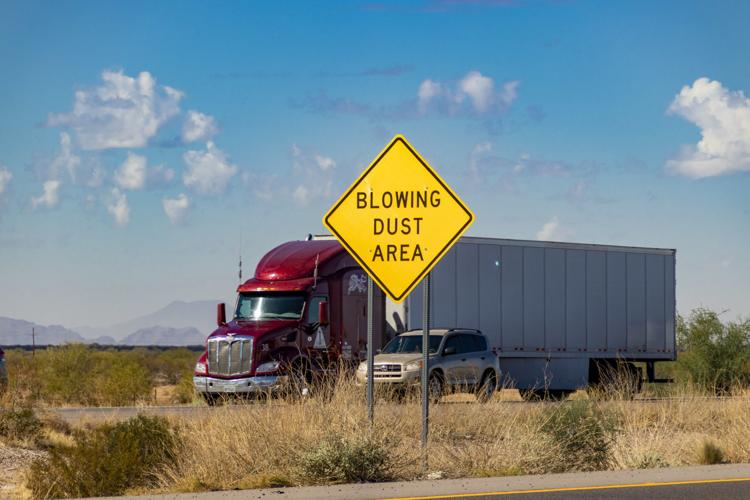
Another Kupper bill would allow the Arizona Department of Transportation to remove speed limits on some rural interstates, beginning with a pilot project on Interstate 8. All that would be required is driving at a "reasonable and prudent" speed.
In both cases, Kupper argues that while the public may naturally conclude the proposals would make the public less safe, in actuality, they could even help. He makes a "facts not feelings" argument for the proposals, though his data is highly contested.
The changes he proposes in driving permits would require students to have their permits for nine months instead of the current six before trying for a driver's license at age 16.
He said, in an interview with Howard Fischer of Capitol Media Services, that states with lower ages for getting driver's permits have lower rates of teen traffic fatalities.
As to the unrestricted speeds, Kupper proposes a one-year pilot project between Casa Grande and Yuma.
"I fully appreciate the fact that, naturally, your first inclination is: that's craziness, you're going to kill people,'' Kupper told Fischer.
"However, the data proves otherwise,'' he continued. "And I want to do this pilot program to prove that we can actually do this and save lives."

State Rep. Nick Kupper
What was interesting in Fischer's reporting is that while in both cases, Kupper claimed "data" backed him up, and that opponents were relying on their "feelings," the Insurance Institute for Traffic Safety rejected his arguments.
A representative said the institute's data suggests lowering the permit age would increase crashes and fatalities among teen drivers. Also, they noted, Kupper's bill does not increase the required hours for permit-holders to practice driving before they get a license, just the time having a permit.
As to the proposal for removing speed limits, the institute said higher speed limits have been proven to mean more traffic fatalities.
The bottom line is, Arizona already has relatively weak traffic-safety laws. In fact, Advocates for Highway & Auto Safety, a Washington, D.C.-based nonprofit group, ranked Arizona's laws in its worst category up until 2023.
The group publishes an annual report called "Roadmap to Safety" every year, and ranks states as either green for having good laws, yellow for having laws to be cautious about, or red for dangerous laws.

Arizona Daily Star columnist Tim Steller
Nothing that Arizona did moved it up from the red, or dangerous, category to the yellow, or be cautious, category in the group's rankings in 2023, where it remains in this year's report. What happened was the group began counting laws that allow red-light and speed cameras in their rankings, and we still have both, which put us in the higher category.
However, some of the laws we lack pertain directly to Kupper's proposals.
One of the laws that the Advocates for Highway & Auto Safety recommends is a requirement that permit-holders do 70 hours of driving before getting a license. Arizona only requires 30, and that would remain under Kupper's proposal.
Another of the laws the group supports: Make permits available at age 16 and licenses available at 17. In other words, they recommend raising our current driving ages.
This would, of course, be a hard sell politically — not only do kids expect the chance to start driving, but parents, in some cases, count on them getting their licenses. Still, it's the kind of thing to consider if we want to reduce traffic chaos and deaths.
The Roadmap to Safety reports don't even bother to recommend that highways have speed limits. It's assumed that the states have them.

"We support speed limits," said Cathy Chase, president of Advocates for Highway & Auto Safety, in an interview Monday. " 'Reasonable' is very difficult if not impossible to enforce. A numeric limit should be on all roads."
By going the opposite direction that Kupper is recommending — tightening rather than loosening laws — Arizona could improve its dire traffic fatality statistics.
In 2023, the last year for which complete data is available, Arizona had 1.73 deaths per 100 million vehicle miles traveled, according to federal data. The only worse state was Mississippi, with 1.79 deaths per 100 million vehicle miles traveled.
The best state was Massachusetts, with 0.56 deaths per 100 million vehicle miles traveled. This is the sort of rate we should be aiming for.
Loosening laws is unlikely to get us there, even out of a counterintuitive logic.

