



The new year is already off to a strange start, at least where the weather is concerned.
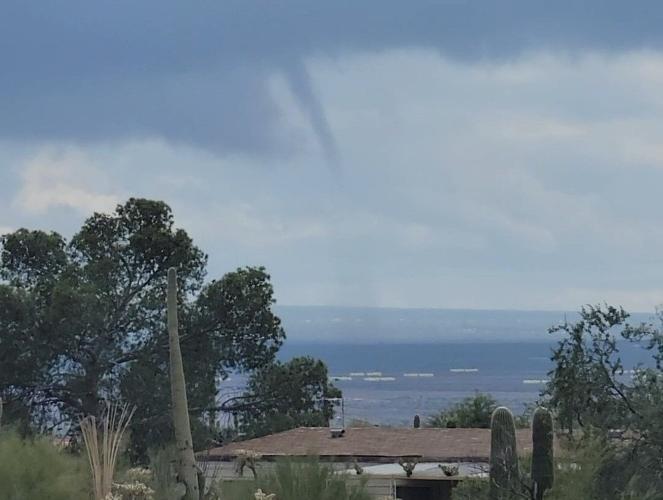
According to the National Weather Service, the Tucson area notched the nation's first tornado of 2026, with a weak landspout that briefly touched down on New Year's Day near Three Points.
Meteorologist Glenn Lader with the Weather Service in Tucson said a trained weather observer reported seeing a funnel cloud make a faint connection to the ground at just after noon on Thursday over a patch of open desert a mile or two from Ajo Highway and Sandario Road.
Lader said it was the only report of a tornado anywhere in the country on Jan. 1, which is not terribly surprising. “It’s wintertime, so there’s not a lot of convective weather going on,” he said.
The first twister of 2026 was “very weak” and lasted for less than a minute, Lader said, long enough to produce some “wind shear at the surface” but no reports of damage.
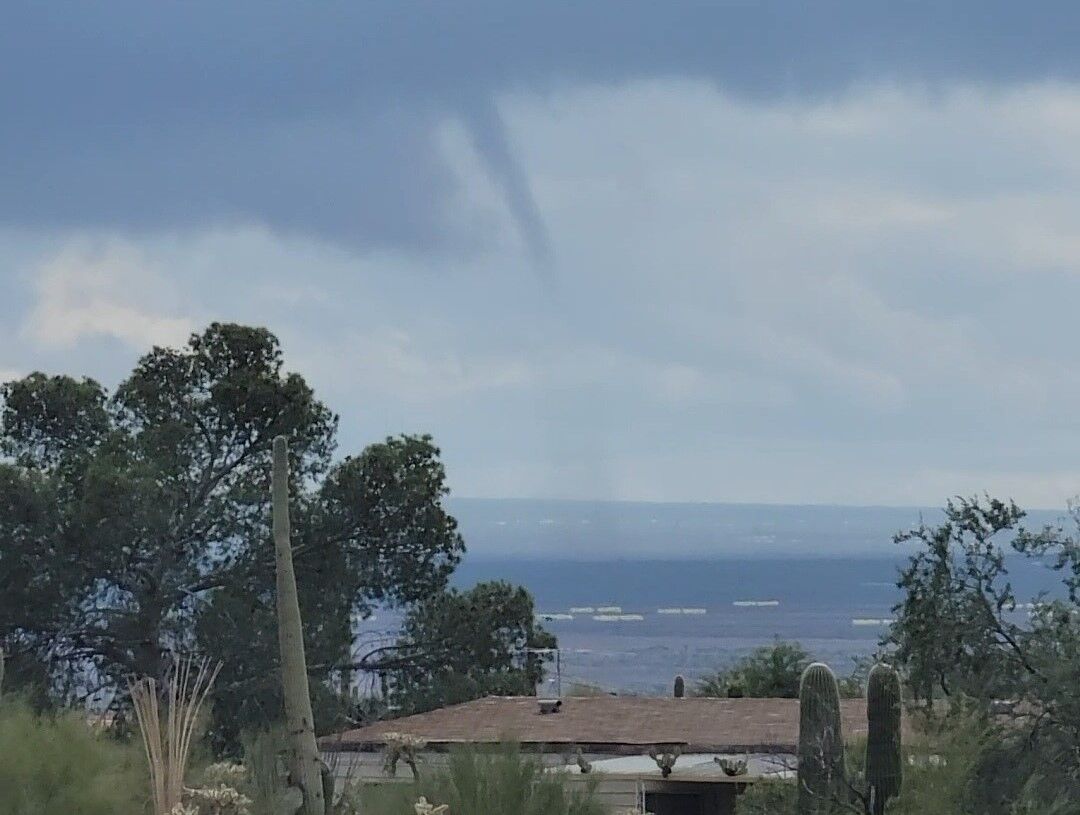
A photo taken by trained weather observer Eric Allan shows a funnel cloud briefly touching the ground near Three Points on Jan. 1, giving the Tucson area the distinction of having the nation's first tornado of 2026.
You can clearly see the funnel cloud in the photos sent to the Weather Service by the man who spotted it: Eric Allan, a visiting weather observer from Washington state.
Tornados are “fairly rare” but not unheard of in Arizona, Lader said. The state typically records a few of them each year, usually in late summer or early fall, when conditions are right for the sorts of thunderstorms that produce them.
The storm that just rang in the New Year over Southern Arizona dropped a quarter of an inch of rain on the official weather station at Tucson International Airport after midnight, making this the third wettest Jan. 1 in the Old Pueblo since recordkeeping began in 1895.
It also marked the fifth time since 2017 that Tucson has seen rainfall on the first day of the year.

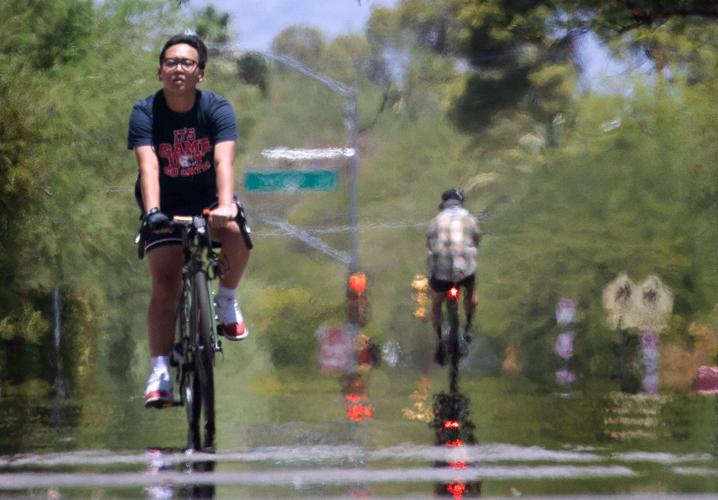
A pair of cyclists ride along the Third Street bicycle boulevard near Campbell Avenue as heat radiates off the asphalt on June 17, 2025.
The showers came on the heels of another unusually hot, dry year in our desert city. According to Weather Service data released by the local forecast office on Thursday, 2025 ranked as the second warmest and the 12th driest of the past 131 years.
“Tucson residents endured another exceptionally warm year,” the service said in its annual report.
The average daily temperature of 72.9 for the year was more than 2 degrees higher than the long-term average, led by the warmest December and the second warmest February and August on record.
Last month’s daily average temperature of 60.1 was a full 7.1 degrees above average for December. Five record highs were tied or set during the month, topping out on Dec. 22, when the temperature hit 85 in December for just the sixth time since 1895.
The mercury soared into the triple digits on 78 days last year, a full 34 fewer than 2024 but still about 10 more than normal. The hottest it got in 2025 was 113 on June 19 and again on July 9.

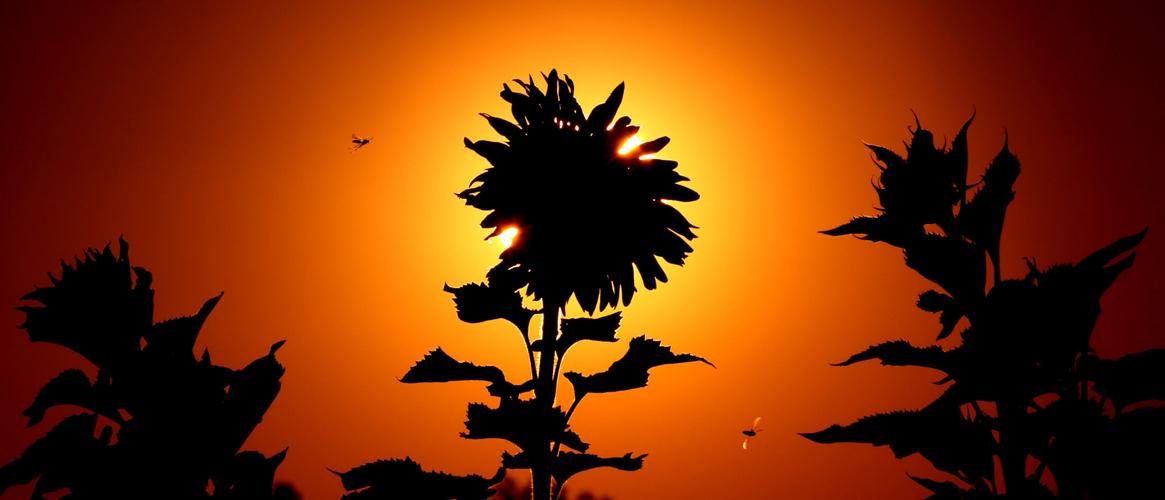
The sun sets behind one of the sunflower plots at the University of Arizona’s Campus Agricultural Center, Campbell Avenue and Roger Road, on the end of a very hot day, June 18, 2025. The mercury soared into the triple digits on 78 days last year. The hottest it got in 2025 was 113 on June 19 and again on July 9.
The 100-degree high on April 11 ranked as the earliest triple-digit day on record, beating the previous mark by eight days. The 112-degree high on Aug. 7 tied the all-time hottest temperature for the month of August.
The lowest low of last year came on Jan. 23, when the official thermometer at the airport registered 26 degrees. It was one of just seven times we officially froze in 2025, five fewer than we see in a normal year.
Last year ranked as the 12th driest on record, with 7.21 inches of precipitation, 3.4 inches less than the current 30-year average. The year started dry and stayed that way through the summer, with below-average precipitation in eight of the first nine months.

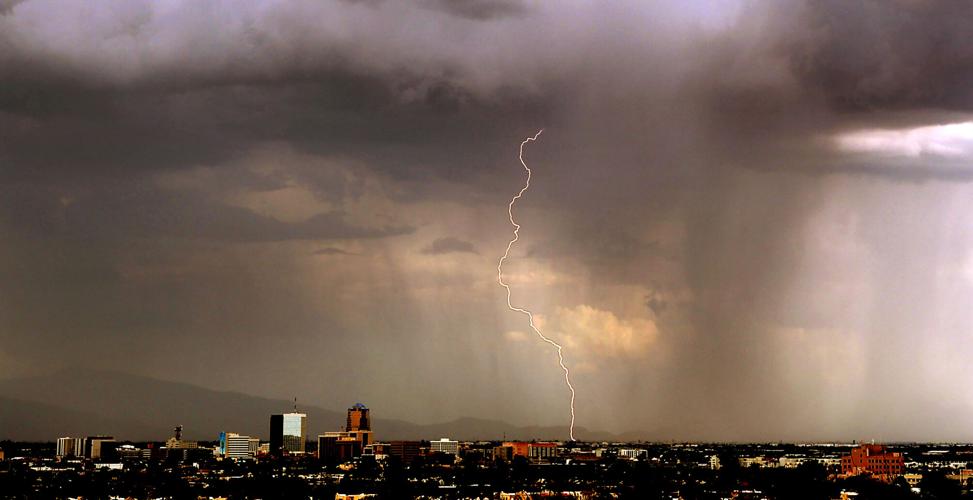
A lightning bolt hits just east of downtown during an intense storm on Sept. 25, 2025. In the end, though, the monsoon season largely fizzled, and 2025 ranked as Tucson's 12th driest year on record.
The monsoon also largely fizzled, delivering just 2.82 inches of rain, the 12th lowest output on record and less than half the normal amount for our traditional season of summer thunderstorms from June 15 through Sept. 30.
If not for a pair of tropical storms in October and twice the normal amount of rainfall in November, Tucson would have ended 2025 as an even drier place.

