

One year ago, the U.S. Supreme Court rescinded a five-decade-old right to abortion, prompting a seismic shift in debates about politics, values, freedom and fairness.
Twenty-five million women of childbearing age now live in states where the law makes abortions harder to get than they were before the ruling.
Decisions about the law are largely in the hands of state lawmakers and courts. Most Republican-led states have restricted abortion. Fourteen ban abortion in most cases at any point in pregnancy. Twenty Democratic-leaning states have protected access.

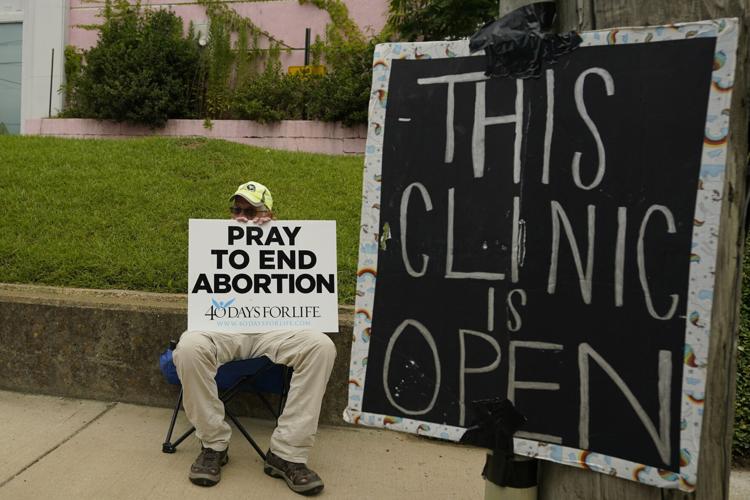
An anti-abortion advocate sits next to a sign that advises the Jackson Women’s Health Organization clinic is still open July 6 in Jackson, Miss. One year ago, the U.S. Supreme Court rescinded a five-decade-old right to abortion, prompting a seismic shift in debates about politics, values, freedom and fairness.
Much has changed since the Dobbs v. Jackson Women’s Health Organization ruling.
Last summer, as women and medical providers began to navigate a landscape without legal protection for abortion, Nancy Davis’ doctors advised her to terminate her pregnancy because the fetus she was carrying was expected to die soon after birth.
But doctors in Louisiana, where Davis lived, would not provide the abortion due to a new law banning it throughout pregnancy in most cases.
Davis became one of the women whose stories, told on news sites and network news, in newspapers and blogs, illustrated the shifting ground doctors and their patients tried to navigate.

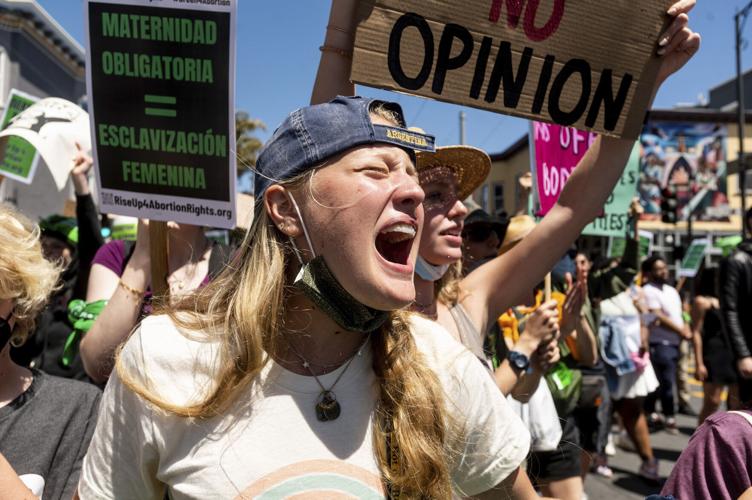
An abortion-rights supporter chants while marching May 14, 2022, through San Francisco's Mission District.
At the same time, abortion opponents who worked for decades to abolish a practice they see as murder cheered the Supreme Court’s Dobbs ruling. Anti-abortion groups said the 1973 Roe v. Wade ruling that legalized abortion nationwide was undemocratic because it prevented states from enacting bans.
“The Dobbs decision was a democratic victory for life that generations fought for,” said E.V. Osment, a spokeswoman for Susan B. Anthony Pro-Life America, a major anti-abortion group.
While some states scrambled to pass new restrictions, others already had enacted laws that were designed to take effect if the court overturned Roe.
More than 25 million women ages 15 to 44, or about 2 in 5 nationally, now live in states where there are more restrictions on abortion access than there were before Dobbs. More than 5.5 million more live in states where restrictions have been adopted but are on hold pending court challenges. Bans on abortion no later than 12 weeks into pregnancy are on the books in nearly every state in the Southeast — though some are not in effect.
Many laws that make exceptions for medical emergencies do not clearly define those situations. After Davis went public with her challenges last year, Louisiana lawmakers debated whether doctors in the state were right to deny her an abortion under a law that has exceptions for “medically futile” pregnancies and when there’s a substantial risk of death or impairment for the woman. But the Legislature made no changes to clarify the law.
Davis got help from a fund that raises money for women to travel for abortions and went to New York for a procedure. The whole experience was heartbreaking, she said.
“A mother’s love starts as soon as she knows she’s pregnant. That attachment starts instantly,” she said. “It was days I couldn’t sleep. It was days I couldn’t eat.”

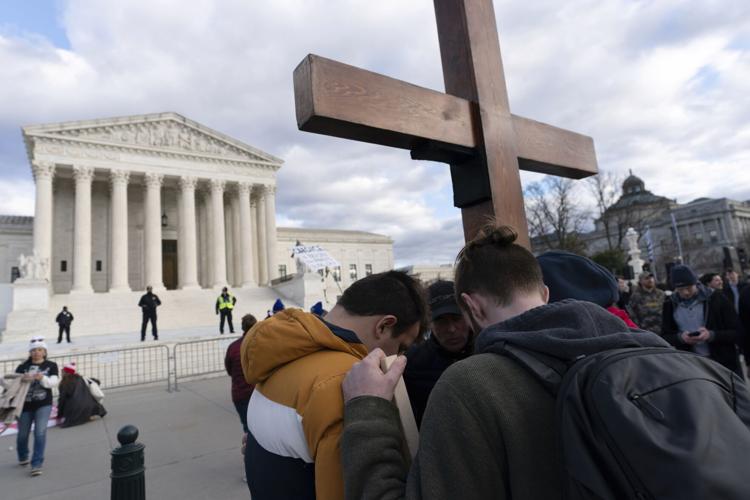
Anti-abortion activists pray as they rally outside of the U.S. Supreme Court on Jan. 20 during the March for Life in Washington.
As some states restricted abortion, others locked in access. Clinics moved across state lines, added staff and lengthened hours to accommodate women leaving their home states to end their pregnancies.
In 25 states, abortion remains generally legal up to at least 24 weeks of pregnancy. Twenty of them have been solidified abortion rights through constitutional amendments or laws.
Women have flocked to states with legal access.
CHOICES Center for Reproductive Health had for decades treated patients seeking abortions in Memphis, Tennessee. After Tennessee’s abortion ban kicked in last year, the clinic opened an outpost three hours away, in Carbondale, Illinois.

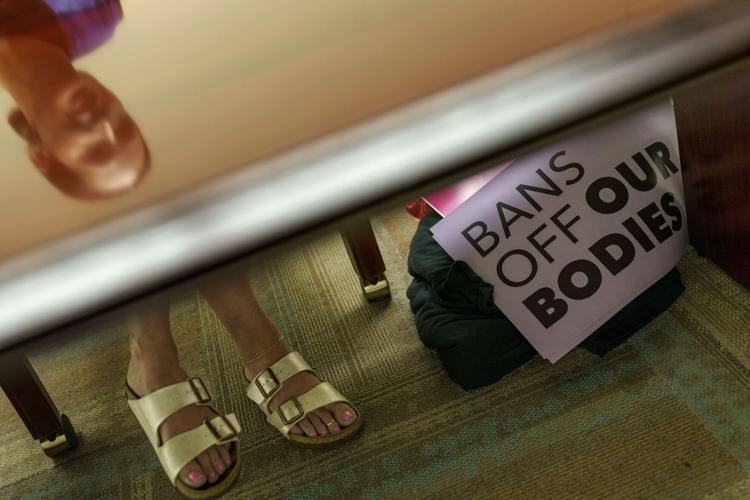
Planned Parenthood advocacy programs manager, Allison Terracio, is reflected in a table as signs sit in the clinic's office May 27, 2022, in Columbia, S.C.
“They’re coming from Tennessee, Mississippi, Arkansas and even Texas,” said CEO Jennifer Pepper. “But now they’re having to travel much farther.”
With lags and gaps in official reporting, the impact of the Dobbs ruling on the number of abortions is not clear.
A survey conducted for the Society of Family Planning, a nonprofit organization that promotes research and supports abortion access, has found that the number has fallen to nearly zero in states with bans and risen in neighboring states with fewer restrictions, and on balance the number of abortions is declining. But the survey does not capture self-managed abortions outside the traditional medical system, usually done with through a two-pill regimen.

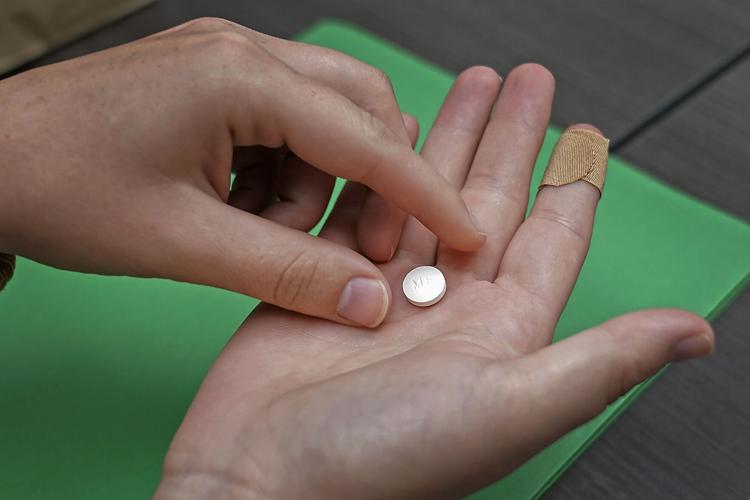
A patient prepares to take the first of two combination pills, mifepristone, for a medication abortion during a visit Oct. 12 to a clinic in Kansas City, Kan.

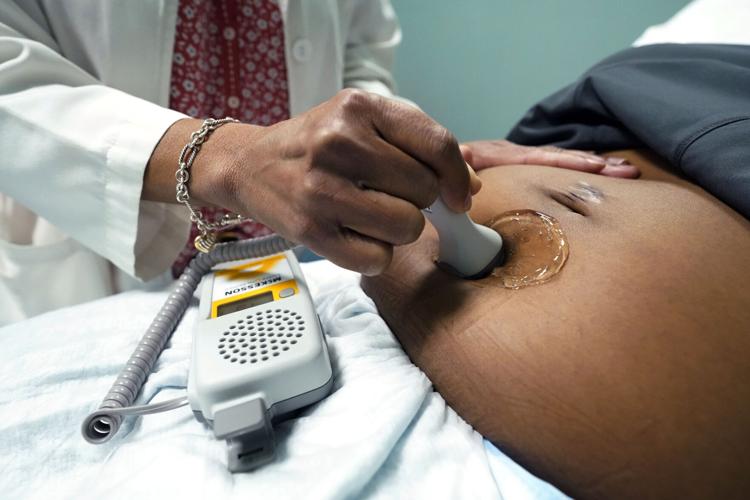
A doctor uses a hand-held Doppler probe on a pregnant woman to measure the heartbeat of the fetus on Dec. 17, 2021, in Jackson, Miss.
Before the Dobbs ruling, pills were already the most common method of abortion in the U.S. Now, there are more networks to provide access to pills in states with abortion bans.
Some abortion opponents are calling for the abortion drug mifepristone to lose its government approval. The Supreme Court has preserved access for now.
More than 50 lawsuits have been filed over abortion policy since the Dobbs ruling. Many challenges rely on arguments about the rights to personal autonomy or religious freedom. A Texas lawsuit alleges women were denied abortions even when their lives were at risk.
Bans or restrictions are on hold in at least six states while judges sort out their long-term fate. The only states where the top court has permanently rejected restrictions since the Dobbs ruling are Iowa and South Carolina.
There’s little evidence that doctors, women, or those who help them get abortions are being prosecuted.
The Mississippi attorney general’s office says no charges have been brought under a new law that calls for up to 10 years in prison for anyone who provides or attempts to provide an abortion in cases where it wasn’t to save the woman’s life or to end a pregnancy caused by rape or incest.

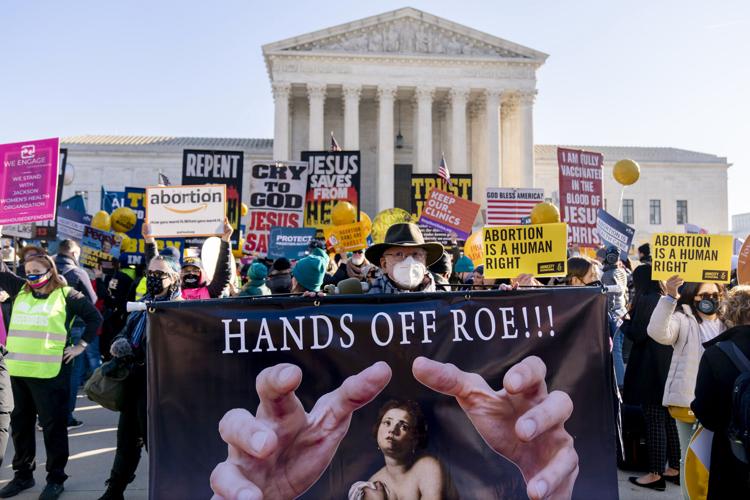
Stephen Parlato of Boulder, Colo., holds a sign that reads "Hands Off Roe!!!" as abortion-rights advocates and anti-abortion protesters demonstrate in front of the U.S. Supreme Court on Dec. 1, 2021, in Washington.
Progressive prosecutors across the country, including in states with bans, have said that they would not pursue abortion-related cases, or that they would make them a low priority.
The political table has been reset, with Republicans entering a new election season weighing how to balance the interests of a base that wants the strictest bans possible against the desires of the broader electorate.
Polling has consistently found that most Americans think abortions should be available early in a pregnancy, but that most also favor restrictions later in a pregnancy.
Last year, voters sided with abortion-rights advocates in all six states with abortion-related ballot measures. The issue was also a major factor in why Democrats performed better than expected in 2022 elections.
It’s emerged as a key issue in the race for the 2024 GOP presidential nomination.

