
MUSCATINE, Iowa — Days after he nearly died when an assailant shot him during an attempted robbery, Felipe de Jesus Hernandez Marcelo went to an Iowa police station hoping to get his belongings back.

Felipe de Jesus Hernandez Marcelo is seen in this undated photograph provided by his attorney, Emily Rebelskey.
The police in Muscatine, Iowa, had his car and the cash he carried when he was shot and nearly killed June 21. Hernandez, 28, recalled in court testimony that the department said he couldn't have those items back. Instead, police arrested him on an old warrant for failing to pay a traffic ticket.
Within hours, Hernandez was turned over to Immigration and Customs Enforcement. He's been detained since then pending removal proceedings, for entering the country illegally from his native Mexico in 2021.
He's one of a growing number of crime victims and relatives arrested and indefinitely detained during the Trump administration's crackdown on illegal immigration.
ICE rescinded a policy that shielded many victims from detention and removal. The number of people applying for visas that allow some victims and their families to remain in the United States appears to have plummeted. Others are detained as they go through the lengthy application process. Of those detained, many were declared ineligible for release under another ICE policy change.
Critics say the outcome is not only cruel to victims and their families but harms public safety by making those who are in the U.S. illegally unlikely to report crimes and cooperate with police.
"This type of thing is now the new normal. This scenario is happening every day in every city," said Dan Kowalski, a retired attorney and expert on immigration law. "Any contact with any level or kind of state or federal law enforcement, civil or criminal, puts you in danger of detention by ICE."

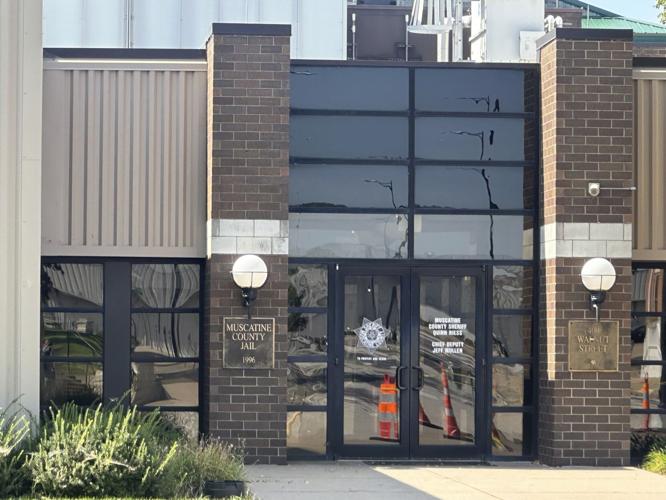
The Muscatine County Jail, where Felipe de Jesus Hernandez Marcelo was detained and doubles as an Immigration and Customs Enforcement holding facility, is seen Sept. 8 in Muscatine, Iowa.
ICE removed protections for crime victims
In January, ICE rescinded a policy that called on agents to generally avoid detaining and seeking to remove immigrants who were crime victims. It protected those carrying so-called U and T visas that allow crime and human trafficking victims and their relatives to remain in the U.S. The protections extended to those who applied for such visas and awaited decisions, which can take years to process.
Hernandez seeks to apply for a U visa — and would appear to be eligible as the victim of a felony assault and key witness against the two charged in the attack — but his attorney said Muscatine County prosecutor Jim Barry had yet to certify his eligibility. Barry didn't respond to messages.
The Biden-era policy called on ICE agents to look for signs immigrants were victimized and to consider that as "a positive discretionary factor" when deciding whether to detain them. The goal was to avoid discouraging immigrant victims from cooperating with police in reporting and solving crimes.
Some conservatives argued that victimization alone should not entitle immigrants to a benefit.
The new policy allows ICE agents to detain crime victims, including the U and T visa holders, as long as they check with police "to ensure criminal investigative and other enforcement actions will not be compromised." Agents aren't required to look for any evidence of victimization.

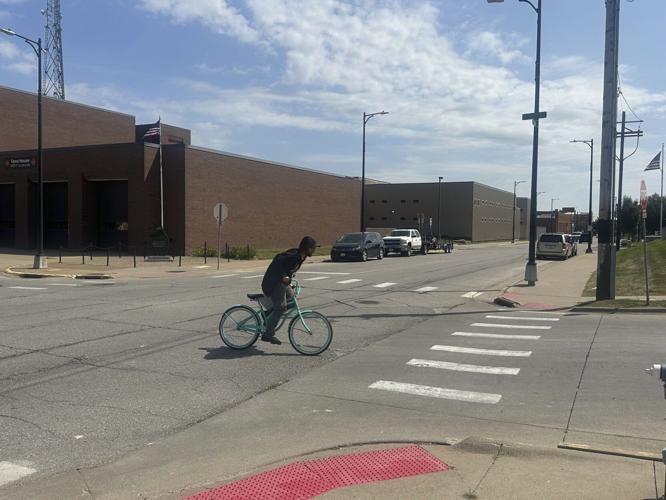
A cyclist crosses an intersection Sept. 8 in Muscatine, Iowa, where witnesses found Felipe de Jesus Hernandez Marcelo covered in blood after he was shot on June 21.
Applications for visas for crime victims dropped
The number of applications for U visas dropped by nearly half in the quarter that ended in March, which included the first 2½ months of the new Trump administration, according to data from U.S. Citizenship and Immigration Services.
Some immigration lawyers say the drop reflects concerns that an application by itself will put someone on the government's radar for potential removal.
Immigration lawyer Bethany Hoffmann said one of her clients, whose wife was a kidnapping victim, was arrested by ICE when he showed up to an appointment to be fingerprinted as part of the U visa application process.
"I have been practicing for 17 years and I have never seen that before," she said, adding the man has no criminal history but was subject to a 10-year-old removal order.
Court documents show other U visa applicants across the country were taken into custody by ICE, including a woman detained in Maine who was assaulted and kidnapped in 2021.

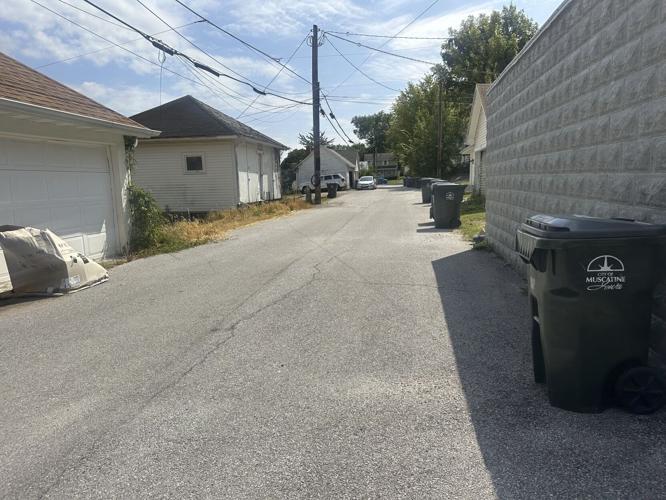
An alley in a residential neighborhood is seen Sept. 8 in Muscatine, Iowa, where police say Felipe de Jesus Hernandez Marcelo was lure before he was shot on June 21.
ICE is indefinitely detaining more people
Compounding the impact is another new practice, in which ICE and immigration judges required the indefinite detention of anyone who entered the country without permission.
Over the past 30 years, immigration lawyers say many such detainees would have been able to be released pending removal proceedings as long as they were deemed not to be a flight risk or danger to the community. With a steady job, local relatives and a minimal criminal history, Hernandez would have been a candidate for release.
Instead, he's been at the Muscatine County Jail in ICE detention for nearly three months.
Hernandez is away from the 9-year-old son he was raising as a single father, unable attend medical appointments critical for recovering from his gunshot wounds, and unable to work the construction job that paid his family's bills.
He said he was denied medicine for the first five days as he suffered in excruciating pain, he said.
"I was locked in a single cell for several days," Hernandez recalled this month in court testimony. "It felt like forever."
A federal judge ruled Sept. 10 that ICE's detention of Hernandez without a bond hearing was illegal, and ordered an immigration court to hold one within seven days. She found that he suffered "irreparable harm" in the meantime.
Hernandez’s lawyer Emily Rebelskey argued at a hearing Wednesday that her client is not a flight risk or danger to the community, and should be released pending further proceedings. But an immigration judge disagreed, denying him bond, meaning he will remain in custody pending deportation proceedings.