

The fatal shooting of a woman by a federal immigration officer in Minneapolis on Wednesday thrust a long-running and deeply contested question back into the national spotlight: When is a law enforcement officer justified in using lethal force against someone in a moving vehicle?
The killing, captured on cellphone video, exposed sharp divisions between federal authorities who quickly defended the agent's actions and local leaders who called the shooting unjustified. It also renewed scrutiny of use-of-force rules that many police departments adopted decades ago to reduce the risk to bystanders or drivers losing control after being shot.
At the center of the debate are policies that for years limited when officers may fire at vehicles, generally barring gunfire at fleeing cars unless the driver poses an imminent threat of deadly force beyond the vehicle itself.
Those restrictions, embraced by many police departments and reflected in federal guidance, were intended to limit what experts long warned was among the most dangerous and unpredictable uses of lethal force.
Homeland Security Secretary Kristi Noem described Wednesday's episode as an "act of domestic terrorism" and claimed the agent acted in self defense and to protect fellow officers.
Here's a look at why police agencies moved to restrict shootings at moving vehicles, what those policies typically require, how they are enforced, and how recent incidents, including the Minneapolis case, have tested rules meant to balance officer safety with public risk.

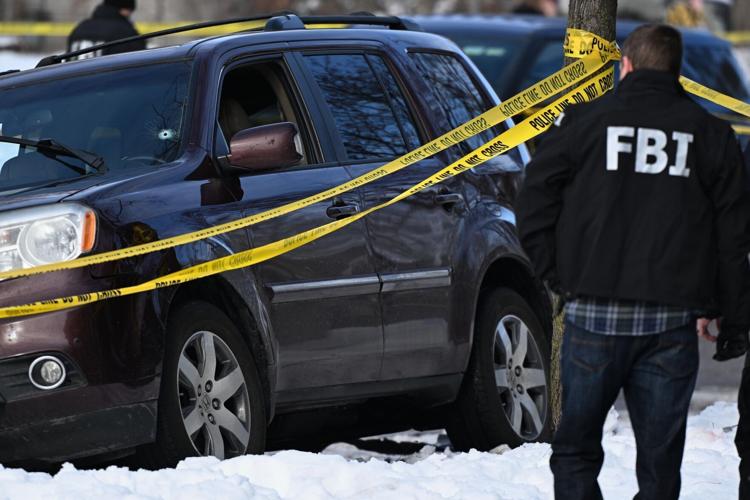
A bullet hole is seen in a windshield Wednesday as law enforcement officers work the scene after a federal law enforcement agent shot and killed a woman in Minneapolis.
Shooting at vehicles
For decades, police departments across the U.S. limited when officers are allowed to fire at moving vehicles, citing the danger to bystanders and the risk that a driver who is shot will lose control.
The New York City Police Department was among the first to adopt those limits. The department barred officers from firing at or from moving vehicles after a 1972 shooting killed a 10-year-old passenger in a stolen car and sparked protests.
Researchers in the late 1970s and early 1980s later found that the policy, along with other use-of-force restrictions, helped reduce bystanders being struck by police gunfire and led to fewer deaths in police shootings.

Over the years, many agencies followed New York's lead. Policing organizations such as the Police Executive Research Forum and the International Association of Chiefs of Police recommended similar limits, warning that shooting at vehicles creates serious risks from stray gunfire or from a vehicle crashing if the driver is hit.
In Wednesday's shooting, the vehicle can be seen in videos crashing into two parked cars before coming to a stop. It was unclear from the video if the vehicle made contact with the officer before he steps to the side.

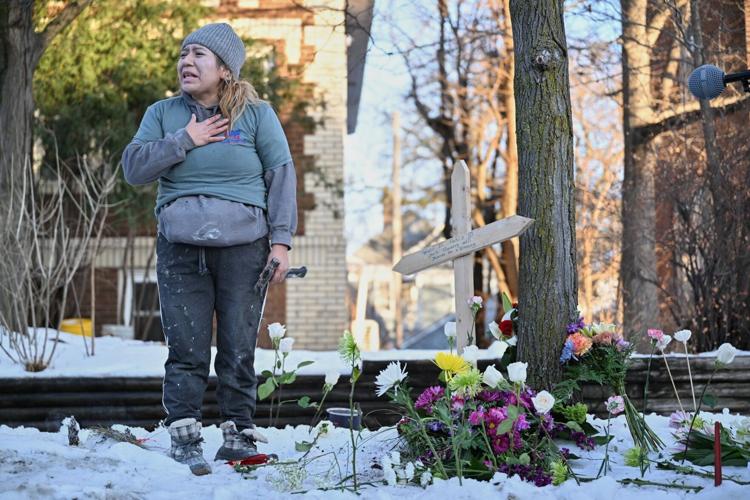
A protester stands next to a makeshift memorial Wedesday honoring the victim of a fatal shooting by a federal law enforcement agent near the scene in Minneapolis.
Federal policy
Federal law enforcement officers operate under similar guidance.
The Department of Justice says in its Justice Manual that firearms should not be used simply to disable a moving vehicle.
The policy allows deadly force only in limited circumstances, such as when someone in the vehicle is threatening another person with deadly force, or when the vehicle itself is being used in a way that poses an imminent risk and no reasonable alternative exists, including moving out of the vehicle's path.
At a news conference Wednesday, Noem claimed the shooting was justified.
"Our officer followed his training, did exactly what he's been taught to do in that situation, and took actions to defend himself and defend his fellow law enforcement officers," Noem said.
She alleged the woman who was killed used her vehicle to block officers, harassed them through the day and "attempted to run a law enforcement officer over" before the agent killed her.
Geoffrey Alpert, a criminology professor at the University of South Carolina, said officials should take a step back before making pronouncements.
"There needs to be two thorough parallel investigations," he said. "First ICE officials should investigate administratively whether this agent violated policy or training. And then state officials should be conducting a thorough criminal investigation as well."

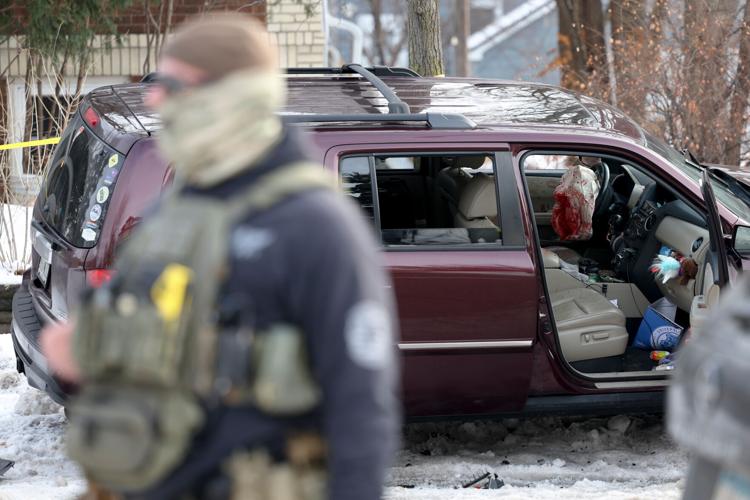
A deployed airbag and blood stains are seen Wednesday in a crashed vehicle on at the scene of a shooting in Minneapolis.
Rise in deaths
The shooting of the woman, identified by family members as Renee Nicole Good, 37, occurred as Homeland Security escalates immigration enforcement operations in Minnesota by deploying 2,000 agents and officers. It's the latest in a growing number of violent encounters between ICE agents and community members, and at least the fifth fatality.
In October, a a Border Patrol agent shot a Chicago woman five times in a similar incident involving a vehicle. Marimar Martinez, 30, survived, and was almost immediately labeled a "domestic terrorist" by Homeland Security officials, who said she "ambushed" and "rammed" agents with her vehicle.
She was charged with assaulting a federal officer, but federal prosecutors later dismissed the case after security camera video and body camera footage emerged showing a Border Patrol agent steering his vehicle into Martinez's truck.

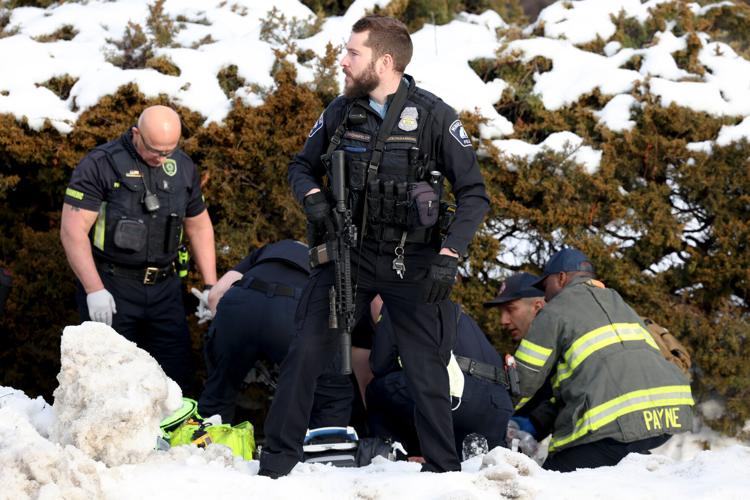
A Minneapolis police officer stands by Wednesday while emergency medical technicians administer aid to a person shot by a Immigration and Customs Enforcement officer in Minneapolis.
What experts say
The debate over shooting at moving vehicles has been sharpened by high-profile cases, including a 2023 shooting in Ohio in which an officer fired through the windshield of a car in a grocery store parking lot while investigating a shoplifting allegation. The pregnant driver was killed; the officer was later charged and acquitted.
John P. Gross, a professor at the University of Wisconsin School of Law who has written extensively about officers shooting at moving vehicles, said while more departments have added explicit policies regarding use-of-force and moving vehicles, officer training also needs to improve.
"If this woman was blocking the street and a law enforcement operation, they are entitled to arrest her. What they are not entitled to do is to use deadly force to arrest her," Gross said. "From just watching the video, this seems like an egregious example."

