

BURLINGTON, Vt. — From the moment President Donald Trump imposed tariffs on nearly every country, Nik Holm feared the company he leads might not survive.
Terry Precision Cycling made it 40 years with a product line specifically for women, navigating a tough early market, thin profit margins and a COVID-19 boom and bust.
But Holm, the company president, wasn't sure how his operation could pay the tariffs first announced in April and stay in business.
"We felt like our backs were up against the wall," he said, explaining why he joined a lawsuit challenging the tariffs.
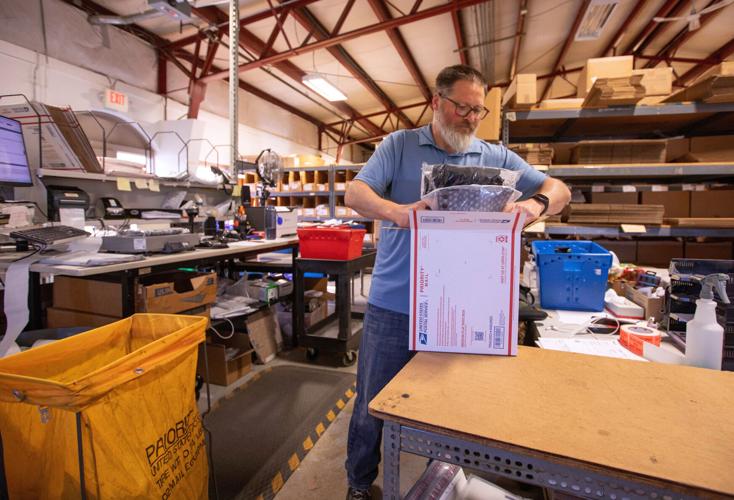
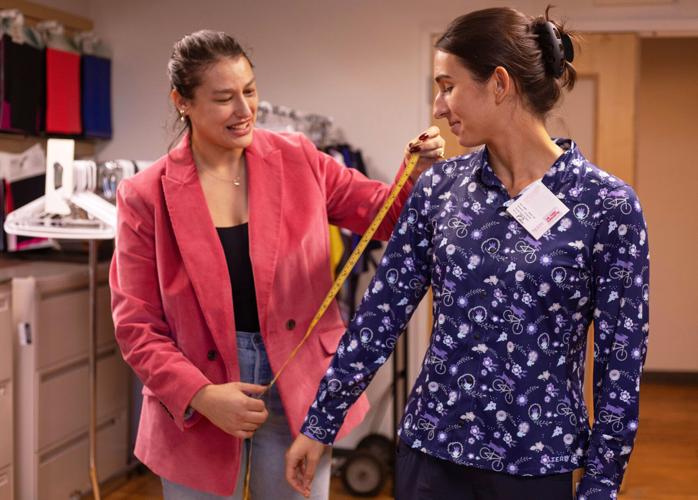
Terry Precision Cycling's offices are tucked behind a Burlington, Vermont, coffee shop. Local accolades share wall space with bike saddles and a color wheel's worth of fabric samples. Orders are shipped from a warehouse a few miles away.
It's one of a handful of small businesses that will challenge many of Trump's tariffs Wednesday before the Supreme Court, a case with extraordinary implications for the global economy and the boundaries of presidential power.
Small businesses hit hard
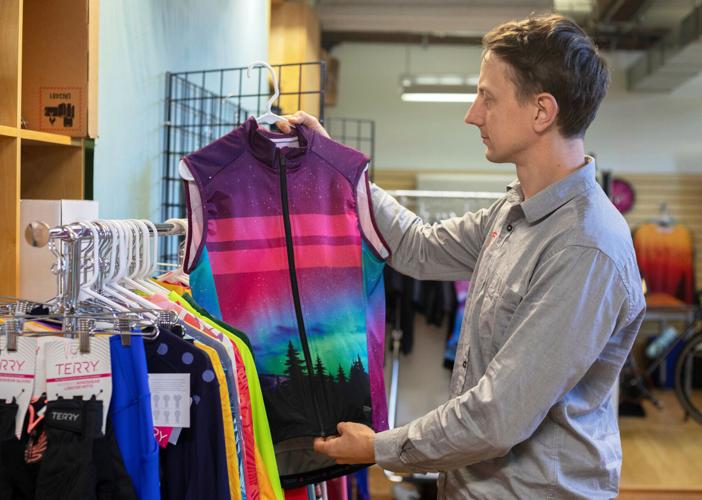
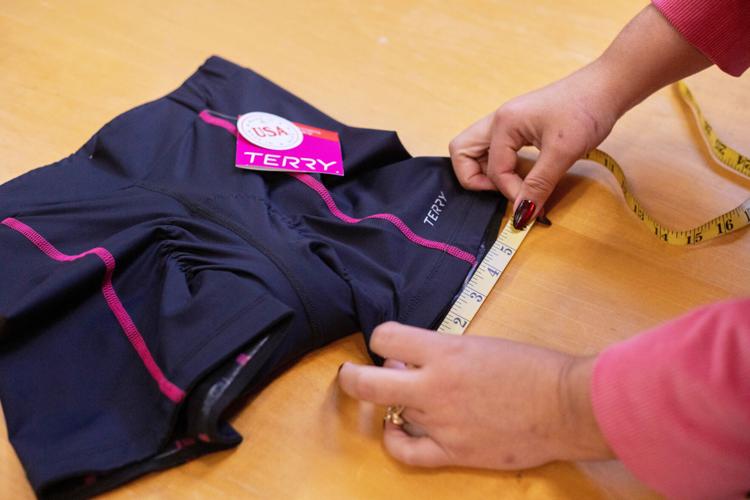
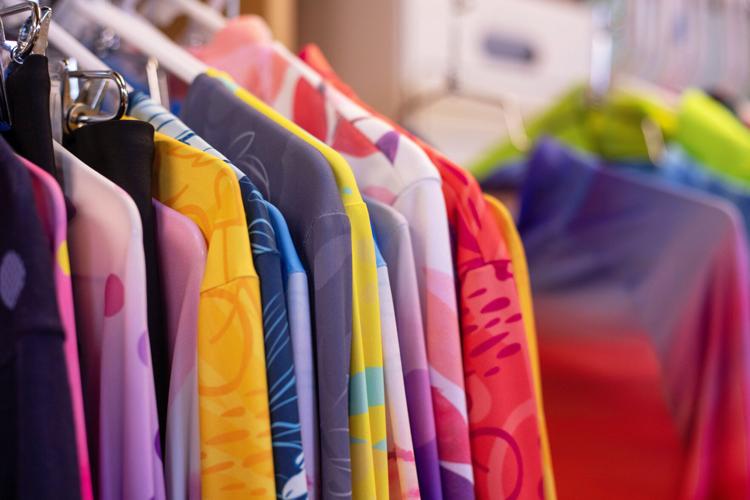
The company sells cycling shorts manufactured in the U.S. using materials imported from France, Guatemala and Italy. Its distinctive, colorfully printed bike jerseys are made with high-tech material that can't be found outside of China.
Tariffs mean the company has to pay more for all those imports, and without the cash reserves of a big company, it has few choices to make up the shortfall besides raising prices for customers. The bewildering pace of changes in tariffs, especially on goods from China, made setting prices more like rolling the dice.
"If we don't know the rules of the game, how are we supposed to play?" Holm asked.
The company had to add $50 to one pair of shorts in the pipeline when China tariffs hit 145%, bringing the price to $199.
The other companies in the lawsuit he joined are also small businesses, including a plumbing supply company in Utah, a wine importer from New York and a fishing-tackle maker in Pennsylvania.
Holm started working for the company more than a decade ago, taking up cycling in earnest alongside the job. He often rides his bike to work.
Holm was named president about two years ago as the company started by women's cycling pioneer Georgena Terry wrestled with a downturn in the outdoor market after the COVID-19 pandemic. His normally level demeanor gets animated when he talks about the design of their padded shorts or the level of SPF protection in the jerseys.
"It's all about fit and function, and feeling safe and comfortable," he said. "That's our foundation, getting people, getting women, riding. More butts on bikes and getting out there."
The businesses challenging Trump's tariffs are represented by Liberty Justice Center, a libertarian-leaning legal group usually more aligned with conservative causes. They say Trump is wrong on sweeping tariffs, which are projected to collect about $3 trillion from businesses over the next decade, according to the Congressional Budget Office.
They argue the president used an emergency powers law that doesn't even mention tariffs to claim nearly unlimited powers to impose and change import duties at will, something no other president has done on such a scale.
"It is practically what the American Revolution was fought over, the principle that taxation is not legitimate unless it is adopted by the representatives of the people," said Jeffrey Schwab, an attorney with the Liberty Justice Center.
Trump calls the case one of the country's most important
The Trump administration said the law lets the president regulate importation, and that includes tariffs. The president was vocal about the case, suggesting at one point he might go to the arguments himself — something no other sitting president is recorded to have done.
"That's one of the most important cases in the history of our country," he said, "because if we don't win that case, we will be a weakened, troubled financial mess for many, many years to come."
The International Emergency Economic Powers Act, was invoked dozens of times over the decades, often to impose sanctions on other countries. No president used it for tariffs until February, when Trump placed duties on China, Mexico and Canada. He said the countries were not doing enough to stop illegal immigration and drug trafficking.
In April, he unveiled "reciprocal" tariffs on nearly all U.S. trading partners with a baseline of 10% and higher increases for specific countries, though many of those since were put on hold. Tariffs on China hit 145% at one point but came down and are headed to 20% overall under Trump's latest deal with China.
Multiple lawsuits were filed over the emergency-powers tariffs. The Supreme Court also will hear two other cases on Wednesday, one from a group of Democratic-leaning states and another from an Illinois educational toy company.
The plaintiffs won two rounds in lower courts, though the government convinced four appellate judges that the law allows the president broad power over tariffs.
The high court will now be asked to rule on the scope of a president's authority. The justices, three of whom were appointed by Trump, so far were reluctant to check his extraordinary flex of executive power.
However, they were skeptical of presidential claims of power before, as when Joe Biden tried to forgive $400 billion in student loans under a different law dealing with national emergencies. The court found that the law didn't clearly give Biden the power to enact such a costly program.
Trump's tariffs are expected to total in the trillions — and increase people's bills by about $2,000 per household this year, an analysis from the Yale Budget Lab found.
Revenue from tariffs totaled $195 billion by September, more than double what it was the year before — though the government could have to pay back that money if the justices strike down the tariffs.

