

It's been a confusing time for people with student loans. Collections restarted, then were put on hold. At the same time, borrowers had to stay on top of changes to key forgiveness plans.
Last year, the long-contested SAVE plan introduced by the Biden administration ended with a settlement agreement. President Donald Trump's tax and spending bill introduced new borrowing limits for graduates and raised challenges to the Public Service Loan Forgiveness program. While several changes for student loan borrowers take effect this summer, other key questions remain unresolved.
More than 5 million Americans were in default on their federal student loans as of September, according to the Education Department. Millions are behind on loan payments and at risk of default this year.
Borrowers "genuinely struggle to afford their loans and then to hear that the administration is making it more expensive and taking away some of the tools and resources that help folks afford their loans is really, it's panic-inducing," said Winston Berkman-Breen, legal director at Protect Borrowers.
The Education Department announced in January that it would delay involuntary collections for student loan borrowers in default until the department finalizes its new loan repayment plans. The date for this is still unclear.
If you're a student loan borrower, here are some key things to know:

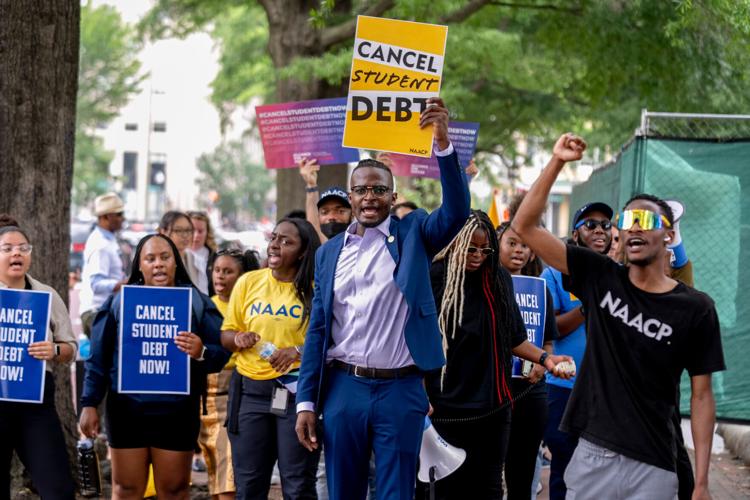
People demonstrate in Lafayette Park across from the White House in Washington, June 30, 2023, after a sharply divided Supreme Court ruled that the Biden administration overstepped its authority in trying to cancel or reduce student loan debts for millions of Americans.
1. If you were enrolled in the SAVE plan
The SAVE plan was a repayment plan with some of the most lenient terms ever. Soon after its launch, it was challenged in court, leaving millions of student loan borrowers in limbo. In December, the Education Department announced a settlement agreement to end the SAVE plan. What is next for borrowers who were enrolled in this repayment plan is yet to be determined.
"Seven and a half million borrowers who are currently enrolled in SAVE need to be moved to another plan," Berkman-Breen said.
The Education Department is expected to develop a plan for borrowers to transition from the SAVE plan, yet borrowers should be proactive about enrolling in other repayment plans, said Kate Wood, a lending expert at NerdWallet.
2. If you are looking to enroll in an income-driven repayment plan
Borrowers can apply for the following income-driven plans: the Income-Based Repayment Plan, the Pay as You Earn plan, and the Income-Contingent Repayment plan.
"They all have similar criteria, and they function similarly. Your payment is set as a percentage of your income, not how much you owe, so it's usually a lower payment," Berkman-Breen said.
You can find out which repayment plan might work best for you by logging on to the Education Department's loan simulator (studentaid.gov/loan-simulator).
3. If you're working toward your Public Service Loan Forgiveness
There are no changes to the Public Service Loan Forgiveness Program yet. Last year, the Trump administration announced plans to change the eligibility requirements for participating nonprofits.
The policy seeks to disqualify nonprofit workers if their work is deemed to have "substantial illegal purpose." The Trump administration said it's necessary to block taxpayer money from lawbreakers, while critics say it turns the program into a tool of political retribution.
While this policy is currently being challenged by 20 Democrat-led states, it's expected to take effect in July. In the meantime, Wood recommends that borrowers enrolled in the PSLF program continue making payments.
4. If your student loans are in default
Involuntary collections on federal student loans remain on hold. The Trump administration announced it is delaying plans to withhold pay from student loan borrowers who default on their payments.
Federal student loan borrowers can have their wages garnished and their federal tax refunds withheld if they default on their loans. Borrowers are considered in default when they are at least 270 days behind on payments.
If your student loans are in default, you can contact your loan holder to apply for a loan rehabilitation program.
"They essentially come up with a payment plan where you're making a reduced payment," Woods said. "After five successful payments on that rehabilitation plan, wage garnishment will cease."

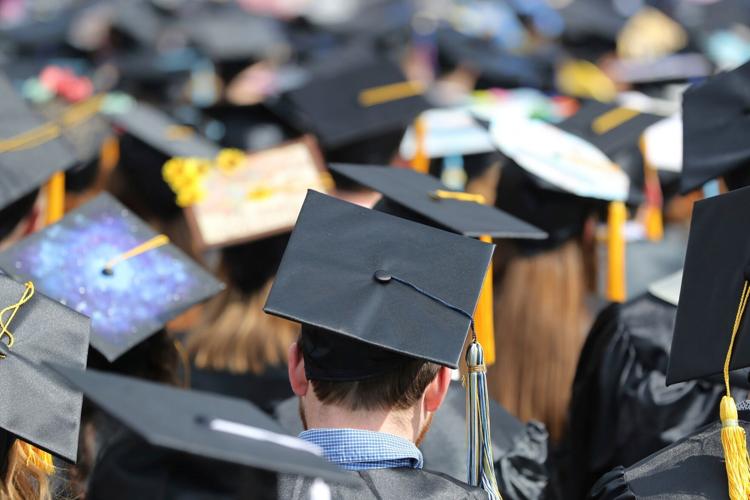
In this May 5, 2018, file photo, graduates at the University of Toledo commencement ceremony in Toledo, Ohio.
5. If you're planning to attend graduate school
Trump's tax and spending bill changed the amount graduate students can borrow from federal student loans. Graduate students could previously borrow loans up to the cost of their degree; the new rules cap the amount depending on whether the degree is considered a graduate or a professional program.
Wood said that if you're starting a new program and taking out a loan after July 1, you will be subject to the new loan limits.
Under the new plan, students in professional programs would be able to borrow up to $50,000 per year and up to $200,000 in total. Other graduate students, such as those pursuing nursing and physical therapy, would be limited to $20,500 a year and up to $100,000 total.
The Education Department is defining the following fields as professional programs: pharmacy, dentistry, veterinary medicine, chiropractic, law, medicine, optometry, osteopathic medicine, podiatry and theology.
6. If you want to consolidate your loan
The online application for loan consolidation is available at studentaid.gov/loan-consolidation. If you have multiple federal student loans, you can combine them into a single loan with a fixed interest rate and a single monthly payment.
The consolidation process typically takes about 60 days to complete. You can only consolidate your loans once.



