

When “The American Revolution” unfolds this month on PBS, don’t get the idea that you weren’t told the truth in elementary school.
“What I learned in school was not wrong,” says director David Schmidt. “It was just incomplete.”
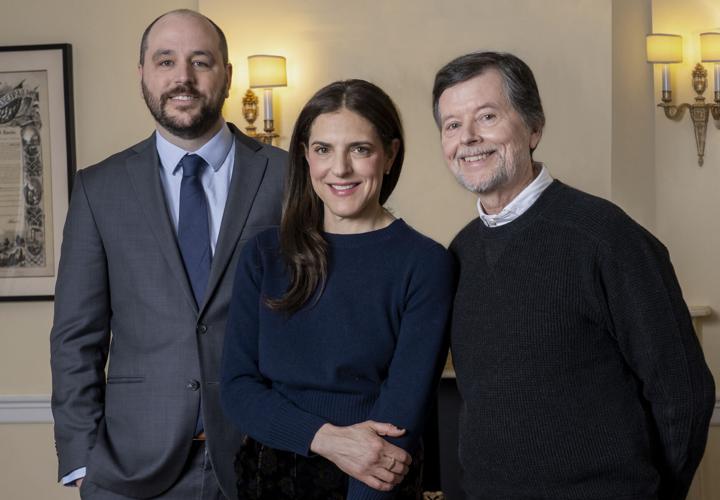
In the decade that Schmidt, Sarah Botstein and Ken Burns have been working on the 12-hour documentary, they’ve found plenty of information that didn’t get the same exposure as urban myths.
“There’s a lot of superficiality to the way we teach any kind of history and it sometime migrates, as certainly the revolution has, into mythology,” Burns says.
Doing exhaustive research, the filmmakers were able to get a more complete story. They didn’t subscribe to one perspective or interpretation, Burns says. “We just are calling balls and strikes. We’ve got a complicated story because that’s the way life is.”
Burns, in fact, considers the American Revolution “the most important event since the birth of Christ. This is our story. It’s our creation story.”
Throughout the six-part film, the documentarians show how violent — and tenuous — the battle was.
“This is a revolution — a bloody, bloody revolution, superimposed by a bloody civil war superimposed by a bloody world war,” Burns says. “The cast of characters is extraordinary. George Washington didn’t know he was going to be George Washington. The sense of contingency and the idea that it might not turn out the way we know was the surprising aspect for us to try to work into our work.”
Schmidt says independence wasn’t the goal at the beginning of the war.
“The war at its start was about standing up to tyranny, liberating Boston, restoring things to the way they used to be under the British Empire," Schmidt says. "It’s only (through) the course of war that makes independence, union and republic necessary."
Those lesser-known aspects of the revolution are what excite, Botstein says. To capture the different takes on history, the filmmakers engaged different generations of scholars talking to each other.
“We want history to be a conversation,” she says. “We want history to poke a hole at things we don’t typically learn about. We want to celebrate our achievements, look squarely at our failures and make the history both exciting and real.”
Diverse vocal talents (including familiar participants such as Peter Coyote and Tom Hanks) play the various names most associate with the revolution.
That helps convey the multitude of takes that have surfaced in the years since the Declaration of Independence was signed.
“A lot of that has to do with the work people have done in the last 50 years, since the bicentennial, to surface more information about more people, digitizing documents,” Schmidt says. “It’s a lot easier for us to find what anybody had to say.”
Voices were important, because there weren’t photographs or films to illustrate the story, as they were for Burns’ “Vietnam War.”
“As we’re doing it, we let the material talk to us and determine (the project’s) length,” Burns says. “Because we’re artists, we’re trying to impose a dramatic structure. At the same time, facts always have to win.
“While we keep learning things, our cutting room floor is necessarily filled with good scenes that just didn’t fit. There were, as you remember from the movie, ‘Amadeus,’ too many notes."

