


WASHINGTON — The Supreme Court refused Tuesday to allow the Trump administration to deploy National Guard troops in the Chicago area to support its immigration crackdown.
The justices declined the Republican administration's emergency request to overturn a ruling by U.S. District Judge April Perry that blocked the deployment of troops. An appeals court also refused to step in.
The Supreme Court took more than two months to act.
Three justices — Samuel Alito, Clarence Thomas and Neil Gorsuch — publicly dissented.
The high court order is not a final ruling but it could affect other lawsuits challenging President Donald Trump's attempts to deploy the military in other Democratic-led cities.

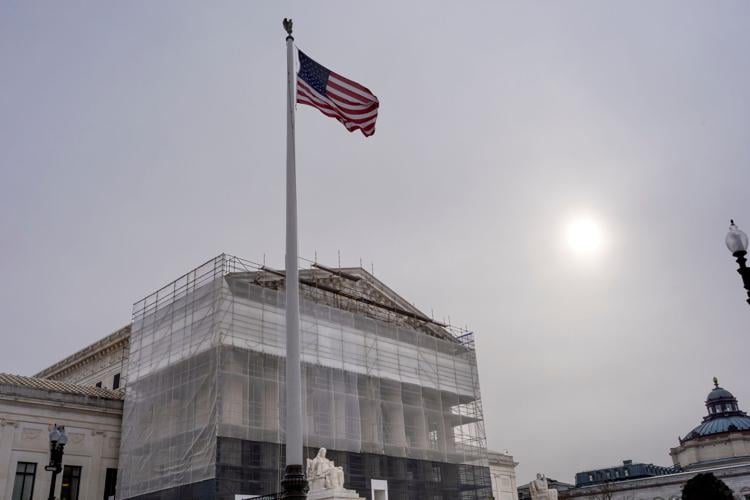
With the Supreme Court Building under renovations, the justices hear oral arguments on President Donald Trump's push to expand control over independent federal agencies Dec. 8 on Capitol Hill in Washington.
Rare setback for Trump administration at high court
The outcome is a rare Supreme Court setback for Trump, who won repeated victories in emergency appeals since he took office again in January.
The conservative-dominated court allowed Trump to ban transgender people from the military, claw back billions of dollars of congressionally approved federal spending, move aggressively against immigrants and fire the Senate-confirmed leaders of independent federal agencies.
The administration initially sought the emergency order to allow the deployment of troops from Illinois and Texas, but the Texas contingent of about 200 National Guard troops later was sent home from Chicago.
The Trump administration argued the troops are needed "to protect federal personnel and property from violent resistance against the enforcement of federal immigration laws."

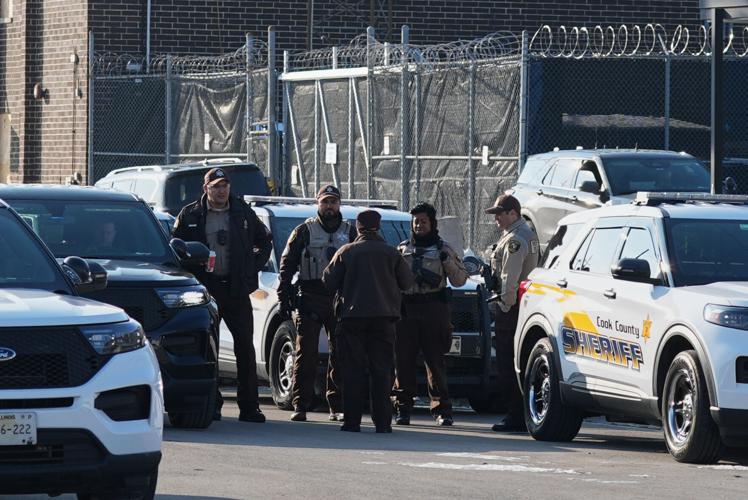
Law enforcement officers guard as protesters gather Dec. 12 outside an ICE processing facility in the Chicago suburb of Broadview, Ill.
But Perry wrote that she found no substantial evidence that a "danger of rebellion" is brewing in Illinois and no reason to believe the protests there got in the way of Trump's immigration crackdown.
Perry initially blocked the deployment for two weeks. In October, she extended the order indefinitely while the Supreme Court reviewed the case.
The U.S. Immigration and Customs Enforcement facility in the west Chicago suburb of Broadview was the site of tense protests, where federal agents used tear gas and other chemical agents on protesters and journalists.
Last week, local authorities arrested 21 protesters and said four officers were injured outside the facility.

Greg Bovino, the chief patrol agent for the U.S. Border Patrol El Centro sector, center, stands with federal immigration agents Oct. 3 near an Immigration and Customs Enforcement facility in Broadview, Ill.
National Guard deployments drew legal battles
The Illinois case is just one of several legal battles over National Guard deployments.
District of Columbia Attorney General Brian Schwalb sued to halt the deployments of more than 2,000 guardsmen in the nation's capital. Forty-five states entered filings in federal court in that case, with 23 supporting the administration's actions and 22 supporting the attorney general's lawsuit.
More than 2,200 troops from several Republican-led states remain in Washington, though the crime emergency Trump declared in August ended a month later.

US Immigration and Customs Enforcement released a new video pretending to show Santa Claus rounding up illegal migrants -- warning them to leave voluntarily before they end up on the naughty list. The holiday-inspired clip, which was blasted out on X late Monday, features a buff Father Christmas clad in a red bulletproof ICE vest cuffing an undocumented migrant on the street. Santa then processes the illegal alien at a federal facility before loading him onto an "ICE Air" plane to be deported.
A federal judge in Oregon permanently blocked the deployment of National Guard troops there, and all 200 troops from California were being sent home from Oregon, an official said.
A state court in Tennessee ruled in favor of Democratic officials who sued to stop the ongoing Guard deployment in Memphis, which Trump called a replica of his crackdown on Washington, D.C.
In California, a judge in September said deployment in the Los Angeles area was illegal. By that point, just 300 of the thousands of troops sent there remained, and the judge did not order them to leave.
The Trump administration appealed the California and Oregon rulings to the 9th U.S. Circuit Court of Appeals.
Photos of families who set off on migration journeys and found themselves torn apart

Guatemalan migrant Amavilia, 31, stands in the South Florida apartment where she lives with her two children and a roommate, after her partner Edgar was detained days after their son's birth and deported to Guatemala, Wednesday, Oct. 8, 2025. (AP Photo/Rebecca Blackwell)

A miniature Jesus figurine sits on a coloring book inside the Miami-area motel room where Jakelin Pasedo is living with her two sons, who all have refugee status, Wednesday, Oct. 22, 2025, after their father requested to be sent back to Venezuela after months in immigration detention. (AP Photo/Rebecca Blackwell)

Jakelin Pasedo's three-year-old son washes his hands in the Miami-area motel room where Pasedo and her two children, who all have refugee status, are living, Wednesday, Oct. 22, 2025, after their father requested to be sent back to Venezuela after months in immigration detention. (AP Photo/Rebecca Blackwell)

The two sons of pregnant asylum-seeker Yaoska pass the time in the Miami-area motel room where the family is living after their father was deported to Nicaragua, Thursday, Nov. 13, 2025. (AP Photo/Rebecca Blackwell)

Guatemalan migrant Amavilia, 31, shows how she prepares the corn-on-the-cob she sells, inside her South Florida apartment, Wednesday, Oct. 8, 2025, after her infant son's father, who worked in construction, was detained and deported to Guatemala. (AP Photo/Rebecca Blackwell)

Two brothers are reflected in a ceiling mirror as they pass the time in the Miami-area motel room where they are living with their pregnant mother Yaoska after their father was deported to Nicaragua, Thursday, Nov. 13, 2025. (AP Photo/Rebecca Blackwell)

Pregnant asylum-seeker Yaoska, 32, comforts her two-year-old son who was not feeling well, inside the Miami-area motel room where she and her two children are living after her husband was deported to Nicaragua, Thursday, Nov. 13, 2025. (AP Photo/Rebecca Blackwell)

Diapers and clothes fill the shelves of the apartment in South Florida where Guatemalan migrant Amavilia, 31, front, lives with her two children and a roommate, after her partner Edgar was detained days after their son's birth and deported to Guatemala, Wednesday, Oct. 8, 2025. (AP Photo/Rebecca Blackwell)

Jakelin Pasedo's sons, ages 5 and 3, color on the bed inside the Miami-area motel room where the trio live, all of whom have refugee status, Wednesday, Oct. 22, 2025, after their father requested to be sent back to Venezuela after months in immigration detention. (AP Photo/Rebecca Blackwell)

Jakelin Pasedo's three-year-old son hunts for a snack in the mini fridge in the Miami-area motel room where Pasedo is living with her two children, who all have refugee status, Wednesday, Oct. 22, 2025, after their father requested to be sent back to Venezuela after months in immigration detention. (AP Photo/Rebecca Blackwell)

Guatemalan migrant Amavilia, 31, holds her infant son, whose father Edgar was detained days after his birth and later deported to Guatemala, inside the South Florida apartment where she lives with her two children and a roommate, Wednesday, Oct. 8, 2025. (AP Photo/Rebecca Blackwell)

The two-year-old son of pregnant, asylum-seeker Yaoska hunts for a snack in the mini fridge of the Miami-area motel room where he lives with his mother and brother, after their father was deported to Nicaragua, Thursday, Nov. 13, 2025. (AP Photo/Rebecca Blackwell)

Jakelin Pasedo, 39, hugs her five-year-old son inside the Miami-area motel room where she lives with her two children, who all have refugee status, Wednesday, Oct. 22, 2025, after their father requested to be sent back to Venezuela after months in immigration detention. (AP Photo/Rebecca Blackwell)

The two-year-old son of pregnant, asylum-seeker Yaoska peers out the window of the Miami-area motel room where he lives with his mother and brother, after their father was deported to Nicaragua, Thursday, Nov. 13, 2025. (AP Photo/Rebecca Blackwell)

Guatemalan migrant Amavilia, 31, gets out the sauces she uses to flavor the corn on the cob she sells, inside her South Florida apartment, Wednesday, Oct. 8, 2025, after her infant son's father, who worked in construction, was detained and deported to Guatemala. (AP Photo/Rebecca Blackwell)

Pregnant asylum-seeker Yaoska, 32, comforts her two-year-old son who was not feeling well, inside the Miami-area motel room where she and her children are living after her husband was deported to Nicaragua, Thursday, Nov. 13, 2025. (AP Photo/Rebecca Blackwell)

