

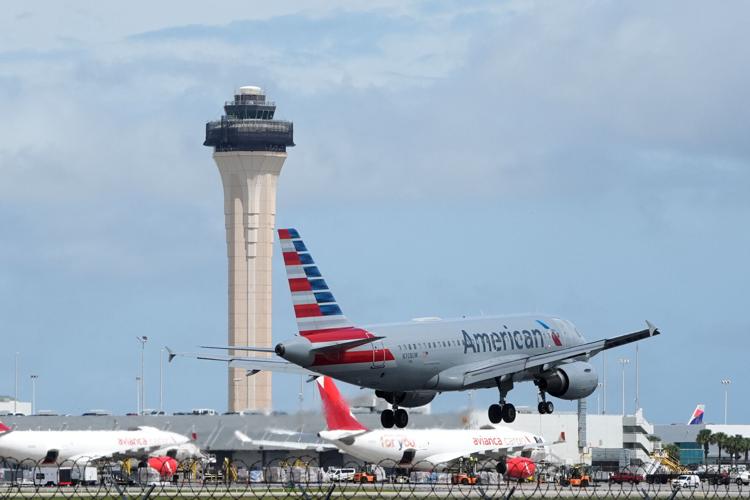
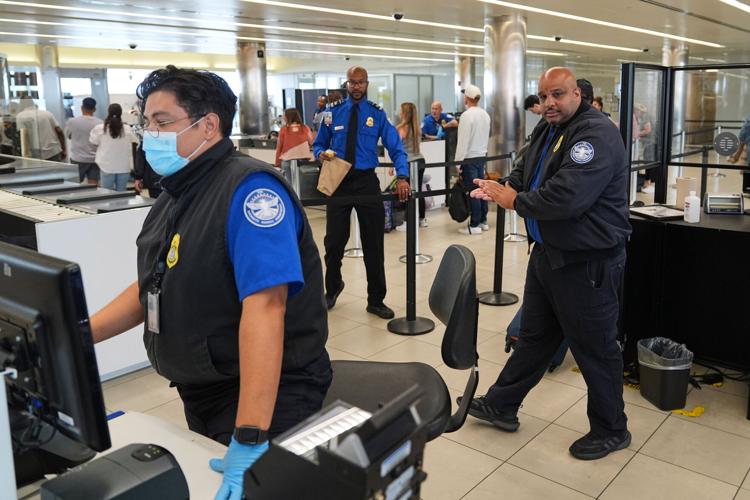
If the U.S. government shutdown goes on long enough, it could throw a wrench in travel plans, potentially leading to longer airport wait times, flight delays and even cancellations.
The shutdown began Oct. 1 after President Donald Trump and Congress failed to reach a deal to continue funding government services and operations. That means most employees who keep U.S. airports and air travel running are working without pay until the government reopens.
"The longer a shutdown drags on, the more likely we are to see longer TSA lines, flight delays and cancellations, national parks in disrepair and unnecessary delays in modernizing travel infrastructure," warned Geoff Freeman, president and CEO of the U.S. Travel Association.
Here's what to know about the shutdown and its potential impacts on your travel plans.
Air traffic safety
Travelers can still fly despite the lapse in funding. Early in the shutdown, they might not even notice any issues at the airport.
Control towers and airport security checkpoints still will be staffed, with about 13,200 air traffic controllers and more than 61,000 Transportation Security Administration employees expected to remain on the job.
As more time passes for the workers since their last paycheck, travelers could start to see longer lines at security and flight interruptions, said Jeffrey Price, professor of aviation at the Metropolitan State University of Denver.
That's what happened in 2018 and 2019, when Trump led the country into a 35-day shutdown, the country's longest ever, during his first term.
About three weeks into that shutdown, some unpaid security screeners started calling in sick, and air traffic controllers sued the government in a bid to get their paychecks. Miami International Airport had to temporarily close one of its terminals because TSA officers were calling in sick at twice the airport's usual rate.
The TSA and Federal Aviation Administration already face staffing shortages, including a shortage of about 3,000 air traffic controllers. If the system can't handle the number of flights that are scheduled, the FAA will slow down landings and take offs and passengers will see more delays and cancellations.
Nick Daniels, president of the union that represents air traffic controllers, said a shutdown weakens the aviation safety system by adding stress on controllers and taking away many of the workers who support them and maintain the outdated system they rely on.
"They're out there working right now with critical staffing — the lowest staffing we've had in decades of only 10,800, where there should be 14,633. And on top of that, they're working with unreliable equipment," Daniels said.
During the shutdown in Trump's first term, controllers in the busiest U.S. air traffic facilities reported working as much as 60 hours per week, and an increasing number of TSA agents also quit their jobs.
Rail operation
Amtrak says its passengers trains will continue running. It operates more than 300 trains daily in 46 states, the D.C. area and three Canadian provinces.
The country's rail operator said passengers planning to travel on its trains "in the coming days and weeks can be assured that Amtrak will remain open for business."
International travel to US
Ports of entry into the country are expected to stay open for international travelers, according to the Department of Homeland Security's contingency plan.
The department estimated about 63,000 workers at Customs and Border Protection would still report to work. They include employees who are responsible for protecting the country's borders and monitoring traffic coming into the U.S. at official border crossings, like airports and land crossings from Canada and Mexico.
Passports and visas
The U.S. Citizenship and Immigration Services, the agency responsible for overseeing the naturalization process, is primarily funded by application fees, meaning a lapse in funding at the federal government has minimal impacts on most passport and visa processing.
Agency spokesperson Matthew Tragesser said, however, that the shutdown temporarily shuttered the agency's E-Verify program, a free online system that employers can use to confirm their new employees are authorized to work in the U.S.
Museums, national parks
Smithsonian museums, research centers and the National Zoo were scheduled to stay open to the public through at least Oct. 6. Further updates will be posted on the Smithsonian website.
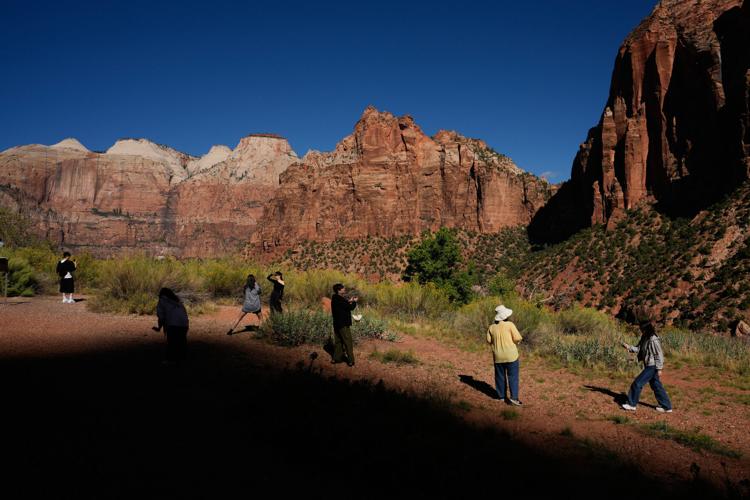
National Parks mostly will remain open during the shutdown.
The National Park Service's contingency plan says park roads, lookouts, trails and open-air memorials will "generally remain accessible to visitors."
Parks without "accessible areas" will be closed, and additional sites could shutter if damage is done to park resources or garbage builds up during the shutdown.

