

WASHINGTON — It's not just criminal prosecutions that worry those who crossed President Donald Trump. There are more prosaic kinds of retaliation: having difficulty renewing passports, getting audited by the IRS and losing federal pensions.
For the many people who made an enemy of Trump, his return to the presidency sparked anxiety. Some are concerned they could go bankrupt trying to clear their names.
Less than 24 hours after taking office, Trump ordered the revocation of security clearances held by dozens of former intelligence officers who he believes sided with Joe Biden in the 2020 campaign or turned against him. The loss of such clearances can be costly for former officials who work for defense contractors and require ongoing access to classified information to do their private sector jobs.
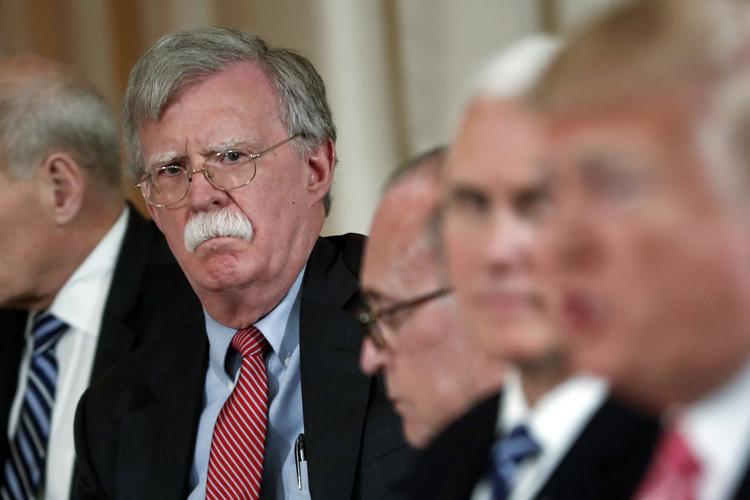
"Anybody who ever disagrees with Trump has to worry about retribution," said John Bolton, who served as Trump's national security adviser and became a vocal critic of the president. "It's a pretty long list. I think there are a lot of people who are very worried."
Bolton was among a half-dozen former officials who spoke about their rising apprehensions about Trump's potential for vengeance. Before Trump took the oath of office on Monday, the officials noted, outgoing President Biden took the extraordinary step of issuing preemptive pardons for frequent Trump targets such as Dr. Anthony Fauci, retired Gen. Mark Milley and lawmakers and staff who served on the congressional panel that investigated Trump supporters' Jan. 6, 2021, attack on the U.S. Capitol.
Biden also pardoned members of his family, saying "baseless and politically motivated investigations wreak havoc on the lives, safety and financial security of targeted individuals and their families."
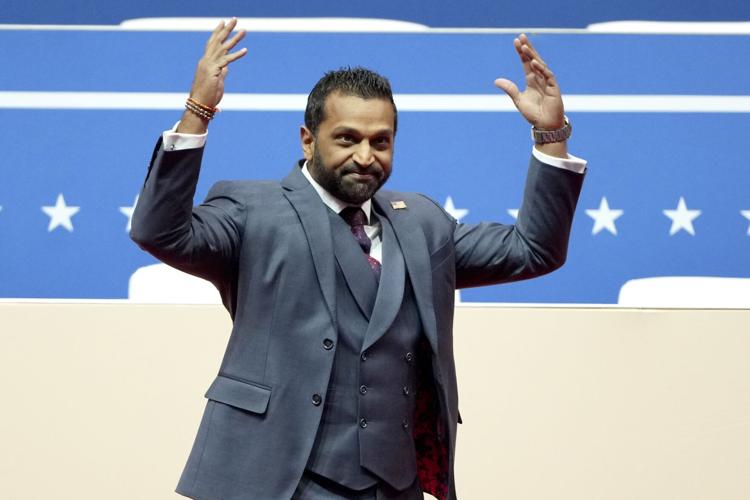
Many of the former officials were listed in an index of "deep state" operatives in a book by Kash Patel, Trump's nominee to be FBI director. Patel promised to launch a campaign against what he calls "government gangsters."
Most of those interviewed spoke about their fears on the condition of anonymity because they did not want to draw more attention to themselves. They are concerned about being on the receiving end of a presidential social media post or being targeted in an online harassment campaign.
They are also worried about being criminally investigated and prosecuted for actions they took as government employees, though few expressed genuine concern about being convicted. All said they were more concerned about having to incur steep legal bills from criminal probes, congressional investigations or defamation suits.
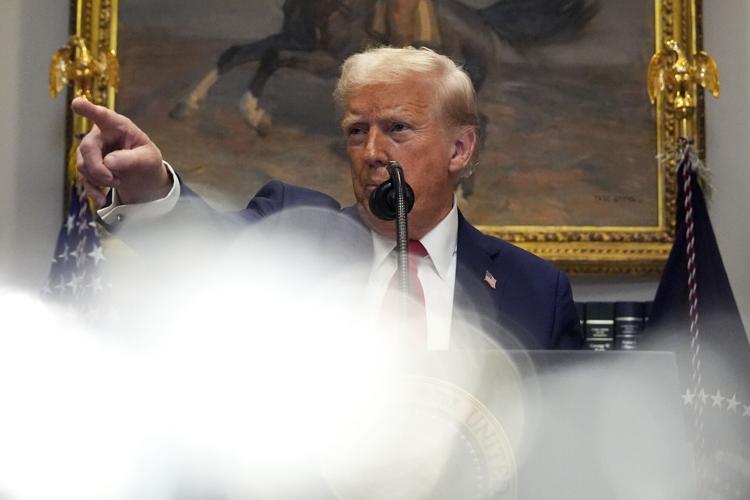
Revenge played a central role in many of Trump's remarks after he left the presidency in 2021. He said at a 2023 rally, "For those who have been wronged and betrayed, I am your retribution."
On Monday, Trump signed an executive order aimed at ending what he called the weaponization of the federal government under Biden. He alleged the previous administration took actions "oriented more toward inflicting political pain than toward pursuing actual justice or legitimate governmental objectives."
Yet hours after being sworn in, Trump issued executive orders aimed at settling scores, including the one stripping clearances from 50 former intelligence officers. He also rescinded Secret Service protection for Bolton, whose life was threatened by Iran.
A White House spokeswoman did not return a request for comment.
The federal government is the largest single purchaser of goods and services in the world. It can audit, investigate, prosecute and cajole. It controls everything from TV broadcast licenses to passport renewals. It has the power to add citizens to a no-fly list or smooth their way through passport control and TSA security checkpoints.
While most of the functions of the federal government were depoliticized for more than a century, there are many ways a president could upend the lives of private citizens.
"If you have the control of the executive branch and you don't care very much about whether you're following the rules or following the law, there's a lot you could do that's quite hard to stop," said Barton Gellman, a senior adviser at the nonpartisan Brennan Center for Justice.
Gellman helped run a series of simulations last year aimed at testing the U.S. response to an authoritarian presidency. The aim was to see how institutions — both public and private — would react to a president giving unlawful or unethical orders. Some of the scenarios involved a president using the power of the government to punish political foes.
What they found was that the institutions of government ultimately would bend to a president's wishes. Gellman believes the only check might be the American people.
"Public opinion might actually be one of the major constraints on Trump. I don't think a majority of Americans wants to see him abusing his legal powers to try to harm his political enemies. If a pattern like that emerges, I don't think it will be popular," Gellman said.
A recent New York Times/Ipsos poll found that 73% of Americans oppose the idea of Trump trying to prosecute his adversaries, including 49% of Americans who consider themselves "strongly opposed."
Attorneys and civil society groups are raising money and organizing on behalf of current and former federal employees who might be in the crosshairs.
Mark Zaid, a Washington attorney who represents several of the people whose security clearances were revoked this week, is organizing an effort to help those who might be targeted. That includes lining up attorneys, accountants and even mental health professionals who could offer services for free.
"There's not a lot we can do in advance," Zaid said, "other than just be prepared for when or if he acts."

