

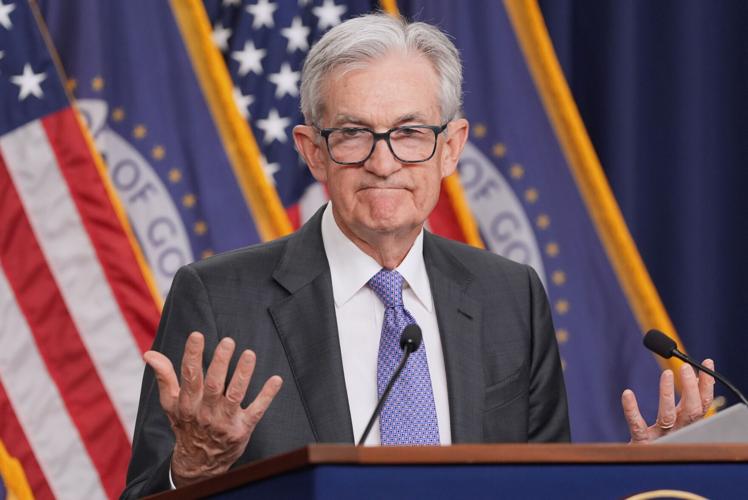
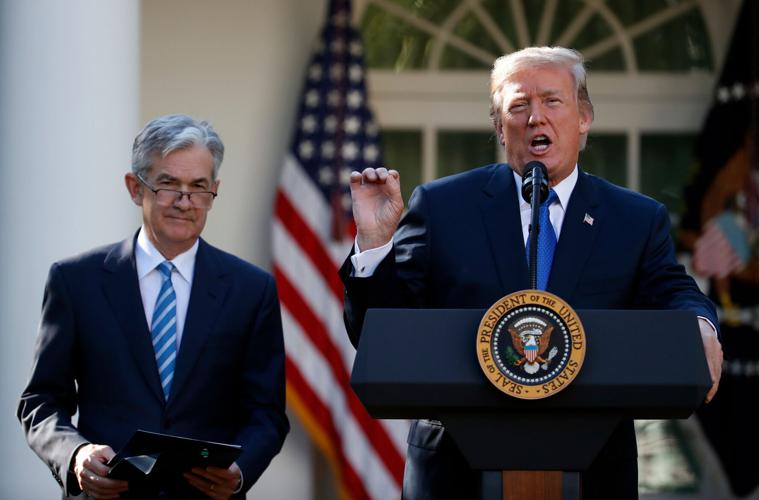
WASHINGTON — The Trump administration's criminal investigation of Federal Reserve Chair Jerome Powell appeared Monday to embolden defenders of the U.S. central bank against the efforts of President Donald Trump to control the Fed.
The backlash reflected the bigger stakes of a contest about the fate of the Fed's independence, the balance of power within the federal government, and the path of the U.S. economy.
Trump has long publicly lashed out against Powell for not reducing the Fed’s benchmark interest rates to his liking, but for some the prospect of a criminal indictment was a step too far for an institution that has an outsized influence on both inflation and the job market.
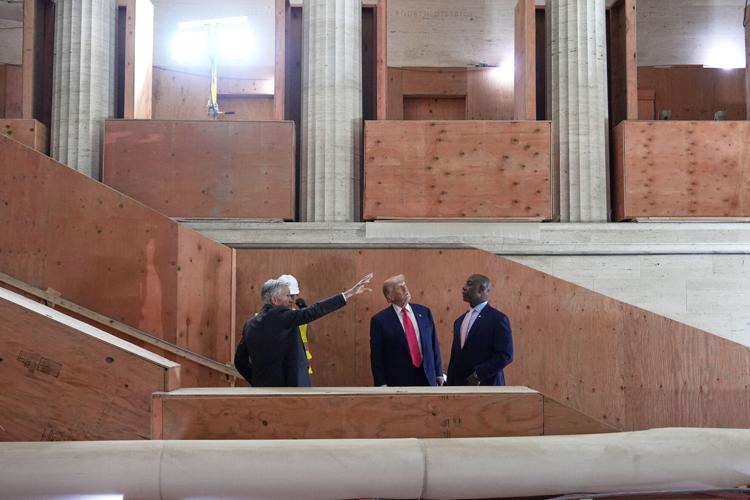
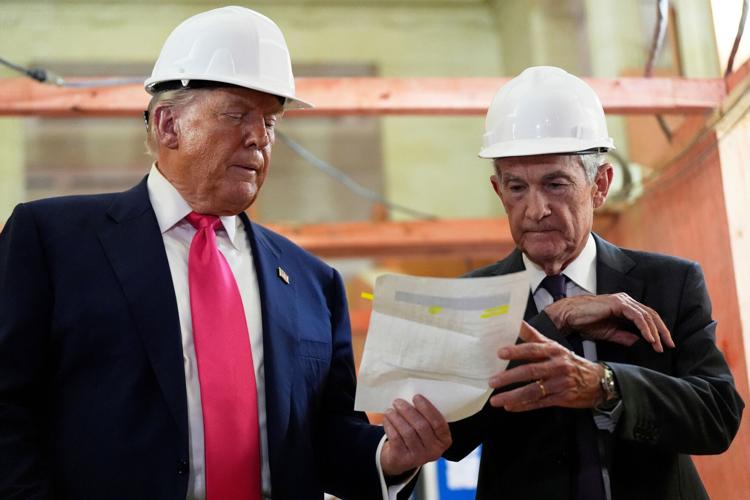
Several Republican senators condemned the Department of Justice's subpoenas of the Fed, which Powell revealed Sunday and characterized as "pretexts" to pressure him to sharply cut interest rates as Trump demands. Powell also said the Justice Department threatened criminal indictments over his June testimony to Congress about the cost and design elements of a building renovation.
Trump repeatedly uses investigations — which might or might not lead to an actual indictment — to attack his political rivals, including Fed governor Lisa Cook, New York Attorney General Letitia James and James Comey, the former FBI director.
White House press secretary Karoline Leavitt claimed Trump did not direct his Justice Department to investigate Powell.
"One thing for sure, the president's made it quite clear, is Jerome Powell is bad at his job," Leavitt said. "As for whether or not Jerome Powell is a criminal, that's an answer the Department of Justice is going to have to find out."
A bipartisan group of former Fed chairs and top economists on Monday compared the Trump administration's actions to moves made in more impoverished countries. Some analysts said the financial market's muted response reflects a widespread belief that Powell could successfully fend off the allegations that his description to lawmakers of the Fed's $2.5 billion project was criminal.
"I think this is ham-handed, counter-productive, and going to set back the president's cause," said Jason Furman, an economist at Harvard and former top adviser to President Barack Obama. It could also unify the Fed's interest-rate setting committee in support of Powell, and means "the next Fed chair will be under more pressure to prove their independence."
The subpoenas apply to the price tag of renovating Fed buildings, including its marble-clad headquarters in Washington, D.C. They come at an unusual moment when Trump teased the likelihood of announcing his nominee this month to succeed Powell as the Fed chair, after Trump played down the idea last summer that the Fed's renovation costs were a fireable offense.
While Powell's term as chair ends in May, he has a separate term as a Fed governor until January 2028. Trump's moves could make it more likely that Powell will stay on the Fed's governing board after his term as chair ends in May to defend the Fed's independence from politics in making its decisions on interest rates, Furman said.
While an interest rate cut was already considered unlikely at the Fed's next meeting in about two weeks, the news of the Justice Department investigation likely means that the Fed will avoid cuts at the next meeting to send the message that it cannot be pressured by politics, economists said.
Powell quickly found a growing number of defenders among Republicans in the Senate, who will have the choice of whether to confirm Trump's planned picks for Fed chair.
Sen. Thom Tillis, a North Carolina Republican and member of the Senate Banking panel, said late Sunday in response to the subpoenas that he would oppose any of the Trump administration's nominees for the Fed, including to replace Powell.
"If there were any remaining doubt whether advisers within the Trump Administration are actively pushing to end the independence of the Federal Reserve, there should now be none," Tillis said.
Trump for the past year sought to pressure Powell into having the Fed slash its benchmark interest rates — a move that reflects a fundamental break over whether inflation still poses any risk to the U.S. economy.
Powell maintains that inflation is still elevated in the aftermath of Trump's tariffs and has moved cautiously, whereas Trump claims that inflation is no longer a worry and rates should be dramatically slashed.
"I have carried out my duties without political fear or favor, focused solely on our mandate of price stability and maximum employment," Powell said in a Sunday night video disclosing the subpoenas. "Public service sometimes requires standing firm in the face of threats."
If Powell stays on the board after his term as chair ends in May, the Trump administration would be deprived of the chance to fill another seat on the board.
The bipartisan group of former Fed chairs and top economists said in their Monday letter that the White House's legal actions and the possible loss of Fed independence could hurt the broader economy.
"This is how monetary policy is made in emerging markets with weak institutions, with highly negative consequences for inflation and the functioning of their economies more broadly," the statement said. "It has no place in the United States whose greatest strength is the rule of law, which is at the foundation of our economic success."
The statement was signed by former Fed chairs Ben Bernanke, Janet Yellen, and Alan Greenspan, as well as former Treasury Secretaries Henry Paulson and Robert Rubin.

