


From the pulpit of the presidency, Donald Trump offered some advice to pregnant women: “Tough it out” before taking Tylenol.
Nine times in all, flanked by four other men, Trump said expectant mothers should suffer through their discomfort instead of reaching for acetaminophen — or paracetamol in countries outside the U.S. — to cure their fevers or headaches, despite the drug being one of the few painkillers that pregnant women are allowed to take.

President Donald Trump speaks in the Roosevelt Room of the White House on Monday Washington as Health and Human Services Secretary Robert F. Kennedy Jr. listens.
“Fight like hell not to take it,” Trump instructed at a Monday news conference meant to address autism. He added that if pregnant women absolutely have to take Tylenol, that’ll be something that they “work out with themselves.”
What many women and experts heard was the latest example of a man telling women how much physical pain they should endure — and an age-old effort to blame mothers for their babies’ autism.
“His use of ‘tough it out’ really was infuriating because it dismissed women’s pain and the real danger that exists with fever and miscarriage during pregnancy,” said women’s rights advocate and social media influencer Amanda Tietz, a 46-year-old mom of three in Wisconsin, in an email. “Not to mention the pain we can experience in pregnancy that can be debilitating.”

Others saw a bunch of men opining — again, without evidence that maternal use of Tylenol causes autism or ADHD in children — on mothers, children with disabilities and their health at a time when studies show pain suffered by women is frequently dismissed. Women's health and their autonomy are especially fraught issues in the wake of the Supreme Court decision in 2022 to strip away constitutional protections for abortion, a deeply personal change for Americans nearly a half century after Roe v. Wade. The debate now roils state legislatures nationwide.
“Yesterday 5 powerful men stood together in the WH and shamed: Pregnant women, told to ‘tough it out’ through pain; Moms of autistic kids, blamed for their child’s condition; Autistic people, called broken & in need of fixing,” Trump’s former surgeon general, Jerome Adams, posted on social media. “Can we all be kinder and less stigmatizing?”

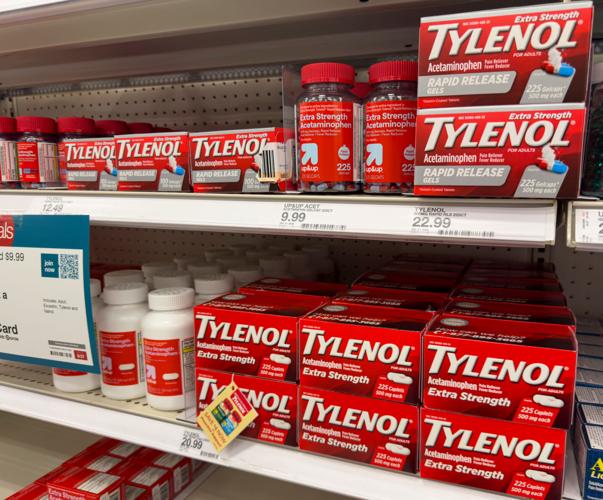
Tylenol pain relief products are shown on a store shelf on Tuesday in Carmel, Ind.
Dr. Nicole B. Saphier of Memorial Sloan Kettering Cancer Center said pregnant women generally are advised to take acetaminophen only under medical supervision, when necessary and at the lowest effective dose. But equally important — and missing from Trump's message — was that untreated fever or severe pain can also pose serious risks to mothers and babies, she said.
“For decades, women have endured a paternalistic tone in medicine. We've moved past dismissing symptoms as ‘hysteria,'” Saphier, who also is a Fox News medical contributor, wrote in an email. “The President's recent comments on Tylenol in pregnancy are a prime example. Advising moderation was sound; delivering it in a patronizing, simplistic way was not.”
Trump is not known for a delicate touch around policy where women are concerned. Ahead of the 2016 election, he erupted over tough questioning by Fox News' Megyn Kelly, later telling CNN: “You can see there was blood coming out of her eyes, blood coming out of her wherever.” He's got a special playbook for female opponents that includes put-downs about their appearance, their emotional stability and their intelligence.

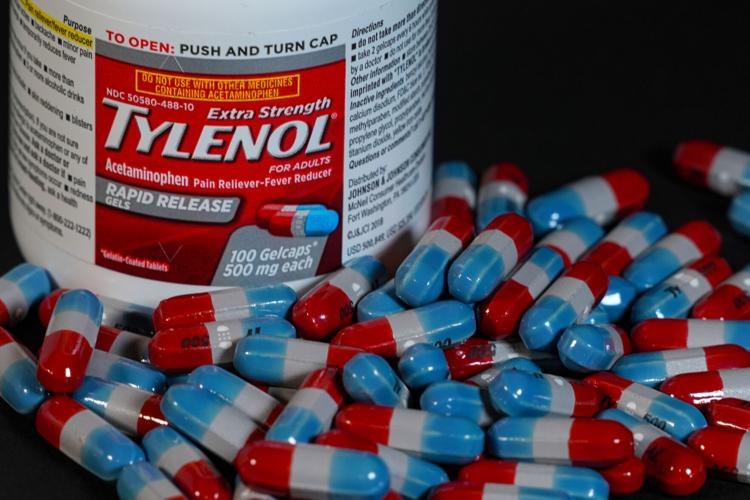
Extra Strength Tylenol is shown on Tuesday in Carmel, Ind.
There's a long history of men holding forth, sometimes incorrectly, about women's reproductive health. Former Missouri Republican Rep. Todd Akin sank his 2012 U.S. Senate campaign with remarks about what constituted “legitimate rape.” Others have erred by suggesting publicly and falsely that rape victims can't get pregnant.
History offers a long list of men making medical policy for women based on the beliefs of their time — and, some say, suspicion about the power of women to create and shape their unborn babies. A nearly half-century-old theory, long discredited, held that “refrigerator mothers” — cold or distant figures — were responsible for their children's autism.
Trump's advice “took me straight back to when moms were blamed for autism,” said Alison Singer, founder of the Autism Science Foundation. “He basically said, if you can’t take the pain, if you can't deal with the fever, then it’s your fault.”
Trump's “tough it out” advice is familiar to Mary E. Fissell, a professor of medical history with Johns Hopkins University. “It's the classic blame-the-mother ... over and over again,” she said. The “maternal imagination,” for example, was a principle once thought to influence the way a baby forms.
“It's the idea that what a pregnant woman desires or feels or imagines will shape the form of her unborn child,” said Fissell, who focuses on 17th- and 18th-century medical history.
Trump offered at least one moment of introspection during his news conference, acknowledging the awkward nature of his directive.
“You know, it’s easy for me to say tough it out,” the president allowed. “But sometimes in life or a lot of other things, you have to tough it out also.”


What's in America's medicine cabinets? A look at what families buy
What's in America's medicine cabinets? A look at what families buy
Updated
From sniffles in the winter to sunburns in the summer, every season brings its own set of minor health concerns—and with them, a steady stream of over-the-counter (OTC) medications into the family medicine cabinet. But how much is too much? What are parents really keeping on hand, and how often do they actually use it?
In this article, SaveHealth takes a peek into America's medicine cabinets to understand what families are stocking, why they're stocking it, and what this means for both household safety and seasonal health preparedness.
A Cabinet Full of Comfort: The Average Family's OTC Inventory
According to a 2023 report from the Consumer Healthcare Products Association (CHPA), the average U.S. household spends around $442 annually on OTC medications. This translates into between 15 to 30 distinct products in the home at any given time. These include:
- Pain relievers (e.g., ibuprofen, acetaminophen)
- Allergy medications (antihistamines like loratadine or diphenhydramine)
- Cough and cold treatments (decongestants, throat lozenges, cough syrups)
- Digestive aids (antacids, laxatives, anti-diarrheals)
- Topicals (antibiotic ointments, hydrocortisone, anti-itch creams)
- First aid staples (bandages, antiseptics, burn gels)
- Sleep aids and supplements
Parents often maintain different versions of the same medication for different family members—such as chewables for kids and tablets for adults. In multigenerational households, the need for varied medications can further inflate the volume of stocked items.
Why We Over-Stock: Convenience, Safety, and the Fear of "What If"
1. Parental Preparedness
The instinct to prepare for every possible scenario drives parents to keep medications on hand, even if rarely used. A survey by the American Academy of Pediatrics found that 78% of parents keep a "'just in case" stash of fever reducers and cold medicines.
2. Seasonal Buying Patterns
Pharmacies and big-box retailers align their marketing strategies with seasonal illnesses. For instance:
- Spring: allergy meds, eye drops, nasal sprays
- Summer: burn relief, insect repellents, bandages
- Winter: cold/flu medications, vapor rubs, thermometers
3. Pandemic Habits
The COVID-19 pandemic reshaped consumer behavior. A 2021 McKinsey report found that 43% of Americans began stockpiling household and medical supplies, and many of these habits persisted even after lockdowns ended. This includes medications for flu-like symptoms, vitamins, and sanitizing products.
What's Actually Being Used?
Despite the abundance of medications, studies show that most families only use a fraction of what they store. The CHPA notes that fewer than 10 OTC products are used on a monthly basis by the average household. Seasonal use spikes are short-lived, meaning that many items expire before they are fully used.
Additionally, a 2022 report from Safe Kids Worldwide revealed that 67% of parents admitted to finding expired or unidentifiable medications during an annual clean-out. This not only represents financial waste but raises safety concerns around accidental ingestion or improper dosing.
The Risks of Overstocking
- Overstocking can feel like a safeguard, but it carries significant risks:
- Expired medications may lose effectiveness or cause adverse reactions.
- Medication mix-ups can occur, especially when different brands or generics look similar.
- Child safety risks increase when medications are not stored securely. According to the CDC, more than 50,000 children under 5 are seen in emergency departments annually due to accidental ingestion of medications.
- Wasted money from buying in bulk or buying redundantly, only to throw items away months or years later.
Building a Smarter Medicine Cabinet: Tips for Families
Here are steps to help families maintain a safe and efficient medicine cabinet:
- Inventory Regularly: Conduct a quarterly check to remove expired or unneeded items.
- Organize by Category: Use bins or labels to sort by symptom (e.g., pain relief, digestion) or age group.
- Match to the Season: Keep only relevant items at the forefront based on the time of year.
- Prioritize Safety: Use child-proof containers and store medications high up or locked away.
- Dispose Responsibly: Take advantage of local medication take-back programs or follow FDA disposal guidelines.
Expert Insight: What Pediatricians and Pharmacists Recommend
Pediatricians recommend keeping only essential medications that are age-appropriate and have clear dosage instructions. Pharmacists stress the importance of not combining multiple products that contain the same active ingredient, such as acetaminophen, which could lead to accidental overdose.
Final Thoughts: Less Is More, But Smart Is Best
A well-stocked medicine cabinet should reflect your family's specific health needs and seasonal lifestyle. It's not about having everything—it's about having what works, when you need it, and ensuring it's stored safely and responsibly.
As we enter allergy season and gear up for summer adventures, consider taking stock. A little organization now can mean faster relief later—and peace of mind all year long.

This story was produced by SaveHealth and reviewed and distributed by Stacker.

