

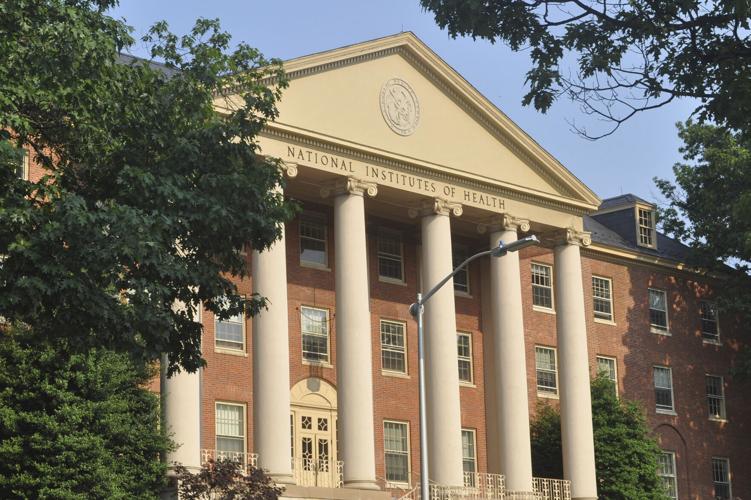
A federal judge blocked the Trump administration Wednesday from drastically cutting medical research funding that many scientists say will endanger patients and cost jobs.
The new National Institutes of Health policy would strip research groups of hundreds of millions of dollars to cover so-called indirect expenses of studying Alzheimer's, cancer, heart disease and a host of other illnesses — anything from clinical trials of new treatments to basic lab research that is the foundation for discoveries.
Separate lawsuits filed by a group of 22 states plus organizations representing universities, hospitals and research institutions nationwide sued to stop the cuts, saying they would cause "irreparable harm."
U.S. District Judge Angel Kelley in Boston temporarily blocked the cuts last month. She filed a preliminary injunction Wednesday to put the cuts on hold longer while the suits proceed.
The NIH, the main funder of biomedical research, awarded about $35 billion in grants to research groups last year. The total is divided into "direct" costs — covering researchers' salaries and laboratory supplies — and "indirect" costs, the administrative and facility costs needed to support that work.
The Trump administration dismissed those expenses as "overhead," but universities and hospitals argue they're far more critical. They can include such things as electricity to operate sophisticated machinery, hazardous waste disposal, staff who ensure researchers follow safety rules and janitorial workers.
Under prior policy, the government negotiated those rates with institutions. As an example, an institution with a 50% indirect cost rate would get another $50,000 to cover indirect expenses for a $100,000 project. The NIH's new policy would cap indirect costs at a flat rate of 15% instead, calculated to cut about $4 billion a year.
Nominee questioned on funding, vaccines
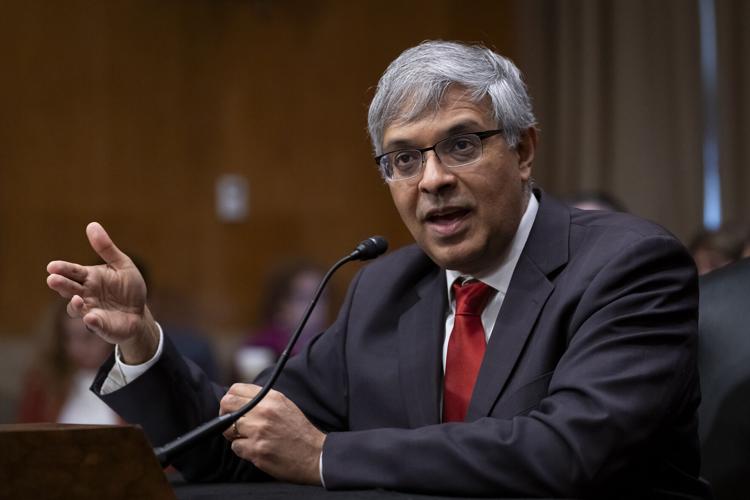
Meanwhile, a health economist who once famously clashed with officials at the NIH and now is the nominee to lead the agency faced questions from senators from both parties Wednesday about drastic funding cuts and research priorities.
Dr. Jay Bhattacharya, a Stanford University professor, was an outspoken critic of the government's COVID-19 shutdowns and vaccine policies. Now he's poised to become director of the NIH, long called the government's crown jewel, as it faces mass firings and drastic funding cutbacks.
"I love the NIH but post-pandemic, America's biomedical sciences are at a crossroads," Bhattacharya told senators.
He laid out priorities including a bigger focus on chronic diseases such as diabetes and obesity. But he also said the agency needs to be more open to scientific dissent, saying influential NIH leaders early in the pandemic shut down his own criticisms about responses to COVID-19.
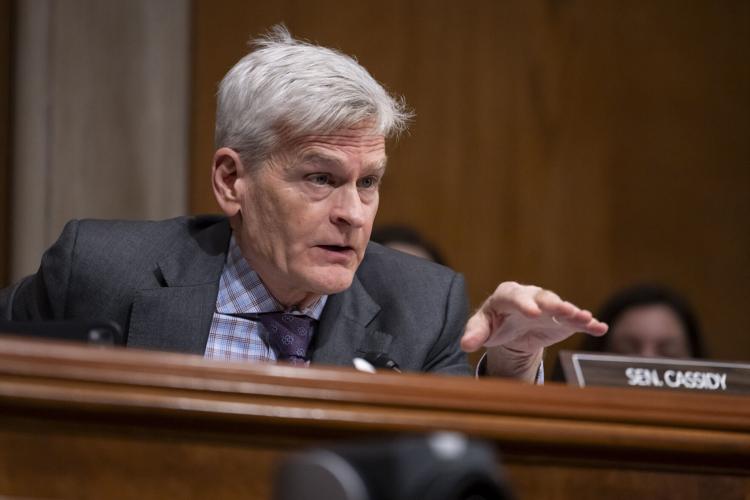
While Republicans warmly welcomed Bhattacharya, Sen. Bill Cassidy, R-La., who chairs the Senate health committee, pressed him about vaccine skepticism that is fueling a large measles outbreak that already killed a child in Texas.
Cassidy strenuously urged Bhattacharya not to waste NIH dollars reexamining whether there's a link between standard childhood vaccines and autism. There's no link — something that's already been proven in studies involving thousands of children, the senator stressed.
Bhattacharya called the measles death a tragedy and said he "fully supported" children being vaccinated but added that additional research might convince skeptical parents.
"People still think Elvis is alive," a frustrated Cassidy responded. He told Bhattacharya any attempt to revisit the debunked issue would deprive funds to study autism's real cause.
Some Senators, including Sen. Susan Collins, R.-Maine, and Tammy Baldwin, D-Wis., expressed deep frustration that turmoil at the nation's largest funder of medical research — mass firings and funding cuts and freezes — threatens the development of cures and new treatments for cancer, Alzheimer's disease and host of other disorders.
They pushed Bhattacharya about how he'd reverse those losses, including one set of funding cuts — paused Wednesday by Kelley — that they said is forbidden by a congressional spending law.
Bhattacharya said he had no part in those cuts and if confirmed as NIH's director, he'd look carefully at the concerns to make sure researchers "have the resources they need." He also said some of the Trump administration's cuts are a signal of distrust of science.
Until recently, the $48 billion NIH had strong bipartisan support. NIH scientists conduct cutting-edge research at its 27 institutes specializing in diseases including cancer, chronic illnesses such as heart, lung and kidney disease, aging and Alzheimer's.
Most of the agency's budget is dispersed to universities, hospitals and other research groups through highly competitive grants to conduct everything from basic research to clinical trials.
NIH-funded research played a part in the development of most treatments approved in the U.S. in recent years.

