


PORTLAND, Ore. — President Donald Trump said Saturday that he will send troops to Portland, "authorizing Full Force, if necessary" to handle "domestic terrorists" as he expands his deployments to more American cities.
Oregon Democratic Gov. Tina Kotek responded by saying Trump is abusing his authority by ordering troops to the city, which she said is doing "just fine" on its own.
Trump made his announcement on social media, writing that he would direct the Department of Defense to "provide all necessary Troops to protect War ravaged Portland." He said the decision was necessary to protect U.S. Immigration and Customs Enforcement facilities, which he alleged is "under siege from attack by Antifa, and other domestic terrorists."
The White House did not immediately respond to a request for details.
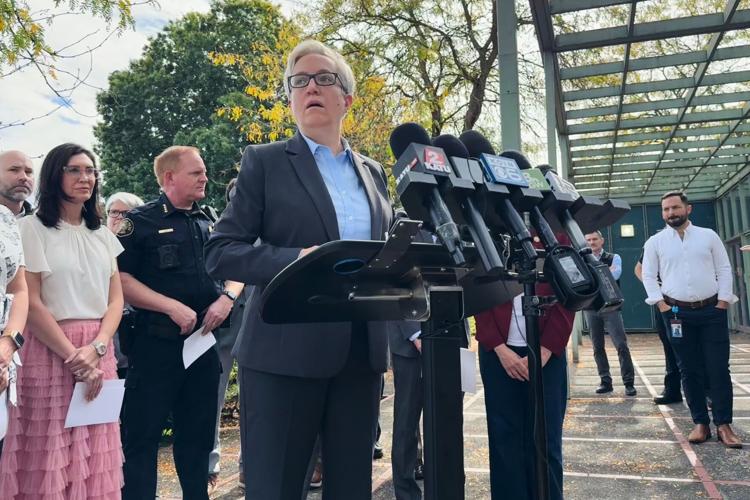
In an afternoon news conference, Kotek said she directly told Trump and Homeland Security Secretary Kristi Noem earlier in the day that troops are not needed and she believes he does not have the authority to deploy the military there.
“We can manage our own local public safety needs. There is no insurrection. There is no threat to national security,” Kotek told reporters.
“This is an American city. We do not need any intervention,” Mayor Keith Wilson said at the news conference. “This is not a military target.”
Kotek said the president did not give a timetable for troops arriving. She said she told him the Oregon National Guard is not needed and she does not plan to call it up.
Trump, however, deployed the guard in Los Angeles even though California Gov. Gavin Newsom opposed it. The federal government appealed a judge's ruling that Trump's use of the National Guard was illegal.
Kotek urged the public to stay calm, saying any kind of property damage or violence will not be tolerated. “Let’s not take the bait,” she said. “Let’s not respond to what the president is trying to do.”
Early Saturday, there was no sign of any federal presence in the city's downtown, where people jogged along the Willamette River, relaxed by a fountain or rode bikes.
"Where's the emergency?" asked resident Allen Schmertzler, 72, who said he was "disgusted" by the president's decision.
Trump previously threatened to send the National Guard into Chicago but has yet to follow through. A deployment in Memphis, Tennessee, is expected soon and will include only about 150 troops — far less than were sent to the District of Columbia for Trump's crackdown on crime or in Los Angeles in response to immigration protests that turned violent with the troops' arrival. Trump also sent Marines to Los Angeles.
In Memphis, about 80 to 100 people marched to a plaza in front of City Hall to protest the expected arrival of the National Guard and members from more than a dozen federal law enforcement agencies, ranging from immigration to drug enforcement.
Protesters held signs with messages such as "Resources Not Task Forces" and "Memphis don't need no occupation, Memphis don't need no government control" — a play on the Pink Floyd song "Another Brick in the Wall."
Speakers at a news conference beforehand said instead of federal troops and law enforcement agents, the city needs more funding for education, crime prevention, youth services and hospitals.
Pentagon spokesman Sean Parnell said the Department of Defense would provide information and updates when available. "We stand ready to mobilize U.S. military personnel in support of DHS operations in Portland at the President's direction," he said.
A spokesperson for the Oregon National Guard, Lt. Col. Stephen Bomar, said in an email that "no official requests have been received at this time" for Guard support. "Any requests would need to be coordinated through the Governor's office," he added.
Oregon's congressional delegation, with the exception of Republican Rep. Cliff Bentz, demanded that the Trump administration keep federal agents and troops out of Portland.
"This unilateral action represents an abuse of executive authority, seeks to incite violence, and undermines the constitutional balance of power between the federal government and states," the Democratic lawmakers wrote in a letter to Trump, Noem and Defense Secretary Pete Hegseth.
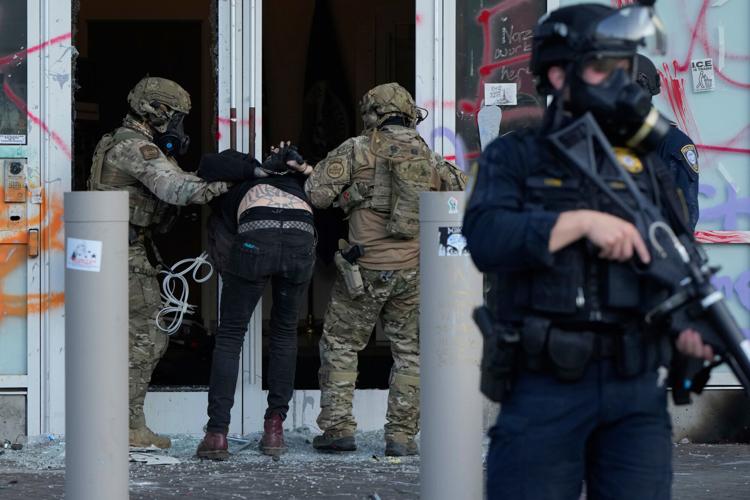
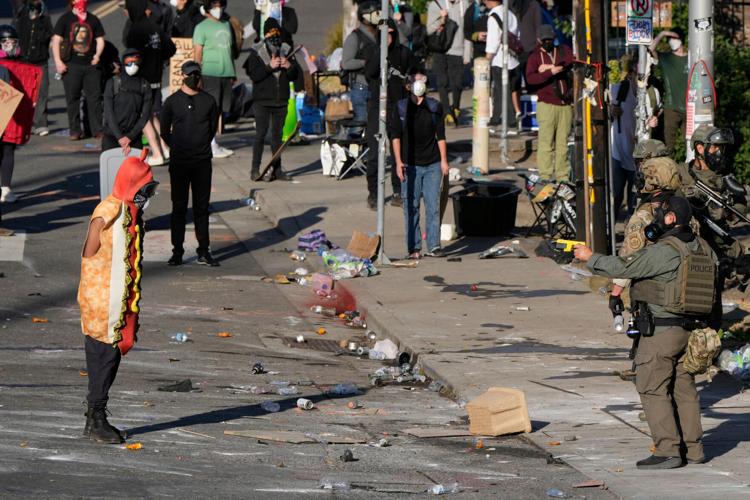
Portland, population 636,000, was the site of long-running and sometimes violent racial justice protests after George Floyd's murder by Minneapolis police in 2020. The Trump administration sent hundreds of agents, including from the U.S. Border Patrol, for the stated purpose of protecting the federal courthouse and other federal property from vandalism.
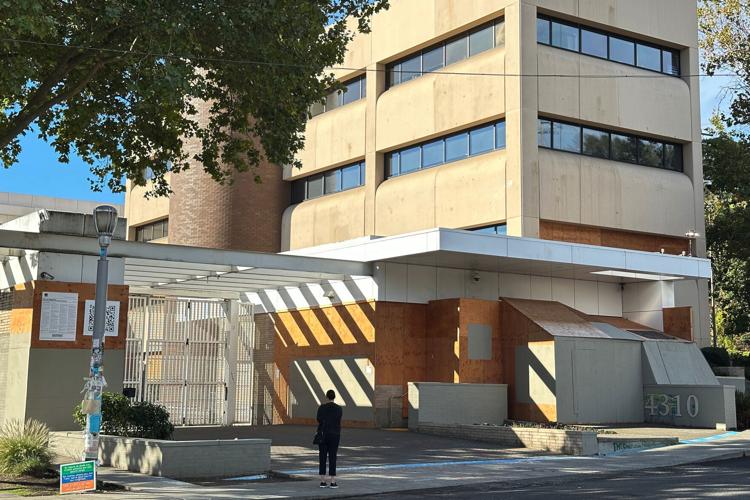
Recent protests were far more muted and focused on the area around the ICE building, located outside the city's downtown that was the heart of the 2020 protests. The building's main entrance and ground-floor windows were boarded up and tagged with graffiti.
Some federal agents were injured and several protesters were charged with assault. Some demonstrators also say they've been injured. When protesters erected a prop guillotine this month, the Department of Homeland Security called it "unhinged behavior."
Early Saturday, all was quiet outside that building, with no signs of protesters or law enforcement.
Portland is among a number of so-called sanctuary cities, places that generally limit cooperation with ICE. This month, the city said it would issue a land use violation notice to the ICE building because it was used to detain people overnight or for more than 12 hours — violations of its conditional land use approval.
City groups and officials sought to highlight the recovery of the downtown area since 2020.
This summer was reportedly the busiest for pedestrian traffic since before the COVID-19 pandemic, and overall violent crime in Portland from January through June decreased by 17% compared to the same period in 2024, a recent report from the Major Cities Chiefs Association found.

