

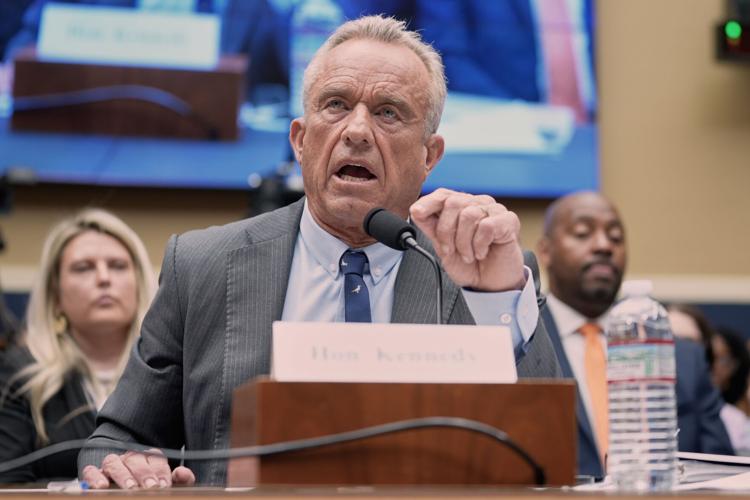
During his Senate confirmation hearings, Health Secretary Robert F. Kennedy Jr. suggested he wouldn’t undermine vaccines.
He also said he wouldn’t halt congressionally mandated funding for vaccination programs, nor impose conditions that would force local, state or global entities to limit access to vaccines or vaccine promotion.
“I’m not going to substitute my judgment for science,” he said.
Yet the Department of Health and Human Services under Kennedy took unprecedented steps to change how vaccines are evaluated, approved and recommended — sometimes in ways that run counter to established scientific consensus.
Childhood vaccine schedule
Sen. Bill Cassidy, a physician who was unsettled about Kennedy’s antivaccine work, said Kennedy pledged to him that he wouldn’t change existing vaccine recommendations.
"I recommend that children follow the (Centers for Disease Control and Prevention) schedule. And I will support the CDC schedule when I get in there,” Kennedy said at his Senate confirmation hearing.
Kennedy also said he thought the polio vaccine was safe and effective and that he wouldn’t seek to reduce its availability.
However, Kennedy vowed Feb. 18 to investigate the childhood vaccine schedule that prevents measles, polio and other dangerous diseases. And the National Institutes of Health in early March canceled studies about ways to improve vaccine trust and access.
He told CBS News April 9 that “people should get the measles vaccine, but the government should not be mandating those,” then continued to raise safety concerns about vaccines.
On May 22, Kennedy issued a report that, among other things, questioned the necessity of mandates that require children to get vaccinated for school admission and suggested that vaccines should undergo more clinical trials, including with placebos. The report has to be reissued later because the initial version cited studies that don’t exist.
CDC vaccine recommendations
At the confirmation hearing, Cassidy asked Kennedy: "Do you commit that you will revise any CDC recommendations only based on peer review, consensus based, widely accepted science?"
Kennedy replied, “Absolutely,” adding he would rely on evidence-based science.
Yet on Feb. 20, HHS postponed a meeting of outside vaccine advisers.
The CDC’s vaccine advisory panel met April 16 and recommended that people 50 to 59 with certain risk factors should be able to get vaccinated against respiratory syncytial virus, and endorses a new shot that protects against meningococcal bacteria. As of late June, the CDC and HHS haven’t acted on the recommendations.
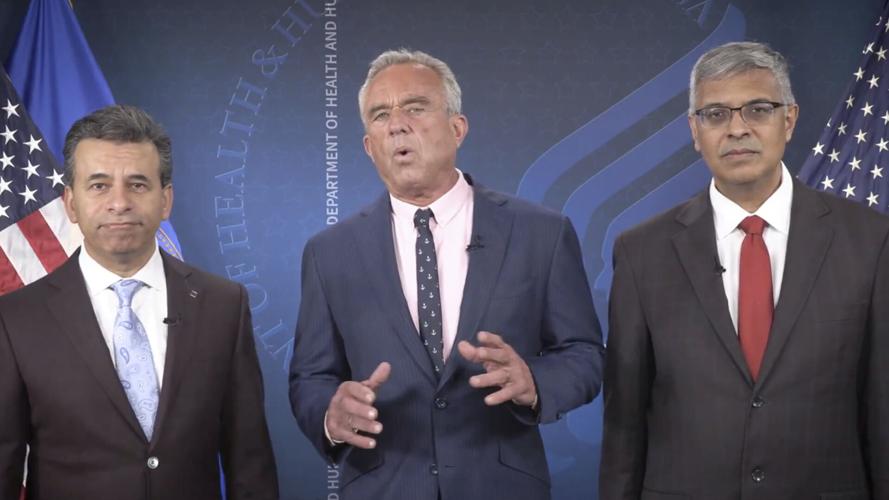
Kennedy announced May 27 that COVID-19 vaccines are no longer recommended for healthy children and pregnant women — a move immediately questioned by several public health experts. No one from the CDC, the agency that makes such recommendations, was present in the video announcing the changes.
On June 9, Kennedy ousted all 17 members of the science panel that advises the CDC on how vaccines should be used. Two days later, Kennedy named new vaccine policy advisers to replace the panel he dismissed. They include a scientist who rose to prominence by relaying conspiracy theories around the COVID-19 pandemic and the vaccines that followed, a leading critic of pandemic-era lockdowns, a business school professor and a nurse affiliated with a group that is widely considered to be a leading source of vaccine misinformation.
The panel announced Wednesday that it will establish a work group to evaluate the “cumulative effect” of the children’s vaccine schedule. The same day, Kennedy announced the U.S. will stop supporting the vaccines alliance Gavi. He accused the group, along with the World Health Organization, of silencing “dissenting views” and “legitimate questions” about vaccine safety.
Kennedy's vaccine advisers recommended Thursday that people receive flu shots free of an ingredient that antivaccine groups have falsely tied to autism. The vote came after a presentation from an anti-vaccine group’s former leader. A CDC staff analysis of past research on the topic is removed from the agency's website because, according to a committee member, the report wasn't authorized by Kennedy’s office.
Vaccine approvals and review standards
At the Senate hearing, Cassidy asked Kennedy if he would keep FDA's historically rigorous vaccine review standards.
“Yes,” Kennedy replied.
Kennedy forced the FDA’s top vaccine official to resign March 29. The official, Peter Marks, said he feared Kennedy’s team might manipulate or delete data from a vaccine safety database.
On May 6, Kennedy named Dr. Vinay Prasad, an outspoken critic of the FDA’s handling of COVID-19 boosters, as the FDA’s vaccine chief.
After a delay, the FDA granted Novavax full approval for its COVID-19 vaccine May 16 but with unusual restrictions: The agency says it’s for use only in adults 65 and older or those 12 to 64 who have at least one health problem that puts them at increased risk from COVID-19.
Top officials limited the approval for seasonal COVID-19 shots to seniors and others at high risk May 20, pending more data on everyone else. The FDA urged companies to conduct large, lengthy studies before tweaked vaccines can be approved for healthier people, a stark break from the previous federal policy recommending an annual COVID-19 shot for all Americans 6 months and older.
FDA on May 30 approved a new COVID-19 vaccine made by Moderna but with the same limits on who can get it as Novavax's shot.
Bird flu vaccine
At his confirmation hearing, Kennedy said he would support the development of a vaccine for H5N1 bird flu.
The Biomedical Advanced Research and Development Authority, an HHS agency, on May 28 canceled $766 million in awards to Moderna to develop a vaccine against potential pandemic influenza viruses, including the H5N1 bird flu.

