


The new year will see dozens of states, cities and counties raising the minimum wage locally, helping millions of Americans offset an increasingly urgent affordability crisis.
On Jan. 1, 2026, the minimum wage will increase in 19 states and 49 cities and counties, with an additional four states and 22 localities lifting their minimums later in 2026, according to an annual report from the National Employment Law Project, an employee advocacy group. In 2026, 79 jurisdictions will have a minimum wage of $15 or more.
“Policies increasing the minimum wage have been a lifeline for underpaid workers who have been the most impacted by a growing affordability crisis − defined here as the growing gap between household incomes and the cost of housing, groceries and other basics,” wrote Yannet Lathrop, the organization’s senior researcher and author of the report.
State and local government measures on the minimum wage are crucial because the federal wage floor hasn’t been raised since 2009, Kathryn Anne Edwards, an economist and policy consultant, said in an interview with USA TODAY. Nearly two decades later, 1 million Americans still make that amount, which is $7.25 an hour.
But sometimes ballot initiatives – policy led by ordinary voters, not state legislatures or city councils – are necessary to get those changes made, Edwards added.
“The minimum wage is one of the most popular ballot issues this century,” she said. “If you put the minimum wage on a ballot, it will pass because nobody in their right mind would say $7 an hour is a reasonable wage in 2025.”
Which states will have minimum wage increases in 2026?
Arizona, California, Colorado, Connecticut, Hawaii, Maine, Michigan, Minnesota, Missouri, Montana, Nebraska, New Jersey, New York, Ohio, Rhode Island, South Dakota, Vermont, Virginia and Washington will lift the minimum wage on Jan. 1, according to the report.
Later in the year, Alaska, Florida and Oregon will act. California will enact a separate new minimum wage for health care workers.
Which cities and towns will see a minimum wage increase in 2026?
Localities from Washington to Maine and points in between will raise the minimum wage in 2026. Among the more notable changes is one in Santa Fe, New Mexico, where future wage increases will be tied to a combination of the consumer price index and the cost of housing. That policy is believed to be a first in the United States.
Also of note, the Los Angeles City Council voted in May to gradually raise the wage floor for certain tourism industry employees to $30 by 2028, which will make it the highest minimum wage in the country in 2028 that has been decided so far.
What effect do minimum wage increases have on the economy?
Because minimum wage increases by definition will go to people making less money, “we’re not expecting that big of an effect” on the economy nor on inflation from the bumps that take effect next year, said Matthew Nestler, a senior economist with KPMG.
But even an additional dollar an hour could be “life-changing” for many Americans at the lower end of the income spectrum, Nestler said. Minimum wage workers tend to be employed in the “care economy” as home health aides, day care providers and so on – or in retail, entertainment or hospitality. And many are immigrants who may have less bargaining power than native-born workers.
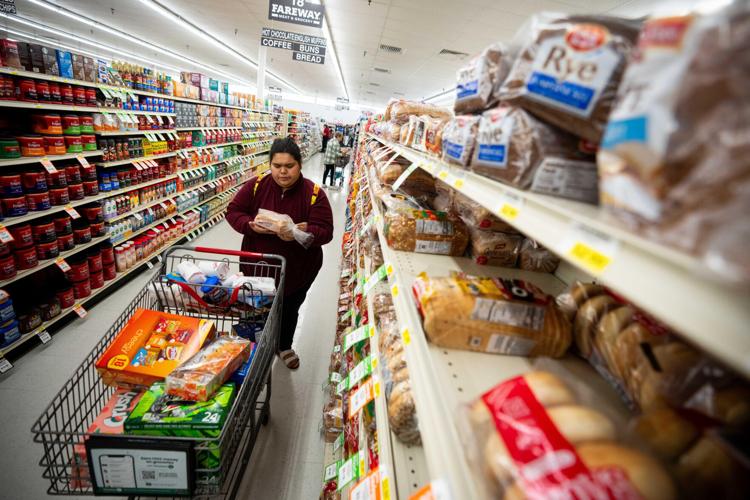
Many such workers have been especially hard-hit by the inflation of the past few years, which has raised the cost of necessities like housing, day care and food much more than other goods and services. “Since 2020, overall inflation has grown by 23.6%, and the price of groceries has risen by 26.4%,” the NELP report notes.
As Nestler puts it, day care and preschool prices account for just 0.7% of the consumer price index (CPI), the broad measure of inflation calculated by the Labor Department and used as a proxy for inflation throughout the economy. But for some households, those costs could account for more like one-quarter of the monthly budget.
That's part of the reason the official government metrics of inflation − the CPI showed prices were up just 3% compared with a year ago in September − don't square with many Americans' lived experiences of the economy. And it's why pushing to raise the minimum wage is one small way to "get the government working on ways to help everyday people afford to live in this economy," Edwards said.
This article originally appeared on USA TODAY: Many workers will get a minimum wage bump in 2026. Here's where.
Reporting by Andrea Riquier, USA TODAY / USA TODAY
USA TODAY Network via Reuters Connect

