

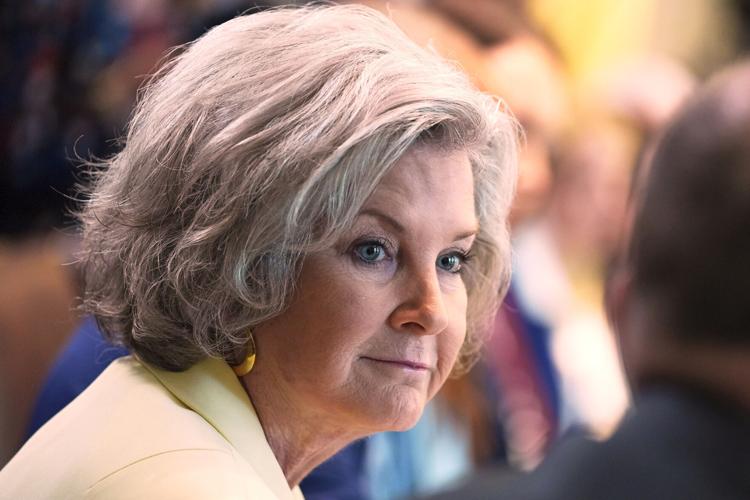
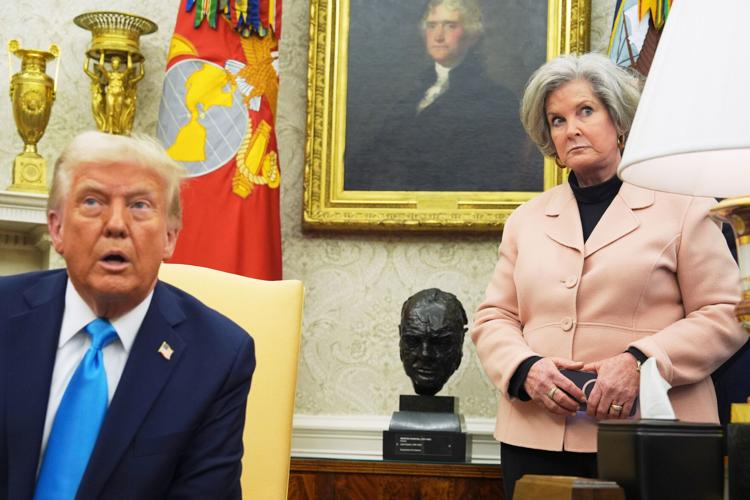
WASHINGTON — Susie Wiles, President Donald Trump's chief of staff, criticized Attorney General Pam Bondi's handling of the Jeffrey Epstein case and offered an unvarnished take on her boss and those in his orbit in interviews published Tuesday in Vanity Fair that sent the West Wing into damage control.
The candid remarks from Wiles, the first woman to ever hold her current post, included describing the president as someone with "an alcoholic's personality," and Vice President JD Vance as a calculating "conspiracy theorist."
The observations from Wiles, who rarely speaks publicly given the behind-the-scenes nature of her job running the White House, prompted questions about whether the chief of staff might be on her way out.
Wiles pushed back after the piece's publication, describing it as a "hit piece" that lacked context, and White House press secretary Karoline Leavitt said the "entire Administration is grateful for her steady leadership and united fully behind her."
As for Trump, he told the New York Post that he hadn't read the piece. When asked if he retained confidence in Wiles, he said, "Oh, she's fantastic."
Trump also agreed that he does have the personality of an alcoholic, describing himself as having "a very possessive personality."
A senior White House official who spoke on condition of anonymity dismissed the notion that Wiles might leave because of the profile, saying if they were rattled by negative news coverage "none of us would work here."
Wiles' candor was so unusual that Rahm Emanuel, who served as chief of staff to former President Barack Obama, said that when he first read her comments, he thought it was a spoof. He said he could not recall a chief of staff giving such a candid interview, at least "not while you hold the title."
Emanuel said the role often involves public remarks that promote the president's agenda, but not sharing personal views about "everything, everybody" in the White House.
His advice to Wiles: "Next time there's a meal, bring a food taster."
Behind the scenes
The interviews with Vanity Fair were themselves uncharacteristic for Wiles, who cut her reputation as someone who brought order to the president's chaotic style and shunned the spotlight so much that at Trump's 2024 election night victory party, she repeatedly shook her head and avoided the microphone as Trump tried to coax her to speak to the crowd.
"Susie likes to stay sort of in the back," said Trump.
Most members of his Cabinet, along with former and current White House officials, posted statements praising Wiles and criticizing the media as dishonest.
But neither Wiles nor the members of the administration who came to her defense Tuesday disputed any details in the two-part profile, including areas where she conceded mistakes and seemed to contradict the administration's official reasoning for its bombing of alleged drug boats in the waters off the coast of Venezuela.
Though the Trump administration said the campaign is about stopping drugs headed to the U.S., Wiles appeared to confirm that the campaign is part of a push to oust Venezuela's authoritarian leader, Nicolás Maduro, saying Trump "wants to keep on blowing boats up until Maduro cries uncle."
No denials
After the comments were published, Wiles disparaged it as a "disingenuously framed hit piece on me and the finest President, White House staff, and Cabinet in history."
"Significant context was disregarded and much of what I, and others, said about the team and the President was left out of the story," she wrote in a social media post.
Trump, in an interview with the New York Post, said he was not offended by Wiles' remarks, including her description of him as someone with "an alcoholic's personality" that she recognizes from her father, the famous sports broadcaster Pat Summerall.
The president, who is a teetotaler and had a brother who struggled with alcohol, said: "I've said that many times about myself. I'm fortunate I'm not a drinker. If I did, I could very well, because I've said that — what's the word? Not possessive — possessive and addictive type personality. Oh, I've said it many times, many times before."
Attorney general
Wiles, over the series of interviews, described the president behind the scenes very much as he presents himself in public: an intense figure who thinks in broad strokes yet is often not concerned with the details of process and policy.
Wiles described much of her job as channeling Trump's energy, whims and desired policy outcomes — including managing his desire for vengeance against his political opponents, anyone he blames for his 2020 electoral defeat and those who pursued criminal cases against him after his first term.
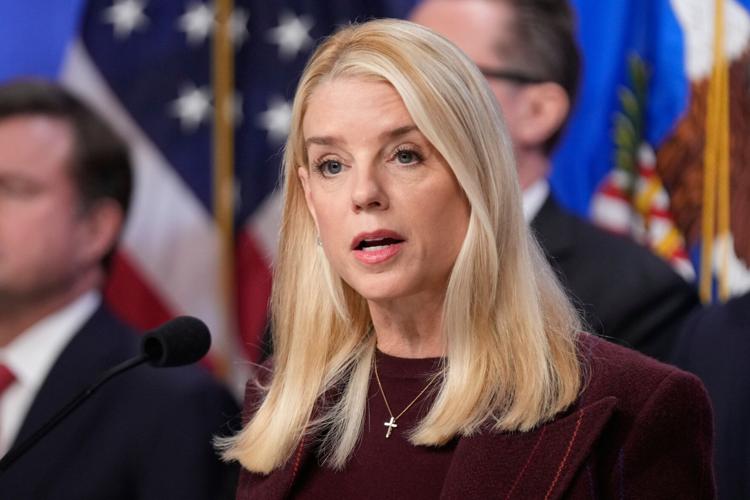
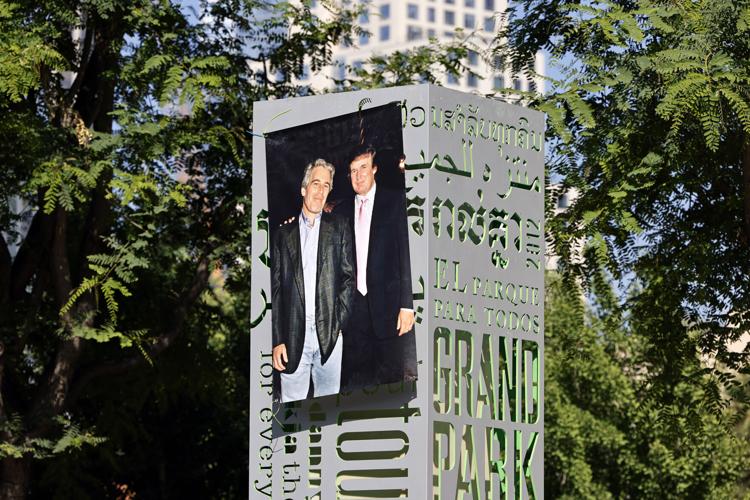
On Epstein, Wiles told the magazine she underestimated the scandal involving the disgraced financier, but she sharply criticized how Bondi managed the case and the public's expectations.
Wiles criticized Bondi's handling of the matter, going back to earlier in the year when she distributed binders to a group of social media influencers that included no new information about Epstein. That led to even more calls from Trump's base for the files to be released.
"I think she completely whiffed on appreciating that that was the very targeted group that cared about this," Wiles said of Bondi. "First she gave them binders full of nothingness. And then she said that the witness list, or the client list, was on her desk. There is no client list, and it sure as hell wasn't on her desk."

