

WASHINGTON — A federal judge on Thursday ordered the Trump administration to preserve records of a text message chat in which senior national security officials discussed sensitive details of plans for a U.S. military strike against Yemen's Houthis.
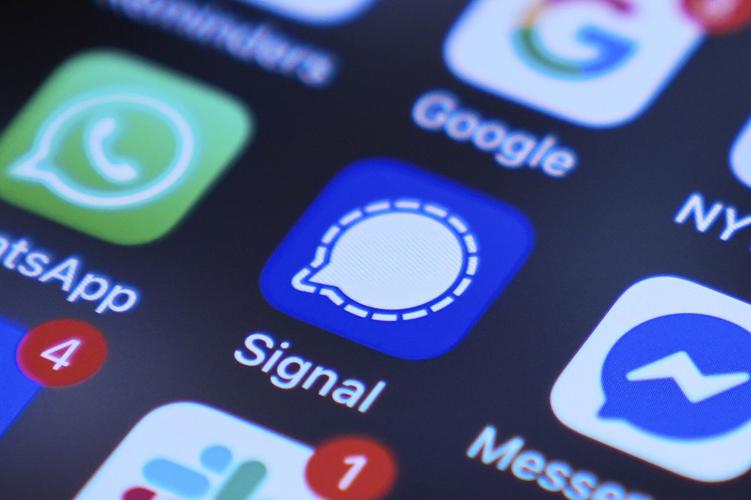
U.S. District Judge James Boasberg barred administration officials from destroying messages that were sent over the encrypted messaging app Signal this month.
A nonprofit watchdog, American Oversight, requested the order. A government attorney said the administration already took steps to collect and save the messages.
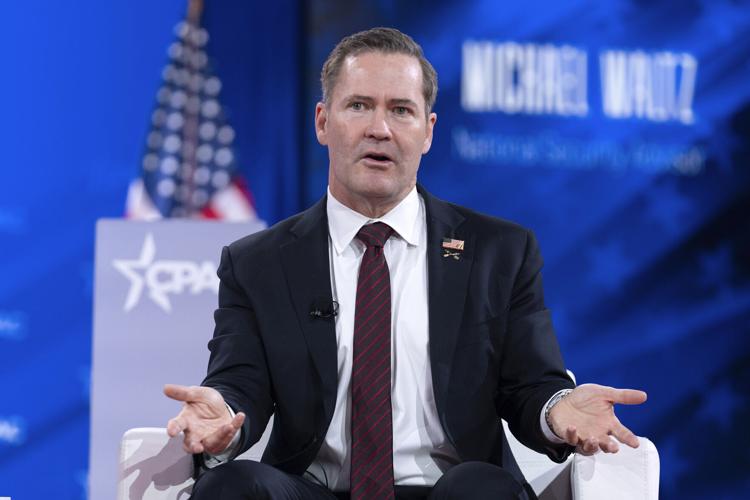
The Atlantic published the entire Signal chat Wednesday. Its editor-in-chief, Jeffrey Goldberg, was added to a discussion that included Defense Secretary Pete Hegseth, national security adviser Michael Waltz, Secretary of State Marco Rubio, Vice President JD Vance and Director of National Intelligence Tulsi Gabbard.
On the chat, Hegseth provided the exact timings of warplane launches and when bombs would drop before the attacks against Yemen's Houthis began earlier this month. Hegseth laid out when a "strike window" would open, where a "target terrorist" was located and when weapons and aircraft would be used.
The images of the text chain posted by The Atlantic show that the messages were set to disappear in one week.
American Oversight sued this week to ensure that the records are kept in accordance with the Federal Records Act. The group suspects that administration officials routinely use Signal to communicate.
"Defendants' use of a non-classified commercial application even for such life-and-death matters as planning a military operation leads to the inevitable inference that Defendants must have used Signal to conduct other official government business," American Oversight's attorneys wrote in a court filing.
Boasberg limited his order to messages sent between March 11 and March 15.
"We are still ascertaining what records the agencies have," Justice Department attorney Amber Richer said.
"I'm glad we could figure out a solution," the judge later said. He instructed the government to provide him with an update Monday.
Meanwhile, the top Republican and Democrat on the Senate Armed Services Committee requested an investigation Thursday into how Trump national security officials used the Signal app.
Sen. Roger Wicker, the Republican chair of the committee, and Sen. Jack Reed, the top Democrat, signed a letter to the acting inspector general at the Department of Defense for an inquiry into the potential “use of unclassified networks to discuss sensitive and classified information, as well as the sharing of such information with those who do not have proper clearance and need to know.”
The senators’ assertion that classified information was potentially shared was notable, especially as Trump’s Republican administration contends there was no classified information on the Signal chain.
Most Republicans seemed content to allow the controversy to blow over. Meanwhile, Democrats slammed the Signal chat as a reckless violation of secrecy that could have put service members in harm’s way.
“This put pilots at risk because of sloppiness and carelessness,” said Sen. Mark Kelly, an Arizona Democrat and former fighter pilot.
Kelly and other Democrats called for Hegseth to resign or be fired.
“If this was an officer in the military — at any level — or enlisted person, they would have been fired already,” Kelly said.
Sen. Mark Warner, the top Democrat on the Senate Intelligence Committee, said he wants to check the phones of those involved in the Signal chat for malware as well as whether Hegseth shared military plans on other Signal chats.
Wicker, whose support was crucial to Hegseth’s Senate confirmation, said the committee will request a classified hearing with a top administration official as well as for the administration to verify the contents of the Signal chat.
The White House National Security Council also says it will investigate the Signal chat.
The Justice Department, which traditionally handles investigations into the mishandling of classified or sensitive information by both Republican and Democratic administrations, showed that under Trump it will likely stay on the sidelines.
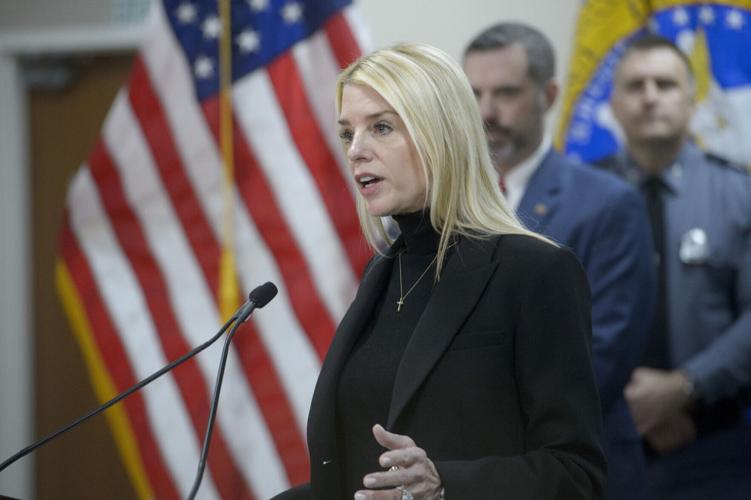
When asked at an unrelated news conference what the Justice Department plans to do, Attorney General Pam Bondi deflected, saying the mission was a success.
Echoing the White House, Bondi also insisted that none of the information shared on Signal was classified, even though officials provided no evidence to support that claim. Espionage Act statutes require the safe handling of closely held national defense information even if it’s not marked classified.

