

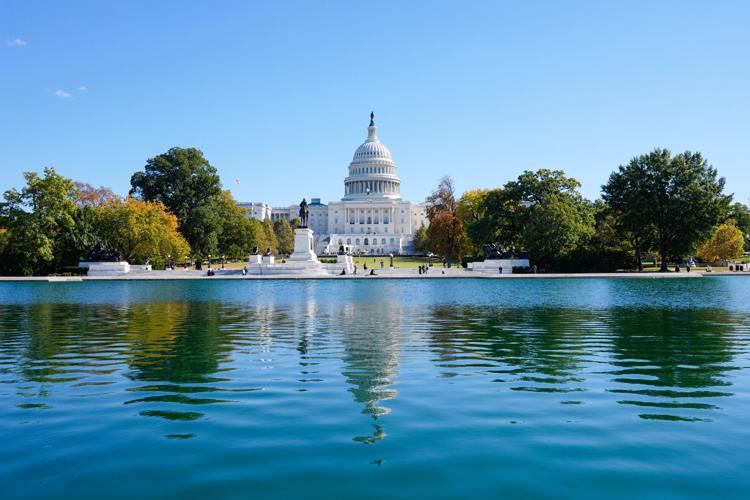

The U.S. Capitol is seen Thursday, day 23 of the government shutdown, in Washington.
WASHINGTON — The Senate rejected dueling partisan bills Thursday to pay federal workers during the government shutdown, with both Republicans and Democrats deflecting blame as many employees are set to miss their first full paycheck at the end of this week.
With unpaid staff and law enforcement standing nearby, Republicans objected as Democrats proposed a voice vote on their legislation to pay all federal workers and prevent President Donald Trump's administration from mass firings. Democrats then blocked a Republican bill to pay employees who are working and not furloughed, 54-45.
The back and forth on day 23 of the government shutdown comes as the two parties are at a protracted impasse with no signs of either side giving in.
Democrats say they won't vote to reopen the government until Republicans negotiate with them on extending expiring subsidies under the Affordable Care Act. Republicans say they won't negotiate on the subsidies until Democrats vote to reopen the government. Trump is mostly disengaged and headed to Asia in the coming days.
Meanwhile, an agency spokesperson said Thursday the Center for Medicare and Medicaid Services will temporarily bring all its furloughed employees back to work Monday to manage health insurance open enrollment, according to an agency spokesperson.

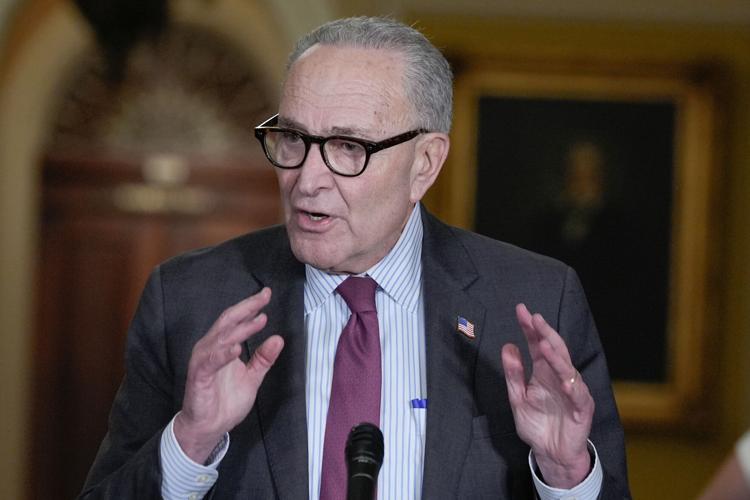
Sen. Minority Leader Chuck Schumer, D-N.Y., speaks Tuesday during a news conference on the government shutdown on Capitol Hill in Washington.
Dueling bills
The Republican bill by Sen. Ron Johnson of Wisconsin would pay "excepted" workers who still have to come to work during the current government shutdown and any future shutdowns.
Democrats said the legislation is unfair to the workers who are involuntarily furloughed and could give Cabinet secretaries too much discretion as to who gets paid.
Johnson's bill is "nothing more than another tool for Trump to hurt federal workers and American families and to keep this shutdown going for as long as he wants," Senate Democratic Leader Chuck Schumer said ahead of the votes.
The Democratic bills would have paid a much larger swath of workers as most federal workers are set to miss paychecks over the next week.
"It seems like everyone in this chamber agrees we should pay federal workers," Sen. Gary Peters, D-Mich., said ahead of the vote. But because of the shutdown, "they are paying a price."

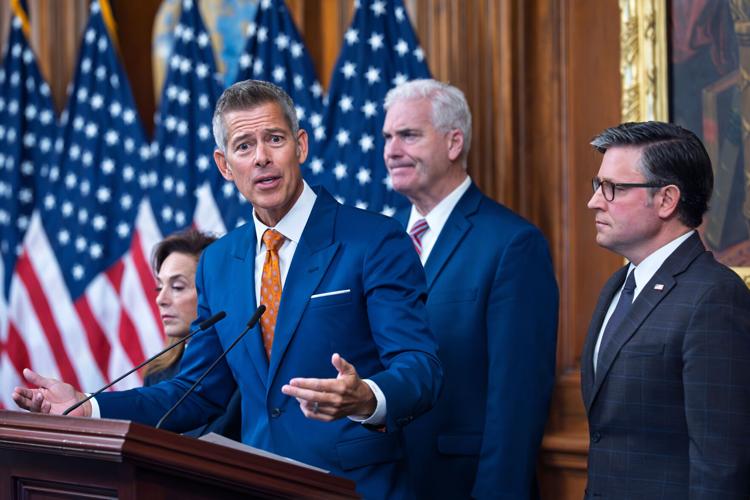
Transportation Secretary Sean Duffy speaks to reporters Thursday joined by, from left, Rep. Lisa McClain, R-Mich., House Majority Whip Tom Emmer, R-Minn., and Speaker of the House Mike Johnson, R-La., at a news conference at the Capitol in Washington.
Services dwindle
As Congress is unable to agree on a way forward, money for essential services could soon reach a crisis point.
Transportation Secretary Sean Duffy said Thursday that his message to air traffic controllers during the government shutdown is "come to work, even if you do not get a paycheck."
Duffy said that air traffic controllers will miss their first full paycheck on Tuesday and that some are having to make choices to pay the mortgage and other bills, at times by taking a second job.
"I cannot guarantee you your flight is going to be on time. I cannot guarantee your flight is not going to be canceled," Duffy said.
Payments for federal food and heating assistance could also run out soon, along with funding for Head Start preschool programs, several states have warned.
The return of staff at the Center for Medicare and Medicaid Services will be paid for by user fees gathered from sharing data with researchers, the agency said.
The decision to call the employees back shows how significantly shutting down the government and losing staffing has impacted federal government operations during a crucial season, as millions of Americans are selecting their health insurance plans for next year. CMS provides health coverage to more than 160 million people, according to its website.

Open enrollment
Another deadline approaching is Nov. 1, the beginning of open enrollment for people who use the marketplaces created by the Affordable Care Act.
Democrats are holding out for negotiations with Republicans as they seek to extend subsidies that started in 2021, during the COVID-19 pandemic, and expire at the end of the year. But any solution would be hard to put in place once people start purchasing their plans.
Some Republicans are open to extending the tax credits, with changes, and lawmakers in both parties have been talking behind the scenes about possible compromises. But it's unclear whether they will be able to find an agreement that satisfies both Republicans and Democrats — or if leadership on either side would be willing to budge.
"Republicans have been perfectly clear that we're willing to have a discussion about health care, just not while government funding is being held hostage," Senate Majority Leader John Thune, R-S.D., said Thursday.

