

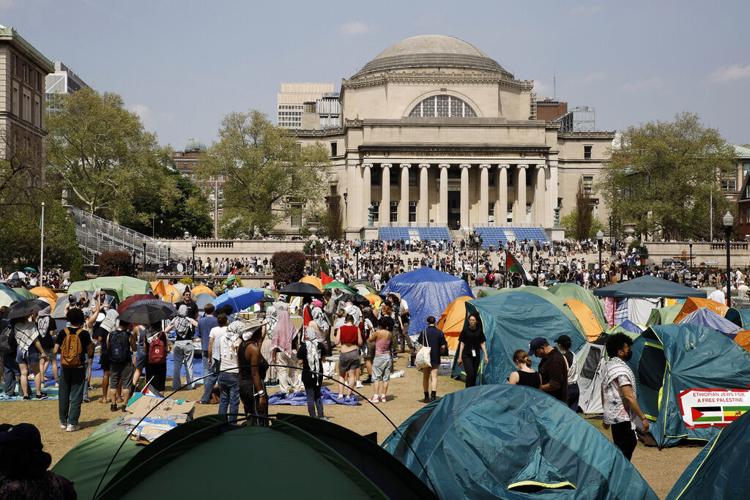
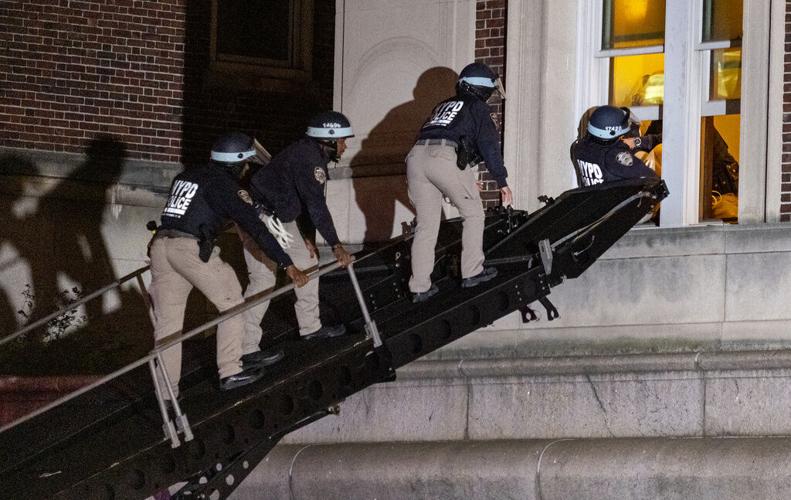
NEW YORK — Columbia University agreed Friday to put its Middle East studies department under new supervision and overhaul its rules for protests and student discipline, acquiescing to an extraordinary ultimatum by the Trump administration to implement those and other changes or risk losing billions of dollars in federal funding.
As part of the sweeping reforms, the university will also adopt a new definition of antisemitism and expand “intellectual diversity” by staffing up its Institute for Israel and Jewish Studies, according to a letter published Friday by the interim president, Katrina Armstrong.
The announcement drew immediate condemnation from some faculty and free speech groups, who accused the university of caving to President Donald Trump's largely unprecedented intrusion upon the school’s academic freedom.
“Columbia’s capitulation endangers academic freedom and campus expression nationwide,” Donna Lieberman, the executive director of the New York Civil Liberties Union, said in a statement.
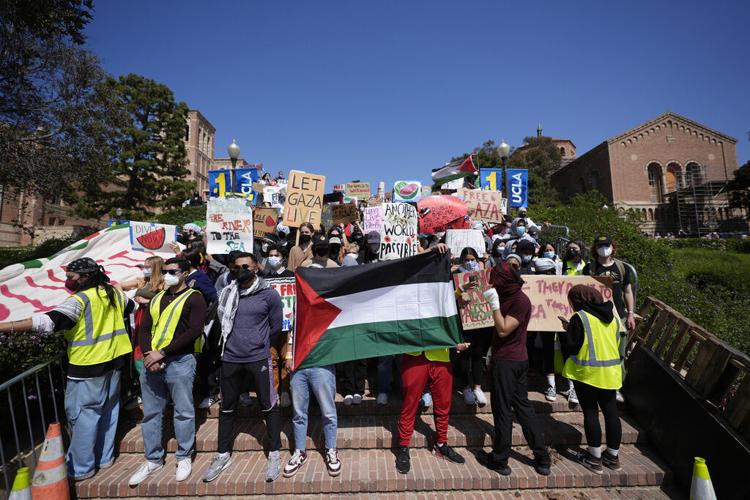
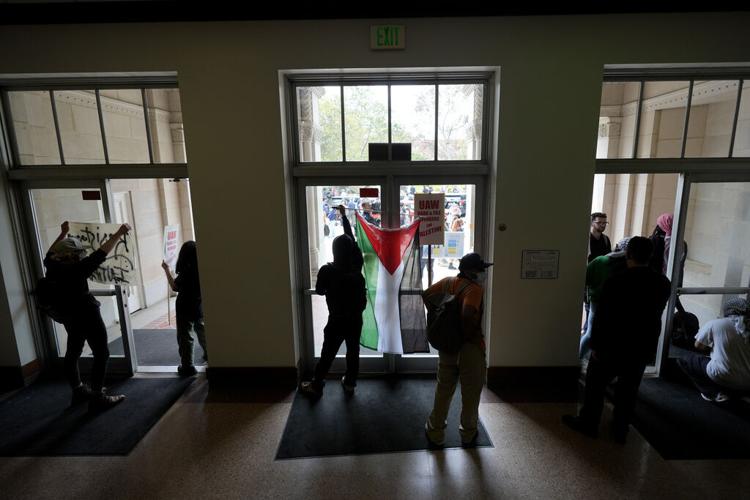
Meanwhile, a group of 35 pro-Palestinian students, faculty members, legal observers, journalists and activists filed a lawsuit against the University of California, Los Angeles, over that school's handling of last year’s demonstrations against the Israel-Hamas war.
Columbia changes detailed
Earlier this month, the Trump administration pulled $400 million in research grants and other funding over the university’s handling of protests against Israel’s military campaign in Gaza. As a precondition to restoring those funds — along with billions more in future grants — federal officials last week demanded the university immediately enact nine separate reforms to its academic and security policies.
In her response Friday, Armstrong indicated Columbia would implement nearly all of them. As ordered, it will hire new public safety personnel and empower them to make arrests on campus, bar students from protesting in academic buildings and revamp its long-standing process for student discipline.
Students will no longer be permitted to wear face masks on campus “for the purposes of concealing one’s identity.” An exception would be made for people wearing them for health or religious reasons.
The university will also appoint a new senior provost to review the leadership and curriculum of several international studies departments to “ensure the educational offerings are comprehensive and balanced.”
The appointment appeared to be a concession to the Trump administration's most contentious demand: that the university place its Middle Eastern, South Asian and African Studies Department under “academic receivership for a minimum of five years.”
The Trump administration repeatedly accused Columbia University of letting antisemitism go unchecked at protests against Israel that began at the university last spring and quickly spread to other campuses — a characterization disputed by those involved in the demonstrations.
In her letter, Armstrong said the university had worked hard to “address the legitimate concerns raised both from within and without our Columbia community, including by our regulators, with respect to the discrimination, harassment, and antisemitic acts our Jewish community has faced.”
“The way Columbia and Columbians have been portrayed is hard to reckon with,” she added. “We have challenges, yes, but they do not define us.”
The Trump administration ratcheted up its attacks on Columbia in recent weeks, thrusting the campus into crisis and sparking fears of additional reprisals at colleges across the country.
On March 8, federal immigration officials arrested Mahmoud Khalil, a prominent Palestinian activist and legal permanent resident in his university-owned apartment building — the “first of many” attempted deportations, according to Trump.
Justice Department leaders say they also are investigating whether Columbia hid students sought by the U.S. over their roles in the demonstrations.
UCLA sued over handling of protests
The lawsuit filed Thursday in Los Angeles comes days after the Trump administration joined a separate lawsuit filed in June against the university by Jewish students and a Jewish professor accusing it of failing to protect them from pro-Palestinian activists.
The demonstrations at UCLA became part of a movement last spring at campuses nationwide against the Israel-Hamas war. Last month, the Trump administration opened new investigations into allegations of antisemitism at Columbia University, the University of California, Berkeley, the University of Minnesota, Northwestern University and Portland State University.
UCLA was repeatedly roiled by protests and the way administrators were handling the situation.
The tensions culminated the night of April 20 when a group of counterprotesters began violently dismantling a pro-Palestinian encampment.
The lawsuit says UCLA failed to protect the demonstrators when dozens of people, some in white masks and some draped in Israeli flags and armed with fireworks, hammers, baseball bats and other weapons, attacked the encampment while the loud sound of crying babies played on the jumbotron.
Several protesters were injured during the attack, which happened after private security left and police had not yet arrived, the lawsuit says.
“Encampment members witnessed the mob’s extreme violence, threats of violence, and UCLA’s failure to intervene,” it says. “They saw people get their heads split open, suffer from open wounds and concussions, scream in pain and fear, with fireworks and mayhem all around them.”
The university did not immediately respond Friday to an email from The Associated Press seeking comment.
Los Angeles Police and California Highway Patrol officers arrested dozens of protesters on May 1 and 2 as the camp was cleared.
The episode led to the reassignment of the campus police chief and creation of a new campus safety office. A subsequent attempt to set up a new camp was also blocked.
The lawsuit also names the Los Angeles Police Department, the California Highway Patrol and 20 people it describes as members of a “mob.” It seeks monetary damages for physical and psychological injuries suffered by the protesters.
Last June, three Jewish students and a Jewish professor sued the university saying it allowed pro-Palestinian protesters to block them from accessing classes and other parts of campus. The students alleged they experienced discrimination on campus during the protests because of their faith and that UCLA failed to ensure access to campus for all Jewish students.
A federal judge ruled in a preliminary injunction last year that the university cannot allow pro-Palestinian protesters to block Jewish students from accessing classes and other parts of campus.
On Monday, the Trump administration filed a brief supporting the Jewish students and professor in their case against UCLA.
“DOJ has thrown down the gauntlet: if university administrators aid and abet mistreatment of Jews, they will pay the price,” said Mark Rienzi, president of the Becket Fund for Religious Liberty and an attorney for the students and professor. “This is a wake-up call for every university that allows antisemitic hatred to fester unchecked. No Jewish student or professor should ever again face this kind of terror on their own campus.”
While Trump made Columbia the most visible target of his crackdown on higher education, he put other universities on notice that they will face cuts if they do not embrace his agenda.
His administration announced investigations into 52 universities for their diversity, equity and inclusion programs. It also suspended approximately $175 million in federal funding for the University of Pennsylvania over a transgender swimmer who last competed for the school in 2022.
On Friday, free speech groups warned Columbia’s response to Trump's threat would reverberate far beyond the Manhattan campus.
"Shaking under government pressure, Columbia crumbled," said Tyler Coward, the lead counsel for government affairs at the Foundation for Individual Rights and Expression. “If Columbia — with its immense resources and influence — can’t stand up to government demands that threaten free speech, what are other colleges to do?”

