

WASHINGTON — Aggressive immigration enforcement in Minnesota, which resulted in the shooting deaths of two U.S. citizens by federal agents, and last week's FBI search of the election office in Georgia's most populous county have Democratic election officials concerned about what could be in store for this fall's midterm elections.
During an annual gathering of state election officials last week, several Democratic secretaries of state said they started planning for a range of ways the Trump administration might seek to interfere with voting or how they run elections. Immigration agents near polling places or attempts to seize voting equipment are among the concerns, they said.
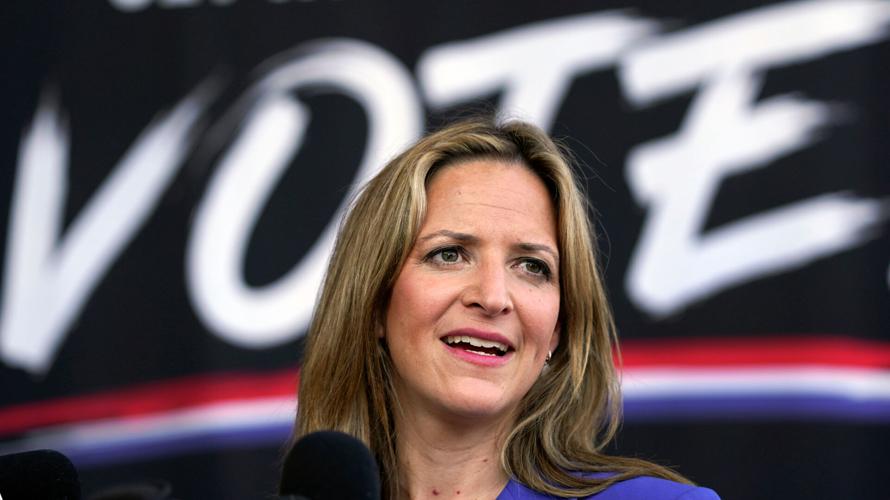
"It's no longer just about making sure everyone gets their ballots and those ballots are counted securely. There's now an election security component that involves this type of scenario planning, also in response to the fact that the Trump administration, very clearly, is planting seeds to potentially interfere in our elections in the future," said Michigan Secretary of State Jocelyn Benson, a Democrat who is running for governor.

Michigan Secretary of State Jocelyn Benson speaks Sept. 24, 2020, in Detroit.
The officials said they will increase their preparations for potential steps the Trump administration could take after Wednesday's search of the Atlanta-area election center, in which federal agents took ballots and other records related to the 2020 election. The FBI search renewed President Donald Trump's longstanding grievances over the 2020 presidential election, which he falsely claims was marred by widespread fraud.
Benson said her office is planning for various crisis scenarios with officials across the state, training that now includes the possibility of bomb threats and U.S. Immigration and Customs Enforcement agents appearing at polling places.
"This is how we deter, this is how we mitigate, this is when we go to court, this is when we need law enforcement to show up and help us protect, this is when we don't," Benson said of her instructions to local election officials.
Colorado Secretary of State Jena Griswold is preparing for this year's midterm elections by revamping previous years' contingency plans and running disaster simulations with the state's governor, attorney general and county clerks.
In an interview ahead of the conference, she said one of the most worrisome changes under the Trump administration was its dismantling of efforts to track election interference and foreign meddling.
She also worried about whether the Trump administration would make changes through the U.S. Postal Service, which already took some steps that concern officials in states that rely heavily on mail ballots.
The White House did not immediately respond to a request to comment on the election officials' concerns.

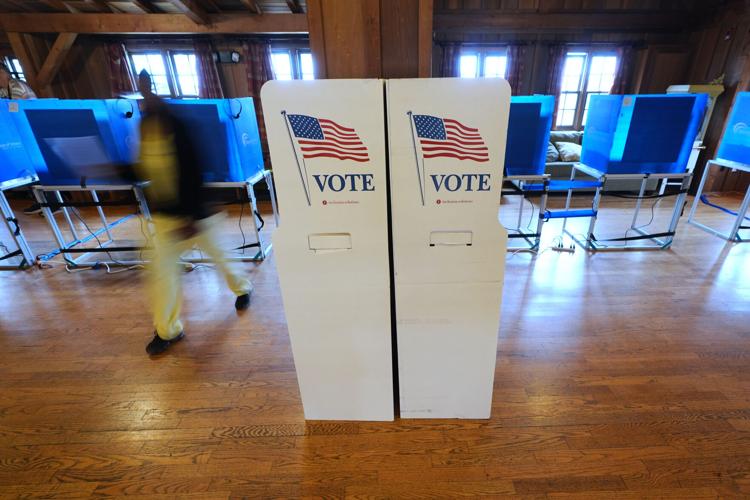
Signs welcome voters Nov. 4 in Del Mar, Calif.
Trump made his interest in overhauling elections clear since early in his second term, signing a wide-ranging executive order that courts largely halted. The Constitution gives states and, to an extent, Congress authority over elections.
Recently, administration officials connected the president's deportation agenda to election administration, an unusual move that alarmed democracy advocates.
Attorney General Pam Bondi recently wrote to Minnesota Gov. Tim Walz, a Democrat, urging him to share the state's voter rolls as part of a way to "help bring back law and order" in the state, which saw widespread protests over increased immigration enforcement and the killings by federal immigration agents.

The Justice Department filed lawsuits against at least 23 states and the District of Columbia seeking detailed voter information that includes names, dates of birth, residential addresses, driver's license numbers and partial Social Security numbers. State election officials who resisted, most of them Democrats, said the request violates state and federal privacy laws.
"That idea of using police force to push policy is un-American," Griswold said.
Maine Secretary of State Shenna Bellows said federal law will be on the side of the states to constrain the most extraordinary conduct, especially if armed federal agents show up around polling places. "That won't be a hard case," she said.
Still, she is worried the show of force by immigration officers, arrests and deportations in various cities might deter some people from going out to cast a ballot.
"If people are too afraid to leave their homes to go get groceries, they're going to be too afraid to go vote if ICE or other federal agents are patrolling the streets," Bellows said.

Scenes of violent arrests by ICE agents and protests on the streets of American cities over the last year also raised concerns among lawmakers in Congress about how the administration's aggressive approach to law enforcement might collide with the midterm elections.
"I don't want roving gangs of ICE showing up at polling stations," said Sen. Mark Warner, a Virginia Democrat. "That would obviously intimidate voters."
Killing in Minnesota intensifies protests

A protester is pepper sprayed at close range while being detained near the site of the fatal shooting of 37-year-old Alex Pretti by federal agents in Minneapolis on Saturday, Jan. 24, 2026. (Ellen Schmidt/MinnPost via AP)

A person holds up their hands as law enforcement deploys a thick screen of teargas on Nicollet Avenue in Minneapolis on Saturday, Jan. 24, 2026. (Ben Hovland/Minnesota Public Radio via AP)

Federal agents deploy tear gas and other munitions into a crowd of people near the intersection of 27th Street and Nicollet Avenue in Minneapolis after a federal officer shot and killed 37-year-old Alex Pretti on Saturday, Jan. 24, 2026. (Ben Hovland/Minnesota Public Radio via AP)

A border patrol agent aims a munition launcher at a crowd of people near the intersection of 27th Street and Nicollet Avenue in Minneapolis after a federal officer shot and killed 37-year-old Alex Pretti on Saturday, Jan. 24, 2026. (Ben Hovland/Minnesota Public Radio via AP)

Minnesota State Patrol officers pass along information on a police line on Nicollet Avenue in Minneapolis on Saturday, Jan. 24, 2026. (Ben Hovland/Minnesota Public Radio via AP)

People gather at the site where a federal officer shot and killed 37-year-old Alex Pretti in Minneapolis on Saturday, Jan. 24, 2026. (Ben Hovland/Minnesota Public Radio via AP)

Homeland Security Secretary Kristi Noem speaks about the man in Minneapolis who was killed by a federal immigration officer earlier in the day during a news conference at Federal Emergency Management Agency headquarters, Saturday, Jan. 24, 2026, in Washington. Behind Noem, from left, are Rodney Scott, commissioner of U.S. Customs and Border Protection, Karen Evans, acting deputy administrator of FEMA, and Gregg Phillips, head of the Office of Response and Recovery at FEMA. (AP Photo/Julia Demaree Nikhinson)

A group of protesters use a dumpster for cover on Nicollet Avenue as federal agents fire crowd control munitions at them after agents fatally shot Alex Pretti in Minneapolis, Minn., on Saturday, Jan. 24, 2026. (Aaron Nesheim/Sahan Journal/Catchlight Local via AP)

A large crowd gathers at the scene where federal agents fatally shot Alex Pretti in Minneapolis, Minn., on Saturday, Jan. 24, 2026. (Aaron Nesheim/Sahan Journal/Catchlight Local via AP)

A mattress is spray painted with "R.I.P. Alex" near the site of the fatal shooting of 37-year-old Alex Pretti by federal agents in Minneapolis, on Saturday, Jan. 24, 2026. (AP Photo/Jack Brook)

A Minnesota State Trooper wears riot gear as protesters fill the site of the fatal shooting of 37-year-old Alex Pretti by federal agents in Minneapolis on Saturday, Jan. 24, 2026. (Ellen Schmidt/MinnPost via AP)

Federal agents point weapons at protesters near the site of the fatal shooting of 37-year-old Alex Pretti by federal agents in Minneapolis on Saturday, Jan. 24, 2026. (Ellen Schmidt/MinnPost via AP)

A protester is detained by a federal agent near the site of the fatal shooting of 37-year-old Alex Pretti by federal agents in Minneapolis on Saturday, Jan. 24, 2026. (Ellen Schmidt/MinnPost via AP)

Protesters advance toward federal agents with their hands up near the site of the fatal shooting of 37-year-old Alex Pretti by federal agents in Minneapolis on Saturday, Jan. 24, 2026. (Ellen Schmidt/MinnPost via AP)

A protester holds a sign outside the Bishop Henry Whipple Federal Building, Saturday, Jan. 24, 2026, in Minneapolis. (AP Photo/Adam Gray)

A Minnesota National Guard vehicle blocks off a road near the scene of a shooting earlier in the day, Saturday, Jan. 24, 2026, in Minneapolis. (AP Photo/Adam Gray)

People walk past a Minnesota National Guard vehicle blocking off a road near the scene of a shooting earlier in the day, Saturday, Jan. 24, 2026, in Minneapolis. (AP Photo/Adam Gray)

Demonstrators hold signs during a protest in response to the fatal shooting of 37-year-old Alex Pretti in Minneapolis earlier in the day Saturday, Jan. 24, 2026, in Los Angeles. (AP Photo/Caroline Brehman)

A demonstrator dressed as Donald Trump participates in a protest in response to the Minneapolis fatal shooting of 37-year-old Alex Pretti Saturday, Jan. 24, 2026, in Los Angeles. (AP Photo/Caroline Brehman)

Protestors fill the intersection in Minneapolis near the site of the fatal shooting of 37-year-old Alex Pretti by federal agents on Saturday, Jan. 24, 2026. (AP Photo/Jack Brook)

A large crowd gathers at the scene where federal agents fatally shot Alex Pretti in Minneapolis, Minn., on Saturday, Jan. 24, 2026. (Aaron Nesheim/Sahan Journal/Catchlight Local via AP)

A protester screams with an injured hand while bystanders help near the site of the fatal shooting of 37-year-old Alex Pretti by federal agents in Minneapolis on Saturday, Jan. 24, 2026. (Ellen Schmidt/MinnPost via AP)

