



Do you live in a red state, a blue state, or one where Republicans and Democrats share power?
Your answer might provide the best indicator of what to expect from your governor and state lawmakers as President-elect Donald Trump takes office and legislatures convene.
In many cases, political party identification defines public policy, percolating from the nation’s capital down to the 50 statehouses.
Many Republican state officials aligned with Trump's policies by pledging to help him crack down on illegal immigration, for example. Some Democratic state officials are mounting a resistance movement, looking for ways to shield their states from potential federal policies restricting abortion and transgender rights, among other things. Some prominent Democratic governors, meanwhile, took a more conciliatory approach to forge a working relationship with the new administration.
Here's a look at what to expect in some policy areas:

Members of the California National Guard listen during a Dec. 5 news conference near the Otay Mesa Port of Entry along the border with Mexico in San Diego.
Immigration
Governors and lawmakers in red states lined up behind Trump's pledge to crack down on illegal immigration and deport many who are living in the U.S. illegally. A joint statement from 26 Republican governors said they “stand ready to utilize every tool at our disposal — whether through state law enforcement or the National Guard — to support President Trump in this vital mission.”
Republican lawmakers in a growing number of states proposed to give local law officers the power to arrest people who entered the country illegally, mirroring a recent Texas law that courts placed on hold while considering whether it unconstitutionally usurps federal authority.
One bill in Missouri would offer a $1,000 reward to informants who tip off authorities about people in the country illegally and allow private bounty hunters to find and detain them.

Governors in some blue states are taking a wait-and-see approach to Trump's immigration plans, willing to cooperate on deporting people who commit crimes but not in using the National Guard for widespread roundups of immigrants living in the U.S. illegally.
Other Democratic-led jurisdictions are bracing for a showdown. The California Legislature has convened a special session to erect shields against Trump's policies on immigration and other issues.
Abortion
Most U.S. abortions are carried out using drugs rather than through surgical procedures, and that is where the current abortion fight is focused.
At least four states — Indiana, Missouri, New Hampshire and Tennessee — introduced bills aimed at banning pills. None take the same approach as Louisiana, which last year classified the drugs as controlled dangerous substances.
Texas Attorney General Ken Paxton sued a New York doctor, claiming she wrongly prescribed via telehealth and sent pills to a Texas woman, even though a New York law aims to protect such prescriptions.
The Republican attorneys general of Idaho, Kansas and Missouri are in court trying to roll back federal approvals of one of the pills usually used in abortion.
Education
Several efforts to expand the use of public money to pay for kids to attend private school suffered high-profile defeats in the November elections, including in Nebraska, Kentucky and Colorado.
Still, Trump’s victory is seen as a boon for such efforts, which exploded in popularity in recent years. A dozen states, almost all red, have programs allowing parents of any student to apply for government funding for private education, including at religious schools.
With Trump in office, states could see more incentives such as block grants or tax benefits to adopt or expand models like vouchers, which subsidize private school tuition for families. Texas, for example, is expected to see momentum on the school choice front, with a number of voucher proponents winning seats in the Legislature.
Many conservative states also are pushing to bring Christianity into public K-12 education through moves such as requiring schools to teach the Bible and post the Ten Commandments. Trump promised to promote prayer and Bible reading in schools, with current courts more amenable to religion in the public sphere, including schools.
In Texas, officials in November approved a curriculum that intertwines language arts with biblical lessons, and the state education superintendent in Oklahoma sought to require Bible-related lessons.

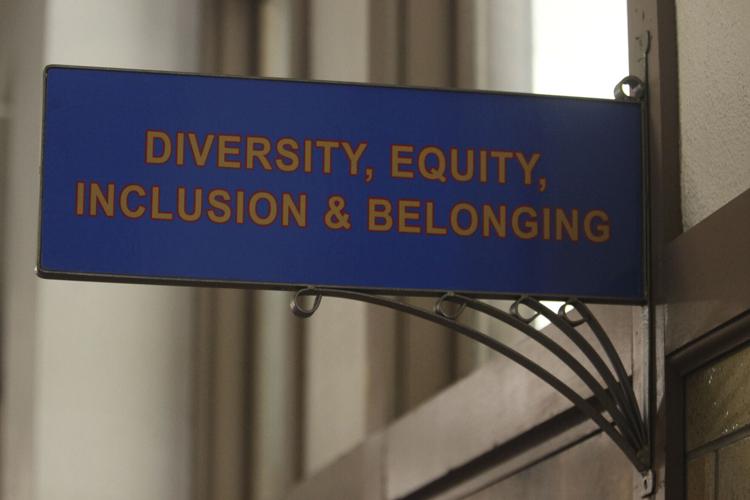
The sign above the door to the Office of Diversity, Equity, Inclusion and Belonging is seen April 12 inside the main administration building on the main University of Kansas campus in Lawrence.
Diversity
Efforts to end diversity, equity and inclusion, or DEI, initiatives are expected to expand in Republican-led states under Trump, who vowed to get rid of perceived “wokeness” in education. More higher education institutions may join the ranks of those already dismantling diversity offices in states such as Florida, Kentucky, North Carolina, Iowa, Missouri, Nebraska and Texas.
Attorneys general and legislatures in red states also are likely to put pressure on the private sector to pare back DEI initiatives. A Tennessee law provides one model, forbidding financial institutions from considering a customer’s participation in “diversity, equity and inclusion training.”

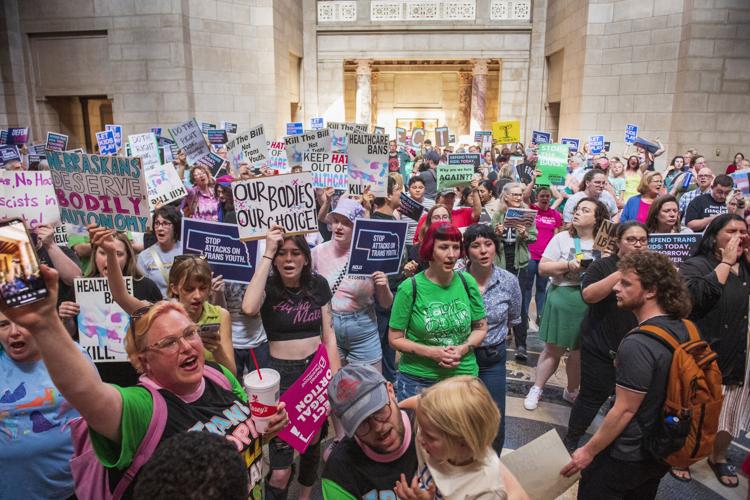
Protesters chant, "One vote to save our lives," on May 16, 2023, during a final reading on a bill that combined a 12-week abortion ban with a measure to restrict gender-affirming care for people under 19, in the legislative chamber at the state Capitol in Lincoln, Neb.
Transgender issues
In his campaign last year, Trump leaned into attacks on transgender rights, suggesting a looming shift in federal policy.
Most Republican-controlled states already have laws banning or limiting gender-affirming care for minors and participation in women’s and girls sports for transgender women and girls. Several also dictate which school restrooms transgender people may use. Republican lawmakers are expected to keep pushing for restrictions on the rights of transgender people, particularly transgender minors.
There are calls to go further, such as barring Medicaid and other state-funded government programs from spending on gender-affirming care for people of any age.
The future of some measures could rest on a U.S. Supreme Court ruling expected this year on whether Tennessee had the right to ban gender-affirming care for transgender minors.

A pharmacist holds a COVID-19 vaccine Sept. 24 at a pharmacy in New York.
Public health
With an incoming presidential administration that indicated fluoride and vaccines might be in its crosshairs, lawmakers in a few states filed bills that would end fluoridation programs and further restrict COVID-19 mandates.
The addition of low levels of fluoride to drinking water has long been considered one of the greatest public health achievements of the last century because it prevents tooth decay. Health and Human Services Secretary-nominee Robert F. Kennedy Jr., a lawyer with no medical or public health degrees, called fluoride an “industrial waste” and said in a Nov. 2 post on X that the Trump administration would “advise all U.S. water systems” to stop adding fluoride.
Arkansas lawmakers filed bills to repeal a statewide fluoridation program and allow local public water systems to hold elections so residents can decide whether to put fluoride in the water. Montana also has a proposed bill to ” ban the use of fluoride,” though the full text of the bill isn’t available yet.

Vaccination laws and mandates are still in play in state governments, too. Alabama may consider changing its vaccination laws to require parental consent for any vaccine to be given to a minor age 14 or older; currently, children that age can decide whether they want medical services. Wyoming has a bill that would impose a civil penalty of up to $5,000 on a business or entity that gets state or federal money if found to discriminate based on whether someone is wearing a mask, has had a COVID-19 vaccination or was tested for COVID-19.
It’s not clear whether these or other bills will get consideration.
Associated Press writers Jesse Bedayn, Erica Hunzinger, Andrew DeMillo and Alia Wong contributed to this report.
Here are people Trump picked for key positions
President-elect Donald Trump
Updated
Susie Wiles, White House Chief of Staff
Updated
Susie Wiles, 67, was a senior adviser to Trump's 2024 presidential campaign and its de facto manager.
Marco Rubio, Secretary of State
Updated
Trump named Florida Sen. Marco Rubio to be secretary of state, making a former sharp critic his choice to be the new administration's top diplomat.
Rubio, 53, is a noted hawk on China, Cuba and Iran, and was a finalist to be Trump's running mate on the Republican ticket last summer. Rubio is the vice chairman of the Senate Intelligence Committee and a member of the Senate Foreign Relations Committee.
“He will be a strong Advocate for our Nation, a true friend to our Allies, and a fearless Warrior who will never back down to our adversaries,” Trump said of Rubio in a statement.
The announcement punctuates the hard pivot Rubio has made with Trump, whom the senator called a “con man" during his unsuccessful campaign for the 2016 GOP presidential nomination.
Their relationship improved dramatically while Trump was in the White House. And as Trump campaigned for the presidency a third time, Rubio cheered his proposals. For instance, Rubio, who more than a decade ago helped craft immigration legislation that included a path to citizenship for people in the U.S. illegally, now supports Trump's plan to use the U.S. military for mass deportations.
Pete Hegseth, Secretary of Defense
Updated
Pete Hegseth, 44, is a co-host of Fox News Channel’s “Fox & Friends Weekend” and has been a contributor with the network since 2014, where he developed a friendship with Trump, who made regular appearances on the show.
Hegseth lacks senior military or national security experience. If confirmed by the Senate, he would inherit the top job during a series of global crises — ranging from Russia’s war in Ukraine and the ongoing attacks in the Middle East by Iranian proxies to the push for a cease-fire between Israel, Hamas and Hezbollah and escalating worries about the growing alliance between Russia and North Korea.
Hegseth is also the author of “The War on Warriors: Behind the Betrayal of the Men Who Keep Us Free,” published earlier this year.
Pam Bondi, Attorney General

Trump tapped Pam Bondi, 59, to be attorney general after U.S. Rep. Matt Gaetz withdrew his name from consideration.
She was Florida's first female attorney general, serving between 2011 and 2019. She also was on Trump’s legal team during his first impeachment trial in 2020.
Considered a loyalist, she served as part of a Trump-allied outside group that helped lay the groundwork for his future administration called the America First Policy Institute.
Bondi was among a group of Republicans who showed up to support Trump at his hush money criminal trial in New York that ended in May with a conviction on 34 felony counts. A fierce defender of Trump, she also frequently appears on Fox News and has been a critic of the criminal cases against him.
Kristi Noem, Secretary of Homeland Security
Updated
Trump picked South Dakota Gov. Kristi Noem, a well-known conservative who faced sharp criticism for telling a story in her memoir about shooting a rambunctious dog, to lead an agency crucial to the president-elect’s hardline immigration agenda.
Noem used her two terms leading a tiny state to vault to a prominent position in Republican politics.
South Dakota is usually a political afterthought. But during the COVID-19 pandemic, Noem did not order restrictions that other states had issued and instead declared her state “open for business.” Trump held a fireworks rally at Mount Rushmore in July 2020 in one of the first large gatherings of the pandemic.
She takes over a department with a sprawling mission. In addition to key immigration agencies, the Department of Homeland Security oversees natural disaster response, the U.S. Secret Service, and Transportation Security Administration agents who work at airports.
Doug Burgum, Secretary of the Interior
Updated
The governor of North Dakota, who was once little-known outside his state, Burgum is a former Republican presidential primary contender who endorsed Trump, and spent months traveling to drum up support for him, after dropping out of the race.
Burgum was a serious contender to be Trump’s vice presidential choice this summer. The two-term governor was seen as a possible pick because of his executive experience and business savvy. Burgum also has close ties to deep-pocketed energy industry CEOs.
Trump made the announcement about Burgum joining his incoming administration while addressing a gala at his Mar-a-Lago club, and said a formal statement would be coming the following day.
In comments to reporters before Trump took the stage, Burgum said that, in recent years, the power grid is deteriorating in many parts of the country, which he said could raise national security concerns but also drive up prices enough to increase inflation.
“There's just a sense of urgency, and a sense of understanding in the Trump administration,” Burgum said.
Robert F. Kennedy Jr., Secretary of Health and Human Services
Updated
Robert F. Kennedy Jr. is President Donald Trump's nominee to lead the Department of Health and Human Services.
Scott Bessent, Treasury Secretary

Scott Bessent, 62, is a former George Soros money manager and an advocate for deficit reduction.
He's the founder of hedge fund Key Square Capital Management, after having worked on-and-off for Soros Fund Management since 1991. If confirmed by the Senate, he would be the nation’s first openly gay treasury secretary.
He told Bloomberg in August that he decided to join Trump’s campaign in part to attack the mounting U.S. national debt. That would include slashing government programs and other spending.
“This election cycle is the last chance for the U.S. to grow our way out of this mountain of debt without becoming a sort of European-style socialist democracy,” he said then.
Lori Chavez-DeRemer, Labor Secretary
Updated
Oregon Republican U.S. Rep. Lori Chavez-DeRemer narrowly lost her reelection bid this month, but received strong backing from union members in her district.
As a potential labor secretary, she would oversee the Labor Department’s workforce, its budget and put forth priorities that impact workers’ wages, health and safety, ability to unionize, and employer’s rights to fire employers, among other responsibilities.
Chavez-DeRemer is one of few House Republicans to endorse the “Protecting the Right to Organize” or PRO Act would allow more workers to conduct organizing campaigns and would add penalties for companies that violate workers’ rights. The act would also weaken “right-to-work” laws that allow employees in more than half the states to avoid participating in or paying dues to unions that represent workers at their places of employment.
Scott Turner, Housing and Urban Development

Scott Turner is a former NFL player and White House aide. He ran the White House Opportunity and Revitalization Council during Trump’s first term in office. Trump, in a statement, credited Turner, the highest-ranking Black person he’s yet selected for his administration, with “helping to lead an Unprecedented Effort that Transformed our Country’s most distressed communities.”
Sean Duffy, Secretary of Transportation
Updated
Sean Duffy is a former House member from Wisconsin who was one of Trump's most visible defenders on cable news. Duffy served in the House for nearly nine years, sitting on the Financial Services Committee and chairing the subcommittee on insurance and housing. He left Congress in 2019 for a TV career and has been the host of “The Bottom Line” on Fox Business.
Before entering politics, Duffy was a reality TV star on MTV, where he met his wife, “Fox and Friends Weekend” co-host Rachel Campos-Duffy. They have nine children.
Chris Wright, Secretary of Energy
Updated
A campaign donor and CEO of Denver-based Liberty Energy, Write is a vocal advocate of oil and gas development, including fracking — a key pillar of Trump’s quest to achieve U.S. “energy dominance” in the global market.
Wright also has been one of the industry’s loudest voices against efforts to fight climate change. He said the climate movement around the world is “collapsing under its own weight.” The Energy Department is responsible for advancing energy, environmental and nuclear security of the United States.
Wright also won support from influential conservatives, including oil and gas tycoon Harold Hamm. Hamm, executive chairman of Oklahoma-based Continental Resources, a major shale oil company, is a longtime Trump supporter and adviser who played a key role on energy issues in Trump’s first term.
Linda McMahon, Secretary of Education
Updated
President-elect Donald Trump tapped billionaire professional wrestling mogul Linda McMahon to be secretary of the Education Department, tasked with overseeing an agency Trump promised to dismantle.
McMahon led the Small Business Administration during Trump’s initial term from 2017 to 2019 and twice ran unsuccessfully as a Republican for the U.S. Senate in Connecticut.
She’s seen as a relative unknown in education circles, though she expressed support for charter schools and school choice. She served on the Connecticut Board of Education for a year starting in 2009 and has spent years on the board of trustees for Sacred Heart University in Connecticut.
Brooke Rollins, Secretary of Agriculture
Updated
Brooke Rollins, who graduated from Texas A&M University with a degree in agricultural development, is a longtime Trump associate who served as White House domestic policy chief during his first presidency.
The 52-year-old is president and CEO of the America First Policy Institute, a group helping to lay the groundwork for a second Trump administration. She previously served as an aide to former Texas Gov. Rick Perry and ran a think tank, the Texas Public Policy Foundation.
Howard Lutnick, Secretary of Commerce
Updated
Trump chose Howard Lutnick, head of brokerage and investment bank Cantor Fitzgerald and a cryptocurrency enthusiast, as his nominee for commerce secretary, a position in which he'd have a key role in carrying out Trump's plans to raise and enforce tariffs.
Trump made the announcement Tuesday on his social media platform, Truth Social.
Lutnick is a co-chair of Trump’s transition team, along with Linda McMahon, the former wrestling executive who previously led Trump’s Small Business Administration. Both are tasked with putting forward candidates for key roles in the next administration.
The nomination would put Lutnick in charge of a sprawling Cabinet agency that is involved in funding new computer chip factories, imposing trade restrictions, releasing economic data and monitoring the weather. It is also a position in which connections to CEOs and the wider business community are crucial.
Karoline Leavitt, White House press secretary

Karoline Leavitt, 27, was Trump's campaign press secretary and currently a spokesperson for his transition. She would be the youngest White House press secretary in history.
The White House press secretary typically serves as the public face of the administration and historically has held daily briefings for the press corps.
Leavitt, a New Hampshire native, was a spokesperson for MAGA Inc., a super PAC supporting Trump, before joining his 2024 campaign. In 2022, she ran for Congress in New Hampshire, winning a 10-way Republican primary before losing to Democratic Rep. Chris Pappas.
Leavitt worked in the White House press office during Trump's first term before she became communications director for New York Republican Rep. Elise Stefanik, Trump's choice for U.S. ambassador to the United Nations.
Tulsi Gabbard, National Intelligence Director
Updated
Former Hawaii Rep. Tulsi Gabbard has been tapped by Trump to be director of national intelligence, keeping with the trend to stock his Cabinet with loyal personalities rather than veteran professionals in their requisite fields.
Gabbard, 43, was a Democratic House member who unsuccessfully sought the party's 2020 presidential nomination before leaving the party in 2022. She endorsed Trump in August and campaigned often with him this fall.
“I know Tulsi will bring the fearless spirit that has defined her illustrious career to our Intelligence Community,” Trump said in a statement.
Gabbard, who has served in the Army National Guard for more than two decades, deploying to Iraq and Kuwait, would come to the role as somewhat of an outsider compared to her predecessor. The current director, Avril Haines, was confirmed by the Senate in 2021 following several years in a number of top national security and intelligence positions.
John Ratcliffe, Central Intelligence Agency Director
Updated
Trump has picked John Ratcliffe, a former Texas congressman who served as director of national intelligence during his first administration, to be director of the Central Intelligence Agency in his next.
Ratcliffe was director of national intelligence during the final year and a half of Trump's first term, leading the U.S. government's spy agencies during the coronavirus pandemic.
“I look forward to John being the first person ever to serve in both of our Nation's highest Intelligence positions,” Trump said in a statement, calling him a “fearless fighter for the Constitutional Rights of all Americans” who would ensure “the Highest Levels of National Security, and PEACE THROUGH STRENGTH.”
Kash Patel, Federal Bureau of Investigation Director

Kash Patel spent several years as a Justice Department prosecutor before catching the Trump administration’s attention as a staffer on Capitol Hill who helped investigate the Russia probe.
Patel called for dramatically reducing the agency’s footprint, a perspective that sets him apart from earlier directors who sought additional resources for the bureau. Though the Justice Department in 2021 halted the practice of secretly seizing reporters’ phone records during leak investigations, Patel said he intends to aggressively hunt down government officials who leak information to reporters.
Lee Zeldin, Environmental Protection Agency Administrator
Updated
Trump has chosen former New York Rep. Lee Zeldin to serve as his pick to lead the Environmental Protection Agency.
Zeldin does not appear to have any experience in environmental issues, but is a longtime supporter of the former president. The 44-year-old former U.S. House member from New York wrote on X, “We will restore US energy dominance, revitalize our auto industry to bring back American jobs, and make the US the global leader of AI.” “We will do so while protecting access to clean air and water,” he added.
During his campaign, Trump often attacked the Biden administration's promotion of electric vehicles, and incorrectly referring to a tax credit for EV purchases as a government mandate. Trump also often told his audiences during the campaign his administration would “Drill, baby, drill,” referring to his support for expanded petroleum exploration.
In a statement, Trump said Zeldin “will ensure fair and swift deregulatory decisions that will be enacted in a way to unleash the power of American businesses, while at the same time maintaining the highest environmental standards, including the cleanest air and water on the planet.”
Brendan Carr, Chairman of the Federal Communications Commission
Updated
Paul Atkins, Chair of the Securities and Exchange Commission
Updated
Trump said Atkins, the CEO of Patomak Partners and a former SEC commissioner, was a “proven leader for common sense regulations.” In the years since leaving the SEC, Atkins has made the case against too much market regulation.
“He believes in the promise of robust, innovative capital markets that are responsive to the needs of Investors, & that provide capital to make our Economy the best in the World. He also recognizes that digital assets & other innovations are crucial to Making America Greater than Ever Before,” Trump wrote on Truth Social.
The commission oversees U.S. securities markets and investments and is currently led by Gary Gensler, who has been leading the U.S. government’s crackdown on the crypto industry. Gensler, who was nominated by President Joe Biden, announced last month that he would be stepping down from his post on the day that Trump is inaugurated — Jan. 20, 2025.
Atkins began his career as a lawyer and has a long history working in the financial markets sector, both in government and private practice. In the 1990s, he worked on the staffs of two former SEC chairmen, Richard C. Breeden and Arthur Levitt.
Jared Isaacman, NASA Administrator

Jared Isaacman, 41, is a tech billionaire who bought a series of spaceflights from Elon Musk’s SpaceX and conducted the first private spacewalk. He is the founder and CEO of a card-processing company and has collaborated closely with Musk ever since buying his first chartered SpaceX flight. He took contest winners on that 2021 trip and followed it in September with a mission where he briefly popped out the hatch to test SpaceX’s new spacewalking suits.
Elise Stefanik, Ambassador to the United Nations
Updated
Rep. Elise Stefanik is a representative from New York and one of Trump's staunchest defenders going back to his first impeachment.
Elected to the House in 2014, Stefanik was selected by her GOP House colleagues as House Republican Conference chair in 2021, when former Wyoming Rep. Liz Cheney was removed from the post after publicly criticizing Trump for falsely claiming he won the 2020 election. Stefanik, 40, has served in that role ever since as the third-ranking member of House leadership.
Stefanik’s questioning of university presidents over antisemitism on their campuses helped lead to two of those presidents resigning, further raising her national profile.
If confirmed, she would represent American interests at the U.N. as Trump vows to end the war waged by Russia against Ukraine begun in 2022. He has also called for peace as Israel continues its offensive against Hamas in Gaza and its invasion of Lebanon to target Hezbollah.
Matt Whitaker, Ambassador to NATO

President-elect Donald Trump says he's chosen former acting Attorney General Matt Whitaker to serve as U.S. ambassador to NATO. Trump has expressed skepticism about the Western military alliance for years. Trump said in a statement Wednesday that Whitaker is “a strong warrior and loyal Patriot” who “will ensure the United States’ interests are advanced and defended” and “strengthen relationships with our NATO Allies, and stand firm in the face of threats to Peace and Stability.” The choice of Whitaker as the nation’s representative to the North Atlantic Treaty Organization is an unusual one, given his background is as a lawyer and not in foreign policy.
David Perdue, Ambassador to China
Updated
President-elect Donald Trump tapped former Sen. David Perdue of Georgia to be ambassador to China, saying in a social media post that the former CEO “brings valuable expertise to help build our relationship with China.”
Perdue lost his Senate seat to Democrat Jon Ossoff four years ago and ran unsuccessfully in a primary against Republican Georgia Gov. Brian Kemp. Perdue pushed Trump's debunked lies about electoral fraud during his failed bid for governor.
Pete Hoekstra, Ambassador to Canada

A Republican congressman from Michigan who served from 1993 to 2011, Hoekstra was ambassador to the Netherlands during Trump's first term.
“In my Second Term, Pete will help me once again put AMERICA FIRST,” Trump said in a statement announcing his choice. “He did an outstanding job as United States Ambassador to the Netherlands during our first four years, and I am confident that he will continue to represent our Country well in this new role.”
Mike Huckabee, ambassador to Israel
Updated
Trump will nominate former Arkansas Gov. Mike Huckabee to be ambassador to Israel.
Huckabee is a staunch defender of Israel and his intended nomination comes as Trump has promised to align U.S. foreign policy more closely with Israel's interests as it wages wars against the Iran-backed Hamas and Hezbollah.
“He loves Israel, and likewise the people of Israel love him,” Trump said in a statement. “Mike will work tirelessly to bring about peace in the Middle East.”
Huckabee, who ran unsuccessfully for the Republican presidential nomination in 2008 and 2016, has been a popular figure among evangelical Christian conservatives, many of whom support Israel due to Old Testament writings that Jews are God’s chosen people and that Israel is their rightful homeland.
Trump has been praised by some in this important Republican voting bloc for moving the U.S. embassy in Israel from Tel Aviv to Jerusalem.
Kimberly Guilfoyle, Ambassador to Greece

Guilfoyle is a former California prosecutor and television news personality who led the fundraising for Trump's 2020 campaign and became engaged to Don Jr. in 2020. Trump called her “a close friend and ally” and praised her “sharp intellect make her supremely qualified.” Guilfoyle was on stage with the family on election night.
“I am so proud of Kimberly. She loves America and she always has wanted to serve the country as an Ambassador. She will be an amazing leader for America First,” Don Jr. posted.
The ambassador positions must be approved by the U.S. Senate.
Guilfoyle said in a social media post that she was “honored to accept President Trump’s nomination to serve as the next Ambassador to Greece and I look forward to earning the support of the U.S. Senate.”
Steven Witkoff, Special Envoy to the Middle East
Updated
Trump on Tuesday named real estate investor Steven Witkoff to be special envoy to the Middle East.
The 67-year-old Witkoff is the president-elect's golf partner and was golfing with him at Trump's club in West Palm Beach, Florida, on Sept. 15, when the former president was the target of a second attempted assassination.
Witkoff “is a Highly Respected Leader in Business and Philanthropy,” Trump said of Witkoff in a statement. “Steve will be an unrelenting Voice for PEACE, and make us all proud."
Trump also named Witkoff co-chair, with former Georgia Sen. Kelly Loeffler, of his inaugural committee.
Keith Kellogg, Special Envoy for Ukraine and Russia

Trump said Wednesday that he will nominate Gen. Keith Kellogg to serve as assistant to the president and special envoy for Ukraine and Russia.
Kellogg, a retired Army lieutenant general who has long been Trump’s top adviser on defense issues, served as National Security Advisor to Trump's former Vice President Mike Pence.
For the America First Policy Institute, one of several groups formed after Trump left office to help lay the groundwork for the next Republican administration, Kellogg in April wrote that “bringing the Russia-Ukraine war to a close will require strong, America First leadership to deliver a peace deal and immediately end the hostilities between the two warring parties.”
(AP Photo/Mariam Zuhaib)
Mike Waltz, National Security Adviser
Updated
Trump asked Rep. Michael Waltz, R-Fla., a retired Army National Guard officer and war veteran, to be his national security adviser, Trump announced in a statement Tuesday.
The move puts Waltz in the middle of national security crises, ranging from efforts to provide weapons to Ukraine and worries about the growing alliance between Russia and North Korea to the persistent attacks in the Middle East by Iran proxies and the push for a cease-fire between Israel and Hamas and Hezbollah.
“Mike has been a strong champion of my America First Foreign Policy agenda,” Trump's statement said, "and will be a tremendous champion of our pursuit of Peace through Strength!”
Waltz is a three-term GOP congressman from east-central Florida. He served multiple tours in Afghanistan and also worked in the Pentagon as a policy adviser when Donald Rumsfeld and Robert Gates were defense chiefs.
He is considered hawkish on China, and called for a U.S. boycott of the 2022 Winter Olympics in Beijing due to its involvement in the origin of COVID-19 and its mistreatment of the minority Muslim Uighur population.
Stephen Miller, Deputy Chief of Staff for Policy
Updated
Stephen Miller, an immigration hardliner, was a vocal spokesperson during the presidential campaign for Trump's priority of mass deportations. The 39-year-old was a senior adviser during Trump's first administration.
Miller has been a central figure in some of Trump's policy decisions, notably his move to separate thousands of immigrant families.
Trump argued throughout the campaign that the nation's economic, national security and social priorities could be met by deporting people who are in the United States illegally. Since Trump left office in 2021, Miller has served as the president of America First Legal, an organization made up of former Trump advisers aimed at challenging the Biden administration, media companies, universities and others over issues such as free speech and national security.
Tom Homan, ‘Border Czar’
Updated
Thomas Homan, 62, has been tasked with Trump’s top priority of carrying out the largest deportation operation in the nation’s history.
Homan, who served under Trump in his first administration leading U.S. Immigration and Customs Enforcement, was widely expected to be offered a position related to the border, an issue Trump made central to his campaign.
Though Homan has insisted such a massive undertaking would be humane, he has long been a loyal supporter of Trump's policy proposals, suggesting at a July conference in Washington that he would be willing to "run the biggest deportation operation this country’s ever seen.”
Democrats have criticized Homan for his defending Trump's “zero tolerance” policy on border crossings during his first administration, which led to the separation of thousands of parents and children seeking asylum at the border.
Rodney Scott, Customs and Border Protection Commissioner

Customs and Border Protection, with its roughly 60,000 employees, falls under the Department of Homeland Security. It includes the Border Patrol, which Rodney Scott led during Trump's first term, and is essentially responsible for protecting the country's borders while facilitating trade and travel.
Scott comes to the job firmly from the Border Patrol side of the house. He became an agent in 1992 and spent much of his career in San Diego. When he was appointed head of the border agency in January 2020, he enthusiastically embraced Trump's policies.
After being forced out under the Biden administration, Scott has been a vocal supporter of Trump's hard-line immigration agenda. He appeared frequently on Fox News and testified in Congress. He's also a senior fellow at the Texas Public Policy Foundation.
Billy Long, Internal Revenue Service commissioner

Former Rep. Billy Long represented Missouri in the U.S. House from 2011 to 2023. Since leaving Congress, Trump said, Long “has worked as a Business and Tax advisor, helping Small Businesses navigate the complexities of complying with the IRS Rules and Regulations.”
Kelly Loeffler, Small Business Administration administrator

Former Georgia Sen. Kelly Loeffler was appointed in January 2020 by Georgia Gov. Brian Kemp and then lost a runoff election a year later. She started a conservative voter registration organization and dived into GOP fundraising, becoming one of the top individual donors and bundlers to Trump’s 2024 comeback campaign.
Even before nominating her for agriculture secretary, the president-elect already had tapped Loeffler as co-chair of his inaugural committee.
Dr. Mehmet Oz, Centers for Medicaid and Medicare Services administrator
Updated
Dr. Mehmet Oz, 64, is a former heart surgeon who hosted “The Dr. Oz Show,” a long-running daytime television talk show. He ran unsuccessfully for the U.S. Senate as the Republican nominee in 2022 and is an outspoken supporter of Trump, who endorsed Oz's bid for elected office.
Elon Musk and Vivek Ramaswamy to advise White House on government efficiency

Elon Musk, left, and Vivek Ramaswamy speak before Republican presidential nominee former President Donald Trump at an Oct. 27 campaign rally at Madison Square Garden in New York.
Trump on Tuesday said Musk and former Republican presidential candidate Ramaswamy will lead a new “Department of Government Efficiency" — which is not, despite the name, a government agency.
The acronym “DOGE” is a nod to Musk's favorite cryptocurrency, dogecoin. Trump said Musk and Ramaswamy will work from outside the government to offer the White House “advice and guidance” and will partner with the Office of Management and Budget to “drive large scale structural reform, and create an entrepreneurial approach to Government never seen before.” He added the move would shock government systems. It's not clear how the organization will operate.
Musk, owner of X and CEO of Tesla and SpaceX, has been a constant presence at Mar-a-Lago since Trump won the presidential election. Ramaswamy suspended his campaign in January and threw his support behind Trump. Trump said the two will “pave the way for my Administration to dismantle Government Bureaucracy, slash excess regulations, cut wasteful expenditures, and restructure Federal Agencies.”
Russell Vought, Office of Management and Budget

Russell Vought held the position during Trump’s first presidency.
After Trump’s initial term ended, Vought founded the Center for Renewing America, a think tank that describes its mission as “renew a consensus of America as a nation under God.”
Vought was closely involved with Project 2025, a conservative blueprint for Trump’s second term that he tried to distance himself from during the campaign.
Vought has also previously worked as the executive and budget director for the Republican Study Committee, a caucus for conservative House Republicans. He also worked at Heritage Action, the political group tied to The Heritage Foundation, a conservative think tank.
Kari Lake, Voice of America
Updated
Trump says he’s picking Kari Lake as director of Voice of America, installing a staunch loyalist who ran unsuccessfully for Arizona governor and a Senate seat to head the congressionally funded broadcaster that provides independent news reporting around the world.
Lake endeared herself to Trump through her dogmatic commitment to the falsehood that both she and Trump were the victims of election fraud. She has never acknowledged losing the gubernatorial race and called herself the “lawful governor” in her 2023 book, “Unafraid: Just Getting Started.”
Additional selections to the incoming White House
Updated
Dan Scavino, deputy chief of staff
Scavino, whom Trump's transition referred to in a statement as one of “Trump's longest serving and most trusted aides,” was a senior adviser to Trump's 2024 campaign, as well as his 2016 and 2020 campaigns. He will be deputy chief of staff and assistant to the president.
Scavino had run Trump's social media profile in the White House during his first administration. He was also held in contempt of Congress in 2022 after a month-long refusal to comply with a subpoena from the House committee’s investigation into the Jan. 6, 2021, attack on the U.S. Capitol.
James Blair, deputy chief of staff
Blair was political director for Trump's 2024 campaign and for the Republican National Committee. He will be deputy chief of staff for legislative, political and public affairs and assistant to the president.
Blair was key to Trump's economic messaging during his winning White House comeback campaign this year, a driving force behind the candidate's “Trump can fix it” slogan and his query to audiences this fall if they were better off than four years ago.
Taylor Budowich, deputy chief of staff
Budowich is a veteran Trump campaign aide who launched and directed Make America Great Again, Inc., a super PAC that supported Trump's 2024 campaign. He will be deputy chief of staff for communications and personnel and assistant to the president.
Budowich also had served as a spokesman for Trump after his presidency.
Jay Bhattacharya, National Institutes of Health
Trump has chosen Dr. Jay Bhattacharya to lead the National Institutes of Health. Bhattacharya is a physician and professor at Stanford University School of Medicine, and is a critic of pandemic lockdowns and vaccine mandates. He promoted the idea of herd immunity during the pandemic, arguing that people at low risk should live normally while building up immunity to COVID-19 through infection. The National Institutes of Health funds medical research through competitive grants to researchers at institutions throughout the nation. NIH also conducts its own research with thousands of scientists working at its labs in Bethesda, Maryland.
Dr. Marty Makary, Food and Drug Administration
Makary is a Johns Hopkins surgeon and author who argued against pandemic lockdowns. He routinely appeared on Fox News during the COVID-19 pandemic and wrote opinion articles questioning masks for children. He cast doubt on vaccine mandates but supported vaccines generally. Makary also cast doubt on whether booster shots worked, which was against federal recommendations on the vaccine.
Dr. Janette Nesheiwat, Surgeon General
Nesheiwat is a general practitioner who serves as medical director for CityMD, a network of urgent care centers in New York and New Jersey. She has been a contributor to Fox News.
Dr. Dave Weldon, U.S. Centers for Disease Control and Prevention
Weldon is a former Florida congressman who recently ran for a Florida state legislative seat and lost; Trump backed Weldon’s opponent.
In Congress, Weldon weighed in on one of the nation’s most heated debates of the 1990s over quality of life and a right-to-die and whether Terri Schiavo, who was in a persistent vegetative state after cardiac arrest, should have been allowed to have her feeding tube removed. He sided with the parents who did not want it removed.
Jamieson Greer, U.S. trade representative
Kevin Hassett, Director of the White House National Economic Council
Trump is turning to two officials with experience navigating not only Washington but the key issues of income taxes and tariffs as he fills out his economic team. He announced he has chosen international trade attorney Jamieson Greer to be his U.S. trade representative and Kevin Hassett as director of the White House National Economic Council. While Trump has in several cases nominated outsiders to key posts, these picks reflect a recognition that his reputation will likely hinge on restoring the public’s confidence in the economy.
Trump said in a statement that Greer was instrumental in his first term in imposing tariffs on China and others and replacing the trade agreement with Canada and Mexico, “therefore making it much better for American Workers.”
Hassett, 62, served in the first Trump term as chairman of the Council of Economic Advisers. He has a doctorate from the University of Pennsylvania and worked at the right-leaning American Enterprise Institute before joining the Trump White House in 2017.
Ron Johnson, Ambassador to Mexico
Johnson — not the Republican senator — served as ambassador to El Salvador during Trump's first administration. His nomination comes as the president-elect has been threatening tariffs on Mexican imports and the mass deportation of migrants who have arrived to the U.S.-Mexico border. Johnson is also a former U.S. Army veteran and was in the Central Intelligence Agency.
Tom Barrack, Ambassador to Turkey
Barrack, a wealthy financier, met Trump in the 1980s while helping negotiate Trump’s purchase of the renowned Plaza Hotel. He was charged with using his personal access to the former president to secretly promote the interests of the United Arab Emirates, but was acquitted of all counts at a federal trial in 2022.
Trump called him a “well-respected and experienced voice of reason.”
Andrew Ferguson, Federal Trade Commission
Ferguson, who is already one of the FTC's five commissioners, will replace Lina Khan, who became a lightning rod for Wall Street and Silicon Valley by blocking billions of dollars worth of corporate acquisitions and suing Amazon and Meta while alleging anticompetitive behavior.
“Andrew has a proven record of standing up to Big Tech censorship, and protecting Freedom of Speech in our Great Country,” Trump wrote on Truth Social, adding, “Andrew will be the most America First, and pro-innovation FTC Chair in our Country’s History.”
Jacob Helberg, undersecretary of state for economic growth, energy and the environment
Dan Bishop, deputy director for budget at the Office of Budget and Management
Leandro Rizzuto, Ambassador to the Washington-based Organization of American States
Dan Newlin, Ambassador to Colombia
Peter Lamelas, Ambassador to Argentina

