

CARACAS, Venezuela — President Donald Trump said Tuesday on social media that “Interim Authorities” in Venezuela would sell 30 million to 50 million barrels of “High Quality” oil to the U.S. at its market price.
“I have asked Energy Secretary Chris Wright to execute this plan, immediately,” Trump posted on Truth Social. “It will be taken by storage ships, and brought directly to unloading docks in the United States.”
Trump said he would control the money as president but claimed it would be used to benefit the people of Venezuela and the United States.
Separately, the White House said it will organize an Oval Office meeting Friday with oil company executives regarding Venezuela, with representatives of Exxon, Chevron and ConocoPhillips expected to attend, according to a person familiar with the matter who requested anonymity.

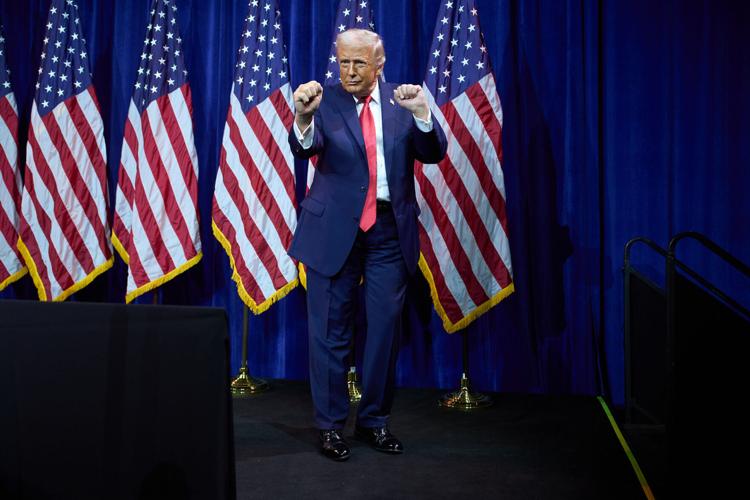
President Donald Trump dances as he walks off stage Tuesday after speaking to House Republican lawmakers during their annual policy retreat in Washington.
Meanwhile, officials said Tuesday at least 24 Venezuelan security officers were killed in the dead-of-night U.S. military operation to capture Nicolás Maduro and spirit him to the United States to face drug charges.
Venezuelan authorities announced the death count as the country's acting president, Delcy Rodriguez, pushed back on Trump, who this week warned she'd face an outcome worse than Maduro’s if she does not "do what’s right" and overhaul Venezuela into a country that aligns with U.S. interests.
Trump says his administration will "run" Venezuela policy and pressed the country’s leaders to open its vast oil reserves to American energy companies.
"Personally, to those who threaten me," Rodriguez said in an address before government agricultural and industrial sector officials. "My destiny is not determined by them, but by God.”
Venezuela's Attorney General Tarek William Saab said overall "dozens" of officials and civilians were killed in the strike and that prosecutors would investigate the deaths in what he described as a "war crime." He didn't specify whether the estimate specifically referred to Venezuelans.
In addition to the Venezuelan security officials, Cuba's government on Sunday announced that 32 Cuban military and police officers working in Venezuela were killed in the raid.
White House deputy chief of staff Stephen Miller said Monday that U.S. officials believe that the Cuban government, which provided Maduro with security protection in Caracas, undercounted the death toll of its personnel.
The U.S. said some of the nearly 200 U.S. personnel who took part in the operation were injured but none were killed. The Pentagon has not provided details about the injuries despite multiple inquiries over several days.

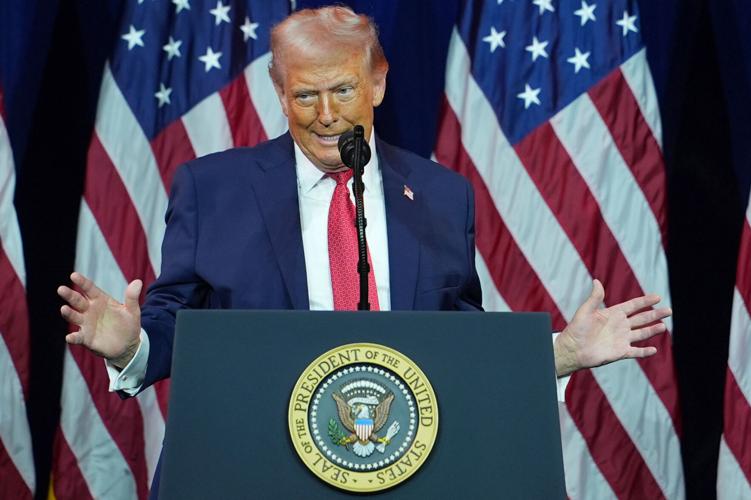
President Donald Trump speaks to House Republican lawmakers Tuesday during their annual policy retreat in Washington.
Trump complaints
Trump pushed back Tuesday against Democratic criticism of the weekend military operation, noting his Democratic predecessor Joe Biden also called for the arrest of the Venezuelan leader on drug trafficking charges.
In remarks before a House Republican retreat in Washington, Trump complained that Democrats didn't give him credit for a successful military operation, even though there was bipartisan agreement that Maduro was not the rightful president of Venezuela.
Maduro was indicted in the United States in 2020, accused in a decadeslong narco-terrorism and international cocaine trafficking conspiracy.
White House officials noted that Biden's administration last year raised the award for information leading to Maduro's arrest after he assumed a third term in office despite evidence suggesting he lost Venezuela's most recent election. The Trump administration doubled the award to $50 million in August.
"You know, at some point, they should say, 'You know, you did a great job. Thank you. Congratulations.' Wouldn't it be good?" Trump said. "I would say that if they did a good job, their philosophies are so different. But if they did a good job, I'd be happy for the country. They've been after this guy for years and years and years."

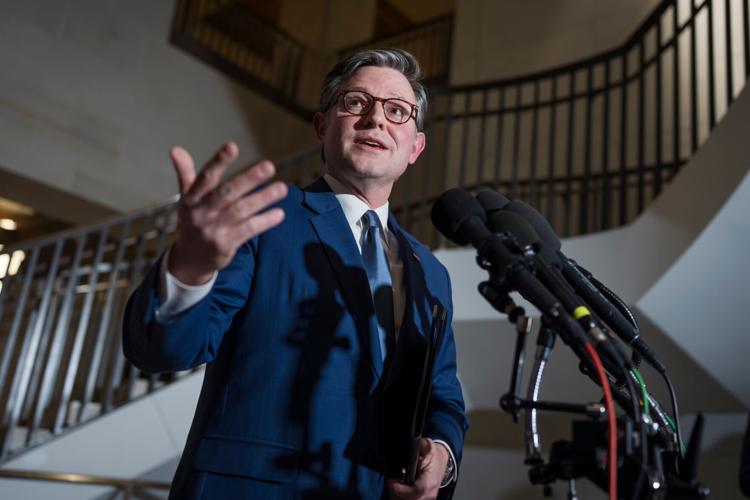
House Speaker Mike Johnson, R-La., answers questions from reporters late Monday after a closed-door briefing about the U.S. military operation in Venezuela at the Capitol in Washington.
Trump's latest comments came after Secretary of State Marco Rubio and other top officials briefed leaders in Congress late Monday on the Venezuela operation amid mounting concerns that the Republican administration is embarking on a new era of U.S. expansionism without consultation with lawmakers or a clear vision for running the South American country.
After the briefing, House Speaker Mike Johnson told reporters he doesn't expect the United States to deploy troops to Venezuela, saying the U.S. actions there are "not a regime change" operation. Democratic leaders said the session lacked clarity about the Trump administration's plans for Venezuela.
Americans are split about the capture of Maduro — with many still forming opinions — according to a poll conducted by The Washington Post and SSRS using text messages over the weekend. About 4 in 10 approved of the U.S. military being sent to capture Maduro, while about the same share were opposed. About 2 in 10 were unsure.

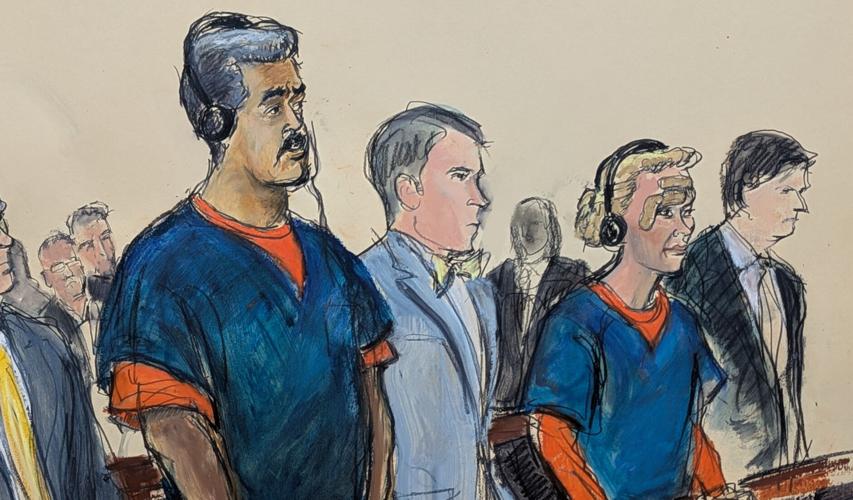
Venezuelan President Nicolas Maduro, left, and his wife, Cilia Flores, second from right, appear Monday in Manhattan federal court with their defense attorneys in New York.
Maduro pleaded not guilty to federal drug trafficking charges in a U.S. courtroom on Monday. U.S. forces captured Maduro and his wife early Saturday in a raid on a compound where they were surrounded by Cuban guards.
In the days since Maduro's ouster, Trump and top administration officials raised anxiety around the globe that the operation could mark the beginning of a more expansionist U.S. foreign policy in the Western Hemisphere.
The president in recent days renewed his calls for an American takeover of the Danish territory of Greenland for the sake of U.S. security interests and threatened military action on Colombia for facilitating the global sale of cocaine, while his top diplomat declared the communist government in Cuba is "in a lot of trouble."
Trump administration officials said his administration will "run" Venezuela policy and would press the country's leaders to open its vast oil reserves to American energy companies.

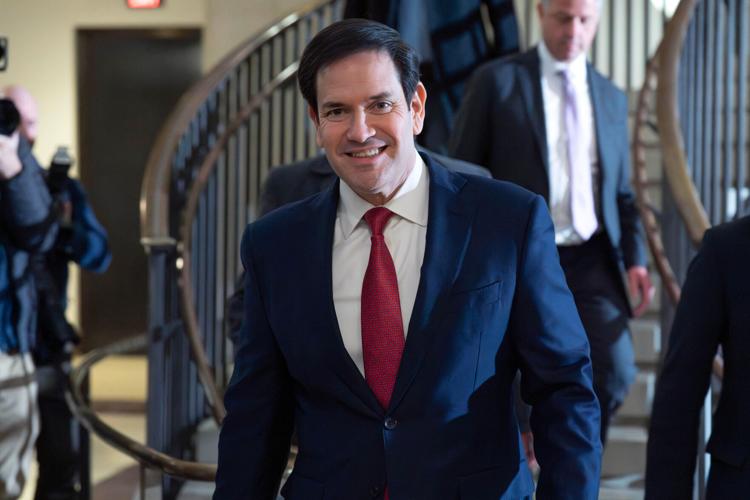
Secretary of State Marco Rubio arrives Monday night at the U.S. Capitol in Washington for a closed-door briefing with top lawmakers.
Colombia's Foreign Affairs Minister Rosa Villavicencio said Tuesday she'll meet with the U.S. Embassy's charge d'affaires in Bogota to present him with a formal complaint over the recent threats issued by the United States.
On Sunday, Trump said he wasn't ruling out an attack on Colombia and described its president, an outspoken critic of the U.S. pressure campaign on Venezuela, as a "sick man who likes making cocaine and selling it to the United States."
At a news conference, Villavicencio said she hopes to strengthen relations with the United States and improve cooperation in the fight against drug trafficking, echoing comments made Monday by several members of Colombia's government.
"It is necessary for the Trump administration to know in more detail about all that we are doing in the fight against drug trafficking," she said.

