


BOSTON — A federal judge said Thursday she will halt the Trump administration from ending a program that allowed hundreds of thousands of Cubans, Haitians, Nicaraguans and Venezuelans to temporarily live in the United States.
U.S. District Judge Indira Talwani said she will issue a stay on the program, which was set to end later this month. The push to help more than half-a-million Cubans, Haitians, Nicaraguans and Venezuelans is part of a broader legal effort to protect nationals from Ukraine, Afghanistan and other countries who are here legally.
During the hearing, Talwani repeatedly questioned the government's assertion for ending the program — namely that it has the power to do and that it was no longer serving their purpose. She argued that immigrants in the program now face an option of “fleeing the country” or staying and “risk losing everything.”
“The nub of the problem here is that the secretary, in cutting short the parole period afforded to these individuals, has to have a reasoned decision,” Talwani said, adding that the explanation for ending the program was “based on an incorrect reading of the law.”
Last month, the administration revoked legal protections for hundreds of thousands of Cubans, Haitians, Nicaraguans and Venezuelans, setting them up for potential deportation in 30 days. Homeland Security Secretary Kristi Noem said they will lose their legal status on April 24.
They arrived with financial sponsors and were given two-year permits to live and work in the U.S. During that time, the beneficiaries needed to find other legal pathways if they wanted to stay in the U.S. Parole has been a temporary status.

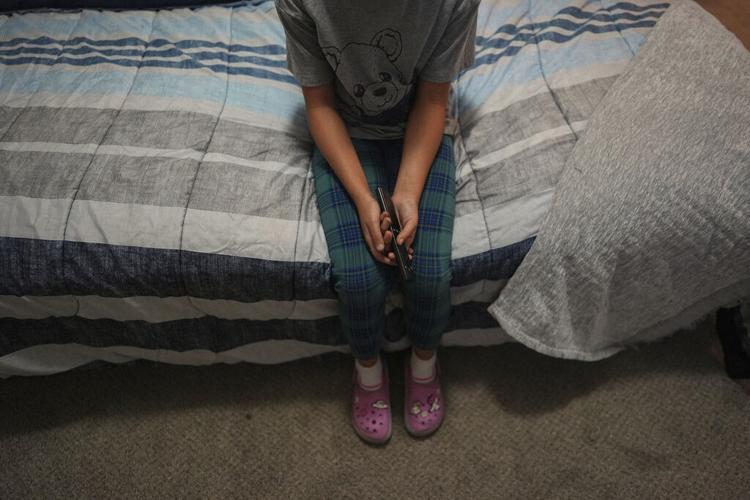
A 9-year-old girl with Temporary Protected Status, or TPS, who was born in Venezuela, but who fluently speaks only English and is in the gifted program at her school, watches TV in her family's apartment, Saturday, April 5, 2025, in Doral, Fla. (AP Photo/Rebecca Blackwell)
President Donald Trump has been ending legal pathways for immigrants to come to the U.S., implementing campaign promises to deport millions of people who are in the U.S. illegally.
Outside court, immigration advocates, including Guerline Jozef, founder and executive director of the Haitian Bridge Foundation, one of the plaintiffs in the lawsuit, said attacks on this program contradict the Trump administration’s strategy on immigration.
“We hear the narrative of people coming her illegally and the administration wanting to erase illegal immigration,” Jozef said. “But, we clearly see today that is not the case. Even those people who have legal status, are paying their taxes and working are under attack.”
In motion ahead of the hearing, plaintiffs called the administration’s action “unprecedented” and said it would result in people losing their legal status and ability to work. The also called the move “contrary to law within the meaning of the Administrative Procedure Act,” which sets out the procedures that agencies have to follow when making rules.
Lawyers for the Trump administration argued that the plaintiffs lacked standing and that the move by the U.S. Department of Homeland Security impacting immigrants in the program, known as CHNV, did not violate the Administrative Procedure Act. They also said plaintiffs would not be able to show the termination of the program was unlawful.
“DHS’s decision to terminate the CHNV program and existing grants of parole under that program is within this statutory authority and comports with the notice requirements of the statute and regulations,” they wrote. “Additionally, given the temporary nature of CHNV parole and CHNV parolees’ pre-existing inability to seek re-parole under the program, their harms are outweighed by the harms to the public if the Secretary is not permitted to discontinue a program she has determined does not serve the public interest.”
The end of temporary protections for these immigrants generated little political blowback among Republicans other than three Cuban-American representatives from Florida who called for preventing the deportation of the Venezuelans affected. One of them, Rep. Maria Salazar of Miami, also joined about 200 congressional Democrats this week in co-sponsoring a bill that would enable them to become lawful permanent residents.
Judge allows administration to require those in US illegally to register
Meanwhile, a federal judge is allowing the Trump administration to move forward with a requirement that everyone in the U.S. illegally must register with the federal government, in a move that could have far-reaching repercussions for immigrants across the country.
In a ruling Thursday, Judge Trevor Neil McFadden sided with the administration, which argued it was simply enforcing an already existing requirement for everyone in the country who wasn’t an American citizen to register with the government.
The requirement goes in effect Friday.
The Department of Homeland Security announced Feb. 25 that it would mandate that all people in the United States illegally register with the federal government, and said those who didn’t self-report could face fines or prosecution. Failure to register is considered a crime, and people will be required to carry registration documents with them or risk prison time and fines.
Registration will be mandatory for everyone 14 and older without legal status. People registering have to provide their fingerprints and address, and parents and guardians of anyone under age 14 must ensure they registered.
The registration process also applies to Canadians who are in the U.S. for more than 30 days, such as so-called snowbirds who spend winter months in places like Florida.

Homeland Security Secretary Kristi Noem speaks during a news conference to announce the re-launch of the VOICE office, Victims of Immigration Crime Engagement, with families of victims behind her, at the Immigration and Customs Enforcement headquarters, Wednesday, April 9, 2025, in Washington. (AP Photo/Alex Brandon)
Registration laws trace back to 1940 act
Federal immigration law long required that people who aren’t American citizens and live in the U.S., including those here illegally, register with the government. Those laws can be traced back to the Alien Registration Act of 1940, which came amid growing fears of immigrants and political subversives in the early days of World War II. The current requirements stem from the Immigration and Nationality Act of 1952.
Still, the requirement that people illegally in the U.S. register has been enforced only in rare circumstances. In fact, advocates opposing the government say it hasn’t been universally used since it was first introduced in the mid-1940s.
It was used in a limited way after Sept. 11, 2001, when the National Security Entry-Exit Registration System required that all noncitizen males 16 and older from 25 countries — all but one of them majority Arab or Muslim — register with the U.S. government. The program led to no terrorism convictions but pulled more than 13,000 people into deportation proceedings. It was suspended in 2011 and dissolved in 2016.
The Trump administration argued that the registration requirement always existed and officials are simply enforcing it for everyone.
The groups that sued say this registration process is expressly to facilitate Trump’s aim of carrying out mass deportations of people in the country illegally.
The plaintiffs also say the government should have gone through the more lengthy public notification process before making the change.
They argue that the registry puts people who work, contribute to the economy and have deep family ties in America into a deep bind: Do they come forward, register and essentially give up their location to a government intent on carrying out mass deportations, or do they stay in the shadows and risk being charged with the crime of not registering?
The government already asked people subject to the registration requirement to create an account on the U.S. Citizenship and Immigration Services website.

Six people died in a helicopter crash in the Hudson River in New York City, an AP source says
PHOTOS: A look at immigration and the US border with Mexico

The U.S. Border with Mexico is seen in an aerial view Friday, Jan. 31, 2025, near San Diego. (AP Photo/Jae C. Hong)

The U.S. Border with Mexico is seen in an aerial view Friday, Jan. 31, 2025, near San Diego. (AP Photo/Jae C. Hong)

An Army soldier looks at the border wall while providing security to the visit of Defense Secretary Pete Hegseth to the US-Mexico border in Sunland Park, N.M., Monday, Feb. 3, 2025. (AP Photo/Andres Leighton)

The Anapra neighborhood of Ciudad Juarez, Mexico, is seen behind the border wall in Sunland Park, N.M., Monday, Feb. 3, 2025. (AP Photo/Andres Leighton)

The Anapra neighborhood of Ciudad Juarez, Mexico, is seen behind the border wall in Sunland Park, N.M., Monday, Feb. 3, 2025. (AP Photo/Andres Leighton)

Freight trains ride adjacent to the border wall in Sunland Park, N.M., Monday, Feb. 3, 2025. (AP Photo/Andres Leighton)

The U.S.-Mexico border wall is seen Saturday, Jan. 25, 2025, in Tijuana, Mexico. (AP Photo/Ethan Swope)

Members of the Mexican National Guard patrol next to the U.S.-Mexico border wall Saturday, Jan. 25, 2025, in Tijuana, Mexico. (AP Photo/Ethan Swope)

A U.S. Marine Osprey is flown over the border Friday, Jan. 31, 2025, near San Diego. (AP Photo/Jae C. Hong)

The U.S. Border with Mexico is seen in an aerial view Friday, Jan. 31, 2025, near San Diego. (AP Photo/Jae C. Hong)

The U.S. Border with Mexico is seen in an aerial view Friday, Jan. 31, 2025, near San Diego. (AP Photo/Jae C. Hong)

Gunnery Sgt. Derek Levi, right, looks down at the U.S. Mexico border aboard a Marines helicopter Friday, Jan. 31, 2025, near San Diego. (AP Photo/Jae C. Hong)

A U.S. Marine Osprey is flown over the border Friday, Jan. 31, 2025, near San Diego. (AP Photo/Jae C. Hong)

The U.S. Border with Mexico is seen in an aerial view Friday, Jan. 31, 2025, near San Diego. (AP Photo/Jae C. Hong)

Tents fill the Juventud 2000 shelter Saturday, Jan. 25, 2025, in Tijuana, Mexico. (AP Photo/Ethan Swope)
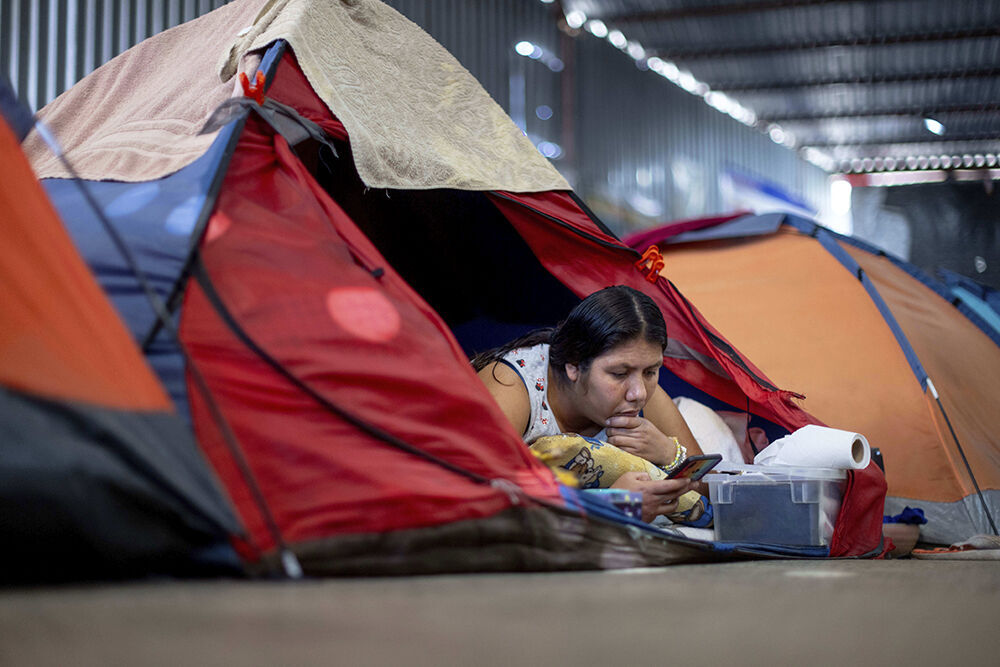
A woman looks at her phone at the Juventud 2000 shelter Saturday, Jan. 25, 2025, in Tijuana, Mexico. (AP Photo/Ethan Swope)

Pablo Jose Alvarado holds a paper showing his canceled appointment with U.S. Customs and Border Patrol at a shelter Saturday, Jan. 25, 2025, in Tijuana, Mexico. (AP Photo/Ethan Swope)

Antonio Neri and his daughters, Evelyn and Melina, from left to right, wait at the Agape Mundial shelter Saturday, Jan. 25, 2025, in Tijuana, Mexico. The family have been at the shelter since March 2024 after fleeing violence in Mexico. (AP Photo/Ethan Swope)

A child wrapped in a blanket walks through the Agape Mundial shelter Saturday, Jan. 25, 2025, in Tijuana, Mexico. (AP Photo/Ethan Swope)

From left to right, Evelyn, Melina and Reina wait at the Agape Mundial shelter Saturday, Jan. 25, 2025, in Tijuana, Mexico. (AP Photo/Ethan Swope)

People walk near the U.S.-Mexico border wall Saturday, Jan. 25, 2025, in Tijuana, Mexico. (AP Photo/Ethan Swope)

Workers begin the installation of a temporary shelter for possible deportees from the United States, in Ciudad Juarez, Mexico, Wednesday, Jan. 22, 2025. (AP Photo/Christian Chavez)

Workers begin the installation of a temporary shelter for possible deportees from the United States, in Ciudad Juarez, Mexico, Wednesday, Jan. 22, 2025. (AP Photo/Christian Chavez)

A Border Patrol agent walks towards a gap in one of two border walls separating Mexico from the United States, Thursday, Jan. 23, 2025, in San Diego. (AP Photo/Gregory Bull)

A Border Patrol agent looks through binoculars towards two border walls separating Mexico from the United States, Thursday, Jan. 23, 2025, in San Diego. (AP Photo/Gregory Bull)

Border Patrol vehicles drive along two border walls separating Mexico from the United States Thursday, Jan. 23, 2025, in San Diego. (AP Photo/Gregory Bull)

A Border Patrol agent walks past four men detained after crossing the border illegally in a gap in two walls separating Mexico from the United States before turning themselves in, Thursday, Jan. 23, 2025, in San Diego. (AP Photo/Gregory Bull)

A gap in one of two border walls separating Mexico from the United States is seen Thursday, Jan. 23, 2025, in San Diego. (AP Photo/Gregory Bull)

Workers construct temporary shelters for possible deportees from the United States, in Ciudad Juarez, Mexico, Friday, Jan. 24, 2025. (AP Photo/Christian Chavez)

Workers construct temporary shelters for possible deportees from the United States, in Ciudad Juarez, Mexico, Friday, Jan. 24, 2025. (AP Photo/Christian Chavez)

Construction crews replace sections of one of two border walls separating Mexico from the United States, Wednesday, Jan. 22, 2025, in Tijuana, Mexico. (AP Photo/Gregory Bull)

A member of the Mexican National Guard stands guard, left, as construction crews replace sections of one of two border walls separating Mexico from the United States, Wednesday, Jan. 22, 2025, in Tijuana, Mexico. (AP Photo/Gregory Bull)

Construction crews replace sections of one of two border walls separating Mexico from the United States, Wednesday, Jan. 22, 2025, in Tijuana, Mexico. (AP Photo/Gregory Bull)

Migrants eat at a shelter Wednesday, Jan. 22, 2025, in the border city of Tijuana, Mexico. (AP Photo/Gregory Bull)

A migrant woman from the Mexican state of Guerrero holds her 1-year-old granddaughter as she hits a piñata of President Donald Trump at a shelter for migrants Wednesday, Jan. 22, 2025, in the border city of Tijuana, Mexico. (AP Photo/Gregory Bull)
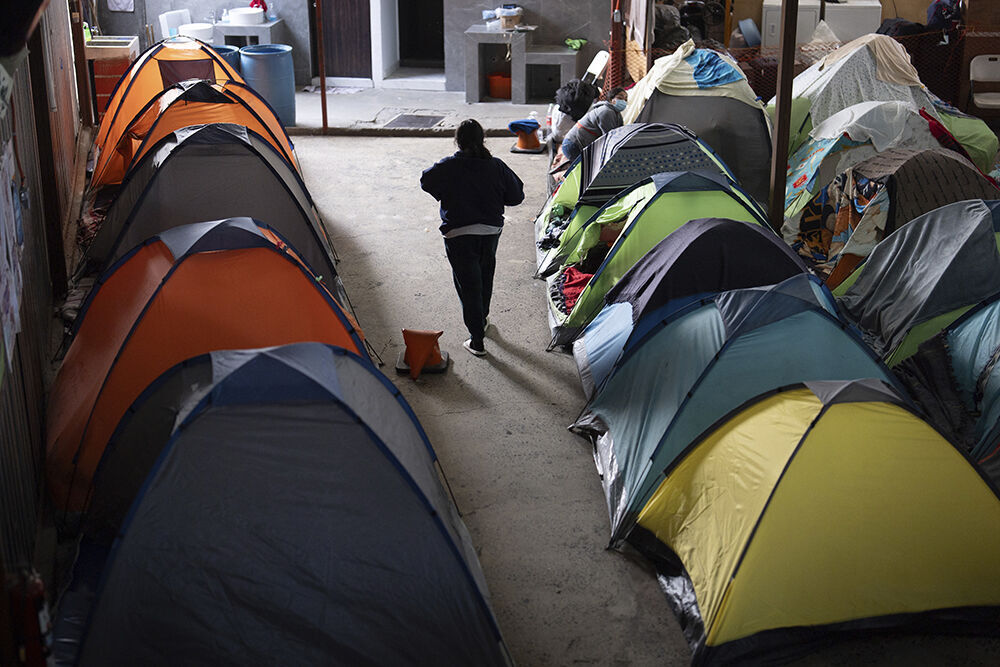
A migrant woman from the Mexican state of Guerrero walks among tents at a migrant shelter Wednesday, Jan. 22, 2025, in the border city of Tijuana, Mexico. (AP Photo/Gregory Bull)

Workers begin the installation of a temporary shelter for possible deportees from the United States, in Ciudad Juarez, Mexico, Wednesday, Jan. 22, 2025. (AP Photo/Christian Chavez)

Migrants who were deported from the U.S. to Mexico wave as they are transported to a shelter, as they cross El Chaparral pedestrian border bridge in Tijuana, Mexico, late Tuesday, Jan. 21, 2025. (AP Photo/Felix Marquez)

Migrants walk back into Mexico after being deported from the U.S., at El Chaparral pedestrian border bridge in Tijuana, Mexico, late Tuesday, Jan. 21, 2025. (AP Photo/Felix Marquez)

Migrants walk into Mexico after being deported from the U.S. at El Chaparral pedestrian border bridge in Tijuana, Mexico, Tuesday, Jan. 21, 2025. (AP Photo/Felix Marquez)

Dogs are near a border wall separating Mexico from the United States Wednesday, Jan. 22, 2025, in San Diego. (AP Photo/Gregory Bull)

Volunteers talk in a tent along a border wall separating Mexico from the United States Wednesday, Jan. 22, 2025, in San Diego. (AP Photo/Gregory Bull)

Members of the Mexican National Guard patrol as construction crews replace sections of one of two border walls separating Mexico from the United States, Wednesday, Jan. 22, 2025, in Tijuana, Mexico. (AP Photo/Gregory Bull)

A sign reading "Augustana is a Sanctuary" is displayed on a door at the Augustana Lutheran Church, Thursday, Jan. 9, 2025, in Portland, Oregon. (AP Photo/Jenny Kane)

Members of the Mexican National Guard patrol as construction crews replace sections of one of two border walls separating Mexico from the United States, Wednesday, Jan. 22, 2025, in Tijuana, Mexico. (AP Photo/Gregory Bull)

A Border Patrol is parked along the border wall in Sunland Park, N.M., Tuesday, Jan. 21, 2025. (AP Photo/Andres Leighton)

A yucca plant is backdropped by the border wall in Sunland Park, N.M., Tuesday, Jan. 21, 2025. (AP Photo/Andres Leighton)

The dry flower spike of a yucca plant is backdropped by the border wall in Sunland Park, N.M., Tuesday, Jan. 21, 2025. (AP Photo/Andres Leighton)

Palm trees are reflected as the sun sets along the border, Tuesday, Jan. 21, 2025, in Hidalgo, Texas. (AP Photo/Eric Gay)

A Border Patrol agent keeps watch along the border wall at sunset, Tuesday, Jan. 21, 2025, in Hidalgo, Texas. (AP Photo/Eric Gay)

Concertina wire tops a section of a border wall separating Mexico from the United States Tuesday, Jan. 21, 2025, in San Diego. (AP Photo/Gregory Bull)

Concertina wire tops a section of a border wall separating Mexico from the United States Tuesday, Jan. 21, 2025, in San Diego. (AP Photo/Gregory Bull)

Migrants who were deported from the U.S. stand on El Chaparral pedestrian border bridge in Tijuana, Mexico, late Tuesday, Jan. 21, 2025. (AP Photo/Felix Marquez)

Migrants who were deported from the U.S. to Mexico wave as they are transported to a shelter, as they cross El Chaparral pedestrian border bridge in Tijuana, Mexico, late Tuesday, Jan. 21, 2025. (AP Photo/Felix Marquez)

Migrants enter Mexico along El Chaparral pedestrian border bridge in Tijuana, Mexico, Tuesday, Jan. 21, 2025, after being deported from the U.S. (AP Photo/Felix Marquez)

The border wall between Mexico, left, and the United States is pictured in Sunland Park, N.M., Tuesday, Jan. 21, 2025 in El Paso, Texas. (AP Photo/Andres Leighton)

A Border Patrol truck rides along the border wall in Sunland Park, N.M., Tuesday, Jan. 21, 2025. (AP Photo/Andres Leighton)

A Border Patrol truck rides along the border wall in Sunland Park, N.M., Tuesday, Jan. 21, 2025. (AP Photo/Andres Leighton)

A truck is seen at the top of a hill along the border wall in Sunland Park, N.M., Tuesday, Jan. 21, 2025. (AP Photo/Andres Leighton)

A truck rides on the Mexico side of the border wall as seen from Sunland Park, N.M., Tuesday, Jan. 21, 2025. (AP Photo/Andres Leighton)

A Border Patrol truck rides along the border wall in Sunland Park, N.M., Tuesday, Jan. 21, 2025. (AP Photo/Andres Leighton)

The border wall is pictured in Sunland Park, N.M., Tuesday, Jan. 21, 2025. (AP Photo/Andres Leighton)

The dry flower spike of a yucca plant is backdropped by the border wall in Sunland Park, N.M., Tuesday, Jan. 21, 2025. (AP Photo/Andres Leighton)

A group of migrants wait to be processed between two border walls separating Mexico and the United States after crossing illegally before dawn Tuesday, Jan. 21, 2025, in San Diego. (AP Photo/Gregory Bull)

A group of migrants wait to be processed between two border walls separating Mexico and the United States after crossing illegally before dawn Tuesday, Jan. 21, 2025, in San Diego. (AP Photo/Gregory Bull)

Danielle Cosmes, a volunteer with American Friends Service Committee, stands in a tent with food, water and information to offer to migrants seeking asylum along a section of the border walls separating Mexico and the United States where hundreds arrived daily a year ago, but is now usually nearly vacant, Tuesday, Jan. 21, 2025, in San Diego. (AP Photo/Gregory Bull)

A Border Patrol van transports a group of migrants after they crossed illegally and waiting to apply for asylum between two border walls separating Mexico and the United States, Tuesday, Jan. 21, 2025, in San Diego. (AP Photo/Gregory Bull)

A group of migrants wait to be processed between two border walls separating Mexico and the United States after crossing illegally before dawn Tuesday, Jan. 21, 2025, in San Diego. (AP Photo/Gregory Bull)

A group of migrants wait to be processed between two border walls separating Mexico and the United States after crossing illegally before dawn Tuesday, Jan. 21, 2025, in San Diego. (AP Photo/Gregory Bull)

Migrants wait to apply for asylum between two border walls separating Mexico and the United States after crossing illegally, Tuesday, Jan. 21, 2025, in San Diego. (AP Photo/Gregory Bull)

A Border Patrol Agent moves along a stretch of boarder wall, Tuesday, Jan. 21, 2025, in Brownsville, Texas. (AP Photo/Eric Gay)

A Border Patrol Agent patrols along a stretch of boarder wall, Tuesday, Jan. 21, 2025, in Brownsville, Texas. (AP Photo/Eric Gay)

A member of the National Guard patrols along a stretch of border wall, Tuesday, Jan. 21, 2025, in Brownsville, Texas. (AP Photo/Eric Gay)

A truck passes a stretch of boarder wall, Tuesday, Jan. 21, 2025, in Brownsville, Texas. (AP Photo/Eric Gay)

The border wall is pictured in the Sunland Park area of New Mexico, Monday, Jan. 20, 2025. (AP Photo/Andres Leighton)

The Anapra neighborhood of Ciudad Juarez, Mexico, is pictured behind the border wall from the Sunland Park area of New Mexico, Monday, Jan. 20, 2025. (AP Photo/Andres Leighton)

Migrants with CBP One application appointments to apply for asylum in the United States look on after their appointments were declared not valid on the application Monday, Jan. 20, 2025, in Tijuana, Mexico, shortly after President Donald Trump was sworn-in. (AP Photo/Gregory Bull)

A girl from the Mexican state of Morelia sleeps in front of a sign for Tijuana as her family's CBP One application appointments to apply for asylum in the United States were declared not valid on the application Monday, Jan. 20, 2025, in Tijuana, Mexico, shortly after President Donald Trump was sworn-in. (AP Photo/Gregory Bull)

Members of the Mexican National Guard patrol along the border wall separating Mexico and the United States, Monday, Jan. 20, 2025, in Tijuana, Mexico. (AP Photo/Gregory Bull)

Members of the Mexican National Guard patrol along the border wall separating Mexico and the United States, Monday, Jan. 20, 2025, in Tijuana, Mexico. (AP Photo/Gregory Bull)

A band serenades two women near where the border wall separating Mexico and the United States reaches the Pacific Ocean Monday, Jan. 20, 2025, in Tijuana, Mexico. (AP Photo/Gregory Bull)

People cross the border into Mexico from the United States, Monday, Jan. 20, 2025, in Tijuana, Mexico. (AP Photo/Gregory Bull)

Migrants seeking asylum leave an immigration office after their scheduled meetings were canceled and they were turned away soon after President Donald Trump canceled the CBP One app, Monday, Jan. 20, 2025, in Matamoros, Mexico. (AP Photo/Eric Gay)

Migrants seeking asylum in the United States load into a taxi after immigration officers turned them away from their scheduled meeting soon after President Donald Trump canceled the CBP One app, Monday, Jan. 20, 2025, in Matamoros, Mexico. (AP Photo/Eric Gay)

Marcela Medina and her husband Enrique Corea of Venezuela react to seeing that their appointment was canceled on the U.S. Customs and Border Protection (CBP) One app, as they wait near the border crossing in Tijuana, Mexico on Monday, Jan. 20. 2025. (AP Photo/Gregory Bull)

A sign regarding the U.S. Immigration and Customs Enforcement is posted on the window of a corner store on the day of President Trump's Inauguration, Monday, Jan. 20, 2025, in the predominantly Latino Little Village neighborhood Chicago. (AP Photo/Erin Hooley)

A family walk back into Mexico after being deported at the border crossing in Tijuana, Mexico on Monday, Jan. 20. 2025. The family had been in detention for a week and their deportation was finalized today. (AP Photo/Gregory Bull)

Roxana, a migrant from Chiapas, Mexico, hands a child a drink at El Buen Samaritano shelter, in Ciudad Juarez, Mexico, Monday, Jan. 20, 2025, the inauguration day of U.S. President Donald Trump. (AP Photo/Christian Chavez)

Migrants pray before receiving a meal at El Buen Samaritano shelter, in Ciudad Juarez, Monday, Jan. 20, 2025, the inauguration day of U.S. President Donald Trump. (AP Photo/Christian Chavez)

A train travels adjacent to the U.S.-Mexico border wall in Sunland Park, New Mexico, Monday, Jan. 20, 2025. (AP Photo/Andres Leighton)

The sun sets behind the border wall in Sunland Park, N.M., Monday, Jan. 20, 2025. (AP Photo/Andres Leighton)

A Border Patrol truck rides along the border wall in Sunland Park, N.M., Monday, Jan. 20, 2025. (AP Photo/Andres Leighton)

Sylvia Martinez and her daughter Maria of El Salvador, hug and get emotional as they see that their afternoon appointment was canceled on the U.S. Customs and Border Protection (CBP) One app, at the border crossing in Tijuana, Mexico on Monday, Jan. 20. 2025. (AP Photo/Gregory Bull)

Migrants live in a tent encampment by the Vallejo train tracks in Mexico City, Monday, Jan. 20, 2025, the inauguration day of U.S. President Donald Trump. (AP Photo/Marco Ugarte)

A migrant talks on his cell phone at a tent camp set up next to the Vallejo train tracks in Mexico City, Monday, Jan. 20, 2025, the inauguration day of U.S. President Donald Trump. (AP Photo/Marco Ugarte)

A volunteer with a pro-migrant organization shows the updated message of the CBP One app advising the cancellations of existing appointments for migrants that were scheduled to enter the United States on Monday, Jan. 20, 2025, in El Paso, Texas. (AP Photo/Andres Leighton)

A migrant seeking asylum holds up the CBP One app showing his appointment was canceled after President Donald Trump was sworn into office, Monday, Jan. 20, 2025, in Matamoros, Mexico. (AP Photo/Eric Gay)

Migrants seeking asylum in the United States load into a taxi after immigrations turned them away from their scheduled meeting soon after President Donald Trump canceled the CBP One app, Monday, Jan. 20, 2025, in Matamoros, Mexico. (AP Photo/Eric Gay)

Migrants seeking asylum in the United States load into a taxi after immigration officers turned them away from their scheduled meetings soon after President Donald Trump canceled the CBP One app, Monday, Jan. 20, 2025, in Matamoros, Mexico. (AP Photo/Eric Gay)

Migrants seeking asylum in the United States wait for a taxi after immigrations officers turned them away from their scheduled meetings soon after President Donald Trump canceled the CBP One app, Monday, Jan. 20, 2025, in Matamoros, Mexico. (AP Photo/Eric Gay)

Migrants seeking asylum leave an immigration office after their scheduled meetings were canceled and they were turned away soon after President Donald Trump canceled the CBP One app, Monday, Jan. 20, 2025, in Matamoros, Mexico. (AP Photo/Eric Gay)

Migrants seeking asylum leave an immigration office after their scheduled meetings were canceled and they were turned away soon after President Donald Trump canceled the CBP One app, Monday, Jan. 20, 2025, in Matamoros, Mexico. (AP Photo/Eric Gay)

Migrants seeking asylum leave an immigration office after their scheduled meetings were canceled and they were turned away soon after President Donald Trump canceled the CBP One app, Monday, Jan. 20, 2025, in Matamoros, Mexico. (AP Photo/Eric Gay)

Migrants seeking asylum in the United States load into a taxi after immigration officers turned them away from their scheduled meetings soon after President Donald Trump canceled the CBP One app, Monday, Jan. 20, 2025, in Matamoros, Mexico. (AP Photo/Eric Gay)

Migrants seeking asylum in the United States load into a taxi after immigration officers turned them away from their scheduled meetings soon after President Donald Trump canceled the CBP One app, Monday, Jan. 20, 2025, in Matamoros, Mexico. (AP Photo/Eric Gay)

Migrants seeking asylum leave an immigration office after their scheduled meetings were canceled and they were turned away soon after President Donald Trump canceled the CBP One app, Monday, Jan. 20, 2025, in Matamoros, Mexico. (AP Photo/Eric Gay)

Migrants seeking asylum leave an immigration office after their scheduled meetings were canceled and they were turned away soon after President Donald Trump canceled the CBP One app, Monday, Jan. 20, 2025, in Matamoros, Mexico. (AP Photo/Eric Gay)

Colombian migrant Margelis Tinoco, 48, left, cries after her CBP One appointment was canceled at the Paso del Norte international bridge in Ciudad Juarez, Mexico, on the border with the U.S., Monday, Jan. 20, 2025, the inauguration day of U.S. President Donald Trump. (AP Photo/Christian Chavez)

Colombian migrant Margelis Tinoco, 48, cries after her CBP One appointment was canceled at the Paso del Norte international bridge in Ciudad Juarez, Mexico, on the border with the U.S., Monday, Jan. 20, 2025, the inauguration day of U.S. President Donald Trump. (AP Photo/Christian Chavez)

A young Venezuelan migrant with a toy gun plays with other children at a migrant tent camp outside La Soledad church in Mexico City, Monday, Jan. 20, 2025, the inauguration day of U.S. President Donald Trump. (AP Photo/Fernando Llano)

Young Venezuelan migrants play with toy cars and guns at a migrant tent camp outside La Soledad church in Mexico City, Monday, Jan. 20, 2025, the inauguration day of U.S. President Donald Trump. (AP Photo/Fernando Llano)

Melanie Mendoza of Venezuela, gets emotional as she sees that her 1pm appointment was canceled on the U.S. Customs and Border Protection (CBP) One app, as she and her family wait at the border crossing in Tijuana, Mexico on Monday, Jan. 20. 2025. (AP Photo/Gregory Bull)

CORRECTS COUNTRY SPELLING Maria Mercado, who is from Colombia but arrived from Ecuador, gets emotional as she sees that her 1pm appointment was canceled on the U.S. Customs and Border Protection (CBP) One app, as she and her family wait at the border crossing in Tijuana, Mexico on Monday, Jan. 20. 2025. (AP Photo/Gregory Bull)

Maria Mercado, who is from Colombia but arrived from Ecuador, gets emotional as she sees that her 1pm appointment was canceled on the U.S. Customs and Border Protection (CBP) One app, as she and her family wait at the border crossing in Tijuana, Mexico on Monday, Jan. 20. 2025. (AP Photo/Gregory Bull)

Maria Mercado, who is from Colombia but arrived from Ecuador, gets emotional as she sees that her 1pm appointment was canceled on the U.S. Customs and Border Protection (CBP) One app, as she and her family wait in Tijuana, Mexico on Monday, Jan. 20. 2025. (AP Photo/Gregory Bull)

A group of people react as they see that their appointments were canceled on the U.S. Customs and Border Protection (CBP) One app, as they arrive at the border crossing in Tijuana, Mexico on Monday, Jan. 20. 2025. (AP Photo/Gregory Bull)

Migrants with appointments wait to present their documents to U.S. immigration agents as part of their asylum applications at the Paso del Norte international bridge in Ciudad Juarez, Mexico, on the border with the U.S., Monday, Jan. 20, 2025, the inauguration day of U.S. President Donald Trump. (AP Photo/Christian Chavez)

A Venezuelan migrant collects water at a migrant tent camp outside La Soledad church in Mexico City, Monday, Jan. 20, 2025, the inauguration day of U.S. President Donald Trump. (AP Photo/Fernando Llano)

Venezuelan migrant Yuslay Rodriguez share a hug with her daughter and friends after entering the United States from Ciudad Juarez, Mexico through the Paso del Norte bridge, Monday, Jan. 20, 2025 in El Paso, Texas. (AP Photo/Andres Leighton)

Venezuelan migrants Yuslay Rodriguez, left, and her daughter Camila Torrealba become emotional while having a video chat with relatives in their home country after entering the United States from Ciudad Juarez, Mexico through the Paso del Norte bridge, Monday, Jan. 20, 2025 in El Paso, Texas. (AP Photo/Andres Leighton)

Venezuelan migrants from left; Yuslay Rodriguez, Sofia Ferrer, Camila Torrealba and Ruthmervis Tiamo have a video chat with relatives in their home country after entering the United States from Ciudad Juarez, Mexico through the Paso del Norte bridge, Monday, Jan. 20, 2025 in El Paso, Texas. (AP Photo/Andres Leighton)

Venezuelan migrants from left; Oldris Rodriguez, Daniela Medina, Josue Fernandez and Jilbelis Sequera celebrate after entering the United States from Ciudad Juarez, Mexico through the Paso del Norte bridge, Monday, Jan. 20, 2025 in El Paso, Texas.(AP Photo/Andres Leighton)

Venezuelan migrants Ruthmervis Tiamo, right, and her daughter Sofia Ferrer become emotional while having a video chat with relatives in their home country after entering the United States from Ciudad Juarez, Mexico through the Paso del Norte bridge, Monday, Jan. 20, 2025 in El Paso, Texas. (AP Photo/Andres Leighton)

Migrants share a hug after entering the United States from Ciudad Juarez, Mexico through the Paso del Norte bridge, Monday, Jan. 20, 2025 in El Paso, Texas. (AP Photo/Andres Leighton)

Colombian migrant Daniela Medina, right, checks her immigration papers after entering the United States from Ciudad Juarez, Mexico through the Paso del Norte bridge, Monday, Jan. 20, 2025 in El Paso, Texas. (AP Photo/Andres Leighton)

A migrant family from Michoacan, Mexico wait for transportation after entering the United States from Ciudad Juarez, Mexico through the Paso del Norte bridge, Monday, Jan. 20, 2025 in El Paso, Texas. (AP Photo/Andres Leighton)

Venezuelan migrants Daniela Medina, right, and Oldris Rodriguez hug in celebration after entering the United States from Ciudad Juarez, Mexico through the Paso del Norte bridge, Monday, Jan. 20, 2025 in El Paso, Texas. (AP Photo/Andres Leighton)

Migrants walk through Tapachula, Chiapas state, Mexico, in an attempt to reach the U.S. border, Monday, Jan. 20, 2025, the inauguration day of U.S. President Donald Trump. (AP Photo/Edgar H. Clemente)

Migrants walk through Tapachula, Chiapas state, Mexico, in an attempt to reach the U.S. border, Monday, Jan. 20, 2025, the inauguration day of U.S. President Donald Trump. (AP Photo/Edgar H. Clemente)

Migrants walk through Tapachula, Chiapas state, Mexico in an attempt to reach the U.S. border, Monday, Jan. 20, 2025, the inauguration day of U.S. President Donald Trump. (AP Photo/Edgar H. Clemente)

Migrants walk past a Mexican immigration checkpoint as they arrive to Huehuetan, Chiapas state, Mexico, in an attempt to reach the U.S. border, Monday, Jan. 20, 2025, the inauguration day of U.S. President Donald Trump. (AP Photo/Edgar H. Clemente)

Women and children migrants walk with a larger group of migrants through Tapachula, Chiapas state, Mexico, in an attempt to reach the U.S. border, Monday, Jan. 20, 2025, the inauguration day of U.S. President Donald Trump. (AP Photo/Edgar H. Clemente)

Yender Romero, from Venezuela, uses his cell phone to listen to news on the inauguration of U.S. President Donald Trump, at a migrant tent camp outside La Soledad church in Mexico City, Monday, Jan. 20, 2025. (AP Photo/Fernando Llano)

Venezuelan migrant Yender Romero shows the U.S. Customs and Border Protection (CBP) One app on his cell phone, which he said he used to apply for asylum in the U.S. and is waiting on an answer, at a migrant tent camp outside La Soledad church in Mexico City, Monday, Jan. 20, 2025, the inauguration day of U.S. President Donald Trump. (AP Photo/Fernando Llano)

A Venezuelan migrant wakes up at a migrant tent camp outside La Soledad church in Mexico City, Monday, Jan. 20, 2025, the inauguration day of U.S. President Donald Trump. (AP Photo/Fernando Llano)

Pedestrians arrive into downtown El Paso after crossing from Ciudad Juarez, Mexico, Sunday, Jan. 19, 2025, in El Paso, Texas. (AP Photo/Andres Leighton)

Volunteer Karen Parker places water bottles in an area where a year ago she would offer medical aid to large groups of migrants who had crossed the border illegally to apply for asylum but is now fairly desolate, Sunday, Jan. 19, 2025, in Jacumba Hot Springs, Calif. (AP Photo/Gregory Bull)

Volunteer Karen Parker places a trash bag in an area where a year ago she would offer medical aid to large groups of migrants who had crossed the border illegally to apply for asylum but is now fairly desolate, Sunday, Jan. 19, 2025, in Jacumba Hot Springs, Calif. (AP Photo/Gregory Bull)

Volunteer Karen Parker lights a cigarette next to the border wall separating Mexico and the United States where a year ago she would offer medical aid to large groups of migrants who had crossed the border illegally to apply for asylum, in Jacumba Hot Springs, Calif., Sunday, Jan. 19, 2025. (AP Photo/Gregory Bull)

Volunteer Karen Parker walks along a road next to the border wall separating Mexico and the United States where a year ago she would offer medical aid to large groups of migrants who had crossed the border illegally to apply for asylum, in Jacumba Hot Springs, Calif., Sunday, Jan. 19, 2025. (AP Photo/Gregory Bull)

Volunteer Karen Parker checks a water station along a road next to the border wall separating Mexico and the United States where a year ago she would offer medical aid to large groups of migrants who had crossed the border illegally to apply for asylum but is now fairly desolate, Sunday, Jan. 19, 2025, in Jacumba Hot Springs, Calif. (AP Photo/Gregory Bull)

Downtown El Paso, Texas is seen from Ciudad Juarez, Mexico, before President-elect Donald Trump's inauguration, Sunday, Jan. 19, 2025. (AP Photo/Andres Leighton)

Pigeons fly over the Rio Grande river and the Paso del Norte bridge that connects Ciudad Juarez, Mexico, and El Paso, Texas, Sunday, Jan. 19, 2025, in Ciudad Juarez, Mexico. (AP Photo/Andres Leighton)

Razor wire covers the banks of the Rio Grande river and the border wall in El Paso, Texas, as seen from Ciudad Juarez, Mexico, Sunday, Jan. 19, 2025. (AP Photo/Andres Leighton)

A purple cross placed on the Mexican side of the border with the United States is pictured with the border wall in the background hours before President-elect Donald Trump's inauguration, Sunday, Jan. 19, 2025, in Ciudad Juarez, Mexico. (AP Photo/Andres Leighton)

Commuters wait in lines to cross over to El Paso, Texas from Ciudad Juarez, Mexico at the Paso del Norte bridge before President-elect Donald Trump's inauguration, Sunday, Jan. 19, 2025. (AP Photo/Andres Leighton)

Roberto Peña sells handcrafted flowers to commuters waiting to cross over to El Paso, Texas, from Ciudad Juarez, Mexico, at the Paso del Norte bridge Sunday, Jan. 19, 2025. (AP Photo/Andres Leighton)

Pedestrians cross into El Paso, Texas, from Ciudad Juarez, Mexico, through the Paso del Norte bridge Sunday, Jan. 19, 2025. (AP Photo/Andres Leighton)

Migrants seeking asylum in the United States wait at Catholic Charity for humanitarian assistance and relief in McAllen, Texas, Saturday, Jan. 18, 2025. (AP Photo/Eric Gay)

Migrants seeking asylum in the United States wait at Catholic Charity for humanitarian assistance and relief in McAllen, Texas, Saturday, Jan. 18, 2025. (AP Photo/Eric Gay)

Migrants seeking asylum in the United States wait at Catholic Charity for humanitarian assistance and relief in McAllen, Texas, Saturday, Jan. 18, 2025. (AP Photo/Eric Gay)

The words "see you soon Trump!" are written on a section of the wall separating Mexico and the United States where the border reaches the Pacific Ocean, days ahead of President-elect Donald Trump's inauguration Saturday, Jan. 18, 2025, in Tijuana, Mexico. (AP Photo/Gregory Bull)

Santiago Lopez, of Mexico's southern state of Chiapas, walks past tents at a shelter for migrants days ahead of the 60th Presidential Inauguration, Saturday, Jan. 18, 2025, in Tijuana, Mexico. After crossing illegally into the United States in the hopes of applying for asylum and being immediately deported in October 2024, Lopez has decided to give up his plan to get to the United States, and will be leaving the border city to take his family back south on the day President-elect Donald Trump is inaugurated. (AP Photo/Gregory Bull)

A man talks on his phone as he looks through the wall separating Mexico and the United States where the border reaches the Pacific Ocean, days ahead of President-elect Donald Trump's inauguration Saturday, Jan. 18, 2025, in Tijuana, Mexico. (AP Photo/Gregory Bull)

Commuters wait in lines to cross over to El Paso, Texas from Ciudad Juarez, Mexico at the Paso del Norte bridge before President-elect Donald Trump's inauguration, Sunday, Jan. 19, 2025. (AP Photo/Andres Leighton)

A section of the border wall and road barriers are pictured during the visit of Defense Secretary Pete Hegseth in Sunland Park, N.M., Monday, Feb. 3, 2025. (AP Photo/Andres Leighton)

