

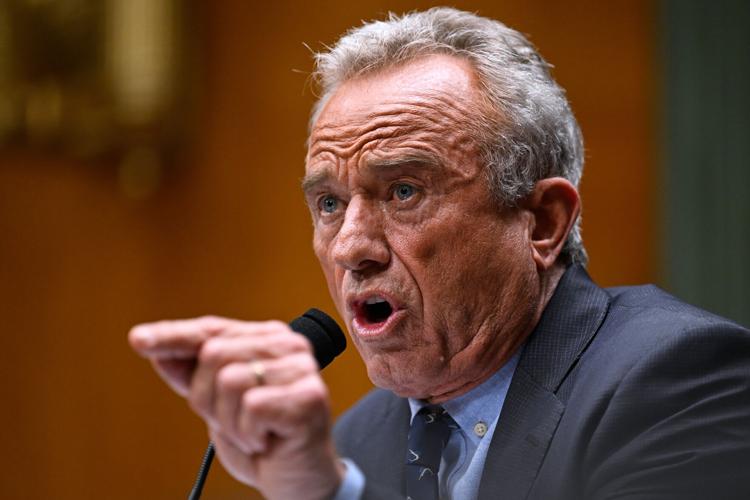
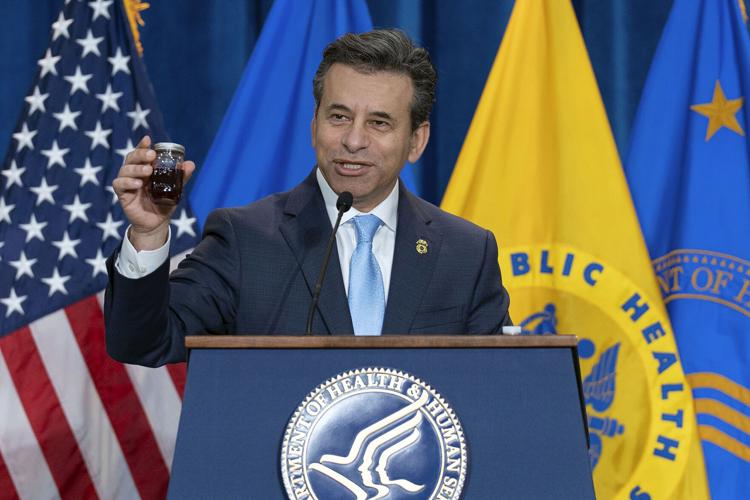
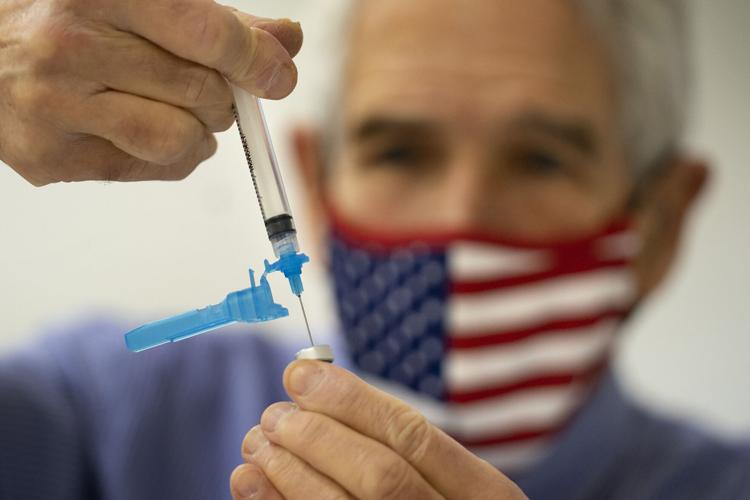
WASHINGTON — Robert F. Kennedy Jr. clinched the political support needed to become the nation's top health official by pledging to work within the decades-old federal system for approval and use of vaccines. Yet his regulators are promising big changes that cloud the outlook for what shots might even be available.
The Food and Drug Administration will soon "unleash a massive framework" for how vaccines are tested and approved, according to Commissioner Marty Makary. Details aren't yet public but the plan is being overseen by the agency's new vaccine chief, Dr. Vinay Prasad, an outspoken critic of FDA's handling of COVID-19 boosters.
Makary and other Trump administration officials already took unprecedented steps that raise uncertainty about next fall's COVID-19 vaccinations, including delaying FDA scientists' full approval of Novavax's shot — and then restricting its use to people at higher risk from the virus. They also suggested seasonal tweaks to match the latest circulating virus strains are new products requiring extra testing.
The changes cross multiple health agencies.
The Centers for Disease Control and Prevention hasn't yet acted on an influential advisory panel's recent recommendations on use of a new meningitis shot or broader RSV vaccination.
A meeting of Kennedy's "Make America Healthy Again" allies was recently told to expect an end to COVID-19 booster recommendations for children — something that vaccine advisory panel was supposed to debate in June. Researchers around the country lost National Institutes of Health funding to study vaccine hesitancy.
"I think you have to assume that RFK Jr.'s intention is to make it harder for vaccines to come to market," said Dr. Amesh Adalja, a vaccine expert at Johns Hopkins University. The changes are "looked at suspiciously because this is someone with a proven track record of evading the value of vaccines."
Raising doubts about vaccines
In a Senate health committee hearing last week, Kennedy incorrectly claimed that the only vaccines tested against a placebo, or dummy shot, were for COVID-19.
Sen. Bill Cassidy, a Louisiana Republican and physician who chairs the committee, briefly interrupted the hearing to say, "For the record, that's not true" — pointing to placebo-controlled studies of the rotavirus, measles and HPV vaccines.
Concerned by rhetoric about how vaccines are tested, a group of doctors recently compiled a list of more than 120 vaccine clinical trials spanning decades, most of them placebo-controlled, including for shots against polio, hepatitis B, mumps and tetanus.
"It directly debunks the claim that vaccines were never tested against placebo," said Dr. Jake Scott, a Stanford University infectious disease physician who's helping lead the project.
Antivaccine groups claim some substances scientists call a placebo may not really qualify, though the list shows simple saline shots are common.
Trump officials held up decision
The administration's promise of a new vaccine framework comes ahead of a Thursday meeting where FDA advisers will discuss updating COVID-19 shots for this fall and winter.
The FDA's credibility has long rested on the independence of its scientific decisions. While the agency is led by a handful of political appointees, approval decisions are almost always handled by career scientists.
That standard appears to be shifting. FDA staffers were poised to approve Novavax's vaccine early last month but administration officials, including Makary, delayed the decision, according to two people with direct knowledge of the situation who spoke on condition of anonymity. The shot was approved late Friday with unusual restrictions.
Dr. Tracy Beth Hoeg — a political appointee serving as Makary's special assistant — was involved in the unprecedented demand that Novavax conduct a new clinical trial of its shot after approval, according to the people. The requirement came shortly after the agency's longtime vaccine chief, Dr. Peter Marks, was forced to resign.
Hoeg — along with Makary and Prasad — spent much of the COVID-19 pandemic criticizing the FDA's handling of booster shots, particularly in children and young adults. All three were co-authors of a 2022 paper stating that requiring booster shots in young people would cause more harm than benefit.
Booster critics in control
As the FDA's top official overseeing vaccines, Prasad is now in position to reverse what he recently called "a number of missteps" in how the FDA assessed the benefits and risks of COVID-19 boosters.
He questioned how much benefit yearly vaccinations continue to offer. In a podcast shortly before assuming his FDA job, Prasad suggested companies could study about 20,000 older adults in August or September to show if an updated vaccine prevented COVID-related hospitalizations.
There is "legitimate debate about who should be boosted, how frequently they should be boosted and the value of boosting low-risk individuals," said Hopkins' Adalja. But he stressed that CDC's Advisory Committee on Immunization Practices has the proper expertise to be making those decisions.
Other experts say simply updating the strain that a COVID-19 vaccine targets doesn't make it a new product — and real-world data shows each fall's update has offered benefit.
"The data are clear and compelling" that vaccination reduces seniors' risk of hospitalization and serious illness for four to six months, said Michael Osterholm, a University of Minnesota infectious disease researcher.
Nor could that kind of study be accomplished quickly enough to get millions of people vaccinated before the yearly winter surge, said Dr. Jesse Goodman of Georgetown University, a former FDA vaccine chief.
"You'd always be doing clinical trials and you'd never have a vaccine that was up to date," he said.

