

PHOENIX — The Democratic base is angry.
Not just at President Donald Trump, Elon Musk and the "Make America Great Again" movement. Rank-and-file Democrats are mad at their own leaders and increasingly agitating to replace them.
Arizona Democrats pushed out their party chair, and Georgia Democrats are on their way to doing the same. Senate Minority Leader Chuck Schumer of New York postponed a book tour in the face of protests amid calls from progressives that he face a primary challenge.
The losing party after a presidential election often spends time in the wilderness, but the visceral anger among Democrats toward their party leaders is reaching a level reminiscent of the tea party movement that swept out Republican incumbents 15 years ago.
"They should absolutely be worried about holding onto power, because there's a real energy right now against them," Paco Fabián, deputy director of Our Revolution, a grassroots group allied with independent Vermont Sen. Bernie Sanders, said of Democratic incumbents. "And as soon as somebody figures out how to harness it, they're going to be in deep trouble."

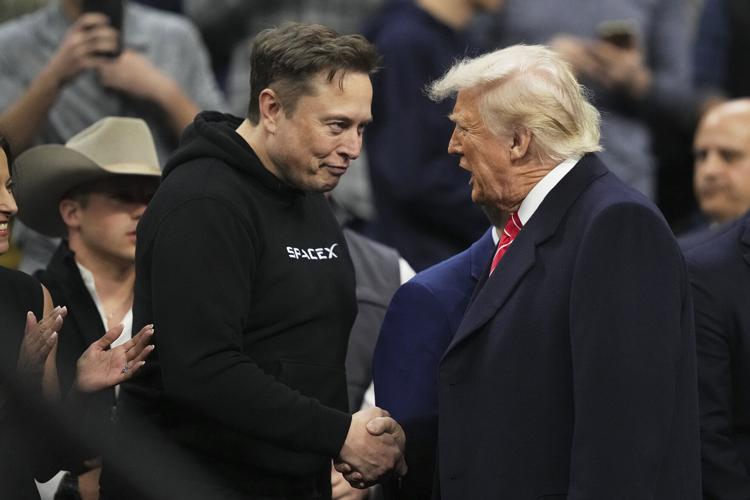
Elon Musk, left, shakes hands with President Donald Trump on March 22 at the finals for the NCAA wrestling championship in Philadelphia.
A deeper hole than previous losses
Elections on Tuesday could give national Democrats a boost. In Wisconsin, the officially nonpartisan race for a state Supreme Court seat has become a test of Musk's influence as his political organization boosts conservative Brad Schimel and progressives back liberal Susan Crawford, who made anti-Musk messaging a centerpiece of her campaign.
Two U.S. House special elections in Florida feature Democrats who are outraising their Republican counterparts in sharply pro-Trump districts.
But the current depth of frustration among Democrats is clear and shows no signs of going away.
According to a February Quinnipiac poll, about half disapprove of how Democrats in Congress are handling their job, compared with about 4 in 10 who approve.
Facing a coordinated and long-planned Republican effort to remake government and fire tens of thousands of federal workers, Democrats struggled with a unified response.
Frustration on the left with elected Democrats began early, when some Democratic senators backed Trump Cabinet nominees and supported legislation targeting illegal immigration. It escalated after Trump's joint address to Congress, when Democratic lawmakers protested by wearing coordinated clothes and holding up signs expressing their discontent.

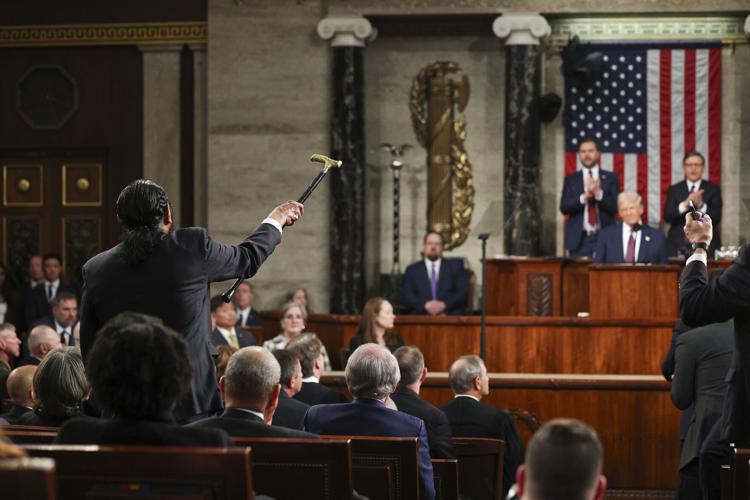
Rep. Al Green, D-Texas, left, shouts March 4 as President Donald Trump addresses a joint session of Congress at the Capitol in Washington.
A handful of Democrats then voted with Republicans to censure U.S. Rep. Al Green, D-Texas, who interrupted Trump's speech to Congress and was escorted out of the chamber.
Schumer faced the most serious backlash after he refused to block a Republican-led government spending bill and shut down the government. Schumer said blocking the bill would have backfired and played into Trump's hands, but many on the left saw it as capitulation.
Anger from a party's base is not unusual after a party loses the presidency.
Establishment Republicans faced fierce backlash after Democrat Barack Obama was elected president in 2008, which fueled the rise of the tea party movement that overthrew some of the party's most powerful incumbents and brought in a new cadre of lawmakers laser-focused on obstructing Obama's agenda.
Democrats, likewise, were dejected after Republican President George W. Bush was reelected in 2004, but his popularity soon tanked and Democrats could foresee the massive wins they would notch in the 2006 midterms, said Robert Shapiro, a Columbia University professor focused on American politics.
Ronald Reagan's victory in 1980 was a bigger shock to Democrats because it brought with it a period of Republican ascendance. The GOP won a Senate majority for the first time in almost 30 years, though Democrats retained control of the House.
"The setback was significant and startling, but not as much as what's happened today, where you have Trump winning the election at the same time the Republicans have control of both houses of Congress," Shapiro said.
Grassroots Democrats were incensed by Trump's first victory — with some talk then of primary challengers to leaders — but they mostly channeled their anger toward the president and the GOP, planning marches and organizing community groups to prepare for the midterms.
Those midterms led to at least one primary upset with future implications: New York Rep. Joe Crowley, the No. 4 House Democrat, fell to Alexandria Ocasio-Cortez, then a virtual unknown.

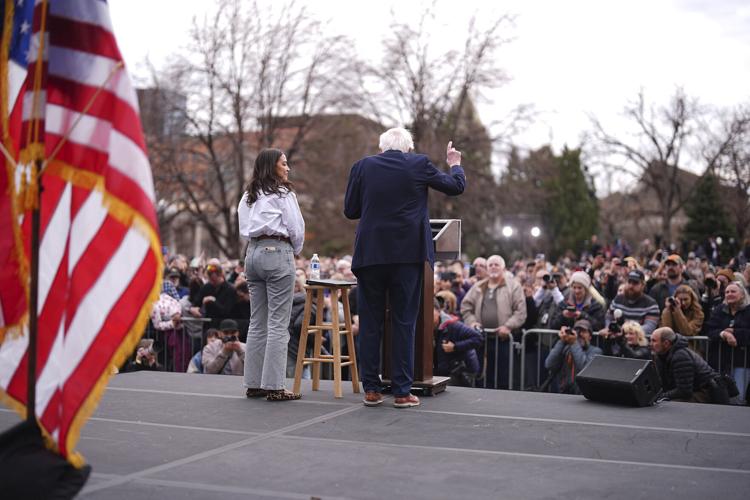
Sen. Bernie Sanders, I-Vt., right, speaks March 21 as Rep. Alexandria Ocasio-Cortez, D-N.Y., looks on during a stop of their "Fighting Oligarchy" tour that filled Civic Center Park in Denver.
New challengers
Thousands have packed rallies to hear Sanders and Ocasio-Cortez, outsiders who rose to prominence for their sharp criticism of the Democratic establishment.
Democrats are getting an earful from constituents at some of the town halls, including events they’re organizing in GOP-controlled districts to draw attention to Republicans avoiding unscripted interactions with voters.
In Arizona, which went for Biden in 2020 before flipping to Trump last year, furious party leaders ousted their chair, Yolanda Bejarano. The result was a shock; Bejarano had support from every prominent Democrat in the state and was widely expected to get a second term.
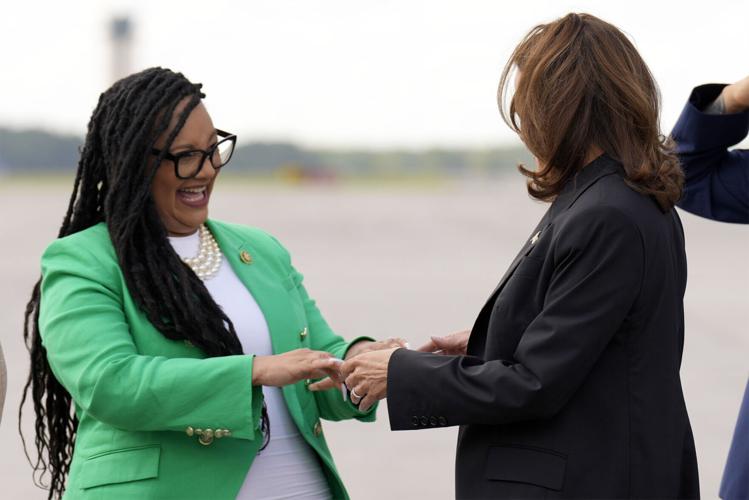
U.S. Rep. Nikema Williams, the chair of the Georgia Democratic Party, is in a similarly perilous position after Trump flipped Georgia in 2024.

Democratic presidential nominee Vice President Kamala Harris greets Rep. Nikema Williams, D-Ga., on Aug. 28 at the Savannah/Hilton Head International Airport in Savannah, Ga.
The Georgia party's state committee approved a rules change Saturday making its chairmanship a full-time role, the Atlanta Journal-Constitution reported. That will make it increasingly likely that Williams, keeping her congressional seat, will step down as chair before her term ends in 2027.
Kat Abughazaleh, a 26-year-old liberal journalist with a big social media following, decided to run for Congress, saying most Democrats "work from an outdated playbook" in an announcement video that's fiercely critical of party leaders.
"They aren't meeting the moment, and their constituents are absolutely livid," Abughazaleh said in an interview. She said Rep. Jan Schakowsky, the 80-year-old Democrat who has represented a suburban Chicago district since 1999, has an "admirable" progressive record, but "something needs to change culturally … about how we do politics and how we campaign."
"I'm done sitting around waiting for someone else to maybe do it," Abughazaleh said.
Photos: Elon Musk through the years

FILE - In this Oct. 20, 2000 file photo, PayPal Chief Executive Officer Peter Thiel, left, and founder Elon Musk, right, pose with the PayPal logo at corporate headquarters in Palo Alto, Calif. (AP Photo/Paul Sakuma, File)

FILE - In this Dec. 9, 2008 file photo, Tesla Motors CEO Elon Musk stands in front a Tesla sports car at a Tesla showroom in Menlo Park, Calif. (AP Photo/Paul Sakuma, file)

FILE - In this March 26, 2009 file photo, Tesla Motors CEO, Chairman and Product Architect Elon Musk speaks at the unveiling of the Tesla Model S all-electric 5-door sedan, in Hawthorne, Calif., Thursday, March 26, 2009. (AP Photo/Reed Saxon, File)
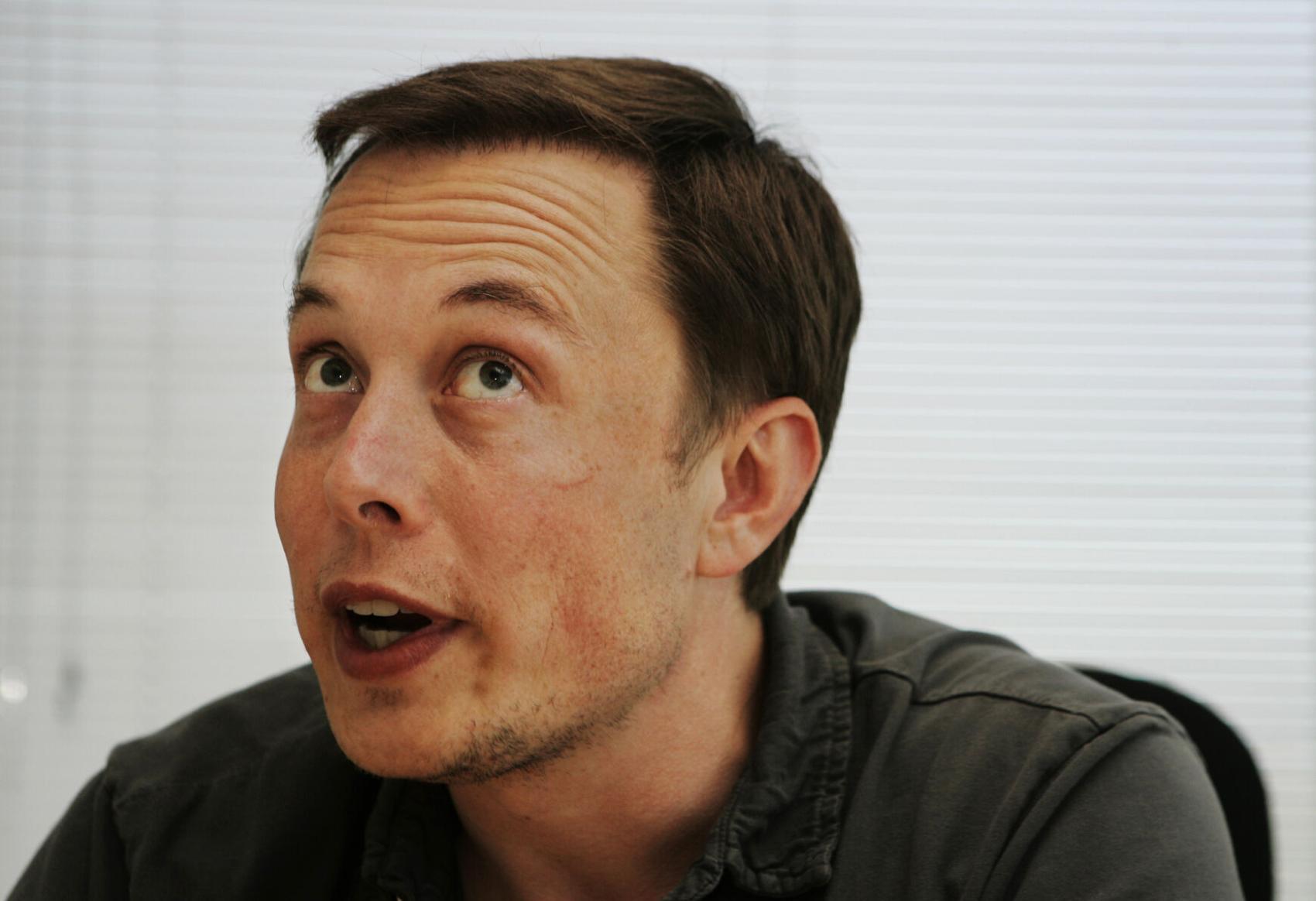
In this July 21, 2009 photo, shows Tesla CEO Elon Musk talking about the lawsuit at Tesla headquarters in San Carlos, Calif., Tuesday, July 21, 2009. (AP Photo/Paul Sakuma)

In this Tuesday, July 21, 2009 photo, Tesla CEO Elon Musk poses at Tesla headquarters in San Carlos, Calif. (AP Photo/Paul Sakuma)

President Barack Obama walks to look at the Flacon 9 launch vehicle with SpaceX CEO Elon Musk at Kennedy Space Center Thursday, April 15, 2010.(AP Photo/Alex Brandon)

Calif. Gov., Arnold Schwarzenegger, right, Toyota CEO Akio Toyoda, left, and Tesla CEO Elon Musk, center, at Tesla headquarters in Palo Alto, Calif., Thursday, May 20, 2010. Tesla and Toyota officials announce partnership. (AP Photo/Paul Sakuma)
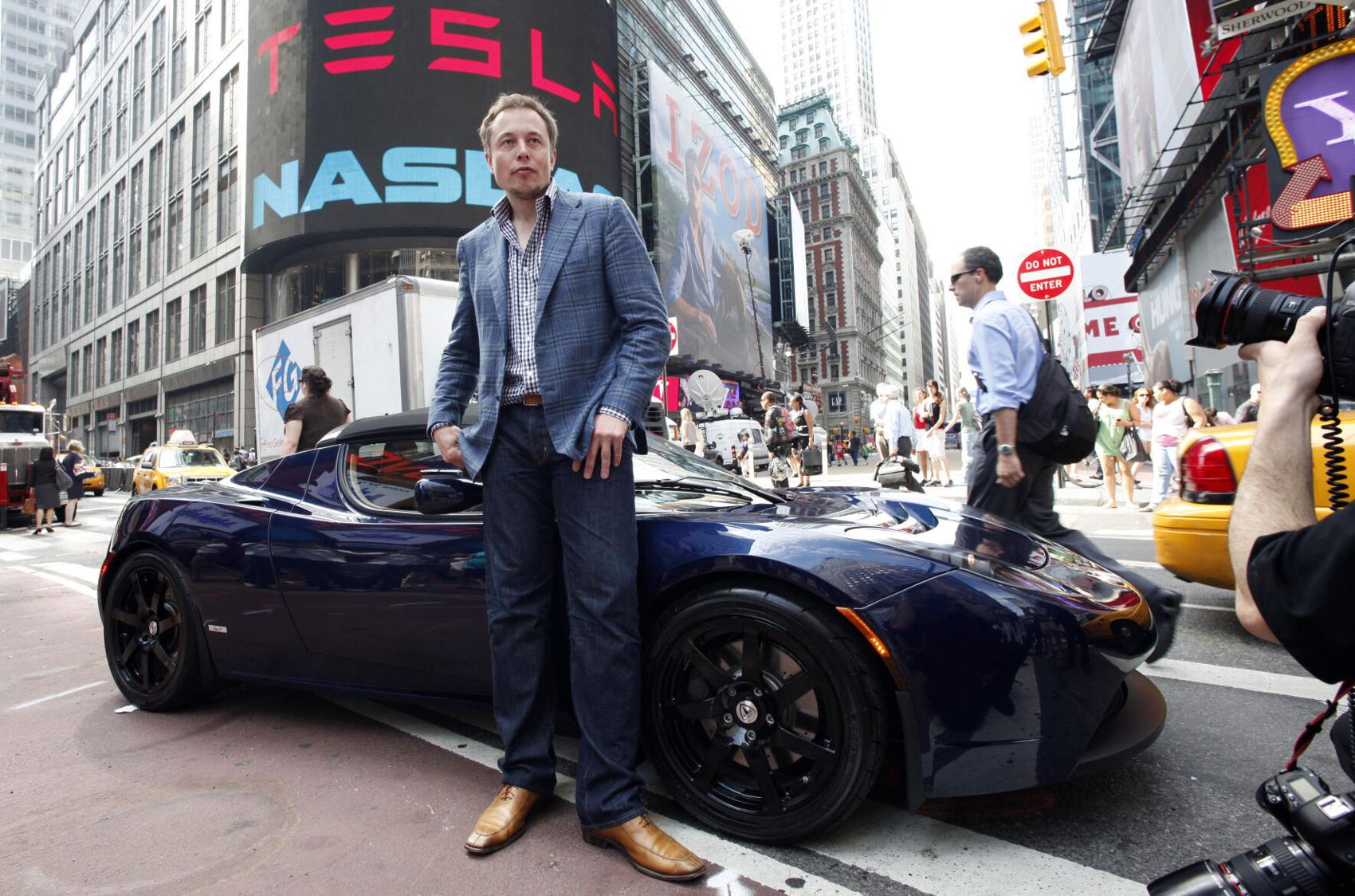
Elon Musk, CEO of Tesla Motors, poses with a Tesla car in front of Nasdaq following the electric automaker’s initial public offering, Tuesday, June, 29, 2010, in New York. The company plans to trade on the Nasdaq stock exchange under the ticker "TSLA." (AP Photo/Mark Lennihan)

Elon Musk, center, CEO of Tesla Motors, raises his hand at the Nasdaq opening bell to celebrate the electric automaker’s initial public offering, Tuesday, June, 29, 2010 in New York. (AP Photo/Mark Lennihan)
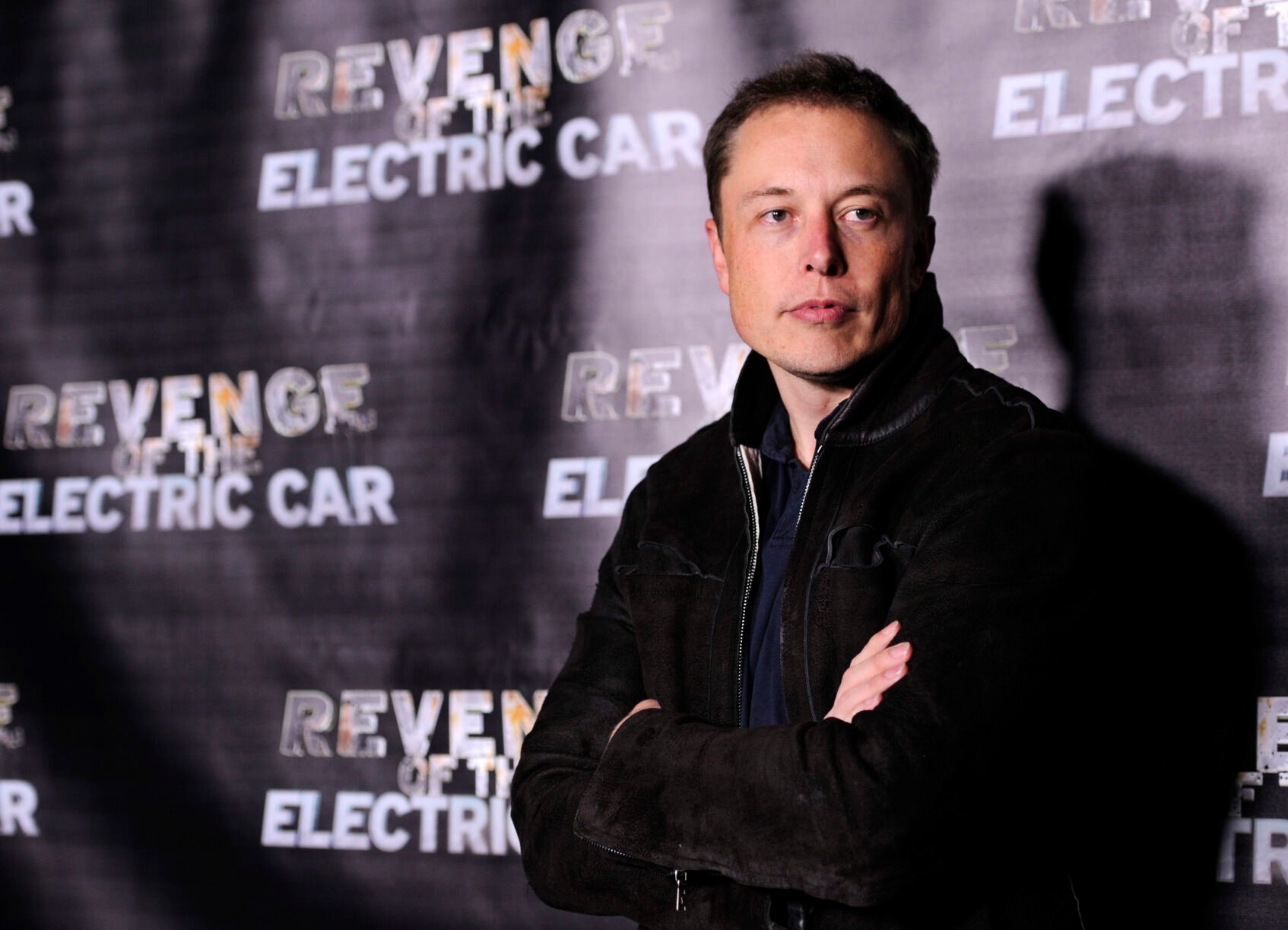
Elon Musk, co-founder, chief executive and product architect of Tesla Motors, poses at the premiere of the documentary film "Revenge of the Electric Car," Friday, Oct. 21, 2011, at Tesla Motors in Los Angeles. The film is director Chris Paine's follow-up to his 2006 documentary, "Who Killed the Electric Car?" (AP Photo/Chris Pizzello)

SpaceX CEO and Chief Designer Elon Musk walks in a procession after delivering the commencement speech for Caltech graduates in Pasadena, Calif. Friday, June 15, 2012. (AP Photo/Damian Dovarganes)
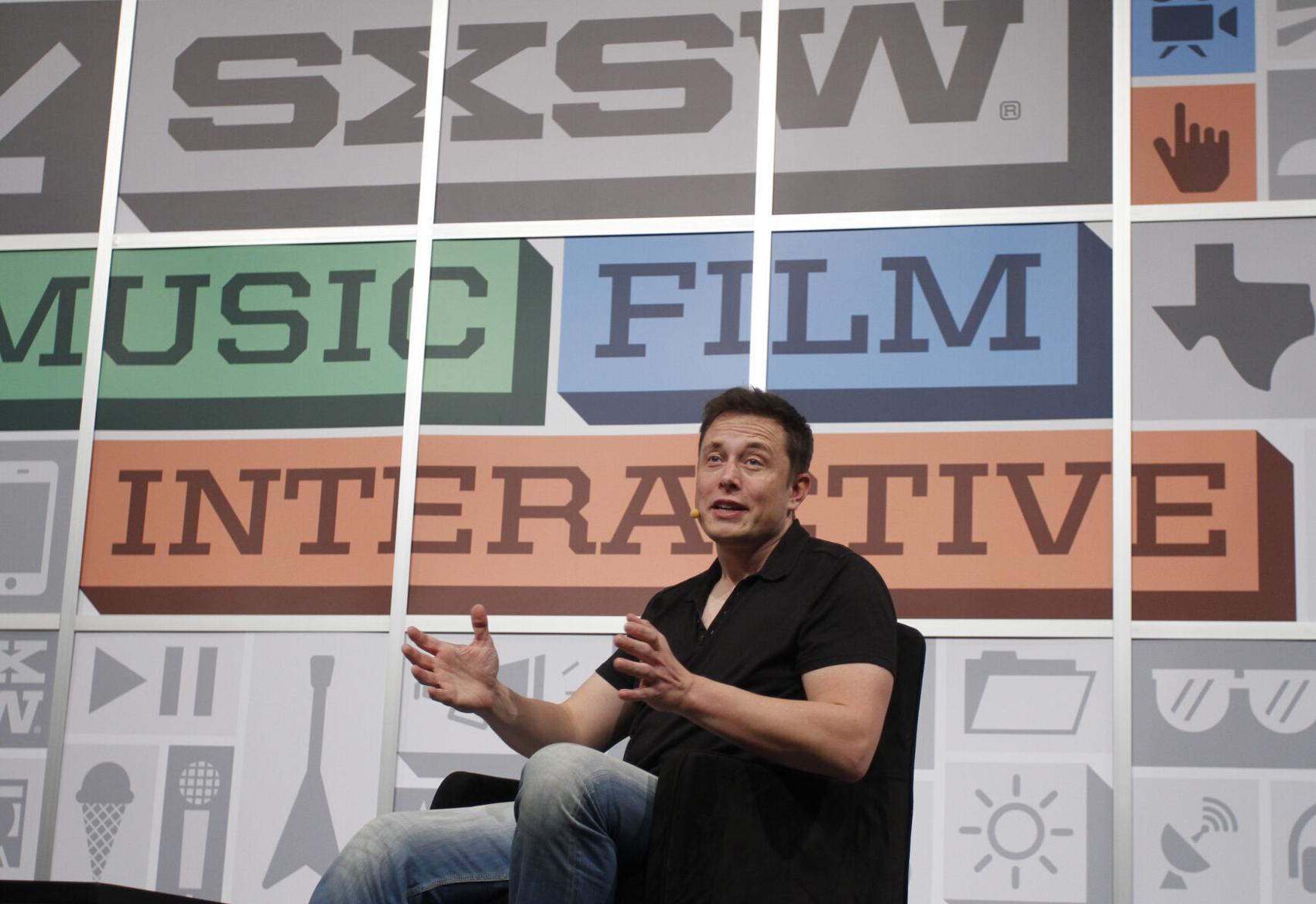
SpaceX CEO Elon Musk gives the opening keynote at the SXSW Interactive Festival on Saturday, March 9, 2013 in Austin, Texas. (AP Photo/Jack Plunkett)

FILE - In this May 29, 2014 file photo, Elon Musk, CEO and CTO of SpaceX, introduces the SpaceX Dragon V2 spaceship at the SpaceX headquarters in Hawthorne, Calif. (AP Photo/Jae C. Hong, File)
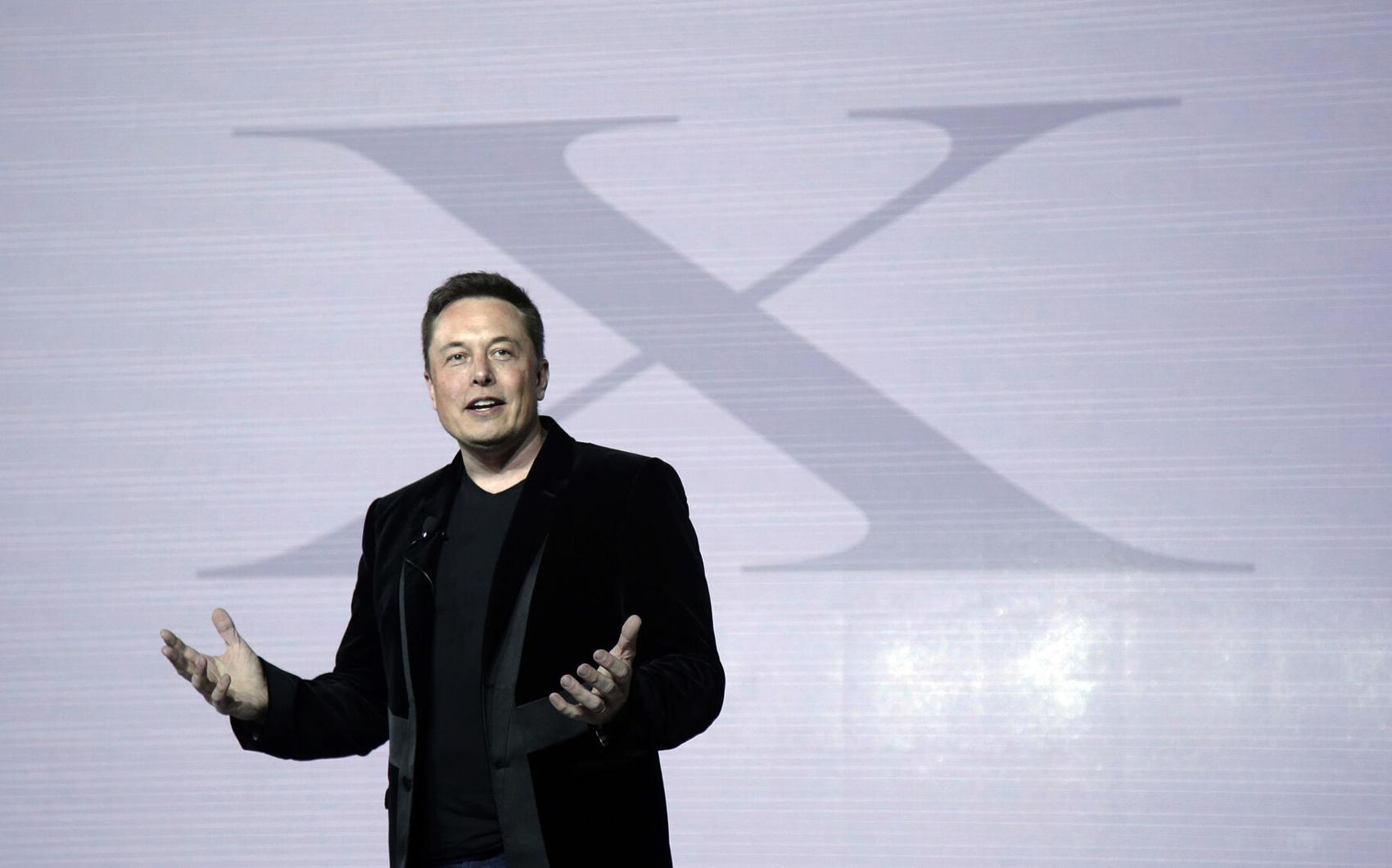
Elon Musk, CEO of Tesla Motors Inc., introduces the Model X car at the company's headquarters Tuesday, Sept. 29, 2015, in Fremont, Calif. Musk said the Model X sets a new bar for automotive engineering, with unique features like rear falcon-wing doors, which open upward, and a driver's door that opens on approach and closes itself when the driver is inside. (AP Photo/Marcio Jose Sanchez)

Elon Musk, CEO & Chief Product Architect of Tesla Moters, attends the premiere of "Racing Extinction" during the 2015 Sundance Film Festival on Saturday, Jan. 24, 2015, in Park City, Utah. (Photo by Arthur Mola/Invision/AP)

SpaceX founder Elon Musk speaks during the 67th International Astronautical Congress in Guadalajara, Mexico, Tuesday, Sept. 27, 2016. In a receptive audience full of space buffs, Musk said he envisions 1,000 passenger ships flying en masse to Mars, 'Battlestar Galactica' style. He calls it the Mars Colonial fleet, and he says it could become reality within a century. Musk's goal is to establish a full-fledged city on Mars and thereby make humans a multi-planetary species. (AP Photo/Refugio Ruiz)

President Donald Trump talks with Tesla and SpaceX CEO Elon Musk, center, and White House chief strategist Steve Bannon during a meeting with business leaders in the State Dining Room of the White House in Washington, Friday, Feb. 3, 2017. (AP Photo/Evan Vucci)

Grimes, left, and Elon Musk attend The Metropolitan Museum of Art's Costume Institute benefit gala celebrating the opening of the Heavenly Bodies: Fashion and the Catholic Imagination exhibition on Monday, May 7, 2018, in New York. (Photo by Charles Sykes/Invision/AP)

SpaceX founder and chief executive Elon Musk speaks after announcing Japanese billionaire Yusaku Maezawa as the first private passenger on a trip around the moon, Monday, Sept. 17, 2018, in Hawthorne, Calif. (AP Photo/Chris Carlson)

Elon Musk, co-founder and chief executive officer of Tesla Inc., speaks during an unveiling event for the Boring Co. Hawthorne test tunnel in Hawthorne, Calif., on Tuesday, Dec. 18, 2018. Musk has unveiled his underground transportation tunnel, allowing invited guests to take some of the first rides ever on the tech entrepreneur's solution to "soul-destroying traffic." (Robyn Beck/Pool Photo via AP)

Tesla CEO Elon Musk jokingly motions to kick before introducing the Model Y at Tesla's design studio Thursday, March 14, 2019, in Hawthorne, Calif. The Model Y may be Tesla's most important product yet as it attempts to expand into the mainstream and generate enough cash to repay massive debts that threaten to topple the Palo Alto, Calif., company. (AP Photo/Jae C. Hong)

NASA Administrator Jim Bridenstine, left, talks with SpaceX chief engineer Elon Musk, second from left, and NASA astronauts crew Doug Hurley and Bob Behnken, right, in front of the Crew Dragon spacecraft, about the progress to fly astronauts to and from the International Space Station, from American soil, as part of the agency's commercial crew program at SpaceX headquarters, in Hawthorne, Calif., Thursday, Oct. 10, 2019. (AP Photo/Alex Gallardo)

Tesla CEO Elon Musk introduces the Cybertruck at Tesla's design studio Thursday, Nov. 21, 2019, in Hawthorne, Calif. Musk is taking on the workhorse heavy pickup truck market with his latest electric vehicle. (AP Photo/Ringo H.W. Chiu)

Elon Musk, founder, CEO, and chief engineer/designer of SpaceX speaks during a news conference after a Falcon 9 SpaceX rocket test flight to demonstrate the capsule's emergency escape system at the Kennedy Space Center in Cape Canaveral, Fla., Sunday, Jan. 19, 2020. (AP Photo/John Raoux)

Tesla and SpaceX Chief Executive Officer Elon Musk speaks during a round table discussion with President Donald Trump at Kennedy Space Center, Wednesday, May 27, 2020, in Cape Canaveral, Fla. (AP Photo/Evan Vucci)

Tesla and SpaceX Chief Executive Officer Elon Musk jumps in the air as people applaud during an event at the Vehicle Assembly Building on Saturday, May 23, 2020, at NASA's Kennedy Space Center in Cape Canaveral, Fla. The event occurred after a rocket ship designed and built by SpaceX lifted off on Saturday with two Americans on a history-making flight to the International Space Station. NASA Administrator Jim Bridenstine looks on at left. (AP Photo/Alex Brandon)

SpaceX owner and Tesla CEO Elon Musk arrives on the red carpet for the Axel Springer media award, in Berlin, Germany, Tuesday, Dec. 1, 2020. (Hannibal Hanschke/Pool via AP)

Elon Musk walks from the justice center in Wilmington, Del., Monday, July 12, 2021. Musk took to a witness stand Monday to defend his company's 2016 acquisition of a troubled company called SolarCity against a shareholder lawsuit that claims he's to blame for a deal that was rife with conflicts of interest and never delivered the profits he had promised. (AP Photo/Matt Rourke)

Elon Musk, Tesla CEO, attends the opening of the Tesla factory Berlin Brandenburg in Gruenheide, Germany, Tuesday, March 22, 2022. The first European factory in Gruenheide, designed for 500,000 vehicles per year, is an important pillar of Tesla's future strategy. (Patrick Pleul/Pool via AP)

Elon Musk, CEO of Tesla, speaks during the Global Citizen Awards dinner, Monday, Sept. 23, 2024, in New York. (AP Photo/Michelle Farsi)

Tesla and SpaceX CEO Elon Musk, right, and Republican vice presidential nominee Sen. JD Vance, R-Ohio, attend a campaign event with Republican presidential nominee former President Donald Trump at the Butler Farm Show, Saturday, Oct. 5, 2024, in Butler, Pa. (AP Photo/Alex Brandon)

Elon Musk jumps on the stage as Republican presidential nominee former President Donald Trump speaks at a campaign rally at the Butler Farm Show, Saturday, Oct. 5, 2024, in Butler, Pa. (AP Photo/Evan Vucci)

FILE - Republican presidential nominee former President Donald Trump listens as Elon Musk speaks during a campaign rally at the Butler Farm Show, Saturday, Oct. 5, 2024, in Butler, Pa. (AP Photo/Julia Demaree Nikhinson, File)

FILE - Elon Musk jumps on the stage as Republican presidential nominee former President Donald Trump speaks at a campaign rally at the Butler Farm Show, Saturday, Oct. 5, 2024, in Butler, Pa. (AP Photo/Evan Vucci, File)

Elon Musk talks with a child as he speaks as part of a campaign town hall in support of Republican presidential nominee former President Donald Trump in Folsom, Pa., Thursday, Oct. 17, 2024. (AP Photo/Matt Rourke)

Elon Musk speaks as part of a campaign town hall in support of Republican presidential nominee former President Donald Trump in Folsom, Pa., Thursday, Oct. 17, 2024. (AP Photo/Matt Rourke)

