

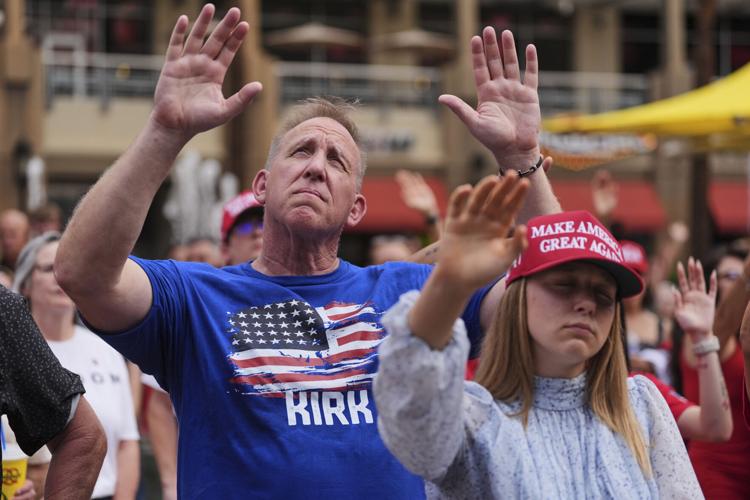
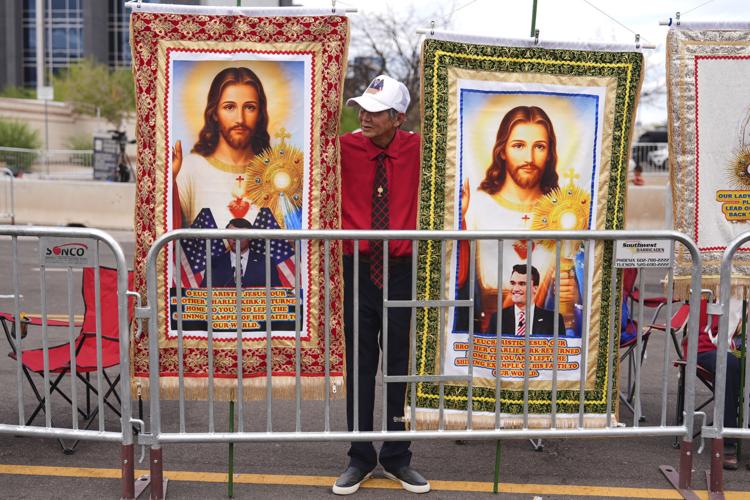
With Vice President JD Vance calling Charlie Kirk “a martyr for Christianity,” and a Catholic cardinal calling him “a modern-day St. Paul,” some Kirk admirers suggest his assassination will galvanize throngs of people — notably young conservatives — to become more engaged in evangelical and Catholic churches.
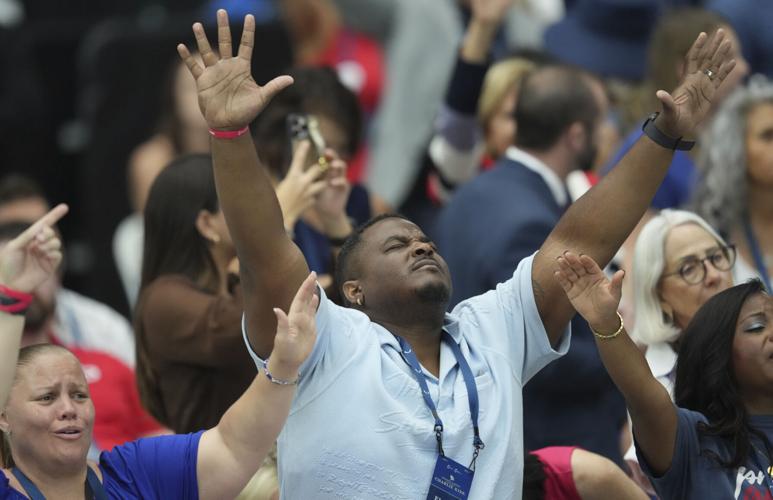
Evocations of Kirk-inspired religious fervor surfaced almost immediately after his death on Sept. 10, and continued to swell as much of Sunday's VIP-studded memorial service for the conservative activist resembled a massive megachurch service. There have been widespread reports of attendance surging at some evangelical churches.
“Charlie had big plans, but God had even bigger plans,” Defense Secretary Pete Hegseth said at the service in Arizona. “Charlie started a political movement but unleashed a spiritual revival.”
The Rev. Robert Jeffress, a longtime ally of President Donald Trump who leads a Southern Baptist megachurch in Dallas, said via email, “The short-term impact of Kirk’s murder is astounding.”
“The outpouring of emotion rivals that of September 11 and President Kennedy’s assassination,” Jeffress added. “Whether this genuine emotion translates into long-term change is yet to be determined, but I pray that it does.”
A sustained surge would run counter to trends. Political scientist Ryan Burge of Washington University in St. Louis, a leading researcher into religious trends and a pastor, said recent history shows no examples of an enduring religious revival after a civic trauma.
Attendance only briefly spiked after the 9/11 attacks before settling back into typical levels, and neither the pandemic nor its aftermath saw any long-term increases as a whole.
“For there to be a noticeable impact on church attendance, this would require a massive shift in behavior of millions of Americans,” Burge said. “In a country of 340 million people, even a 5% increase would mean 17 million more people going to church on a weekly basis.”
Even if a long-term upswing occurred, “we’d need at least 18 months of data to demonstrate a lasting effect,” Burge said.
Some individuals and churches may indeed undergo spiritual revivals, but “the plural of anecdote is not data,” he added.
Whether it's a blip or not, conservative Christian congregations say they are are seeing new faces among their ranks.
Gina Gleason, director of the political engagement team at Calvary Chapel Chino Hills, said she is already seeing more people coming back to church in the wake of Kirk's death and expects the wave of engagement to grow.
The Southern California megachurch’s pastor, Jack Hibbs, was a friend of Kirk’s and a well-known Trump supporter. Kirk has spoken at Calvary Chapel at least 10 times and each time, thousands attended, packing the sanctuary as well as overflow rooms, Gleason said.
“I think we’re going to see an increase particularly in youth engagement because they listened to Charlie,” Gleason said. “He talked about politics and issues, but at the heart of his message was the Gospel, the truth about eternal salvation in Jesus Christ.”
The possibility of a revival was conveyed in a widely circulated montage that appeared on “The Charlie Kirk Show ” on Sept. 17, showing several TikTok users saying they went to church for the first time in years after the assassination.
In it, one man said he bought a suit to go to church and will “try to be a better father, husband and leader for my family.” A woman says she and her husband returned to church after 20 years and wants their three boys to grow “as strong in their convictions as Charlie Kirk was.”
That was the message stressed by Andrew Kolvet, executive producer of “The Charlie Kirk Show,” in an interview with Fox News after Kirk's death.
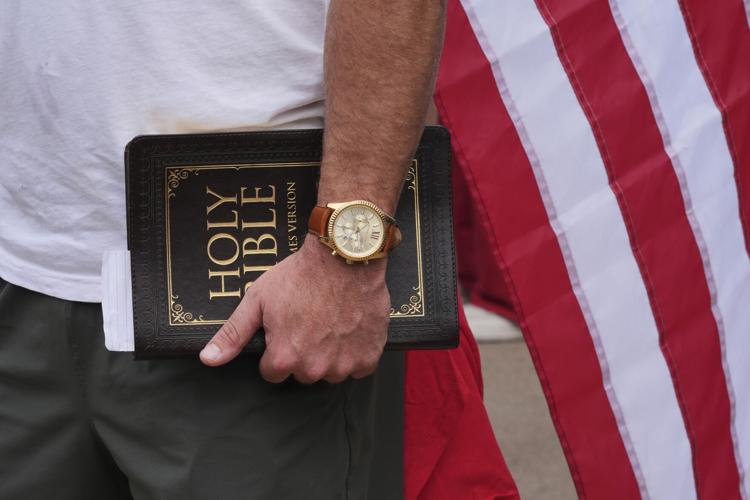
“If you want to honor Charlie ... go back to church. Open your Bible; pray. Ask God to lead you. That’s what he wanted,” Kolvet said.
The founder of Communio, an evangelism ministry working with nearly 400 U.S. churches on marriage programs, said he had received reports of increased worship attendance at evangelical and Catholic services in Colorado, Ohio, Pennsylvania, Texas and elsewhere since Kirk's death.
“Pastors need to see this as an authentic move of the Holy Spirit,” said J.P. De Gance said. “The Holy Spirit’s moving in the hearts and minds of men and women, causing them to want to seek something and they’re showing back up.”
De Gance encouraged Christians to make a special effort to introduce themselves to new faces at church or those who’ve returned after a long lapse. Building trust is key.
“Once someone knows that you care, at that point, they’re going to care about what you know,” he said.
Though Kirk identified as a Protestant evangelical, his admirers included prominent Catholic clergy.
“This guy is a modern day St. Paul,” said Cardinal Timothy Dolan, the archbishop of New York, on “Fox & Friends.” “He was a missionary, he’s an evangelist, he’s a hero. He’s one I think that knows what Jesus meant when he said, ‘The truth will set you free.’”
Dolan's comment was criticized by some left-of-center Catholics.
“Any reflection on the legacy of Kirk cannot gloss over the pain and suffering that Kirk inflicted on innumerable people through his harsh, divisive and combative rhetoric,” wrote John Grosso, digital editor for The National Catholic Reporter.
David Gibson of the Center on Religion and Culture at Fordham University, a Catholic school in New York, noted that some people suggest that the response to Kirk's death could presage a religious revival in the U.S “akin to one of the previous ‘Great Awakenings’ that have periodically stirred the national soul.”
“Past and current data show that revival is not really happening, and if there is any uptick it likely will not last,” Gibson added in an email.
“What the response to Kirk’s killing and memorial will likely do is to continue to change the nature of American Christianity by making it more conservative politically and more friendly to the kind of brash young men who Kirk inspired, and who his followers are increasingly trying to mobilize with martial images and crusader rhetoric.”

