

With the East Coast legalizing marijuana in many areas, the industry is set to grow. Veuer’s Tony Spitz has the details.
For nine years, Arnold Marcus had been making a living selling spice grinders on Amazon.
His company, Golden Gate Grinders, had several colors available, repeat customers and an invitation to join the Amazon Accelerator program, a path toward becoming a supplier for Amazon's private label. Marcus, 68, would package orders and take customers' calls from his living room in San Francisco, proud that he was involved in every aspect of the business he built.
That changed overnight last year when Amazon removed his listings, flagging his products as a violation of company policy prohibiting the sale of drugs and drug paraphernalia. For the uninitiated, a grinder can be used for spices like oregano or rosemary, or for weed.
Marcus spent months fighting his ejection from Amazon's online marketplace, to no avail.
"There was no indication in all those years that this is a prohibited product," Marcus said this summer. "One day, they were supporting me and then one day it ended."
Amazon says its guidelines around drugs and drug paraphernalia are longstanding and state that products can't be primarily designed for making, preparing or using a controlled substance. Grinders that are equipped with features specifically for marijuana-related use are not allowed on the platform.
"Third-party sellers are independent businesses and are required to follow all applicable laws, regulations and Amazon policies when listing items for sale in our store," a spokesperson said. "We have proactive measures in place to prevent prohibited products from being listed, including drug paraphernalia, and we continuously monitor our store, remove any such products and take corrective actions when we find them."
For sellers, the language of the policy is clear but enforcement is ambiguous.
In some cases, Amazon has flagged products that have been sold on the platform for years. It has removed some spice grinders, like those that Marcus was selling, while allowing similar products to remain for sale. One grinder that is still on sale includes in its product description that users can "just keep your weed in it until you need it."
A search for "spice grinders" on Amazon.com brings up more than 8,000 results. "Spice grinders for cannabis" has over 660.
"They've always said there's no drug paraphernalia but there were lots of products that were ambiguous products that were able to sell on the platform for years and years," said Lesley Hensell, co-founder of Riverbend Consulting, which helps third-party sellers on Amazon.
For sellers, there was a period of very little enforcement followed by a period of very strict enforcement, leaving them with a lot of questions and a lot of products in their garage, Hensell said. "These guys are talking about unloading stuff at flea markets."
Riverbend Consulting started hearing from more sellers about problems listing grinders last year when, Hensell says, Amazon changed the artificial intelligence it used to search for contraband on the site. Now, listings that slipped through the cracks are flagged by the software right away.
The cannabis industry is inherently risky, said Chris Shreeve, co-founder and vice president of business development at PrograMetrix, a Seattle-based ad agency with a cannabis and CBD division. Shreeve also co-owns The Bakeréé, a dispensary with two locations in Seattle.
"We have to play the hand that we're dealt in the cannabis space," he said. "It's a difficult hand, but we've got to do it."

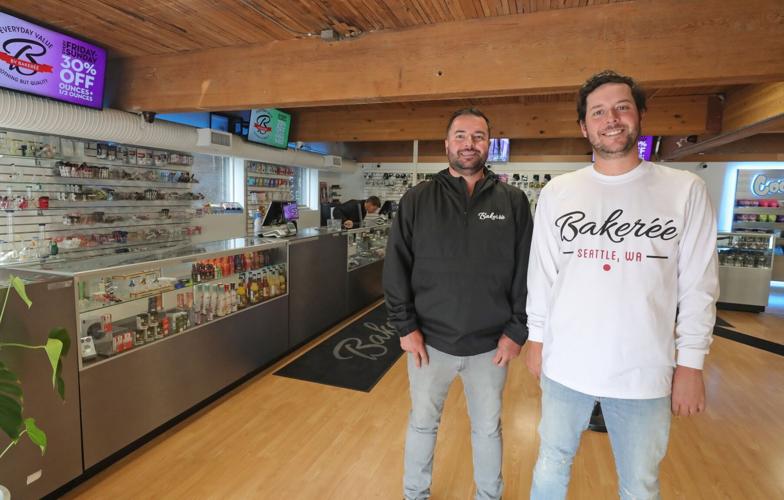
Brothers Chris, left, and Alex Shreeve at a Seattle location of their cannabis shop The Bakeréé.
Platforms like Google, Meta and Amazon are "tiptoeing around acceptance," Shreeve said, hoping to follow federal rules and keep up with changing guidelines across state lines — while also finding some way to tap into the roughly $30 billion cannabis industry. Amazon has campaigned for marijuana legalization at the federal level and, in June 2021, announced it would no longer include marijuana in its drug screening program.
The tech giants tend to leave gray areas for products that are not "plant facing," like grow lights that can be used for lots of different kinds of plants and grinders that can be used for lots of different kinds of herbs, Shreeve said.
That ambiguity has left many companies in the cannabis industry looking for workarounds, Shreeve said.
On Google, a company can share information about cannabis but can't sell the product or a related product. So brands will market blog posts about the industry in the hopes potential customers will click through and later make a purchase. Meta allows companies to market topical CBD or hemp products but not anything that users would smoke or chew. So brands will create separate landing pages for different products, hoping again to reach new customers.
"Each platform has its own hoops to jump through and red tape to navigate but there are brands that are sidestepping those rules and regulations because of the importance of exposure for the company and the product," Shreeve said.
"I don't fault cannabis and CBD brands for trying to navigate the ambiguous rules and regulations on some of these larger platforms," he continued. "But it needs to be done under the assumption that there is risk."

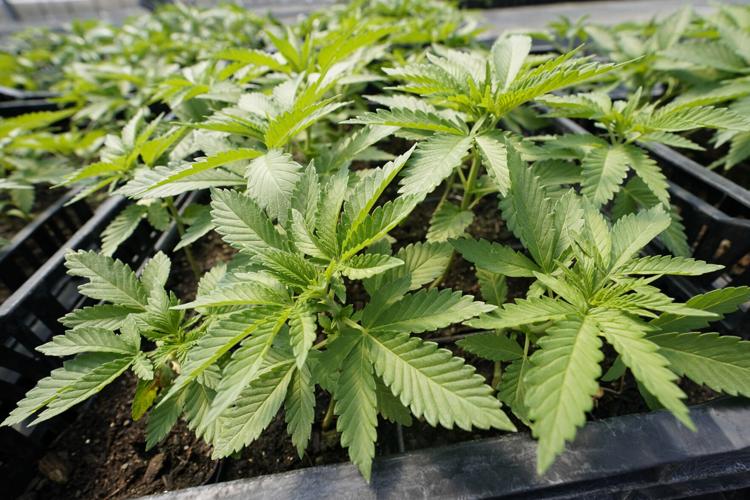
Marijuana plants for the adult recreational market are seen in a greenhouse in Milton, N.Y., on July 15, 2022.
Marcus, from Golden Gate Grinders, has spent the past year tweaking his product and the way it appears on the website to respond to Amazon's concerns. His seller account is still active, but his products aren't listed for purchase, meaning he can't bring in any revenue.
One Amazon representative suggested his product was removed because he had a mesh screen. He removed the screen, relisted the grinder and watched it get flagged again. Another representative told him the product was taken down because there were keywords related to tobacco. Marcus checked his listing and didn't find any references to tobacco. Yet another representative pinned the blame on specific semicolons and quotation marks.
After months of small changes, Marcus scrapped his listing entirely and created a new product: a 2.5-inch silver spice mill without any key words, photos or descriptions. Amazon still flagged and removed the product.
"I'm done, there's nothing else I'll do or can do that will change what's going on," Marcus said. "I feel even if I create a Golden Gate Grinders toothbrush, it'll be removed."
Many third-party sellers outside the cannabis industry have run into similar problems, reporting that a confusing decision — often driven by an algorithm — has kicked products off Amazon's platform with little explanation and little room for recourse. Last year, Chukar Cherries was removed suddenly when Amazon's fraud-prevention algorithm inexplicably linked it to another seller in China that had been deactivated for violating company policy. It took 67 days to get the sweets back online.
In online forums for third-party sellers, concerns specific to grinders have cropped up again and again. One user posted that they "can't understand why others can sell" but they cannot. Another said it was unclear what triggered it, "but for whatever reason (the) majority of the listings were yanked." Another said Amazon's "one size fits all policy makes sellers lose millions."
Before Golden Gate Grinders ran into its own trouble, Marcus had been a vocal supporter of Amazon on these types of forums. He posted that being a third-party seller on Amazon gave "a burnt-out software engineer, an old man, an opportunity to recreate himself."
Now, he is considering filing for bankruptcy, has had to ask his brother for a loan and has taken on credit card debt.
He had been buying inventory to prepare for the moment Amazon relisted his products but, after nearly a year off the platform, he's no longer optimistic he could build his business back up. He's lost customer reviews that are crucial to getting his product on the top of the search results, and his competitors have been operating while he's been sidelined.
"Even if somebody woke up one morning and said 'Let's let him back on,' that would be very challenging," Marcus said. "I have to start from the beginning. They seriously damaged and hurt my company."
Explainer: What to know about 'buy now, pay later'
Q: How does buy now, pay later work?
UpdatedAnswer: Branded as “interest-free loans,” buy now, pay later services require you to download an app, link a bank account or debit or credit card, and sign up to pay in weekly or monthly installments. Some companies, such as Klarna and Afterpay, do soft credit checks, which aren't reported to credit bureaus, before approving borrowers. Most are approved in minutes. Scheduled payments are then automatically deducted from your account or charged to your card.

FILE - A 65-inch television is shown at a warehouse, Thursday, June 17, 2021, in Lone Tree, Colo. Buy now, pay later loans allow users to pay for items such as new sneakers, electronics or luxury goods in installments.
The services generally don't charge you more than you would have paid up front, meaning there's technically no interest, so long as you make the payments on time.
But if you pay late, you may be subject to a flat fee or a fee calculated as a percentage of the total you owe. These can run as high as $34 plus interest. If you miss multiple payments, you may be shut out from using the service in the future, and the delinquency could hurt your credit score.
Q: Are my purchases protected?
UpdatedAnswer: In the U.S., buy now, pay later services are not currently covered by the Truth in Lending Act, which regulates credit cards and other types of loans (those paid back in more than four installments).
That means you could find it more difficult to settle disputes with merchants, return items, or get your money back in cases of fraud. Companies can offer protections, but they don't have to.
Lauren Saunders, associate director at the National Consumer Law Center, advises borrowers to avoid linking a credit card to buy now, pay later apps whenever possible. If you do, you lose the protections you get from using the credit card while also opening yourself to owing interest to the card company.
“Use the credit card directly and get those protections,” she said. “Otherwise, it’s the worst of both worlds.”
Q: What are the other risks?
UpdatedAnswer: Because there's no centralized reporting of buy now, pay later purchases, those debts won't necessarily appear on your credit profile with major credit rating agencies.
That means more companies may let you buy more items, even if you can't afford them, because the lenders don't know how many loans you have set up with other companies.
Payments you make on time aren't reported to credit rating agencies, but missed payments are.
“Right now, buy now, pay later can’t generally help you build credit, but it can hurt,” said Saunders.
Elyse Hicks, consumer policy counsel at Americans for Financial Reform, a progressive nonprofit, said people may not consider seriously enough whether they'll still be able to afford payments down the road.
“Because of inflation, people may think, ‘I’m going to have to get what I need and pay for it later in these installments,’” she said. “But are you still going to be able to afford the things you’re affording now six months from now?”
Q: Why do retailers offer buy now, pay later?
UpdatedAnswer: Retailers accept the backend fees of buy now, pay later services because the products increase cart sizes. When shoppers are given the option to pay off purchases in installments, they're more likely to buy more goods in one go.
When Apple recently announced it will be creating its own buy now, pay later service, Josiah Herndon, 23, joked on Twitter about “paying off 6 carts of (things) I can’t afford with Apple, Klarna, Afterpay, PayPal Pay in 4, Shop Pay in 4, & Affirm.”
Herndon, who works in insurance in Indianapolis, said he started using the services because it was taking a long time for him to be approved for a credit card, since his age meant he didn’t have an extensive credit history. He’s since used them to pay for high-end clothes, shoes, and other luxury goods. Herndon said he lines the payment schedules up with his paychecks so he doesn’t miss installments, and called the option “very convenient."
Q: Who should use buy now, pay later?
UpdatedAnswer: If you have the ability to make all payments on time, buy now, pay later loans are a relatively healthy, interest-free form of consumer credit.
“If (the loans) work as promised, and if people can avoid late fees and don’t have trouble managing their finances, they have a place,” said Saunders, of the National Consumer Law Center.
But if you're looking to build your credit score, and you’re able to make payments on time, a credit card is a better choice. The same goes if you want strong legal protections from fraud, and clear, centralized reporting of loans.
If you're uncertain whether you'll be able to make payments on time, consider whether the fees charged by buy now, pay later companies will add up to higher charges than the penalties and interest a credit card company or other lender would charge.
Q: How will economic instability affect buy now, pay later?
UpdatedAnswer: As the cost of living increases, some shoppers have started breaking up payments on essentials, rather than just big-ticket items like electronics or designer clothes. A poll by Morning Consult released this week found 15% of buy now, pay later customers are using the service for routine purchases, such as groceries and gas, sounding alarm bells among financial advisors.
Hicks points to the rising number of delinquent payments as a sign that buy now, pay later could already be contributing to unmanageable debt for consumers. A July report from the Fitch ratings agency found delinquencies on the apps increased sharply in the 12 months that ended March 31, to as high as 4.1% for Afterpay, while credit card delinquencies held relatively steady at 1.4%.
“The increasing popularity of this is going to be interesting to see over these different economic waves,” Hicks said. “The immediate fallout is what’s happening now.”
The Ethical Life: Why do Americans have so much respect for small businesses?
Updated

